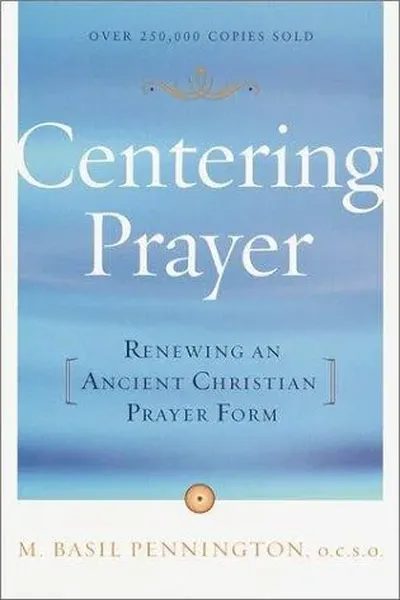
La prière de silence

 77
77

La prière de silence
M. Basil Pennington's "La prière de silence" offers a rigorous yet accessible exploration of Christian contemplative prayer. Pennington, a Trappist monk, eschews flowery language for direct, analytical prose, which is both a strength and, at times, a limitation. His systematic breakdown of silent prayer, moving from its foundational theological principles to practical considerations, provides a clear roadmap for practitioners. A particularly illuminating section details the "prayer of simple regard," contrasting its intuitive, affective nature with more common forms of meditative prayer. However, the book occasionally feels overly scholastic, sometimes sacrificing the visceral experience of silence for doctrinal exposition. The absence of a more direct engagement with contemporary psychological perspectives on altered states of consciousness might also be noted by some readers. Despite this, "La prière de silence" remains a significant contribution, offering a clear, theologically sound guide to the heart of Christian interiority.
📝 Description
77
### What It Is La prière de silence, by M. Basil Pennington, first published in 2006, is a seminal work exploring the contemplative dimensions of Christian prayer. It moves beyond mere recitation to investigate the silent, interior space where direct communion with the divine is cultivated. The book examines the phenomenology of this inner stillness, detailing its characteristics, the challenges faced in its attainment, and the transformative potential it holds for the spiritual life. Pennington's approach is both deeply theological and experientially grounded, drawing from a rich tradition of mystical thought.
### Who It's For This text is intended for individuals seeking a deeper, more authentic engagement with prayer, particularly those within Christian contemplative traditions or those interested in comparative mysticism. It will appeal to seasoned practitioners of meditation and prayer who are looking to refine their understanding and practice of silent prayer. Scholars of religious studies, theology, and spirituality will find valuable insights into the historical and theological underpinnings of interior prayer practices. It is also a resource for spiritual directors and guides seeking to support others on their contemplative paths.
### Historical Context Pennington's work emerged in the early 21st century, a period marked by renewed interest in contemplative practices across various religious traditions, often spurred by academic study and popular spiritual movements. While rooted in the Christian mystical tradition, particularly drawing from figures like the Desert Fathers and later mystics such as John of the Cross, the book also speaks to a broader interest in mindfulness and contemplative states that transcended denominational boundaries. Its publication in 2006 placed it within a landscape where Eastern meditation techniques were increasingly integrated into Western spiritual discourse, yet Pennington steadfastly anchors his exploration within the Christian theological framework.
### Key Concepts The book centers on "prière de silence" (silent prayer) as a distinct mode of spiritual encounter, emphasizing its distinctiveness from discursive prayer. It explores the "divine indwelling," the concept of God's continuous presence within the human soul, as the locus of silent prayer. Another crucial concept is the "prayer of simple regard," a non-intellectual, intuitive turning of the heart toward God. Pennington also addresses the "dark night of the soul," not as a sign of divine abandonment, but as a purification process essential for deeper union. The "prayer of silence" is presented not as an absence of thought, but as a presence of God that supersedes conceptualization.
💡 Why Read This Book?
• Learn to cultivate "prière de silence," a direct, wordless communion with the divine, as detailed in Pennington's exploration of the interior life. • Understand the "prayer of simple regard," a key concept Pennington elucidates, enabling a non-intellectual, intuitive turning toward God. • Gain practical insights into navigating the "dark night of the soul" within the context of silent prayer, viewing it as purification rather than abandonment, as Pennington explains.
⭐ Reader Reviews
Honest opinions from readers who have explored this book.
❓ Frequently Asked Questions
What is "prière de silence" as described by M. Basil Pennington?
"Prière de silence" translates to "silent prayer." Pennington describes it as a direct, interior communion with God that transcends words and discursive thought, focusing on the soul's awareness of the divine presence.
When was "La prière de silence" first published?
The original publication date for "La prière de silence" by M. Basil Pennington was 2006.
What is the "prayer of simple regard"?
The "prayer of simple regard" is an intuitive, non-discursive form of prayer where the soul rests in the loving presence of God, characterized by a simple gaze or attention toward the divine.
Is this book suitable for beginners in prayer?
Yes, while it delves into profound theological concepts, Pennington's clear exposition makes it accessible to beginners seeking a deeper understanding of silent prayer, provided they approach it with openness.
What role does the "divine indwelling" play in Pennington's concept of silent prayer?
Pennington posits that the "divine indwelling"—God's continuous presence within the human soul—is the very ground and source of silent prayer, making direct communion possible.
Does the book offer practical exercises for silent prayer?
While primarily a theological and phenomenological exploration, the book's detailed descriptions and explanations of concepts like "prayer of simple regard" inherently guide the reader toward practical application and interior disposition.
🔮 Key Themes & Symbolism
The Divine Indwelling
This theme explores the profound theological concept of God's constant presence within the human soul, a cornerstone of "La prière de silence." Pennington posits that recognizing and resting in this inherent presence is the very essence of silent prayer. It is not about seeking God as an external entity, but about becoming aware of the divine already within. This internal reality provides the stable ground for interior prayer, transforming the soul's relationship with the divine from one of seeking to one of abiding. The work emphasizes that this indwelling is not earned but is a gift, requiring only openness and receptivity to be experienced.
Prayer of Simple Regard
Pennington meticulously details the "prayer of simple regard" as a crucial, often misunderstood, form of silent prayer. This practice is characterized by a direct, intuitive, and loving attention to God, devoid of complex mental formulations or discursive reasoning. It is an affective prayer, a resting in God's presence rather than an active striving. The book explains how this simple, yet profound, gaze allows the soul to connect with the divine indwelling, fostering a deep sense of peace and union. It's presented as a natural unfolding of the contemplative life when the soul is sufficiently attuned.
The Dark Night of the Soul
In "La prière de silence," the "dark night of the soul" is reframed not as a punitive spiritual trial, but as a necessary purification for deeper union with God. Pennington interprets these periods of dryness or spiritual desolation as God's active work in detaching the soul from lesser attachments—whether to spiritual consolations, intellectual understanding, or even the self. This process, while challenging, ultimately prepares the soul for the unitive experience of silent prayer, clearing the ground for a more direct and unmediated encounter with the divine presence. It signifies a transition from sensory to spiritual perception.
Phenomenology of Silence
The book engages with the lived experience of silent prayer, exploring its unique phenomenology. Pennington describes how silence in this context is not an absence of sound or thought, but a fullness of divine presence that renders words and concepts secondary. He details the subjective experience of this stillness: the sense of peace, the intuitive awareness, and the profound inner transformation that occurs. The work examines the challenges in maintaining this state, such as distractions and the ego's resistance, offering insights into cultivating the interior disposition necessary for sustained contemplative practice.
💬 Memorable Quotes
“The essence of silent prayer lies not in the absence of thoughts, but in the presence of God.”
— This statement captures the core of Pennington's argument, distinguishing Christian silent prayer from mere mental quietude. It emphasizes that the goal is a conscious awareness of the divine, a presence that can permeate even a busy mind.
“The prayer of simple regard is a loving attention, a resting in God's gaze upon us.”
— This highlights the passive yet receptive nature of this form of prayer. It's not about the individual's effort to pray, but about the soul's awareness of and response to God's loving presence and attention directed towards it.
“Periods of spiritual dryness are often God's work of purification, leading us toward deeper union.”
— This paraphrased concept reframes the difficult experiences of the "dark night." It suggests that what feels like abandonment is actually a divine process of refinement, preparing the soul for a more profound connection with God.
“We are called to discover the divine indwelling, the God who is already within us.”
— This emphasizes the immanence of God in Pennington's theology. The spiritual journey, in this view, is less about reaching out to a distant deity and more about awakening to the divine presence already residing within the human heart.
“True silence in prayer is a receptivity to the Word that speaks without sound.”
— This interpretation underscores the active nature of divine communication even within silence. It suggests that God's presence communicates directly to the soul, bypassing the need for audible or conceptual language.
🌙 Esoteric Significance
Tradition
Pennington's work is deeply embedded within the Christian contemplative tradition, specifically drawing from its mystical and ascetical streams. While not typically categorized as 'esoteric' in the same vein as Hermeticism or Kabbalah, its focus on interior transformation, direct experience of the divine, and the cultivation of inner stillness aligns with broader esoteric principles of spiritual alchemy and gnosis. It departs from purely dogmatic or ritualistic approaches, emphasizing direct, unmediated experience, which is a hallmark of esoteric spirituality across traditions. His work can be seen as a bridge, making profound mystical experiences accessible within a structured theological framework.
Symbolism
The primary "symbol" in "La prière de silence" is silence itself, representing the unitive state of consciousness and the direct presence of God that transcends conceptualization. The "divine indwelling" functions symbolically as the sacred inner space, the temple within the soul where this communion occurs. The "prayer of simple regard" can be seen as a symbolic act of turning the soul's gaze inward towards this indwelling presence, an act of pure attention that signifies surrender and receptivity. These symbols point towards an inner reality accessible through contemplative practice.
Modern Relevance
Contemporary interest in mindfulness, contemplative practices, and the "inner life" makes Pennington's work highly relevant. Thinkers and practitioners in fields ranging from spiritual psychology to interfaith dialogue find value in his systematic approach to silent prayer. Modern contemplative communities, including those practicing Centering Prayer (which Pennington co-founded), continue to draw directly from his writings. His emphasis on the "divine indwelling" resonates with contemporary seekers looking for immanent spiritual experiences and provides a robust theological grounding for practices that might otherwise be seen as purely secular mindfulness techniques.
👥 Who Should Read This Book
• Individuals seeking to deepen their Christian prayer life beyond recitation, particularly those interested in contemplative and mystical traditions. • Scholars and students of theology, religious studies, and spirituality looking for a structured exploration of Christian interior prayer. • Practitioners of meditation and mindfulness from any background who are curious about the Christian approach to cultivating inner stillness and divine awareness.
📜 Historical Context
Published in 2006, M. Basil Pennington's "La prière de silence" emerged during a period of significant resurgence in contemplative spirituality. The early 21st century saw a broad interest in mindfulness and meditation, often drawing from Eastern traditions, yet Pennington anchored his work firmly within the Christian mystical lineage. He built upon the foundations laid by scholars and practitioners like Thomas Merton, who had himself revived interest in the Trappist contemplative tradition, and the earlier work of figures such as William Johnston, who explored Christian meditation. Pennington's contribution was to systematically articulate the theological and phenomenological aspects of silent prayer, drawing heavily from the Desert Fathers and medieval mystics. While movements like Centering Prayer, which Pennington himself was instrumental in developing, gained traction, "La prière de silence" offered a more in-depth theological exploration that distinguished it from purely practical guides. Its reception was primarily within academic theological circles and among practitioners of Christian contemplative prayer, affirming its place in the ongoing dialogue about interior prayer.
📔 Journal Prompts
The "divine indwelling" as the ground of prayer.
Cultivating the "prayer of simple regard" in daily life.
Interpreting periods of spiritual dryness within the "dark night" framework.
The experience of "prière de silence" beyond discursive thought.
The soul's receptivity to the Word that speaks without sound.
🗂️ Glossary
Prière de silence
Literally "silent prayer." It refers to a form of prayer characterized by interior stillness and direct communion with God, transcending words and discursive thought.
Divine Indwelling
The theological concept that God resides continuously within the human soul, providing the foundational presence for interior prayer and spiritual union.
Prayer of Simple Regard
A form of intuitive, affective prayer involving a simple, loving attention or gaze toward God, without complex mental elaboration.
Dark Night of the Soul
A spiritual purification process, often characterized by dryness or desolation, aimed at detaching the soul from lesser attachments and preparing it for deeper union with God.
Discursive Prayer
Prayer that involves mental reasoning, meditation on scripture, or formulation of thoughts and petitions directed towards God.
Phenomenology
The study of the structures of experience and consciousness as experienced from the first-person point of view.
Contemplative Prayer
A posture of prayer characterized by stillness, receptivity, and direct experience of God's presence, often seen as the highest form of prayer in Christian mysticism.