Jung Stripped Bare

 74
74

Jung Stripped Bare
Sonu Shamdasani’s meticulous dissection of Carl Jung’s 1916 ‘Seven Sermons to the Dead’ is an essential, if demanding, companion to Jung’s most enigmatic text. Shamdasani brings to light the archival sources and personal crises that birthed Jung’s Gnostic-infused cosmology, moving far beyond simple interpretation. The book’s strength lies in its rigorous contextualization, revealing how Jung’s visionary experience was both a product of and a radical departure from the spiritual currents of the early 20th century. A particularly illuminating section details Jung’s correspondence regarding the text’s publication, demonstrating his careful, almost furtive, approach to sharing these deeply personal revelations. However, the density of the source material and Shamdasani's scholarly prose can occasionally obscure the intuitive leaps Jung himself made. While the scholarly apparatus is invaluable, it sometimes risks overshadowing the raw, visionary power of Jung's original text. Ultimately, Jung Stripped Bare provides indispensable clarity for those willing to engage with its scholarly depth.
📝 Description
74
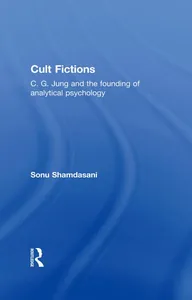
### What It Is Jung Stripped Bare, first published in 2018 by Sonu Shamdasani, offers a critical examination of Carl Jung's seminal work, 'Seven Sermons to the Dead'. This text, originally published anonymously by Jung in 1916 under the pseudonym 'Salome', is often considered a pivotal, albeit cryptic, expression of his post-World War I psychological and spiritual crisis. Shamdasani's work moves beyond mere exegesis, presenting archival materials and scholarly analysis to contextualize Jung's intensely personal and visionary writings.
### Who It's For This book is intended for serious students of Carl Jung, psychohistory, and the history of esoteric thought. Readers who are familiar with Jungian psychology but find 'Seven Sermons' particularly opaque will benefit from Shamdasani's meticulous research. It is also suited for scholars of 20th-century intellectual history who are interested in the intersection of psychology, religion, and the burgeoning interest in spiritualism and occultism during the interwar period.
### Historical Context The publication of 'Seven Sermons to the Dead' in 1916 occurred during a period of profound global upheaval. Jung's personal confrontation with his unconscious, which he termed his 'confrontation with the unconscious', led to the creation of this deeply personal text. The work emerged from a landscape where figures like Rudolf Steiner and Theosophy, led by Helena Blavatsky, were popularizing complex spiritual doctrines. Jung’s text, however, stands apart with its unique Gnostic-inflected cosmology and psychological phenomenology, offering a distinct response to the era's spiritual yearnings.
### Key Concepts Shamdasani's analysis unpacks the core concepts presented in Jung's 'Seven Sermons'. These include the Gnostic idea of the Pleroma and the Emptiness, the figure of the Puer Aeternus, and the inherent duality of the human psyche. The book also explores Jung's development of the concept of the 'Self' as a unifying principle, distinct from the ego. Shamdasani emphasizes the deeply personal nature of these visions, linking them to Jung's own psychological and spiritual explorations during a critical phase of his life.
💡 Why Read This Book?
• Gain a grounded understanding of Carl Jung’s personal 'confrontation with the unconscious' that directly led to his 1916 ‘Seven Sermons to the Dead,’ moving beyond speculative interpretations. • Explore the specific Gnostic concepts Jung adapted, such as the Pleroma and the figure of the Puer Aeternus, as presented in Shamdasani's rigorous analysis. • Understand the historical milieu of 1916, situating Jung’s unique spiritual cosmology alongside contemporary movements like Theosophy and Rudolf Steiner’s anthroposophy.
⭐ Reader Reviews
Honest opinions from readers who have explored this book.
❓ Frequently Asked Questions
What is the primary focus of Sonu Shamdasani's 'Jung Stripped Bare'?
The book provides a scholarly examination of Carl Jung's 1916 text, 'Seven Sermons to the Dead,' contextualizing Jung's personal visionary experiences and Gnostic cosmology through archival research and historical analysis.
When was Carl Jung's 'Seven Sermons to the Dead' originally published?
Carl Jung's 'Seven Sermons to the Dead' was first published anonymously in 1916 under the pseudonym 'Salome'.
What intellectual traditions influenced Jung's 'Seven Sermons'?
Jung's text draws heavily on Gnostic ideas, particularly concerning the Pleroma and the concept of Emptiness, interwoven with his own developing psychological theories and personal visionary experiences.
Is 'Jung Stripped Bare' suitable for beginners in Jungian psychology?
While valuable for all students of Jung, the book is more suited for those already familiar with Jungian concepts and who are seeking a deeper, contextual understanding of his more esoteric writings.
What archival materials does Shamdasani utilize?
Shamdasani incorporates Jung's personal papers, correspondence, and previously unpublished notes to shed light on the genesis and meaning of 'Seven Sermons to the Dead'.
How does 'Jung Stripped Bare' differ from standard Jungian analyses?
It focuses intensely on the specific context and creation of 'Seven Sermons,' using primary source material to reveal Jung's personal psychic journey, rather than providing a broad overview of his entire oeuvre.
🔮 Key Themes & Symbolism
The Confrontation with the Unconscious
Shamdasani meticulously documents Jung's profound personal crisis following World War I, which he termed his 'confrontation with the unconscious'. This internal upheaval was the direct crucible for 'Seven Sermons to the Dead.' The book unpacks how Jung navigated his own psyche, drawing parallels between his visionary experiences and the symbolic language of Gnosticism. It highlights this period as crucial for the development of his analytical psychology, moving beyond purely clinical observation into deeply personal spiritual exploration.
Gnostic Cosmology and Psychology
The core of Jung's 'Seven Sermons' is its unique Gnostic-inspired cosmology. Shamdasani's work elucidates concepts like the Pleroma, the primordial fullness, and the subsequent descent into Emptiness. He explains how Jung reinterprets these ancient ideas through a psychological lens, positing them as archetypal structures of the psyche. This theme explores the tension between the spiritual realm and the material world, and the emergence of consciousness from the void, as envisioned by Jung.
The Puer Aeternus Archetype
Shamdasani highlights the recurring motif of the Puer Aeternus, or Eternal Child, within Jung's 'Seven Sermons'. This archetype represents eternal youth, perpetual becoming, and a refusal to be bound by limitations. The book examines how Jung connects this figure to the process of individuation and the inherent tension between the desire for transcendence and the necessity of grounding oneself in reality. It's presented as a key symbolic representation of Jung's own psychic struggles.
Archival Revelation
A significant contribution of 'Jung Stripped Bare' is its reliance on previously unpublished archival materials. Shamdasani utilizes Jung's personal notes, correspondence, and preliminary drafts related to 'Seven Sermons'. This allows for an unprecedented view into the intellectual and personal genesis of Jung's text. By presenting this material, the book offers a scholarly foundation for understanding the work, moving beyond speculation to documented evidence of Jung's creative and psychological process.
💬 Memorable Quotes
“The Sermons are not an esoteric text in the usual sense, but a record of Jung’s personal confrontation with the unconscious.”
— This statement emphasizes that Jung's 'Seven Sermons' should be understood not as a manual of occult secrets, but as a deeply personal psychological document reflecting his own intense inner journey and discoveries.
“Jung’s Pleroma is a Gnostic concept, but his interpretation is psychologized.”
— This highlights how Jung adopted the ancient Gnostic idea of a divine fullness (Pleroma) but reframed it within his own theoretical framework, seeing it as an internal psychic reality rather than solely a metaphysical one.
“The text was published anonymously in 1916 due to its intensely personal nature.”
— This explains Jung's decision to release 'Seven Sermons' without his name attached, underscoring the profound vulnerability and private nature of the psychological and spiritual revelations contained within it.
“The figure of the Puer Aeternus embodies a perpetual state of becoming.”
— This interpretation focuses on the symbolic meaning of the Eternal Child archetype as presented in Jung's work, representing a dynamic, unformed potentiality and an ongoing process of development.
“Shamdasani’s work provides access to the source materials of Jung’s 'Seven Sermons'.”
— This points to the book's value in offering direct access to the original documents and research that informed Jung's enigmatic text, enabling a more informed scholarly understanding.
🌙 Esoteric Significance
Tradition
This work engages directly with the Gnostic tradition, a significant current within Western esotericism. Shamdasani unpacks how Jung reinterpreted Gnostic concepts like the Pleroma and the Demiurge through a psychological lens. While not strictly a Gnostic text, 'Seven Sermons' represents Jung's attempt to integrate archaic spiritual cosmologies with his nascent theories of the psyche, particularly the concept of the Self, positioning it as a bridge between ancient mysticism and modern depth psychology.
Symbolism
Key symbols examined include the Pleroma, representing primordial fullness and divine consciousness, and its counterpoint, the Emptiness or Void, from which creation emerges. The Puer Aeternus (Eternal Child) is another central motif, symbolizing eternal youth, unformed potential, and the ongoing process of becoming. Shamdasani explains how these symbols function not just metaphysically, but as potent representations of internal psychic states and archetypal dynamics within the human unconscious.
Modern Relevance
Contemporary thinkers and practitioners in Jungian psychology, archetypal studies, and depth psychology continue to draw upon Jung's 'Seven Sermons' for its profound symbolic language and exploration of consciousness. Modern movements exploring consciousness, myth, and spirituality often reference Jung's Gnostic-inflected cosmology as a framework for understanding the psyche's relationship to the numinous. Shamdasani's work itself is crucial for contemporary scholars seeking to accurately contextualize Jung's most esoteric and personal writings.
👥 Who Should Read This Book
• Serious students of Carl Jung's oeuvre seeking to understand the origins of his most esoteric writings, particularly 'Seven Sermons to the Dead'. • Scholars of 20th-century intellectual history interested in the intersection of psychology, religion, and esoteric movements during the interwar period. • Practitioners of depth psychology and archetypal studies who want to explore the foundational visionary experiences that shaped Jungian thought.
📜 Historical Context
Published in 2018, 'Jung Stripped Bare' by Sonu Shamdasani revisits the creation of Carl Jung's 'Seven Sermons to the Dead,' first released anonymously in 1916. This period, amidst the turmoil of World War I, saw a widespread hunger for spiritual meaning, with movements like Theosophy, championed by Helena Blavatsky, and Rudolf Steiner's Anthroposophy gaining considerable traction. Jung’s text, however, emerged from his intensely personal 'confrontation with the unconscious,' a psychic crisis that led him to develop a unique cosmology heavily influenced by Gnosticism. Unlike the more systematic doctrines of his contemporaries, Jung's work was a raw, visionary outpouring. Reception of Jung's later work, particularly his engagement with myth and religion, was often met with skepticism from the scientific establishment, yet it profoundly influenced fields from psychology to comparative mythology, marking a significant departure from purely empirical approaches.
📔 Journal Prompts
The Pleroma and Emptiness as psychic states within your own experience.
Jung's 'confrontation with the unconscious' in 1916 and its textual output.
Reflect on the symbolic meaning of the Puer Aeternus in relation to personal growth.
The influence of Gnosticism on Jung's psychological framework.
Archival evidence and its role in understanding visionary texts.
🗂️ Glossary
Seven Sermons to the Dead
A text written by Carl Jung between 1916 and 1917, published anonymously in 1916. It is a collection of visionary dialogues exploring Gnostic cosmology and psychological concepts.
Pleroma
In Gnosticism, the Pleroma refers to the totality of divine powers and the spiritual universe, a state of primordial fullness from which creation emanates.
Emptiness
The Gnostic concept representing the void or unmanifest state that precedes or underlies creation, often seen as a counterpart to the Pleroma.
Puer Aeternus
Latin for 'Eternal Child.' An archetype representing perpetual youth, potential, and a refusal to mature or be bound by limitations.
Confrontation with the Unconscious
Carl Jung's term for his intense period of personal exploration of his own psyche following World War I, which involved vivid inner visions and dialogue.
Salome
The pseudonym Carl Jung used when publishing 'Seven Sermons to the Dead' anonymously in 1916.
Analytical Psychology
Carl Jung's school of psychology, which emphasizes archetypes, the collective unconscious, and the process of individuation.