Humanity and Self-cultivation
 76
76

Humanity and Self-cultivation
Tu Wei-ming’s essays in *Humanity and Self-cultivation* offer a lucid, if sometimes dense, exploration of core Confucian tenets. The strength lies in its systematic unpacking of concepts like *ren* and *li*, demonstrating their interconnectedness in fostering an ethical self. A limitation for the contemporary reader might be the academic tone, which occasionally distances the philosophical ideas from immediate personal application. The essay on the historical development of Confucian thought, tracing its evolution through various dynasties, is particularly illuminating. It charts the intellectual shifts with precision, showcasing how the tradition adapted while retaining its essence. While not always accessible, the scholarship is undeniable. This collection serves as a valuable resource for serious students of Chinese thought.
📝 Description
76
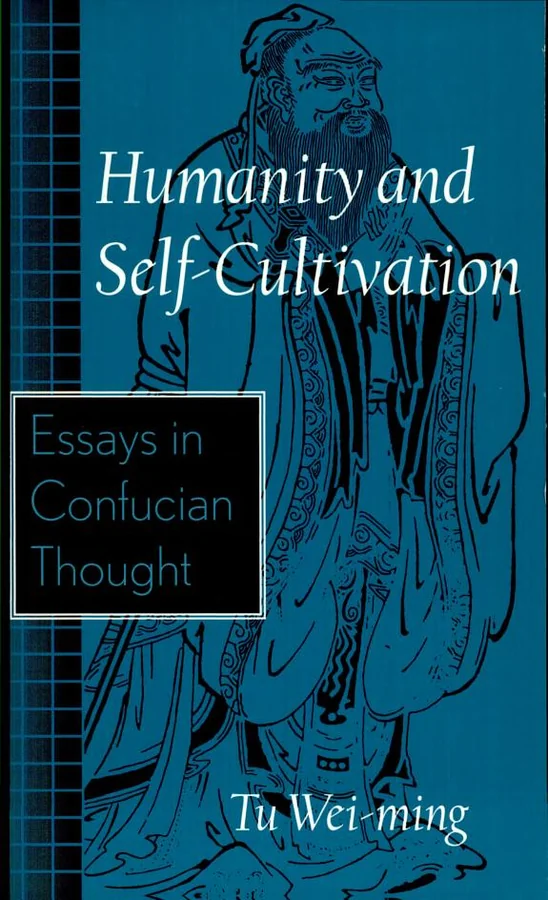
Tu Wei-ming's 1998 collection examines personal growth through the lens of Chinese philosophy.
Published in paperback in 1998, Humanity and Self-cultivation gathers essays by Tu Wei-ming that focus on individual ethical development within historical and societal frameworks. The book addresses how people pursue personal growth, particularly through the teachings of Confucianism. It is aimed at those studying Chinese philosophy, intellectual history, or comparative ethics, and for readers interested in the philosophical basis of personal development and its connection to cultural traditions. Those looking for interpretations of Confucian thought beyond common understandings will find this work valuable.
Tu Wei-ming, a noted scholar, engages with classical Chinese thinkers like Confucius and Mencius. He places their ideas within the long history of Chinese intellectual thought. The collection touches on the tension between universal ethical principles and those specific to cultures, a discussion relevant in philosophy since World War II. The book considers Confucianism's relevance to contemporary ethical discussions.
This work sits within the tradition of Neo-Confucian thought, which seeks to understand the ethical and spiritual dimensions of human existence through classical Chinese texts. It engages with concepts like *ren* and *li*, emphasizing the practical application of these virtues in daily life and governance. The focus on self-cultivation as a continuous process, rather than a final state, aligns with introspective practices found in various contemplative traditions. Tu Wei-ming connects these ancient ideas to modern ethical concerns, showing their continuing relevance.
💡 Why Read This Book?
• Gain a nuanced understanding of *ren* (humaneness) as a foundational Confucian virtue, moving beyond surface-level definitions to grasp its practical implications for ethical conduct and social harmony, as explored in the book's discussions. • Appreciate the dynamic nature of self-cultivation as presented by Tu Wei-ming, recognizing it as a lifelong process of growth deeply embedded within historical and cultural contexts, rather than a singular achievement. • Grasp the crucial role of ritual (*li*) in shaping ethical character and fostering social order, as detailed in the essays, offering a specific framework for understanding Confucian practice beyond abstract moralizing.
⭐ Reader Reviews
Honest opinions from readers who have explored this book.
❓ Frequently Asked Questions
When was the first paperback edition of Humanity and Self-cultivation published?
The first paperback edition of Humanity and Self-cultivation, featuring essays by Tu Wei-ming, was published in 1998. This edition included a new introductory essay by Robert Cummings Neville.
What is the primary focus of Tu Wei-ming's essays in this book?
The book primarily focuses on the Confucian concepts of humanity (*ren*) and self-cultivation, examining their historical development and practical application within Chinese philosophy and society.
Who is Tu Wei-ming and what is his academic background?
Tu Wei-ming is a renowned scholar of Chinese history and philosophy, known for his work on Neo-Confucianism and its relevance to contemporary ethical and political thought.
What does the concept of 'ren' signify in Confucianism as discussed in the book?
In Confucianism, 'ren' signifies humaneness, benevolence, or goodness. Tu Wei-ming explores it as a fundamental virtue central to ethical development and harmonious social relations.
What role does 'li' play in the self-cultivation process according to Tu Wei-ming?
'Li' refers to ritual propriety or social norms. Tu Wei-ming discusses how engaging in 'li' is essential for cultivating virtue and understanding one's place within social structures.
Who is Robert Cummings Neville and what is his contribution to this edition?
Robert Cummings Neville is the Dean of Drew University. He contributed a new introductory essay to the 1998 paperback edition of Humanity and Self-cultivation, offering his scholarly perspective.
🔮 Key Themes & Symbolism
The Virtue of Ren
Central to Confucian thought, 'ren' (humaneness, benevolence) is explored not merely as an abstract ideal but as a practical, embodied virtue. Tu Wei-ming illustrates how the cultivation of 'ren' is fundamental to ethical living, impacting interpersonal relationships, societal harmony, and the individual's connection to the cosmic order. The essays trace its development and interpretation across different historical periods, showing its enduring significance in shaping moral consciousness within the Chinese tradition.
The Process of Self-Cultivation
This theme emphasizes that self-cultivation is a continuous, lifelong endeavor rather than a final state. Tu Wei-ming details how individuals actively engage in moral development through study, reflection, and practice. This process is intrinsically linked to understanding one's social roles and responsibilities, guided by principles of righteousness (*yi*) and propriety (*li*), ultimately aiming for personal authenticity and moral maturity.
The Role of Ritual and Propriety
The book highlights the significance of 'li' (ritual, propriety, etiquette) as a crucial mechanism for social order and personal ethical formation. Tu Wei-ming argues that rituals are not empty forms but embody social values and provide a framework for expressing respect, sincerity, and proper conduct. Through adherence to 'li', individuals learn to internalize ethical norms and contribute to a well-ordered society.
Historical Dynamics of Confucianism
Tu Wei-ming situates Confucian philosophy within its rich historical trajectory, examining its evolution from ancient origins through various imperial dynasties and into the modern era. The essays demonstrate how Confucianism adapted to changing social and intellectual landscapes while maintaining core principles. This historical perspective underscores the dynamic and resilient nature of the tradition, revealing its ongoing relevance.
💬 Memorable Quotes
“The ultimate aim of self-cultivation is to become fully human.”
— This encapsulates the Confucian ideal where personal ethical development is not merely about self-improvement but about realizing one's inherent potential for goodness and becoming a complete human being in the fullest sense.
“Humaneness is the root of all virtues.”
— This statement emphasizes the foundational importance of 'ren' in the Confucian ethical system. All other virtues, such as righteousness, propriety, and wisdom, are seen as stemming from or being expressions of this core human capacity for benevolence.
“To know is not as good as to love; to love is not as good as to delight in.”
— This interpretation highlights a progression in moral engagement. True understanding of virtue is surpassed by a genuine affection for it, which is in turn surpassed by finding joy and fulfillment in its practice.
“Self-cultivation is a continuous process of becoming.”
— This emphasizes that ethical development is not a destination but an ongoing journey. It involves constant effort, reflection, and adaptation to life's challenges, reflecting the dynamic nature of moral growth.
“Ritual propriety guides social interaction and personal conduct.”
— This highlights the function of 'li' in both public and private spheres. Rituals and social norms provide essential structure, ensuring harmonious relationships and guiding individuals toward appropriate actions.
🌙 Esoteric Significance
Tradition
While not strictly an 'esoteric' text in the Western sense (like Hermeticism or Kabbalah), Tu Wei-ming's work engages with the profound, internal dimensions of Chinese philosophy, particularly Confucianism, which shares certain aims with esoteric traditions: the transformation of the self and the attainment of a higher state of being or understanding. It can be seen as belonging to the lineage of inner cultivation practices that emphasize moral and spiritual perfection through disciplined self-effort, a common thread in many esoteric paths.
Symbolism
The concept of *ren* (humaneness) acts as a central symbolic principle, representing the ideal state of interconnectedness and benevolent action. The notion of the 'gentleman' (*junzi*) functions as an archetypal symbol of perfected humanity achieved through diligent cultivation. The interconnectedness between the individual, society, and the cosmos is also a symbolic representation of a holistic worldview, where microcosm and macrocosm mirror each other.
Modern Relevance
Contemporary thinkers exploring virtue ethics, comparative philosophy, and global ethics often draw upon Tu Wei-ming's scholarship. His work is particularly relevant to discussions on intercultural understanding, the role of tradition in modern life, and the philosophical foundations of leadership and good governance. Schools of thought focusing on applied ethics and character education also find his analyses of *ren* and self-cultivation highly applicable.
👥 Who Should Read This Book
• Scholars and graduate students of Chinese philosophy, intellectual history, and comparative ethics seeking rigorous analysis of core Confucian concepts like *ren* and *li*. • Individuals interested in the philosophical underpinnings of personal development and ethical formation within a non-Western context, looking for alternatives to purely individualistic self-help. • Comparative religion researchers and students of East Asian traditions who wish to understand the historical evolution and contemporary relevance of Confucian thought.
📜 Historical Context
The 1998 paperback release of *Humanity and Self-cultivation* arrived at a time when Western scholarship was increasingly engaging with non-Western philosophical traditions, particularly in the wake of the 'linguistic turn' and postmodern critiques. Tu Wei-ming, a leading figure in the study of Confucianism, was writing within a context where Neo-Confucianism was being re-evaluated for its ethical and political implications. His work engaged with intellectual currents that sought to find universal ethical frameworks while acknowledging cultural particularity, contrasting with earlier modernization theories that often viewed Confucianism as an impediment to progress. Contemporaries like Alasdair MacIntyre were exploring virtue ethics, creating a dialogue, albeit indirect, about the potential of Aristotelian and Confucian traditions. The reception of Tu's work has generally been positive within academic circles, solidifying his position as a key interpreter of Chinese thought for a global audience.
📔 Journal Prompts
The cultivation of *ren* as a daily practice.
Reflecting on the role of *li* in modern social interactions.
The historical evolution of Confucian self-cultivation ideals.
Defining one's own understanding of becoming 'fully human'.
Connecting personal growth with societal harmony.
🗂️ Glossary
Ren (仁)
Often translated as humaneness, benevolence, or goodness. It is considered the most fundamental virtue in Confucianism, representing the ideal relationship between individuals based on empathy and care.
Li (禮)
Encompasses ritual, propriety, etiquette, and social norms. 'Li' provides the structure for social order and guides individuals in expressing respect, sincerity, and appropriate conduct in various situations.
Junzi (君子)
Literally 'son of a ruler,' often translated as gentleman or superior person. It represents the ideal moral exemplar in Confucianism, achieved through dedicated self-cultivation and adherence to ethical principles.
Yi (義)
Righteousness or justice. It is the virtue that guides individuals to do what is morally right and appropriate in a given situation, often considered in conjunction with 'ren'.
Self-cultivation
The ongoing process of moral and intellectual development undertaken by an individual to improve their character, refine their virtues, and achieve personal and ethical maturity.
Confucianism
An ethical and philosophical system developed from the teachings of Confucius, emphasizing personal and governmental morality, correctness of social relationships, justice, kindness, and sincerity.
Neo-Confucianism
A philosophical movement that emerged in China during the Tang dynasty and became prominent in the Song and Ming dynasties, attempting to integrate Confucian ethics with metaphysical concepts.