God's Demon
 80
80

God's Demon
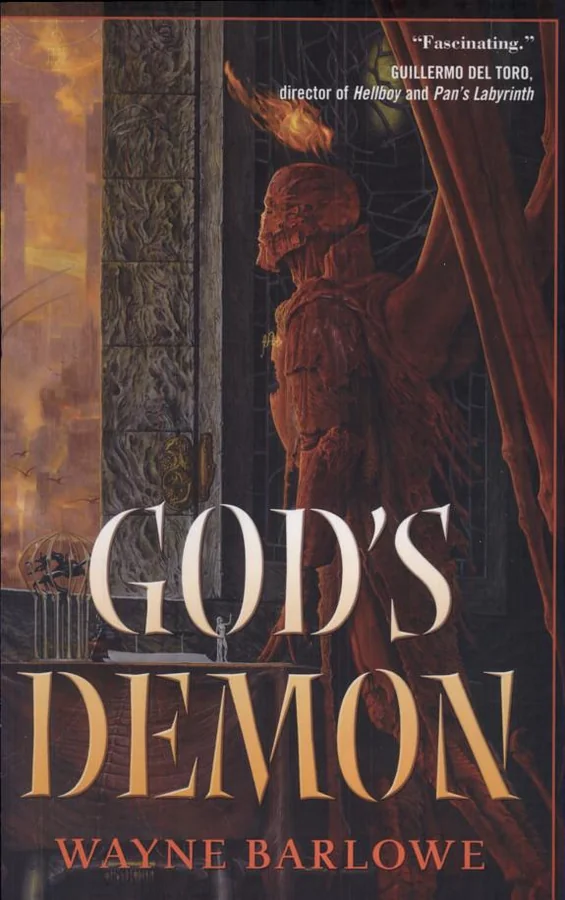
Wayne Barlowe's "God's Demon" attempts a grand, infernal epic, focusing on the demon prince Belial's struggle for autonomy. Barlowe's signature artistic vision is palpable, rendering the infernal planes with a stark, almost geological grandeur that few authors could match. The novel's strength lies in this unique visual and conceptual foundation, painting a picture of a cosmos far removed from conventional human experience. However, the narrative momentum occasionally falters, weighed down by extensive theological exposition that, while fascinating, can slow the pacing. The central conflict, while conceptually rich, sometimes feels more like an abstract debate than a visceral struggle. The book excels when it allows its alien cosmology to speak for itself, particularly in its depiction of the creation of new celestial bodies by the fallen. Ultimately, "God's Demon" is a visually stunning and intellectually ambitious work that remains more compelling in its premise and imagery than in its outright storytelling.
📝 Description
80
Wayne Barlowe's 2007 novel, God's Demon, charts the existence of a demon prince after his fall.
Wayne Barlowe's "God's Demon," published in 2007, presents a narrative that blends dark fantasy with theological speculation. The story follows a powerful demon prince after his fall, examining themes of rebellion, spiritual dominion, and the structure of cosmic order. Barlowe's distinctive visual style shapes the stark imagery of its otherworldly settings and characters.
This novel is for readers who appreciate imaginative world-building and narratives that engage with complex philosophical and religious ideas. It will appeal to those interested in fallen angels, infernal hierarchies, and beings operating outside human morality. Readers wanting a story with a unique aesthetic and a contemplative tone, rather than direct action, will find "God's Demon" a fitting choice.
Published in 2007, "God's Demon" engages with theological fiction and mythic archetypes. While distinct from late 19th-century occult movements, it connects to longer traditions of demonology, similar to texts like the Pseudomonarchia Daemonum (1577). The book considers the Great Chain of Being as it applies to angelic and demonic realms, placing it within a lineage of speculative fiction that examines religious and supernatural structures.
💡 Why Read This Book?
• Gain a unique perspective on cosmic hierarchies and the nature of rebellion, directly engaging with the concepts of angelic fall and demonic dominion as depicted in "God's Demon." • Experience Barlowe's distinctive artistic vision translated into prose, offering a visual and imaginative depth rarely found in speculative fiction, particularly concerning his depictions of infernal landscapes. • Understand the motivations behind the creation of new spiritual orders within a fallen cosmos, as explored through the protagonist Belial's actions and philosophical outlook in the narrative.
⭐ Reader Reviews
Honest opinions from readers who have explored this book.
❓ Frequently Asked Questions
What is the primary subject matter of Wayne Barlowe's 'God's Demon'?
The novel chronicles the existence and philosophical struggles of a demon prince, Belial, after the fall of Lucifer. It explores themes of rebellion, power, and the creation of new spiritual orders within an infernal cosmology.
When was 'God's Demon' by Wayne Barlowe first published?
Wayne Barlowe's 'God's Demon' was first published on October 16, 2007.
Does 'God's Demon' have any connections to religious texts or traditions?
While a work of fiction, it draws inspiration from Christian demonology and angelology, reinterpreting these traditions through Barlowe's unique artistic and philosophical lens, particularly concerning fallen angelic beings.
What makes the world-building in 'God's Demon' stand out?
Barlowe's background as an artist heavily influences the novel, creating a visually striking and conceptually alien infernal realm. The depiction of physical laws and societal structures for demons is highly original.
Is 'God's Demon' a sequel or part of a series?
No, 'God's Demon' is a standalone novel. While Barlowe has explored similar themes and artistic concepts in other works like 'Barlowe's Inferno,' this book functions as a self-contained narrative.
What is the overall tone of 'God's Demon'?
The tone is largely speculative and philosophical, with elements of dark fantasy. It's contemplative and often stark, focusing on grand cosmic ideas and the inner lives of powerful, non-human entities.
🔮 Key Themes & Symbolism
Cosmic Hierarchy and Rebellion
The novel meticulously details a hierarchical structure within the demonic realms, echoing but subverting concepts found in traditional angelology and demonology. It explores the motivations behind rebellion against established cosmic order, not as mere chaos, but as a complex struggle for autonomy and the creation of new spiritual frameworks. Belial's narrative arc questions the nature of divine authority and the legitimacy of imposed structures, presenting a nuanced view of defiance beyond simple evil.
The Nature of Dominion
Central to 'God's Demon' is an examination of what it means to rule and to be ruled. Barlowe presents a vision where dominion is not solely about power, but also about creation, influence, and the establishment of existential order. The narrative contrasts the static power of the established divine order with the dynamic, often destructive, force of those who seek to forge their own domains. This theme is explored through the actions and philosophies of the fallen angels and their successors.
Existential Freedom and Creation
The book delves into the desire for existential freedom among beings bound by ancient decrees. Belial's quest is not just for power, but for the liberty to define existence and meaning independently. This leads to the concept of creating new worlds and spiritual realities, a profound act of will that mirrors divine creation but emerges from a place of perceived subjugation. The narrative posits that true existence might lie in the act of self-creation.
The Aesthetics of the Infernal
Wayne Barlowe's artistic background heavily informs the novel's depiction of the infernal. The book presents a unique aesthetic for hell and its inhabitants, moving beyond stereotypical imagery. It emphasizes a stark, often alien, beauty characterized by strange anatomies, bizarre landscapes, and an overall sense of cosmic grandeur. This visual language serves to underscore the otherness of the demonic and its departure from earthly or celestial norms.
💬 Memorable Quotes
“The void answered him with the slow, inevitable grinding of creation.”
— This phrase captures the essence of Barlowe's infernal cosmology, where even the absence of established order possesses a dynamic, almost physical presence that facilitates the emergence of new realities.
“He was a prince among the fallen, a being forged in defiance.”
— This highlights the central character's status and inherent nature. It speaks to the genesis of his identity not from divine decree, but from active opposition to it.
“Dominion required more than mere subjugation; it demanded the shaping of existence itself.”
— This interpretation of power emphasizes creation and influence over brute force, suggesting that true rule involves imposing one's will upon the very fabric of reality.
“The Great Chain of Being had been fractured, and new links were now being forged in the abyss.”
— This concept illustrates the disruption of established cosmic order and the subsequent, active construction of new hierarchies and realities from the remnants of the old.
“Stars were but dust scattered by the breath of forgotten gods.”
— This poetic line evokes a sense of immense cosmic scale and the ephemeral nature of even celestial bodies, suggesting a reality far older and stranger than commonly perceived.
🌙 Esoteric Significance
Tradition
While "God's Demon" is a work of fiction, it engages with themes resonant within Gnostic and certain Kabbalistic traditions concerning the nature of creation, rebellion against a flawed demiurge, and the establishment of spiritual orders outside a primary divine authority. It reinterprets the Christian narrative of the Fall, not as a simple moral failing, but as a catalyst for existential independence and the creation of alternative cosmic structures.
Symbolism
The 'Great Chain of Being,' a concept central to Western thought from antiquity through the Renaissance, is here inverted and fractured. The 'Abyss' serves as a symbol for primordial chaos and potential, a canvas upon which new realities are painted by the fallen. 'Dominion' itself becomes a symbol for the act of imposing meaning and order, whether divine or self-ordained, upon existence.
Modern Relevance
Contemporary thinkers and artists exploring transhumanism, radical autonomy, and the creation of artificial consciousness might find parallels in Belial's drive to forge new existence. Barlowe's work continues to inspire those interested in deconstructing traditional religious narratives and exploring the philosophical implications of cosmic power structures in speculative fiction and art.
👥 Who Should Read This Book
• Readers interested in speculative theology and cosmology, particularly those who enjoy exploring alternative interpretations of angelic and demonic lore beyond conventional religious dogma. • Fans of Wayne Barlowe's distinctive artistic style, seeking to experience his visual imagination translated into a narrative form with rich, otherworldly descriptions. • Students of comparative mythology and religion, looking for a modern fictional work that engages with archetypal figures and cosmic narratives in a novel and imaginative way.
📜 Historical Context
Published in 2007, Wayne Barlowe's "God's Demon" arrived in a literary landscape where dark fantasy and theological explorations in fiction were experiencing a resurgence. While not directly tied to the late 19th-century occult revivalist movements like Theosophy or the Hermetic Order of the Golden Dawn, Barlowe's work taps into a perennial fascination with fallen angels and infernal hierarchies that has roots stretching back to medieval demonological texts like the Pseudomonarchia Daemonum (1577). In the contemporary speculative fiction sphere, it can be seen as a counterpoint to more human-centric fantasy, engaging with grand, abstract theological concepts. Unlike the more esoteric treatises of figures like Aleister Crowley, Barlowe's approach is narrative-driven, using his artistic vision to flesh out a cosmologically coherent, albeit fictional, infernal existence. The book's reception was largely within speculative fiction circles, appreciating its ambitious scope and unique visual imagination.
📔 Journal Prompts
Belial's quest for autonomy: What does it mean to forge one's own existence outside established hierarchies?
The nature of dominion: Reflect on the distinction between ruling through force and ruling through creation.
The fractured Great Chain of Being: How might alternative cosmic orders emerge from chaos?
Infernal aesthetics: Consider the visual language used to depict the demonic realms in the book.
The void as a creative force: Explore the concept of potentiality within emptiness as presented in the narrative.
🗂️ Glossary
The Fall
Refers to the biblical narrative of Lucifer and his angels being cast out of Heaven. In 'God's Demon,' this event is recontextualized as the catalyst for the development of independent demonic realms and philosophies.
Demon Prince
A high-ranking demonic entity, often possessing significant authority and influence within the infernal hierarchy. Belial is presented as such a figure, striving for greater autonomy.
Great Chain of Being
A hierarchical structure of all matter and life, believed to have been decreed by God. The novel explores its disruption and the subsequent creation of new, often infernal, chains.
Infernal Cosmology
The system of beliefs and concepts describing the structure, nature, and inhabitants of hell or the demonic realms. Barlowe's work presents a unique and detailed infernal cosmology.
Dominion
In the context of the book, dominion signifies not just power or rule, but the act of shaping and ordering existence according to one's will, often through creation.
The Abyss
Often depicted as a primordial, chaotic void or the deepest part of hell. In 'God's Demon,' it functions as a space of potential from which new realities can be formed.
Existential Freedom
The philosophical concept of radical freedom and self-determination. The novel explores this desire among beings traditionally bound by divine or infernal decree.