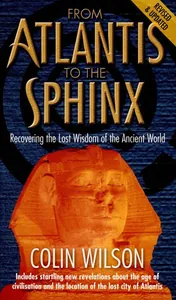
From Atlantis to the Sphinx

 71
71

From Atlantis to the Sphinx
Colin Wilson's From Atlantis to the Sphinx (2004) tackles the grand sweep of human history through the lens of esoteric possibility, a familiar territory for the author. Wilson’s strength lies in his relentless pursuit of connections, linking ancient myths and archaeological anomalies to theories of consciousness and forgotten civilizations. He presents a compelling argument for viewing historical enigmas not as isolated puzzles but as facets of a deeper, perhaps psychic, human heritage. One particularly engaging thread concerns the potential for widespread telepathic or precognitive abilities in antiquity, a concept he explores with characteristic gusto. However, the book occasionally suffers from a lack of rigorous academic grounding, often presenting speculation as established fact without sufficient evidential support. While Wilson’s enthusiasm is infectious, the sheer breadth of topics covered can sometimes feel overwhelming, lacking the focused depth found in more specialized studies. Nevertheless, for readers accustomed to Wilson's unique approach, it offers a stimulating, if sometimes unfocused, exploration of humanity's most enduring mysteries.
📝 Description
71
### What It Is
From Atlantis to the Sphinx presents Colin Wilson's extensive research into the nature of consciousness and its connection to historical enigmas. Published in 2004, the book synthesizes findings from archaeology, psychology, and paranormal research to explore persistent mysteries of human civilization. Wilson examines the possibility of lost civilizations, ancient astronaut theories, and the roots of myth, seeking a unified understanding of humanity's past and its potential future.
### Who It's For
This work is intended for readers fascinated by the intersection of history, myth, and unexplained phenomena. It appeals to those who question conventional historical narratives and are interested in alternative explanations for human origins and societal development. Individuals drawn to Colin Wilson's broader work on altered states of consciousness, the paranormal, and the nature of reality will find familiar themes explored through a historical lens.
### Historical Context
The book emerges from a long tradition of speculative history and esoteric inquiry, building upon the work of figures like Ignatius Donnelly and Helena Blavatsky. Wilson's exploration of Atlantis and ancient mysteries places him within a lineage of thinkers who sought pre-diluvian knowledge and alternative timelines for human development. His synthesis of anecdotal evidence, psychological theory, and historical speculation reflects a post-World War II intellectual climate increasingly open to exploring the frontiers of human knowledge and the subconscious.
### Key Concepts
Central to the book is the concept of 'Lapsarian' humanity – a humanity that has fallen from a higher state of awareness, with lost civilizations like Atlantis representing remnants of this former glory. Wilson explores the idea that myths and legends are not mere stories but encoded memories of advanced ancient cultures and their interaction with psychic phenomena. He also examines 'The Outsider' archetype, suggesting that individuals who perceive these hidden realities are often ostracized but hold keys to understanding consciousness.
💡 Why Read This Book?
• Understand the concept of Lapsarian humanity, theorizing a lost state of consciousness that underlies myths of golden ages and vanished civilizations, offering a unique perspective on human potential. • Explore the historical context of Atlantis and other ancient mysteries as potentially encoded memories of advanced societies, a perspective informed by 20th-century esoteric thought and archaeology. • Examine Colin Wilson's theories on the 'Outsider' archetype and its connection to individuals who perceive hidden realities, providing insight into the nature of intuition and subjective experience.
⭐ Reader Reviews
Honest opinions from readers who have explored this book.
❓ Frequently Asked Questions
What is Colin Wilson's 'Lapsarian' concept in From Atlantis to the Sphinx?
Wilson's 'Lapsarian' concept posits that humanity has fallen from a higher state of awareness or consciousness, with lost civilizations like Atlantis potentially representing remnants of this former, more advanced state.
Does From Atlantis to the Sphinx discuss archaeological evidence for Atlantis?
The book discusses various theories and interpretations of archaeological findings and ancient texts that proponents, including Wilson, suggest could point to the existence of Atlantis or similar advanced ancient cultures.
What role does consciousness play in Colin Wilson's exploration of ancient mysteries?
Consciousness is central; Wilson explores how altered states, psychic phenomena, and collective memory might explain ancient myths, megalithic constructions, and the persistence of certain esoteric traditions.
When was From Atlantis to the Sphinx first published?
From Atlantis to the Sphinx was first published in 2004.
What other authors or ideas does Colin Wilson engage with in this book?
Wilson engages with a range of thinkers and ideas, often referencing figures like Ignatius Donnelly, Helena Blavatsky, and concepts from psychology and paranormal research to support his arguments.
Is this book a factual account of Atlantis?
No, From Atlantis to the Sphinx is an exploration of esoteric theories and speculative history regarding Atlantis and other ancient mysteries, rather than a strictly factual historical account.
🔮 Key Themes & Symbolism
Lost Civilizations and Ancient Wisdom
The book posits that myths of lost continents and golden ages, such as Atlantis, are not mere fables but fragmented memories of advanced prehistoric societies. Wilson explores the possibility that these civilizations possessed a deeper understanding of consciousness and the universe, which has been lost to modern humanity. He examines various geographical and archaeological theories about Atlantis, suggesting that its legend serves as a persistent archetype for humanity's forgotten past and potential future evolution, linking it to a broader pattern of cyclical rise and fall in human development.
Consciousness and Psychic Phenomena
A core theme is the exploration of human consciousness beyond its conventional, materialist understanding. Wilson investigates the potential for latent psychic abilities, such as telepathy and precognition, to have been more prevalent and integrated into ancient societies. He suggests that anomalies in history and mythology might be explained by the operation of these deeper mental faculties, which modern humans have largely suppressed or forgotten. The book seeks to demonstrate a connection between altered states of consciousness and a more profound grasp of reality.
The Outsider Archetype
Wilson revisits his concept of 'The Outsider' – individuals who perceive reality differently and often feel alienated from mainstream society. In the context of ancient mysteries, these 'outsiders' are presented as those who have retained or rediscovered fragments of ancient wisdom or possess heightened intuition. Their experiences, often dismissed by conventional thought, are framed as vital clues to understanding the esoteric currents that have shaped human history and consciousness, suggesting a recurring pattern of visionary individuals.
Mythology as Encoded History
The book proposes that ancient myths, legends, and religious narratives are not just symbolic stories but contain encoded information about humanity's true origins and history. Wilson analyzes recurring motifs across disparate cultures, arguing they point to shared experiences or knowledge transmitted from a common, ancient source. He views these myths as a form of collective memory, preserving insights into pre-history, lost technologies, and fundamental truths about existence that transcend simple allegorical interpretation.
💬 Memorable Quotes
“Myths and legends are not just fairy tales but echoes of a forgotten past.”
— This paraphrased concept highlights Wilson's view that ancient stories hold literal or symbolic truths about lost civilizations and advanced knowledge, serving as fragmented historical records.
“Humanity has experienced a 'fall' from a higher state of awareness.”
— This captures the essence of Wilson's 'Lapsarian' theory, suggesting a decline in consciousness and perception from a previous, more enlightened era, which he links to the loss of ancient wisdom.
“The 'Outsider' perceives realities hidden from the ordinary mind.”
— This interpretation focuses on Wilson's recurring theme of the alienated individual whose unique perception offers insights into deeper truths about consciousness and existence.
“Ancient ruins and symbols may be keys to forgotten technologies or knowledge.”
— This paraphrased idea reflects Wilson's approach to interpreting archaeological and symbolic evidence not just as relics, but as potential indicators of sophisticated ancient capabilities.
“The exploration of Atlantis suggests a continuity of human potential across vast timescales.”
— This interpretation emphasizes Wilson's belief that the legends of Atlantis point to enduring human capacities and a history far more complex than mainstream archaeology accepts.
🌙 Esoteric Significance
Tradition
Wilson's work draws heavily from the Western Esoteric Tradition, particularly its 19th and 20th-century manifestations influenced by Theosophy and general occultism. It aligns with the Hermetic principle of 'As Above, So Below,' applying it to historical epochs and the human psyche. His exploration of lost civilizations and psychic evolution also echoes Gnostic ideas of a fallen or obscured primal knowledge. Wilson departs from strict adherence to any single lineage, instead forging a syncretic path that prioritizes subjective experience and the potential for radical human transformation.
Symbolism
The book frequently engages with symbols like the Sphinx and pyramids, often interpreted as remnants of advanced ancient civilizations holding keys to cosmic or psychological truths. The Sphinx, as a composite creature, can symbolize the integration of human and animal consciousness, or the enigmatic nature of forgotten knowledge bridging disparate eras. Atlantis itself functions as a powerful symbol of lost potential, a utopian or advanced society whose decline serves as a cautionary tale and a beacon for humanity's aspirations toward higher consciousness.
Modern Relevance
Contemporary thinkers in consciousness studies, archetypal psychology, and alternative history circles continue to reference Colin Wilson's expansive research. His emphasis on subjective experience and the potential for expanded awareness resonates with modern trends in mindfulness, transpersonal psychology, and interest in ancient astronaut theories. While specific claims about Atlantis may be debated, Wilson's exploration of the human need to find meaning in history and the persistence of myth provides a framework for understanding enduring esoteric questions today.
👥 Who Should Read This Book
• Readers interested in Colin Wilson's broader philosophical inquiries into human potential and consciousness, seeking to understand how these themes connect to historical mysteries. • Enthusiasts of speculative history and ancient civilizations, particularly those drawn to the Atlantis legend and theories of lost advanced cultures. • Individuals exploring the relationship between myth, psychology, and the nature of reality, who appreciate a synthesis of esoteric thought and historical inquiry.
📜 Historical Context
Published in 2004, From Atlantis to the Sphinx emerged during a period of renewed interest in speculative history and alternative theories of human origins, fueled by figures like Graham Hancock and the growing accessibility of ancient texts online. Colin Wilson, already established for his work on existentialism and the paranormal, synthesized ideas that drew from earlier esoteric traditions, notably Theosophy and the theories of Ignatius Donnelly, who popularized the Atlantis myth in the late 19th century. Wilson’s approach stood in contrast to mainstream archaeological and historical consensus, which largely dismissed Atlantis as myth. His work engaged with the burgeoning field of consciousness studies and fringe archaeology, positioning him alongside contemporaries exploring similar themes, though often with less emphasis on psychological interpretation. While not receiving widespread academic acclaim, Wilson's prolific output and unique synthesis resonated with a dedicated readership interested in challenging conventional narratives.
📔 Journal Prompts
The concept of Lapsarian humanity and its echoes in modern dissatisfaction.
Symbolism of the Sphinx across different cultures and its potential meanings.
Personal experiences of 'Outsider' perception and their connection to intuition.
Interpreting ancient myths not just as stories, but as potential records of lost knowledge.
The possibility of Atlantis as a metaphor for lost human potential.
🗂️ Glossary
Lapsarian Humanity
A term coined by Colin Wilson to describe humanity's perceived 'fall' from a higher state of consciousness or awareness, suggesting a loss of ancient knowledge and psychic abilities.
The Outsider
A concept explored extensively by Wilson, referring to individuals who perceive reality differently from the norm, often feeling alienated but possessing unique insights into deeper truths.
Atlantis
A mythical island continent, often depicted as a highly advanced civilization that predates recorded history and was destroyed by a cataclysm, frequently discussed in esoteric and speculative literature.
Esoteric
Relating to or concerned with the occult, mystical, or supernatural; intended for or understood by only a small number of people with a specialized knowledge or interest.
Psychic Phenomena
Events or abilities that appear to transcend the known laws of physics, such as telepathy, clairvoyance, precognition, and psychokinesis, often explored in relation to consciousness.
Mythopoeia
The creation of myths or a mythical framework; in this context, the interpretation of myths as potentially containing historical or psychological truths beyond simple allegory.
Prehistory
The period of human history before the advent of writing and written records, often the subject of speculative theories regarding lost civilizations and ancient knowledge.