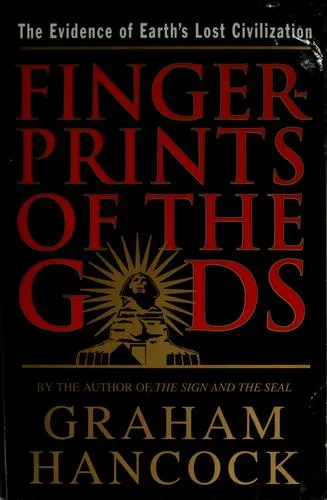
Fingerprints of the Gods
 83
83

Fingerprints of the Gods
Graham Hancock's Fingerprints of the Gods persistently challenges the established timeline of human civilization, a stance that has always invited both fervent support and sharp criticism. The book's strength lies in its ambitious synthesis of diverse fields—archaeology, geology, mythology, and astronomy—to construct a compelling narrative of a forgotten global civilization. Hancock's particular focus on the Younger Dryas period (roughly 12,900 to 11,700 years ago) as a crucial, cataclysmic turning point is a recurring and potent theme. However, the work's primary limitation remains its reliance on selective interpretation of evidence and its tendency to present hypotheses as near-certainties without fully addressing counter-arguments from mainstream academia. A memorable passage involves Hancock's analysis of the sophisticated astronomical alignments found at sites like the Giza plateau, which he argues point to an advanced knowledge base far older than currently accepted.
📝 Description
83
### What It Is
Fingerprints of the Gods, first published in 2017, presents a controversial re-examination of human history. Graham Hancock posits that a sophisticated global civilization existed tens of thousands of years ago, only to be wiped out by a cataclysmic event. He argues that the surviving elite carried the knowledge of this lost epoch, influencing the development of later cultures and mythologies worldwide.
### Who It's For
This work is intended for readers who question conventional historical narratives and are open to exploring alternative theories about humanity's past. It appeals to those interested in archaeology, ancient mysteries, comparative mythology, and the possibility of pre-Ice Age advanced societies. It’s for the intellectually curious who enjoy challenging established paradigms.
### Historical Context
The book engages with a long tradition of speculative history and alternative archaeology. Hancock's theories echo earlier ideas from figures like Ignatius Donnelly, who in his 1882 book Atlantis: The Antediluvian World proposed a lost continent as the origin of ancient civilizations. Hancock's work emerged in a period of renewed interest in ancient astronaut theories and pre-diluvian myths, often drawing on geological evidence and reinterpretations of ancient texts.
### Key Concepts
Hancock explores the concept of a global flood narrative as a literal historical event rather than a myth. He examines evidence from ancient sites like Göbekli Tepe, suggesting it predates accepted timelines for complex construction. The work also scrutinizes astronomical alignments in megalithic structures and proposes a 'Younger Dryas impact hypothesis' as the potential cataclysmic event that ended the last Ice Age and destroyed this advanced civilization.
💡 Why Read This Book?
• Learn about the Younger Dryas impact hypothesis, a specific theory positing a cosmic event around 12,900 years ago that Hancock argues reset human civilization, offering a unique explanation for global myths of destruction. • Gain an alternative perspective on the age and purpose of megalithic sites, such as the enigmatic Göbekli Tepe, by examining Hancock's interpretation of their construction and placement. • Understand how Hancock connects widespread flood myths across disparate cultures to a potential single, ancient global catastrophe, providing a novel framework for comparative mythology.
⭐ Reader Reviews
Honest opinions from readers who have explored this book.
❓ Frequently Asked Questions
What is the central argument of Graham Hancock's Fingerprints of the Gods?
The book argues that a highly advanced global civilization existed before the end of the last Ice Age, around 12,900 years ago, and was destroyed by a cataclysmic event, with survivors passing down their knowledge to nascent cultures.
What evidence does Hancock present for a lost civilization?
He cites evidence such as advanced astronomical alignments in ancient structures, geological data supporting the Younger Dryas impact hypothesis, and reinterpretations of flood myths and ancient iconography from cultures worldwide.
Which ancient sites are discussed in detail?
Prominent sites include Göbekli Tepe in Turkey, the pyramids of Giza in Egypt, and various megalithic structures found across the globe, which Hancock suggests are remnants of this earlier civilization.
What is the 'Younger Dryas impact hypothesis' mentioned in the book?
This hypothesis suggests that a comet or asteroid impact around 12,900 years ago triggered the rapid climate shifts of the Younger Dryas period, potentially causing the demise of advanced prehistoric societies.
How does Fingerprints of the Gods relate to Atlantis?
Hancock's theory posits a global civilization that predates the mythical Atlantis, suggesting that the Atlantis story might be a fragmented memory of this earlier, more widespread advanced culture.
Has Hancock's work been accepted by mainstream archaeology?
No, Hancock's theories are largely considered fringe by the mainstream archaeological and historical communities, which often point to a lack of definitive evidence and alternative explanations for the phenomena he discusses.
🔮 Key Themes & Symbolism
Pre-Ice Age Civilization
The core concept is the existence of a sophisticated global civilization that thrived tens of thousands of years ago, prior to the end of the last Ice Age. Hancock argues that this civilization possessed advanced knowledge in areas like astronomy and engineering, evidenced by megalithic structures and astronomical alignments found globally. He suggests that this epoch was deliberately obscured or forgotten in mainstream historical accounts, presenting a radical alternative to established timelines of human development and cultural diffusion.
The Younger Dryas Cataclysm
Hancock heavily emphasizes the Younger Dryas period, a time of abrupt climate change occurring roughly between 12,900 and 11,700 years ago. He proposes that a cosmic impact event, such as a comet fragment, was the catalyst for this rapid cooling and subsequent global devastation. This cataclysm, according to his theory, wiped out the advanced civilization, leaving behind only fragmented myths and enigmatic ruins that hint at its former glory.
Global Flood Narratives
The book examines the prevalence of flood myths across diverse and geographically separated ancient cultures. Hancock interprets these widespread stories not as mere allegories but as collective memories of a literal, global deluge caused by the cataclysmic event ending the Ice Age. He posits that survivors of this disaster passed down the knowledge of their lost world, influencing the formation of subsequent civilizations like those of Egypt and Mesopotamia.
Ancient Astronomical Knowledge
A significant theme is the sophisticated astronomical understanding attributed to this lost civilization. Hancock analyzes the precise celestial alignments of ancient sites like the Pyramids of Giza and Stonehenge, arguing that their construction required knowledge far beyond what is typically credited to early humans. This advanced celestial awareness, he suggests, was crucial for their civilization's operation and was passed down through generations.
💬 Memorable Quotes
“The Earth is a library of forgotten histories.”
— This encapsulates Hancock's view that remnants of lost civilizations are physically present in the world's ancient sites and geological records, waiting to be rediscovered and interpreted correctly.
“Myths are the distorted echoes of historical truth.”
— Hancock suggests that ancient myths, particularly those involving floods and great destructions, are not pure fantasy but corrupted memories of real, cataclysmic events that ended advanced prehistoric societies.
“Göbekli Tepe challenges the established timeline of civilization.”
— This highlights a key piece of evidence Hancock uses, arguing that the immense age and sophisticated construction of this site in Turkey indicate that organized, monumental building predates current archaeological consensus.
“The evidence for a lost world is written in stone and stars.”
— This phrase points to Hancock's method of seeking proof in both physical ruins (stone) and astronomical alignments (stars) to support his theory of an advanced prehistoric global civilization.
“The end of the Ice Age was a reset for humanity.”
— This refers to the Younger Dryas event, which Hancock argues was so catastrophic that it effectively ended one era of human civilization and forced survivors to rebuild from a much lower technological base.
🌙 Esoteric Significance
Tradition
While not strictly adhering to a single esoteric lineage, Hancock's work resonates with Gnostic and Hermetic themes of lost primordial knowledge and cyclical destruction and rebirth. It echoes the idea of hidden histories and esoteric wisdom passed down through select groups, challenging the exoteric, linear progression of human history presented by conventional scholarship. The narrative of a fallen golden age and surviving initiates aligns with archetypal patterns found in many mystical traditions.
Symbolism
The book frequently engages with the symbolism of the serpent, often associated with ancient wisdom and cyclical time in various mythologies, and the Ouroboros, representing eternity and renewal. The concept of the 'World Tree' or axis mundi also appears implicitly, symbolizing the connection between the lost high civilization and the subsequent cultures that inherited its fragmented legacy, often represented by megalithic structures acting as cosmic anchors.
Modern Relevance
Hancock's work continues to influence contemporary alternative history circles, pseudoarchaeology, and fringe science communities. Thinkers exploring consciousness, ancient technologies, and suppressed histories often cite Fingerprints of the Gods as a foundational text. Its ideas are revisited in online forums, documentaries, and by authors proposing theories about ancient alien intervention or earth mysteries, keeping the discourse on lost civilizations alive in popular culture.
👥 Who Should Read This Book
• Enthusiasts of alternative history and archaeology who are eager to explore theories that challenge mainstream consensus about human origins and development. • Readers interested in comparative mythology and ancient flood narratives, seeking a framework that connects global myths to a potential shared historical event. • Individuals curious about the possibility of advanced prehistoric civilizations and the Younger Dryas impact hypothesis, who enjoy speculative yet evidence-based (from the author's perspective) arguments.
📜 Historical Context
Published in 2017, Fingerprints of the Gods arrived during a period of intense popular interest in alternative history and ancient mysteries, a trend fueled by the internet and a growing skepticism towards established narratives. Hancock's work tapped into existing discussions sparked by figures like Erich von Däniken and continued the legacy of early Atlantis theorists like Ignatius Donnelly, whose 1882 book Atlantis: The Antediluvian World proposed similar concepts. The book's reception was polarized; while it found a vast audience among those seeking alternative explanations, it was largely dismissed by mainstream archaeology, which often criticized its methodology and selective use of evidence. Competing schools of thought, such as the widely accepted diffusionist model of cultural development, directly contrasted with Hancock's proposals of a single, ancient global source.
📔 Journal Prompts
The concept of a lost global civilization before the Younger Dryas.
Göbekli Tepe's implications for human history.
Interpreting flood myths as historical memory.
The Younger Dryas impact hypothesis as a historical reset.
Evidence of advanced astronomical knowledge in ancient sites.
🗂️ Glossary
Younger Dryas
A period of abrupt climate change that occurred approximately 12,900 to 11,700 years ago, characterized by a rapid return to glacial conditions after a period of warming. Hancock suggests it was triggered by a cosmic impact.
Göbekli Tepe
An archaeological site in Turkey featuring massive carved stone pillars arranged in circles, dating back to around 9600-8200 BCE, challenging conventional timelines for sophisticated construction and organized religion.
Megalithic Structures
Large structures built from stone, often associated with prehistoric peoples. Examples include Stonehenge, Carnac, and the pyramids, which Hancock argues show evidence of advanced planning and astronomical alignment.
Flood Myths
Stories from various cultures describing a great deluge that destroyed much of humanity. Hancock posits these are collective memories of a real cataclysmic event.
Antediluvian World
Literally 'before the flood,' referring to the period and civilizations believed to have existed before a major biblical or global flood event, often associated with lost advanced cultures.
Obliquity
The angle of tilt of a planet's rotational axis relative to its orbital plane. Hancock discusses how ancient structures align with celestial phenomena related to obliquity changes.
Cataclysm
A violent natural upheaval, such as a flood or earthquake. Hancock uses this term to describe the event that he believes ended the last Ice Age and destroyed the advanced civilization.