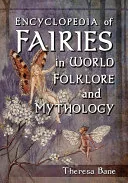
Encyclopedia of Fairies in World Folklore and Mythology
 82
82

Encyclopedia of Fairies in World Folklore and Mythology
Theresa Bane's *Encyclopedia of Fairies in World Folklore and Mythology* endeavors to be a comprehensive catalog, and in sheer volume, it succeeds. The breadth of its entries, spanning continents and belief systems, is genuinely impressive. However, as a critic steeped in the esoteric traditions, I find its approach leans more towards folklore taxonomy than a deep engagement with the spiritual or magical currents these beings represent. For instance, the entry on the Aos Sí, while noting their association with the Otherworld, doesn't fully explore the implications for Celtic shamanism or initiatory practices. The limitation lies in its encyclopedic, rather than interpretive, nature. It presents a vast collection of names and descriptions, but the connective tissue – the underlying energetic principles or the practical application of working with these entities – is less developed. The sheer scope is its greatest asset, providing an unparalleled resource for identifying and cross-referencing beings. Yet, for those seeking the animating spirit behind the folklore, the work offers a detailed map without fully illuminating the terrain. It remains a valuable, if somewhat detached, reference.
📝 Description
82
Published in 2013, Theresa Bane's encyclopedia details over 2,500 distinct fairy and nature spirit beings.
This encyclopedia catalogs more than 2,500 distinct fairy and nature spirit beings from global mythologies and religions. Entries, spanning from the A-senee-ki-waku of North America to the Zips of Central America and Mexico, present these creatures as significant entities within their cultural and spiritual frameworks. It is a valuable resource for researchers, folklorists, comparative mythologists, and practitioners of animism or nature-based spiritual paths. Those studying folklore, mythology, or seeking to deepen their connection with the natural world will find it useful.
The work systematically classifies and presents diverse supernatural beings, often referred to as 'fairies' or 'nature spirits.' It examines the roles these entities play in various belief systems, their perceived characteristics, and their interactions with humanity. The encyclopedia highlights the universality of belief in non-human intelligences and the varied forms these beliefs take across cultures and time.
Theresa Bane's work dialogues with earlier encyclopedic efforts in folklore, like those by Katharine Briggs, but expands the scope geographically and taxonomically. Its 2013 publication date aligns with a contemporary interest in folklore, mythology, and animistic perspectives, often explored in fields like ecopsychology and contemporary paganism.
This encyclopedia sits within the broader tradition of collecting and categorizing folkloric entities, a practice seen in works like Katharine Briggs's Dictionary of Fairies. It is particularly relevant to contemporary paganism and animistic traditions that seek to understand and engage with the perceived non-human intelligences of the natural world. By systematically cataloging these beings, Bane's work supports a scholarly and personal exploration of the diverse spiritual relationships humanity has held with the unseen.
💡 Why Read This Book?
• Gain an unparalleled breadth of knowledge on over 2,500 named fairy and nature spirit entities from global traditions, far exceeding typical folklore collections. • Understand the specific roles and characteristics attributed to beings like the Aos Sí of Ireland and the Tla-tlan-kwe of North America, offering concrete mythological examples. • Access a unique reference published in 2013, providing contemporary scholarship on beings previously scattered across disparate texts and oral traditions.
⭐ Reader Reviews
Honest opinions from readers who have explored this book.
❓ Frequently Asked Questions
What is the earliest documented mention of fairies covered in this encyclopedia?
The encyclopedia covers a vast array of beings, with many having roots in ancient mythologies. While specific early dates vary per entry, the work generally draws from traditions stretching back to antiquity, referencing early Mesopotamian or Egyptian beliefs alongside later European folklore.
Does the book differentiate between different types of nature spirits?
Yes, the encyclopedia systematically categorizes beings, differentiating between various classes of nature spirits, elemental beings, and folkloric entities that fall under the broad umbrella term 'fairy' across global cultures.
Are there entries on Slavic or Eastern European fairy traditions?
Absolutely. The work includes a wide geographical scope, featuring numerous entries on Slavic spirits, such as Vily or Rusalki, alongside traditions from Europe, Asia, Africa, and the Americas.
How does this encyclopedia differ from other folklore books?
Unlike general folklore collections, this book focuses exclusively on fairy and nature spirit beings, offering over 2,500 concise, alphabetized entries with extensive cross-referencing and global coverage.
Can this book be used for academic research on comparative mythology?
Yes, its comprehensive nature, detailed entries, and global scope make it a valuable resource for academic researchers in comparative mythology, folklore studies, and religious studies.
What is the approximate number of entries in the Encyclopedia of Fairies?
The encyclopedia features over 2,500 individual entries, cataloging a vast array of fairy and nature spirit beings from mythologies and religions worldwide.
🔮 Key Themes & Symbolism
Global Spirit Taxonomy
The work systematically classifies over 2,500 distinct fairy and nature spirit beings, moving beyond Western European archetypes to encompass a truly global perspective. It highlights how disparate cultures independently conceived of non-human intelligences inhabiting the natural world, from the elemental spirits of European lore to the ancestral spirits and land deities found in indigenous traditions worldwide. This broad catalog serves as a foundational text for understanding the universal human impulse to recognize and categorize the otherworldly inhabitants of existence.
Animism and Nature Reverence
Central to the encyclopedia is the implicit acknowledgment of animistic belief systems, where spirits and consciousness are perceived in natural phenomena and entities. By detailing beings like the A-senee-ki-waku or the various tree and water spirits, the book underscores the profound connection cultures have historically maintained with their environments. It provides a rich resource for studying the spiritual dimensions of nature, offering insights into practices and beliefs that venerate the living world and its unseen inhabitants.
Folklore as Spiritual System
This encyclopedia presents folklore not merely as quaint stories, but as integral components of historical spiritual and religious systems. Each entry, whether detailing the mischievous sprites of Germanic folklore or the powerful elemental beings of ancient traditions, illustrates the functional role these entities played in explaining the world, guiding human behavior, and facilitating spiritual interaction. It frames these beings as significant actors within the cosmological frameworks of their respective cultures.
The 'Otherworld' Concept
A recurring theme is the concept of an 'Otherworld'—a parallel realm or dimension inhabited by these supernatural beings. From the Celtic Otherworld associated with the Aos Sí to the spirit areas of indigenous mythologies, the encyclopedia maps these liminal spaces and their inhabitants. It explores the boundaries between the mundane and the magical, providing a detailed look at how different cultures conceptualized and interacted with these unseen domains and their powerful denizens.
💬 Memorable Quotes
Direct passages from the work, attributed to the author.
“Fairies have been revered and feared, sometimes simultaneously, throughout recorded history.”
— This foundational statement immediately sets the stage for understanding the dualistic nature of human perception towards these beings. It acknowledges the complex emotional and spiritual relationship humanity has historically held with the unseen, recognizing both awe and apprehension.
“More than 2,500 individual beings and species of fairy and nature spirits from a wide range of mythologies and religions from all over the globe.”
— This quantifiable claim highlights the sheer scope and ambition of the work, positioning it as an outstanding resource for anyone seeking comprehensive information on these entities across diverse cultural landscapes.
“Entries from the A-senee-ki-waku of northeastern North America to the Zips of Central America and Mexico.”
— This geographical spread demonstrates the encyclopedia's commitment to global coverage, illustrating that the concept of fairy or nature spirit is not confined to a single region but is a pervasive element in human belief systems worldwide.
“Concise entries.”
— This descriptor suggests that the book prioritizes accessibility and breadth over exhaustive, academic treatises on individual beings, making it a practical reference tool for quick consultation and comparison.
“Includes beings from a wide range of mythologies and religions.”
— This emphasizes the comparative and interdisciplinary nature of the work, positioning it as a valuable tool for scholars and enthusiasts interested in the intersection of folklore, mythology, and religious studies.
🌙 Esoteric Significance
Tradition
While not strictly adhering to a single esoteric lineage like Hermeticism or Kabbalah, this work functions as a foundational text for modern animistic, folkloric, and nature-based spiritual practices. It serves practitioners who engage with the spirit world as understood through indigenous traditions, Celtic reconstructionism, or various forms of witchcraft that recognize the agency and presence of nature spirits.
Symbolism
The encyclopedia implicitly explores the symbolism of nature itself as a carrier of spirit. Beings associated with specific flora (tree spirits), fauna (animal familiars), or natural phenomena (elementals, weather spirits) represent the personification of these forces. The very act of naming and classifying these entities can be seen as a symbolic way of engaging with, understanding, and potentially interacting with the unseen energies of the world.
Modern Relevance
Contemporary practitioners of witchcraft, shamanism, and animism draw heavily on such encyclopedic resources. Thinkers and groups exploring ecological spirituality, ecopsychology, and the concept of 'more-than-human' worlds find in Bane's work a catalog of recognized spiritual entities that validates and expands their understanding of the sentient natural world.
👥 Who Should Read This Book
• Researchers in comparative mythology and folklore seeking a comprehensive, alphabetically organized reference for a vast array of global spirit beings. • Practitioners of witchcraft, animism, and nature-based spiritual paths who wish to identify and understand the diverse folkloric entities they might encounter or wish to honor. • Authors and storytellers looking for detailed descriptions and origins of mythical beings to enrich their creative works with authentic folkloric elements.
📜 Historical Context
Published in 2013, Theresa Bane's *Encyclopedia of Fairies in World Folklore and Mythology* emerged during a period of renewed popular and academic interest in folklore, mythology, and esoteric traditions. It arrived in a landscape where scholars like Jacqueline Simpson had already made significant contributions to British and Irish folklore, and where contemporary paganism was exploring diverse spiritualities. Bane's work distinguished itself by its explicit global scope and its sheer volume, aiming to catalog beings far beyond the well-trodden paths of European fae lore. It can be seen as both a continuation of, and a significant expansion upon, earlier encyclopedic efforts. The 2013 publication date means it predates some of the more recent academic waves focusing on non-human personhood or decolonial approaches to folklore, offering a valuable snapshot of the field at that time.
📔 Journal Prompts
Consider the Aos Sí as described in the encyclopedia; how might their perceived nature influence a practitioner's approach to liminal spaces?
Reflect on the geographical diversity of fairy beings, from the Zips of Mexico to beings in Asian mythologies. What does this suggest about human interaction with the unseen?
Analyze the entry for a specific elemental spirit. What correspondences does this spirit have with natural forces and how might that inform a ritual practice?
Compare the descriptions of guardian spirits in two different cultures. What commonalities and differences emerge regarding their roles and powers?
Explore the concept of the 'Otherworld' as presented through various entries. How does the encyclopedia depict the boundaries and transitions between worlds?
🗂️ Glossary
A-senee-ki-waku
A specific type of fairy or nature spirit originating from the folklore of northeastern North America, representing the diverse indigenous spiritual beings cataloged in the work.
Zips
A classification of fairy or nature spirit found in the folklore of Central America and Mexico, illustrating the encyclopedia's broad geographical coverage.
Aos Sí
A term used in Irish folklore, often translated as 'people of the mounds' or 'fairies', referring to a supernatural race with significant roles in Irish mythology and belief systems.
Nature Spirits
A broad category encompassing entities believed to inhabit and govern natural elements, landscapes, flora, and fauna, distinct from human or divine beings.
Folklore
The traditional beliefs, customs, and stories of a community, passed through the generations by word of mouth or practice, often including accounts of supernatural beings.
Mythology
A collection of myths, especially one belonging to a particular religious or cultural tradition, often detailing the origins of the world and the deeds of deities and heroes.
Esoteric
Intended for or likely to be understood by only a small number of people with a specialized knowledge or interest, often relating to spiritual or mystical traditions.