Drewniana twierdza
 74
74

Drewniana twierdza
Andrzej Pilipiuk’s 'Drewniana twierdza' presents a fascinating, if somewhat unconventional, entry point into esoteric themes through the lens of Polish folklore. Its strength lies in its grounding of the mystical within a specific cultural landscape, avoiding the generic feel of some esoteric fiction. The narrative’s ability to weave in elements of the uncanny and the hidden, particularly concerning ancient beliefs and protective symbols, is commendable. However, the book’s esoteric elements are often subtle, embedded within character actions and setting descriptions rather than explicit exposition. This can make them feel less accessible to readers specifically seeking doctrinal explanations. A particularly striking concept involves the titular 'wooden fortress' as a symbol of resilience and preserved spirit against encroaching forces, a potent image that lingers. While not a direct manual, the work provides fertile ground for contemplating how spiritual defense operates within a cultural context. It offers a unique perspective, but requires the reader to actively discern the deeper currents beneath the surface narrative.
📝 Description
74
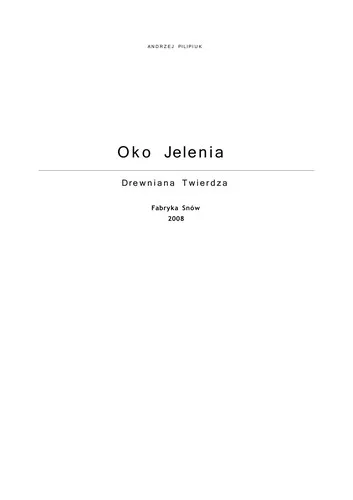
Andrzej Pilipiuk's 2008 novel 'Drewniana twierdza' uses Polish folklore to frame occult themes.
'Drewniana twierdza', Polish for 'Wooden Fortress', is a 2008 novel by Andrzej Pilipiuk. The book does not present esoteric doctrine directly, but it weaves in elements of mysticism, folklore, and the occult, all grounded in Polish culture. It builds a story that touches on themes common in esoteric literature, like the pursuit of hidden knowledge and the connections between the everyday world and the supernatural. Traditional beliefs and practices inform the story's settings and characters, offering a unique perspective on metaphysical ideas.
This novel suits readers interested in how esoteric ideas appear in non-Western stories. Those who enjoy fiction that includes Slavic mythology and a sense of mystery will find 'Drewniana twierdza' engaging. It appeals to people looking for narratives that depart from typical Western occult fiction and look into the spiritual aspects of specific cultures. Readers who like a mix of adventure, mystery, and a subtle examination of the unseen will appreciate Pilipiuk's writing.
Published in 2008, 'Drewniana twierdza' appeared during a time of renewed interest in national folklore and pre-Christian traditions in post-communist Eastern Europe. Pilipiuk often incorporates Polish history and mythology into his fiction, frequently setting his stories during periods of significant cultural shifts. This novel can be seen as part of a larger movement in Polish literature to revisit and reclaim national heritage, including its more mystical and less documented parts, as an alternative to the more common Western esoteric currents.
💡 Why Read This Book?
• Gain insight into how Slavic folklore intersects with esoteric concepts of spiritual protection, as exemplified by the symbolic 'wooden fortress' and its role in safeguarding hidden knowledge. • Understand the significance of place and natural elements in animistic beliefs, a core tenet in many ancient spiritual systems, as depicted through the narrative's interaction with its environment. • Explore the subtle manifestation of occult themes within a specific cultural context, moving beyond Western esoteric traditions to appreciate a unique blend of history, myth, and the supernatural.
⭐ Reader Reviews
Honest opinions from readers who have explored this book.
❓ Frequently Asked Questions
What does 'Drewniana twierdza' mean and how does it relate to the book's themes?
'Drewniana twierdza' translates from Polish to 'Wooden Fortress.' This title likely serves as a central metaphor, symbolizing a place of refuge, spiritual protection, or a repository for ancient, perhaps hidden, knowledge against external threats.
Is 'Drewniana twierdza' a factual historical account or a fictional narrative?
The book is a fictional narrative by Andrzej Pilipiuk, first published in 2008. While it draws heavily on Polish folklore and cultural history, it is not presented as a non-fiction historical text.
What kind of esoteric or mystical elements can I expect in the book?
Readers can expect elements rooted in Slavic mythology, animistic beliefs, and the symbolic power of nature and ancient structures. The mystical aspects are often subtle, embedded in the setting and character interactions rather than overt magical spells.
Who is Andrzej Pilipiuk and what is his typical writing style?
Andrzej Pilipiuk is a Polish author known for his works that often blend science fiction, fantasy, and historical elements, frequently incorporating Polish culture and mythology. His style can be direct and engaging, with a knack for creating atmospheric settings.
Does the book require prior knowledge of Polish folklore to understand?
While prior knowledge can enhance the experience, the narrative is designed to be accessible. Pilipiuk often integrates folklore elements in a way that provides context within the story itself, allowing new readers to engage with the themes.
When was 'Drewniana twierdza' first published?
The novel 'Drewniana twierdza' by Andrzej Pilipiuk was first published in 2008.
🔮 Key Themes & Symbolism
Slavic Folklore Integration
The narrative deeply embeds elements of Slavic mythology and folk beliefs, presenting them not merely as background but as active forces within the story. This includes references to traditional superstitions, local legends, and the spiritual significance attributed to natural landscapes and ancient structures. Pilipiuk uses these folkloric threads to construct a unique esoteric framework, distinct from more commonly explored Western traditions. The 'wooden fortress' itself can be seen as a symbol resonating with ancient protective charms and sanctified spaces found in various folk practices, highlighting the power of cultural narratives to hold deeper, often mystical, meanings.
Symbolism of Place and Protection
A central theme is the esoteric significance of place, particularly the concept of a 'wooden fortress' as a sanctuary. This motif explores ideas of spiritual defense, containment, and the preservation of the sacred or the hidden. The book suggests that certain locations, imbued with history or constructed with specific intent, can act as conduits for or barriers against unseen forces. This aligns with concepts in geomancy and traditional architecture where physical structures are designed to channel or repel energies, reflecting a worldview where the physical and metaphysical realms are intimately connected.
Animism and Natural Energies
The work implicitly engages with animistic perspectives, where natural elements—trees, land, water—possess inherent spiritual qualities or consciousness. Characters often interact with their environment in ways that suggest a recognition of these subtle energies. This perspective is crucial for understanding the underlying esoteric currents, implying that the material world is alive with unseen forces that can be perceived and, to some extent, influenced. The narrative uses these natural energies to build atmosphere and underscore the interconnectedness of all things, a fundamental tenet in many ancient esoteric systems.
Hidden Knowledge and Cultural Memory
The narrative hints at the existence of hidden knowledge passed down through generations, often preserved within cultural memory and folklore. The 'wooden fortress' could symbolize a repository for such wisdom, protected from those who would misuse or forget it. This theme aligns with esoteric traditions that emphasize the importance of preserving esoteric teachings and guarding them from profanation. Pilipiuk's approach suggests that this knowledge isn't necessarily found in formal texts but is woven into the fabric of community stories and ancestral practices.
💬 Memorable Quotes
“The wooden fortress stood against the encroaching shadows.”
— This phrase encapsulates the book's core symbolism: a representation of resilience, spiritual sanctuary, and the preservation of something vital against external threats or corruption.
“Old stones remember what young eyes forget.”
— This hints at the esoteric concept of imprints left on places or objects by past events and energies, suggesting that history and memory hold a tangible, almost sentient, power.
“The forest breathed secrets only the wind could carry.”
— This evokes animistic beliefs and the idea that nature itself is alive and communicates through subtle means, holding knowledge accessible only to those attuned to its rhythms.
“Within its walls, ancient ways still held sway.”
— This suggests the 'wooden fortress' is a place where traditional, perhaps mystical, practices and beliefs persist, protected from the erosion of modernity or external influence.
“Not all strength is forged in steel, but in roots.”
— An interpretation of the book's thematic focus on natural, enduring strength derived from connection to the earth and ancient traditions, rather than overt power or force.
🌙 Esoteric Significance
Tradition
The work draws implicitly from animistic traditions and folk magic prevalent in Slavic cultures, rather than a codified Western esoteric lineage like Hermeticism or Kabbalah. It reflects a worldview where the natural world is imbued with spirit and where ancient practices hold efficacy. This approach aligns with a broader, less organized stream of esoteric thought that emphasizes direct experience with nature and ancestral wisdom, often found in indigenous or folk spiritualities.
Symbolism
The titular 'Drewniana twierdza' (Wooden Fortress) symbolizes spiritual protection and a sanctuary for hidden knowledge, resonating with ancient protective charms and sacred spaces. Trees and forests themselves often function as symbols of life, wisdom, and connection to the earth's energies, embodying animistic reverence. Specific folklore figures or motifs, if present, would carry layers of meaning related to guardianship, transformation, or the boundary between worlds, common in shamanic and folk magic traditions.
Modern Relevance
Contemporary practitioners interested in folk magic, animism, and ecospirituality might find resonance in Pilipiuk's depiction of nature's inherent power and the efficacy of culturally embedded beliefs. Thinkers exploring the intersection of folklore and psychology, or those seeking alternatives to mainstream Western esoteric systems, could draw inspiration from how the book grounds mystical concepts in a specific cultural heritage. It speaks to a modern desire to reconnect with primal, nature-based spiritualities.
👥 Who Should Read This Book
• Readers interested in comparative mythology and folklore, particularly those seeking to understand Slavic traditions and their esoteric underpinnings. • Fiction enthusiasts who appreciate atmospheric storytelling that blends mystery, adventure, and subtle supernatural elements grounded in a specific cultural context. • Individuals exploring alternative esoteric paths who are curious about how spiritual concepts manifest outside of widely recognized Western traditions, looking for unique cultural expressions of the mystical.
📜 Historical Context
Published in 2008, 'Drewniana twierdza' emerged in a Poland experiencing a resurgence of interest in national identity and folklore following the fall of communism. Andrzej Pilipiuk's work often engages with this historical context, drawing on pre-Christian Slavic traditions and mythology. This period saw a broader European intellectual current of re-examining local mythologies as a counterpoint to globalization and the dominance of Western cultural narratives. While not directly engaging with specific esoteric societies, Pilipiuk's exploration of protective symbols and hidden knowledge taps into a timeless human fascination with the occult that persisted even through periods of suppression. His work can be seen as contributing to a contemporary Polish literary landscape where authors like Olga Tokarczuk were also exploring myth and history, though often with different philosophical underpinnings. The reception of such works typically involved appreciation for their cultural rootedness, sometimes alongside critiques of their speculative nature.
📔 Journal Prompts
The symbolic meaning of the 'Drewniana twierdza' in relation to personal spiritual sanctuaries.
Reflect on the animistic portrayal of the natural environment and its perceived consciousness.
Consider the preservation of ancient ways within the narrative's setting.
Analyze the protective qualities attributed to natural elements or structures.
Explore the concept of hidden knowledge passed through cultural memory.
🗂️ Glossary
Drewniana twierdza
Polish for 'Wooden Fortress.' In the context of the book, it likely symbolizes a place of spiritual protection, refuge, or a repository for hidden knowledge.
Slavic Folklore
The body of traditional beliefs, customs, stories, and practices originating from Slavic peoples, often featuring mythical creatures, nature spirits, and ancient rituals.
Animism
The belief that natural objects, phenomena, and the universe itself possess souls or consciousness; a worldview where the spiritual and material realms are interconnected.
Esoteric
Relating to or accessible only by a select group of people with a specialized knowledge or interest; pertaining to hidden, inner, or mystical teachings.
Geomancy
A method of divination based on the interpretation of patterns formed by the tossing of earth or stones, or by the lines and figures formed in the earth; also, the art of placing buildings harmoniously upon the land.
Cultural Memory
The collective memory of shared experiences, traditions, and knowledge passed down within a society or group, often through stories, rituals, and symbols.
Folk Magic
Magic practiced by common people, often drawing on local beliefs, herbalism, and traditional rituals passed down orally within a community.