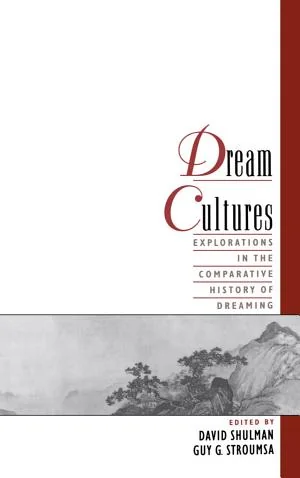
Dream Cultures
 83
83

Dream Cultures
David Dean Shulman and Guy G. Stroumsa's "Dream Cultures" presents a commendable effort to map the varied landscapes of dream interpretation across human history. Its strength lies in the sheer breadth of its comparative approach, drawing from disparate traditions like ancient Chinese dream manuals and Greco-Roman antiquity. The work effectively illustrates how cultural contexts imbue dreams with distinct meanings. However, the sheer volume of material can sometimes lead to a somewhat detached analysis, occasionally sacrificing narrative flow for encyclopedic coverage. A particularly striking passage details the systematic classification of dream omens in Mesopotamian cultures, which starkly contrasts with the more introspective dream analysis found in later Western traditions. Ultimately, it serves as a valuable, if dense, compendium for understanding the historical variability of dream perception.
📝 Description
83
### The Dreamscape Across Civilizations This work offers a comparative cross-cultural history of dreams, moving beyond anecdotal accounts to analyze documented dream experiences. It investigates how various societies have interpreted, recorded, and integrated dream phenomena into their worldview, examining a broad spectrum of textual evidence.
### Diverse Cultural Dream Archives The authors scrutinize texts from distinct historical and geographical locations, including ancient China, Indigenous American traditions, and the classical worlds of Greece and Rome. This allows for an exploration of the unique frameworks each culture applied to understanding the nocturnal narrative.
### Religious and Philosophical Dream Frameworks Examining dreams within diverse religious contexts, the book reveals how spiritual beliefs shaped dream interpretation. It highlights the commonalities and divergences in how dreams served as conduits for divine messages, personal revelation, or psychological insight across different faiths.
### Methodological Approaches to Dream Studies 'Dream Cultures' presents a scholarly approach to the study of dreams, employing historical and anthropological methods. It focuses on the cultural construction of dream meaning and the evolution of dream theory across millennia, demonstrating that dream experience is not uniform but culturally mediated.
💡 Why Read This Book?
• Gain insight into the specific dream classifications used in ancient China, understanding how these ancient interpretations differ from contemporary psychological models. • Explore the documented dream practices of Indigenous American cultures, revealing distinct spiritual and communal roles dreams played in societies predating European contact. • Analyze the foundational texts of dream interpretation within Greek and Roman antiquity, recognizing how early philosophical and religious ideas shaped Western dream discourse.
⭐ Reader Reviews
Honest opinions from readers who have explored this book.
❓ Frequently Asked Questions
When was "Dream Cultures" first published?
The initial publication of "Dream Cultures" by David Dean Shulman and Guy G. Stroumsa was in 1999, marking a significant contribution to comparative dream studies.
What ancient cultures are examined in "Dream Cultures"?
The book examines dream practices and interpretations from ancient China, the Americas, and classical Greece and Rome, among other regions.
Does the book discuss modern dream psychology?
While "Dream Cultures" focuses on historical and cross-cultural perspectives, its analysis of how different societies conceptualized dreams provides a rich historical backdrop for understanding the evolution of dream psychology.
Who are the authors of "Dream Cultures"?
The authors are David Dean Shulman and Guy G. Stroumsa, scholars who brought their expertise in comparative religion and cultural studies to this work.
Is "Dream Cultures" suitable for academic study?
Yes, due to its scholarly approach, extensive textual analysis, and comparative methodology, "Dream Cultures" is highly suitable for academic study in fields like comparative religion, anthropology, and history.
What is the primary focus of "Dream Cultures"?
The primary focus is a cross-cultural historical examination of how various societies have understood, recorded, and utilized dreams, exploring the diverse meanings attributed to them.
🔮 Key Themes & Symbolism
Cultural Specificity of Dreams
This work emphasizes that the experience and interpretation of dreams are not universal but are deeply embedded within specific cultural frameworks. It illustrates how societal norms, religious beliefs, and historical contexts shape what dreams mean, how they are recalled, and what actions might be taken based on them, moving beyond a singular, modern psychological lens to reveal a rich diversity of human dream traditions.
Dream Interpretation as Social Practice
The book treats dream interpretation not merely as an individual psychological event but as a social and cultural practice. It examines how, in various societies, dreams have been used for divination, prophecy, healing, and social cohesion, demonstrating their integral role in governance, religious ritual, and personal life across different civilizations.
Textual Archives of the Dream World
Central to the study is the analysis of diverse textual sources – from ancient manuscripts to ethnographic accounts – that document dream experiences. The authors explore the challenges and methodologies involved in reconstructing historical dream cultures from these records, highlighting the ways in which written traditions have preserved and transmitted dream knowledge across generations.
The Evolution of Dream Theory
By tracing dream concepts across millennia and continents, the book offers a comparative history of dream theory. It maps the shifts in understanding, from dreams as divine messages or omens in antiquity to their integration into philosophical and later psychological discourse, revealing the dynamic nature of human inquiry into the subconscious.
💬 Memorable Quotes
“The way a culture dreams is a function of how it understands the world.”
— This statement underscores the book's central thesis: that dream content and meaning are not inherent but are constructed by a culture's prevailing worldview, religious beliefs, and social structures.
“Dreams served as a bridge between the human and the divine.”
— This interpretation highlights a common function of dreams across many ancient cultures examined, where they were perceived as channels for communication with deities or supernatural forces.
“The classification of dream omens provided a framework for social order.”
— This points to the practical application of dream interpretation in certain historical societies, where understanding dream symbolism was crucial for decision-making and maintaining societal stability.
“Written records reveal diverse methods for recalling and analyzing dreams.”
— This suggests that the book scrutinizes the actual textual evidence, showing how different cultures developed specific techniques for documenting and interpreting their dream experiences.
“Dream interpretation varied significantly between Eastern and Western traditions.”
— This paraphrased concept indicates the book's comparative scope, illustrating how distinct geographical and philosophical lineages led to divergent approaches to understanding the dream world.
🌙 Esoteric Significance
Tradition
While not strictly an esoteric text itself, "Dream Cultures" provides crucial historical and comparative context for many esoteric traditions that place significant emphasis on dream work, divination, and altered states of consciousness. It situates practices found in Hermeticism, Kabbalah, and various shamanic traditions within a broader human history of dream engagement, highlighting the common threads and unique developments.
Symbolism
The book implicitly explores the symbolic language of dreams as it appears across cultures. For example, common dream motifs like falling, flying, or encounters with animals can be analyzed through the lens of the specific cultural symbolism presented, revealing how these universal archetypes are culturally inflected and interpreted differently, influencing their esoteric significance.
Modern Relevance
Contemporary practitioners of lucid dreaming, oneiromancy, and psychological astrology often draw upon the historical and cross-cultural understanding of dreams that works like this provide. It informs modern esoteric thought by demonstrating that the techniques and interpretations used today have deep roots and diverse precedents, encouraging a more nuanced and historically aware approach to personal and collective dream exploration.
👥 Who Should Read This Book
• Students of Comparative Religion and Mythology: Those seeking to understand the diverse spiritual roles dreams have played across global traditions, from ancient divination to personal revelation. • Anthropologists and Cultural Historians: Researchers interested in how societies have historically conceptualized and integrated dream experiences into their social, political, and religious structures. • Practitioners of Esoteric Arts: Individuals involved in dream analysis, oneiromancy, or altered states of consciousness who wish to contextualize their practices within a broad historical and cross-cultural framework.
📜 Historical Context
Published in 1999, "Dream Cultures" emerged during a period of increased interdisciplinary scholarship that sought to bridge the humanities and social sciences. The late 20th century saw a growing interest in post-structuralist approaches to text and culture, alongside a resurgence of interest in religion and mythology beyond purely rationalist frameworks. This work participated in a broader academic conversation about the construction of meaning and the role of subjective experience in shaping historical understanding. It engaged with the legacy of figures like Mircea Eliade, whose work on comparative religion often touched upon dream symbolism, and implicitly responded to psychological theories of dreaming, such as those originating from Freud and Jung, by providing a deeper historical and cultural counterpoint. The book's reception was primarily within academic circles, appreciated for its rigorous comparative analysis rather than sparking overt public debate or controversy.
📔 Journal Prompts
The Mesopotamian classification of dream omens and its implications for societal order.
Cultural variations in dreams of flying or falling across the examined traditions.
The role of dreams in ancient Chinese divination versus their interpretation in Greek antiquity.
How the concept of the divine communicated through dreams evolved from antiquity to the early medieval period.
The social function of dream interpretation in Indigenous American communities versus its use in classical Rome.
🗂️ Glossary
Oneiromancy
The practice of divination by dreams. It involves interpreting the symbolic meaning of dreams to predict future events or gain insight into hidden matters.
Divination
The practice of seeking knowledge of the future or the unknown by supernatural means. Dreams are a common medium for divination in many cultures.
Cultural Relativism
The principle that an individual's beliefs and activities should be understood by others in terms of that individual's own culture. Applied to dreams, it means their meaning is culturally specific.
Textual Analysis
The critical examination of written documents to understand their meaning, context, and historical significance. This is a primary method used in 'Dream Cultures'.
Mythology
The body of myths and legends of a particular culture or people. Dreams often intersect with mythology, reflecting shared cultural narratives and archetypes.
Ethnography
The scientific description of the customs of individual peoples and cultures. Ethnographic accounts provide data on dream practices in societies with oral traditions.
Anthropology
The study of human societies and their cultures and development. The book uses an anthropological lens to examine dream practices.