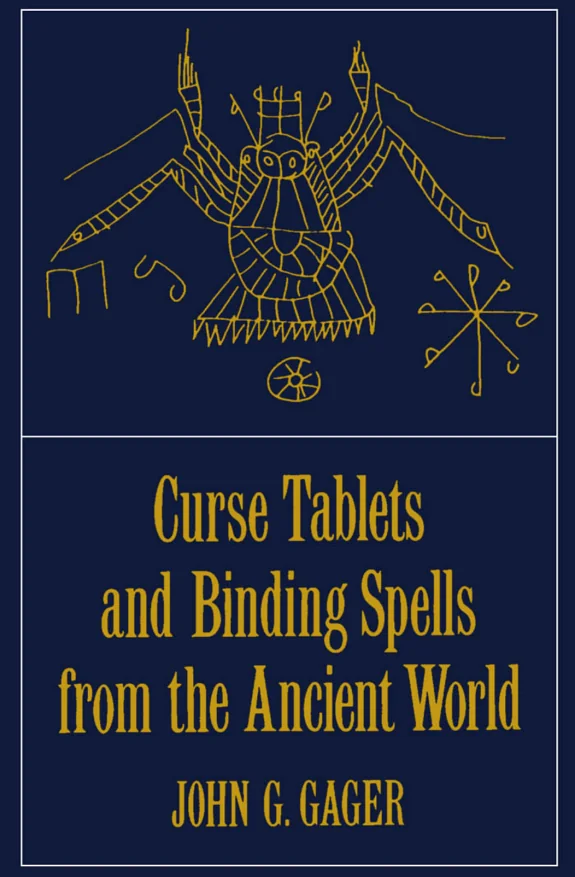
Curse tablets and binding spells from the ancient world
 74
74

Curse tablets and binding spells from the ancient world
Gager's "Curse Tablets and Binding Spells" presents a meticulously researched survey of ancient imprecatory magic. The strength lies in its comprehensive cataloging of artifacts and their inscriptions, providing a solid evidentiary base for understanding these practices. The work's limitation, however, is its academic dryness; while invaluable for specialists, it can be less accessible to the general esoteric reader seeking more evocative engagement. The detailed discussion of tablets found in Roman Britain, for instance, is a particularly strong section, grounding the abstract concepts in specific archaeological finds. Ultimately, it serves as an essential, if demanding, reference for the material evidence of ancient spellcraft.
📝 Description
74
### What It Is
John G. Gager's "Curse Tablets and Binding Spells from the Ancient World" offers a scholarly examination of a specific category of ancient magical practice. The book compiles and analyzes numerous examples of inscribed objects, primarily from the Greco-Roman period, used for imprecation and compulsion. These artifacts, often found in wells, springs, or tombs, represent a direct, albeit often hostile, engagement with supernatural forces.
### Who It's For
This work is suited for academics, students of ancient history, classics scholars, and practitioners of Western esotericism interested in the material culture of magic. It appeals to those who seek to understand the practical applications of magical beliefs in antiquity, moving beyond theoretical discussions to examine the actual objects and their intended use. Readers should possess an interest in historical linguistics and epigraphy, as the texts inscribed on these tablets are central to the analysis.
### Historical Context
The study of ancient magic gained significant academic traction in the late 20th century, moving from a dismissal of such practices as mere superstition to an appreciation of their integral role in ancient societies. Gager’s work emerged within this evolving landscape, contributing to a more nuanced understanding of religious and magical beliefs. The book specifically examines practices prevalent from approximately the 5th century BCE through the 4th century CE across the Mediterranean world.
### Key Concepts
The core of the book revolves around the analysis of *defixiones* (curse tablets) and similar inscribed objects. Gager explores the contexts in which these were used, the typical formulas and curses employed, and the social dynamics that might have prompted their creation. He discusses the targets of these spells, the deities invoked, and the physical locations where these tablets were deposited, all of which offer insights into the anxieties and interpersonal conflicts of the ancient populace.
💡 Why Read This Book?
• Understand the practical application of ancient magic by examining the specific use of *defixiones* (curse tablets) as documented from regions like Roman Egypt, a method far more direct than theoretical magical texts. • Gain insight into the social anxieties of the ancient world by analyzing the common targets and curses inscribed on tablets dating from the Classical Greek period onward, revealing everyday conflicts and fears. • Appreciate the role of material culture in ancient spirituality through Gager's focus on the physical deposition of tablets in specific locations like springs and tombs, demonstrating a tangible connection to the divine or underworld.
⭐ Reader Reviews
Honest opinions from readers who have explored this book.
❓ Frequently Asked Questions
What are curse tablets and binding spells from the ancient world?
Curse tablets, or *defixiones*, are inscribed metal or clay sheets, typically lead, used in antiquity to invoke supernatural forces against an enemy or to bind someone to a specific action. They were common in the Greco-Roman world from the 5th century BCE to the 4th century CE.
Where were these ancient curse tablets found?
These artifacts have been discovered in a variety of locations, often associated with the underworld or bodies of water. Common find spots include tombs, wells, springs, and other bodies of water, reflecting beliefs about their connection to deities or the spirits of the deceased.
Who were the typical targets of ancient curse tablets?
Targets varied widely but commonly included rivals in legal disputes, lovers who had spurned the spellcaster, athletes competing against them, or even political opponents. The spells aimed to inflict harm, impede success, or compel specific behaviors.
What deities were invoked in ancient binding spells?
Various deities associated with the underworld, vengeance, or justice were invoked. These often included figures like Hecate, Pluto, Mercury, and specialized chthonic deities or daemons, depending on the specific cultural context and the nature of the spell.
What is the historical significance of studying curse tablets?
Studying these tablets provides direct evidence of popular magical beliefs and practices in the ancient world, offering insights into social dynamics, personal grievances, and the intersection of religion and magic that are often absent from more formal historical records.
Does "Curse Tablets and Binding Spells" include translations?
Yes, the work extensively analyzes and often provides translations or transliterations of the inscriptions found on the curse tablets discussed, making the primary source material accessible to readers.
🔮 Key Themes & Symbolism
The Materiality of Magic
This work underscores that ancient magic was not merely theoretical but deeply embedded in tangible objects. The curse tablets themselves, crafted from lead, clay, or other materials, were imbued with intention and then physically deposited in specific locations—wells, tombs, springs. Gager's analysis of these artifacts highlights how the physical form and placement were integral to the spell's efficacy, revealing a practical, material engagement with supernatural forces rather than abstract ritual.
Social Conflict and Imprecation
The spells documented reveal a spectrum of personal grievances and social conflicts within the ancient world. From romantic rivalries and business disputes to athletic competitions and legal battles, these tablets served as a direct, often desperate, means of seeking supernatural intervention. Gager’s examination of who cursed whom and why offers a unique window into the anxieties, resentments, and power dynamics that permeated daily life from the Hellenistic period through the Roman Empire.
Deities and Demonic Forces
The invocations found on curse tablets demonstrate a complex relationship with the divine and the chthonic. Spellcasters appealed to a range of deities, from major gods associated with justice and the underworld (like Mercury or Pluto) to more specialized spirits and daemons. Gager explores how these entities were perceived as agents capable of inflicting harm or enforcing obedience, illustrating a practical theology where the divine was actively enlisted in personal vendettas and compulsions.
Epigraphy and Archaeological Context
Central to Gager's study is the meticulous examination of the inscribed texts (*epigraphy*) on the curse tablets and their archaeological context. Understanding the precise wording of the curses, the names invoked, and the location of discovery is crucial for interpreting their function and meaning. This approach emphasizes that the study of magic requires a fusion of textual analysis with the physical evidence of the artifacts themselves.
💬 Memorable Quotes
“The tablets were intended to be effective instruments of magic, and their physical properties and deposition were part of that intention.”
— This highlights the book's focus on the material aspect of ancient magic. The physical form of the tablet and where it was placed were not incidental but deliberate choices believed to enhance the spell's power.
“Many curses were directed against specific individuals in specific circumstances.”
— This points to the highly personal and often urgent nature of the spells. They were not general incantations but targeted tools used to resolve particular conflicts or achieve concrete outcomes.
“The act of depositing the tablet in a watery grave or a tomb was a ritualistic component.”
— This emphasizes the importance of ritual action and symbolic placement in ancient spellcasting. The act of burial or submersion connected the spell to potent forces, often associated with the underworld or purification.
“The language used in these spells often reflects a sense of desperation or intense emotion.”
— This interpretation suggests that the texts themselves provide evidence of the psychological state of the spellcaster, revealing anxieties, anger, or a profound need for external intervention in their affairs.
“The range of deities invoked shows a flexible approach to accessing supernatural power.”
— This conveys that ancient practitioners were not rigidly bound to one deity but drew upon various divine figures depending on the nature of the problem and perceived divine affinities.
🌙 Esoteric Significance
Tradition
While not strictly adhering to a single esoteric lineage like Hermeticism or Kabbalah, Gager's work is foundational for understanding the practical magical traditions within Greco-Roman paganism. It provides empirical data for the material practices that underpin many later Western esoteric systems, demonstrating the historical roots of sympathetic magic and intentionality projection that find echoes in modern ceremonial magic and witchcraft.
Symbolism
The lead tablets themselves symbolize weight, permanence, and a connection to the chthonic realm, often associated with Saturn or Pluto, deities of the underworld and endings. The act of inscription represents the binding of will and intent into a physical medium, while the deposition in water or earth signifies a transfer of power to the submerged or buried realms, connecting the earthly grievance to supernatural forces.
Modern Relevance
Contemporary practitioners of witchcraft, spellcraft, and certain forms of modern paganism draw upon the historical understanding of *defixiones*. Gager's research informs modern spellcasting techniques that emphasize material components, precise intention, and directed energetic release, often through symbolic burial or submersion, demonstrating the enduring principles of imprecatory magic.
👥 Who Should Read This Book
• Students of Classics and Ancient History seeking empirical data on religious practices beyond formal cults. • Practitioners of modern witchcraft and spellcraft interested in the historical antecedents and material techniques of ancient binding and cursing rituals. • Comparative religion scholars investigating the intersection of belief, social conflict, and ritual action in antiquity.
📜 Historical Context
John G. Gager's "Curse Tablets and Binding Spells" emerged in 1992, a period when the academic study of ancient magic was rapidly maturing. Previously dismissed as fringe phenomena or mere superstition, magical practices began to be recognized as integral to the religious and social fabric of the ancient world. Gager's work contributed significantly to this shift by focusing on the concrete evidence of *defixiones*. This was a departure from earlier, more generalized studies of ancient religion or philosophy. While scholars like Franz Cumont had explored magic and mystery cults, Gager’s meticulous cataloging and analysis of inscriptions offered a more grounded, empirical approach. His work provided a crucial counterpoint to more theoretical or philosophical treatments of ancient belief systems, offering direct insight into the popular, often contentious, uses of supernatural appeals. The reception within classical scholarship was generally positive, acknowledging its value as a comprehensive reference and a solid contribution to the understanding of ancient religious practice.
📔 Journal Prompts
The inscription on a curse tablet: how does the act of writing transform intent into action?
Consider the deities invoked: what does this reveal about ancient perceptions of divine justice and intervention?
The deposition of *defixiones* in wells or tombs: reflect on the symbolic significance of these locations.
Personal grievances expressed in ancient spells: how do these compare to modern expressions of conflict?
The materials used for curse tablets (e.g., lead): what properties made them suitable for imprecatory magic?
🗂️ Glossary
Defixiones
Latin term for curse tablets or binding spells, typically inscribed on lead sheets or other materials and deposited in specific locations.
Imprecation
The act of calling down a curse or invoking evil upon someone or something; a verbal curse or malediction.
Chthonic
Relating to the underworld or the deities associated with it; pertaining to the earth and its deities.
Epigraphy
The study of inscriptions, especially ancient ones; the deciphering and interpretation of written texts on durable materials.
Sympathetic Magic
A type of magic based on the belief that like produces like, or that a part represents the whole, allowing for the magical manipulation of a person or object through its likeness.
Hellenistic Period
The period of Mediterranean history between the death of Alexander the Great in 323 BCE and the emergence of the Roman Empire in 27 BCE.
Greco-Roman Period
The historical period encompassing the influence of Greek culture and Roman political dominance in the Mediterranean world, roughly from the 1st century BCE to the 4th century CE.