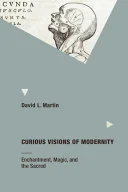
Curious Visions of Modernity
 84
84

Curious Visions of Modernity
David L. Martin's *Curious Visions of Modernity* offers a sharp counterpoint to the assumed triumph of Enlightenment rationality. The book presents a compelling argument that beneath the veneer of empirical certainty, Western culture remains haunted by repressed enchantments and secret knowledges. Martin skillfully employs specific visual artifacts, such as Rembrandt's *Anatomy Lesson of Dr. Nicolaes Tulp* (circa 1632), to demonstrate how seemingly mundane or scientific imagery can, upon closer inspection, reveal hidden esoteric currents. The work’s strength lies in its meticulous analysis of these visual anomalies, forcing a re-evaluation of modernity’s self-understanding. A notable limitation, however, is the occasional reliance on dense theoretical language that might obscure the central thesis for readers less familiar with post-structuralist thought. Despite this, the exploration of the shrunken head of an Australian indigenous leader as a site of displaced spiritual power is particularly striking. The book challenges readers to question the very foundations of their perceived objective reality.
📝 Description
84
### What It Is ### Who It's For ### Historical Context ### Key Concepts
💡 Why Read This Book?
• Gain a new perspective on Western rationality by examining how artifacts like Rembrandt's *Anatomy Lesson* (c. 1632) reveal repressed esoteric knowledge. • Understand the concept of "repressed enchantment" as a force shaping modern culture, as illustrated by the aerial view of Paris from a balloon. • Develop critical visual analysis skills to identify hidden symbolic meanings in everyday historical objects and images.
⭐ Reader Reviews
Honest opinions from readers who have explored this book.
❓ Frequently Asked Questions
What is the central argument of Curious Visions of Modernity?
The book argues that Western rationality is not as purely empirical as it appears, but is instead haunted by repressed enchantments and secret knowledges that surface in various cultural artifacts.
What types of visual artifacts does David L. Martin analyze?
Martin analyzes diverse items, including Rembrandt's *Anatomy Lesson* painting, shrunken heads from indigenous cultures, and aerial views of cities like Paris.
When was Curious Visions of Modernity first published?
The book was first published on November 15, 2011.
How does the book challenge the idea of a rational modern world?
It suggests that seemingly rational or scientific objects and images often contain or allude to forgotten spiritual or esoteric dimensions, contradicting a purely materialist worldview.
What is the significance of the shrunken head example?
The shrunken head is presented as a window into a repressed spiritual power, a curiosity that illuminates the hidden, enchanted aspects lurking behind modernity's rational facade.
Who is David L. Martin?
David L. Martin is the author of *Curious Visions of Modernity*, exploring the intersection of visual culture, history, and esoteric thought.
🔮 Key Themes & Symbolism
Repressed Enchantment
This theme posits that Western modernity, in its pursuit of rationality and empirical science, has actively suppressed or forgotten its own inherent magical and spiritual dimensions. These 'repressed enchantments' do not disappear but instead manifest in unexpected ways within cultural artifacts. Martin shows how seemingly mundane objects or events, such as an aerial view of Paris, can serve as conduits for these hidden forces, revealing a deeper, more complex reality beneath the surface of the rational world. The book argues that understanding these manifestations is crucial to grasping the full nature of modernity.
Visual Artifacts as Windows
The book treats various visual and historical objects not merely as evidence of their time but as active sites where hidden knowledge and enchantment can be perceived. Rembrandt's *Anatomy Lesson of Dr. Nicolaes Tulp* (c. 1632) is a prime example, suggesting that scientific dissection can simultaneously be an exploration of deeper, perhaps esoteric, mysteries of the body and soul. Similarly, the shrunken head of an Australian indigenous leader becomes a focal point for understanding displaced spiritual power and the limitations of purely Western rational frameworks. These artifacts serve as 'windows' through which the forgotten dimensions of modernity become visible.
The Shadow of Rationality
Martin critiques the self-congratulatory narrative of modernity as a complete liberation from superstition and magic. He argues that this liberation is incomplete, leaving a 'shadow' where repressed esoteric knowledge lingers. This shadow is not merely ignorance but an active, albeit hidden, force that influences perception and culture. The work contends that the neat facade of a rational world conceals a more complex, enchanted reality that continues to exert influence, often in ways unrecognized by mainstream thought.
Secret Knowledge
Central to the book's thesis is the idea that a 'secret knowledge' has been systematically excluded from dominant Western discourse. This knowledge pertains to the interconnectedness of the material and spiritual, the unseen forces that shape human experience, and alternative modes of understanding reality. Martin suggests that this knowledge is not entirely lost but preserved in the margins, accessible through careful examination of seemingly disparate cultural phenomena. The book aims to reawaken an awareness of this suppressed wisdom.
💬 Memorable Quotes
“Western rationality is not what it seems, haunted by a secret knowledge and a repressed enchantment.”
— This core statement encapsulates the book's central thesis: that the perceived triumph of empirical thought has obscured deeper, magical, and spiritual dimensions of existence that continue to exert influence.
“Rembrandt's famous painting of an anatomy lesson... are windows to enchantment.”
— This highlights Martin's method of using specific artworks, like Rembrandt's c. 1632 depiction of an anatomy lesson, as evidence that even scientific pursuits can reveal hidden esoteric or spiritual realities.
“The shrunken head of an Australian indigenous leader... illuminate something shadowy and forgotten lurking behind the neat facade of a rational world.”
— This illustrates how the book analyzes objects from non-Western cultures to challenge Western assumptions, suggesting these artifacts hold keys to understanding repressed aspects of modernity's self-perception.
“An aerial view of Paris from a balloon: all are windows to enchantment.”
— This demonstrates the breadth of Martin's analysis, showing how even modern technological perspectives, like viewing a city from above, can be reinterpreted as revealing underlying mystical or enchanted dimensions.
“Curiosities that illuminate something shadowy and forgotten.”
— This phrase captures the essence of the book's approach – treating unusual or overlooked historical details not as anomalies but as vital clues to a more profound, hidden reality.
🌙 Esoteric Significance
Tradition
This work engages with a broad spectrum of Western esoteric thought, implicitly drawing from Hermeticism's emphasis on hidden correspondences and Gnosticism's critique of mundane reality. It doesn't adhere strictly to one lineage but rather synthesizes a critique of modernity through an esoteric lens. The departure lies in its focus on visual culture and modern artifacts, applying esoteric interpretative frameworks to secularized elements of contemporary life rather than solely to ancient texts or traditional magical practices.
Symbolism
The book often uses symbols not in a fixed, encyclopedic way, but as points of entry into repressed meaning. Rembrandt's *Anatomy Lesson* can symbolize the tension between scientific materialism and the enduring mystery of the soul or life force. The shrunken head functions as a potent symbol of the 'other' and the spiritual power perceived as lost or suppressed by Western modernity. Aerial views of cities represent a shift in perspective, potentially revealing the hidden geometric or energetic patterns underlying urban environments, connecting to Hermetic ideas of macrocosm and microcosm.
Modern Relevance
Contemporary thinkers and practitioners interested in critical theory, visual studies, and the philosophy of consciousness find value in Martin's approach. His work resonates with those seeking to deconstruct secular narratives and explore the persistence of the sacred or magical in ostensibly disenchanted societies. It informs discussions in fields like occult humanities, critical magic studies, and post-secular theory, offering tools to analyze how esoteric ideas might be embedded within the fabric of modern culture and art.
👥 Who Should Read This Book
• Students of cultural history and art history seeking to understand the esoteric undercurrents within seemingly rational modern visual culture. • Scholars and practitioners of Western Esotericism interested in how traditional concepts of hidden knowledge and enchantment manifest in contemporary artifacts. • Critical theorists and philosophers questioning the limitations of Enlightenment rationality and exploring the 'shadow' aspects of modern Western identity.
📜 Historical Context
Published in 2011, *Curious Visions of Modernity* emerged during a period of renewed interest in the esoteric and the critique of postmodern relativism, though Martin's approach is distinct. The intellectual landscape was shaped by figures like Michel Foucault, whose work on power and knowledge provided a framework for understanding how certain knowledges are marginalized, and Carl Jung, whose exploration of archetypes and the collective unconscious offered a lens for viewing hidden psychological and spiritual currents. While not directly engaging with, say, the Theosophical Society's popularization of Eastern and Western esotericism in the late 19th and early 20th centuries, Martin's work can be seen as a contemporary echo of that broader cultural fascination with hidden wisdom. The book implicitly challenges the dominant rationalist and materialist paradigms that had largely held sway since the Enlightenment, finding resonance with scholarship that began re-evaluating the role of magic, alchemy, and mysticism in shaping Western thought and art.
📔 Journal Prompts
The repressed enchantment lurking within Rembrandt's *Anatomy Lesson*.
Interpreting the shrunken head as a symbol of forgotten spiritual power.
How does an aerial view of Paris reveal hidden dimensions of modernity?
Identifying the 'secret knowledge' suppressed by Western rationalism in your own experience.
The 'neat facade' of modernity and its underlying 'shadowy' elements.
🗂️ Glossary
Repressed Enchantment
The idea that magical, spiritual, or mystical elements of human experience, suppressed by the rise of rationality, continue to exist and manifest in subtle or disguised forms within modern culture and artifacts.
Secret Knowledge
Esoteric or hidden wisdom concerning the nature of reality, consciousness, and the spiritual dimensions, which has been excluded or marginalized by dominant rationalist and scientific paradigms.
Western Rationality
The dominant mode of thought in Western cultures since the Enlightenment, emphasizing logic, empirical evidence, scientific method, and objective analysis, often at the expense of subjective experience or mystical understanding.
Visual Artifacts
Objects or images from the past or present, such as paintings, photographs, or cultural items, that are analyzed for their symbolic meaning and their potential to reveal hidden aspects of history, culture, or consciousness.
Shadowy and Forgotten
Refers to the hidden, suppressed, or neglected aspects of human experience and culture that lie beneath the surface of conscious awareness or mainstream discourse, often holding significant, though unrecognized, power.
Facade of Rationality
The outward appearance of a society or worldview that presents itself as purely logical, scientific, and empirical, masking deeper, often irrational or spiritual, complexities and influences.
Windows to Enchantment
Specific objects, images, or phenomena that, upon critical examination, reveal or suggest the presence of hidden magical, spiritual, or mystical dimensions, challenging a purely materialist interpretation of reality.