Crop Circles

 73
73

Crop Circles
Jane Bingham's "Crop Circles" offers a measured approach to a topic often mired in speculation. The work commendably details the geometric intricacies of formations, such as the precise application of Euclidean geometry and fractal recursion observed in numerous examples. Bingham effectively catalogues the evolution of designs from simple rings to elaborate fractal patterns, a strength that grounds the discussion. However, the book sometimes feels constrained by its commitment to empirical observation, leaving the more speculative theories about their origins explored only superficially. A notable passage discusses the 1991 documentary "The Crop Circle Maker," which, while revealing, doesn't fully resolve the mystery it purports to address. The author’s balanced presentation is valuable, but lacks the speculative daring that some readers might seek in this subject. It is a competent survey that prioritizes description over deep interpretation.
📝 Description
73
### What Crop Circles Are
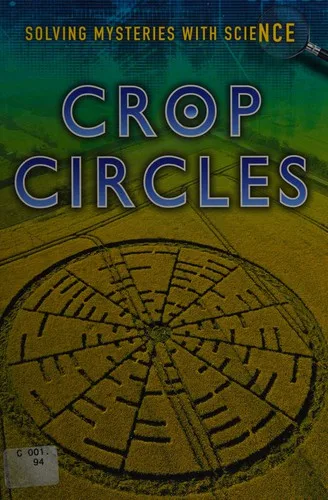
This work examines the phenomenon of crop circles, the intricate geometric patterns that appear in agricultural fields. Bingham explores the visual complexity and scale of these formations, which range from simple rings to elaborate designs spanning hundreds of feet. The book details how these patterns are created, focusing on the precise mathematical and geometric principles that govern their construction.
### Who Should Investigate This Book
This volume is suited for researchers of anomalous phenomena, pattern recognition enthusiasts, and those interested in the intersection of art, science, and folklore. It appeals to readers who approach unexplained occurrences with a critical yet open mind, seeking systematic analysis rather than sensationalism. Those studying the history of earth mysteries or contemporary folklore will find it particularly relevant.
### Historical Roots of the Phenomenon
The exploration of crop circles is situated within a broader history of unexplained aerial phenomena and earth mysteries that gained traction in the late 20th century. Bingham touches upon earlier instances of unusual field markings, though the modern phenomenon largely emerged in the public consciousness in the late 1970s and 1980s. The book acknowledges the historical tendency to attribute such events to natural forces, human hoaxes, or extraterrestrial intervention.
### Core Concepts Explored
Central to the discussion are the concepts of sacred geometry, fractal patterns, and the potential for non-human intelligence to communicate through complex visual language. The book considers the mathematical precision found in many circles, often employing principles like the Golden Ratio and Fibonacci sequences. It also touches upon the energetic or geophysical theories proposed by some researchers to explain their formation.
💡 Why Read This Book?
• Learn about the specific geometric principles, like fractal recursion and the Golden Ratio, evident in crop circle designs, offering a concrete understanding of their mathematical sophistication. • Understand the historical trajectory of the modern crop circle phenomenon, tracing its emergence from the late 1970s and its public perception shifts. • Explore theories linking crop circles to geophysical anomalies or non-human communication, providing a framework for considering alternative explanations beyond simple hoaxes.
⭐ Reader Reviews
Honest opinions from readers who have explored this book.
❓ Frequently Asked Questions
What is the earliest known example of a crop circle discussed in Jane Bingham's book?
While the modern phenomenon largely began in the late 1970s, Jane Bingham's "Crop Circles" may reference earlier, less documented instances of unusual field markings that predate this period, suggesting a longer history of such occurrences.
Does the book attribute crop circles to aliens?
Bingham's "Crop Circles" adopts a balanced perspective, exploring various hypotheses including human hoaxes, natural phenomena, and speculative theories involving non-human intelligence, rather than definitively attributing them to extraterrestrials.
What role does sacred geometry play in the analysis of crop circles?
The book examines how many crop circles exhibit complex geometric patterns, often incorporating principles of sacred geometry such as the Golden Ratio and Fibonacci sequences, suggesting a deliberate design.
Is Jane Bingham's book a recent publication?
Jane Bingham's "Crop Circles" was first published in 2013, offering a synthesis of research and observations available up to that point in the study of this phenomenon.
What distinguishes the crop circle phenomenon as explored in this book?
The book highlights the increasing complexity and scale of crop circle designs over time, moving from simple circles to intricate geometric and fractal patterns, which challenges simplistic explanations.
Does the book offer explanations for the formation of crop circles?
Yes, "Crop Circles" by Jane Bingham presents and discusses several potential formation theories, including methodical human creation, natural atmospheric or geological events, and more speculative ideas about intelligent design.
🔮 Key Themes & Symbolism
Sacred Geometry in Design
The work meticulously details how many crop circles are not random occurrences but exhibit profound mathematical and geometric precision. Bingham explores the application of concepts like the Golden Ratio and fractal geometry, illustrating how these formations often mirror ancient sacred geometric principles. This suggests an underlying intelligence or natural law guiding their creation, pushing the reader to consider patterns that transcend conventional human artistry and engineering capabilities found in agricultural settings.
Evolution of Complexity
A central theme is the observable increase in the intricacy and scale of crop circle designs from their emergence in the late 1970s to the early 21st century. Bingham charts this progression, moving from simple rings and circles to elaborate pictograms, mandalas, and fractal patterns. This evolution challenges the notion of simple hoaxes and prompts consideration of more sophisticated explanations, whether human, natural, or otherwise, that could account for such advanced design development.
Phenomenon as Communication
The book investigates the interpretation of crop circles as a potential form of communication. Bingham examines theories proposing that these patterns might convey messages or information, perhaps from non-human intelligences or as a manifestation of planetary consciousness. The sheer artistry and complexity serve as a focal point for discussions on symbolic language, encouraging readers to think about how meaning can be conveyed through visual, geometric forms in a global context.
Historical and Cultural Context
Bingham situates the modern crop circle phenomenon within a broader history of unexplained aerial events and earth mysteries. The work acknowledges earlier folklore and potential precursors, contrasting them with the highly documented and geometrically sophisticated formations of recent decades. This historical lens helps readers understand how public perception and scientific inquiry have grappled with these anomalies over time.
💬 Memorable Quotes
“The geometric precision often found in crop circles suggests a deliberate, intelligent design.”
— This paraphrase captures the essence of the book's focus on the mathematical regularity of formations. It implies that the patterns are not accidental but intentionally constructed, prompting questions about the nature and source of this presumed intelligence.
“Designs have evolved from simple circles to complex fractal patterns over a relatively short period.”
— This highlights a key observation from the book: the increasing sophistication of crop circles. It underscores the dynamic nature of the phenomenon and challenges simple explanations by pointing to a developmental trend in design complexity.
“Theories range from human artistry to geophysical explanations and potential extraterrestrial communication.”
— This interpretation summarizes the spectrum of hypotheses explored in the book. It shows the author's intent to present a comprehensive overview of the different ways researchers and the public have attempted to understand the origin of these formations.
“The scale and detail of some formations require significant planning and execution.”
— This statement emphasizes the practical challenges involved in creating large, intricate crop circles. It serves to counter the idea that they are easily or spontaneously formed, implying a need for advanced knowledge or capability.
“Understanding crop circles requires considering their place within broader patterns of earth mysteries.”
— This paraphrase suggests that the phenomenon should not be viewed in isolation. It encourages a comparative approach, linking crop circles to other unexplained events and folklore, thereby enriching the context of the investigation.
🌙 Esoteric Significance
Tradition
While not explicitly tied to a single esoteric lineage, Bingham's work engages with concepts often found in esoteric traditions, particularly those concerned with cosmology, sacred geometry, and subtle energies. It touches upon numerological and geometric systems that echo Pythagorean thought and Hermetic principles of 'as above, so below.' The exploration of patterns as potential communication aligns with Gnostic ideas of divine emanations or symbolic language, offering a modern lens on ancient inquiries into universal order.
Symbolism
The primary symbols explored are the geometric forms themselves. Circles, rings, and spirals are ancient symbols of unity, eternity, and the cosmos. More complex formations often incorporate fractals, representing infinite self-similarity and the interconnectedness of all things, a concept found in various mystical traditions. The precision of these designs is interpreted as a symbolic representation of underlying cosmic laws or intelligent order, transcending mere visual representation to suggest deeper meaning.
Modern Relevance
Contemporary thinkers and practitioners in fields like consciousness studies, sacred geometry art, and even some branches of ufology continue to draw inspiration from the patterns and concepts explored in crop circle research. The idea of non-linear communication through complex visual symbols resonates with modern approaches to understanding consciousness and alternative forms of intelligence. The book's detailed analysis provides a valuable reference for those exploring synchronicities and the potential for meaning embedded within natural and man-made patterns.
👥 Who Should Read This Book
• Students of anomalous phenomena and earth mysteries seeking a structured overview of the crop circle phenomenon. • Researchers interested in the intersection of geometry, mathematics, and unexplained events, particularly those focusing on pattern analysis. • Skeptics and believers alike who appreciate a balanced presentation of evidence, theories, and historical context regarding field formations.
📜 Historical Context
Jane Bingham's "Crop Circles" emerged in an era where the study of anomalous phenomena had a significant following, particularly following the rise of UFOlogy and earth mysteries in the late 20th century. The modern crop circle phenomenon, largely recognized from the late 1970s onwards, gained considerable public attention throughout the 1980s and 1990s. Bingham's work, published in 2013, builds upon decades of research and speculation. Key contemporaries in the broader field of unexplained phenomena include researchers like Jacques Vallee and authors such as Erich von Däniken, who explored ancient astronaut theories. While not directly engaging with this book, figures like Colin Andrews were prominent in crop circle research during the phenomenon's peak. Reception of crop circles has varied widely, often polarized between skeptical debunking, such as the confessions of Doug Bower and Dave Chorley in 1991, and earnest investigation into geophysical or non-terrestrial explanations.
📔 Journal Prompts
The recurrence of fractal patterns in crop circles: reflection on infinite regression.
Analyzing the 1991 confessions of Bower and Chorley in the context of crop circle formation.
Consider the application of sacred geometry principles to other natural or man-made designs.
The potential for non-human communication through visual symbols: initial thoughts.
Documenting a personal observation of geometric patterns in nature and their perceived meaning.
🗂️ Glossary
Sacred Geometry
The study of geometric shapes and patterns that are considered fundamental to the structure of the universe and often hold spiritual or mystical significance.
Fractal
A complex geometric pattern that exhibits self-similarity at different scales, meaning that similar shapes or patterns repeat infinitely within the overall structure.
Golden Ratio
An irrational number, approximately 1.618, often found in nature and art, where the ratio of the sum of two quantities to the larger quantity is equal to the ratio of the larger quantity to the smaller one.
Pictogram
A pictorial symbol for a word or phrase, used in the context of crop circles to describe complex designs that resemble recognizable images or symbols.
Earth Mysteries
A broad category of phenomena and sites that challenge conventional scientific or historical explanations, including crop circles, ley lines, and ancient megalithic structures.
Geophysical Anomalies
Unusual or unexplained variations in the Earth's physical properties, such as magnetic fields or electrical activity, that have been proposed as potential causes for crop circle formation.
Synchronicity
Meaningful coincidences, where two or more events occur that are not causally related but are perceived as being meaningfully connected, a concept explored in relation to the appearance of crop circles.