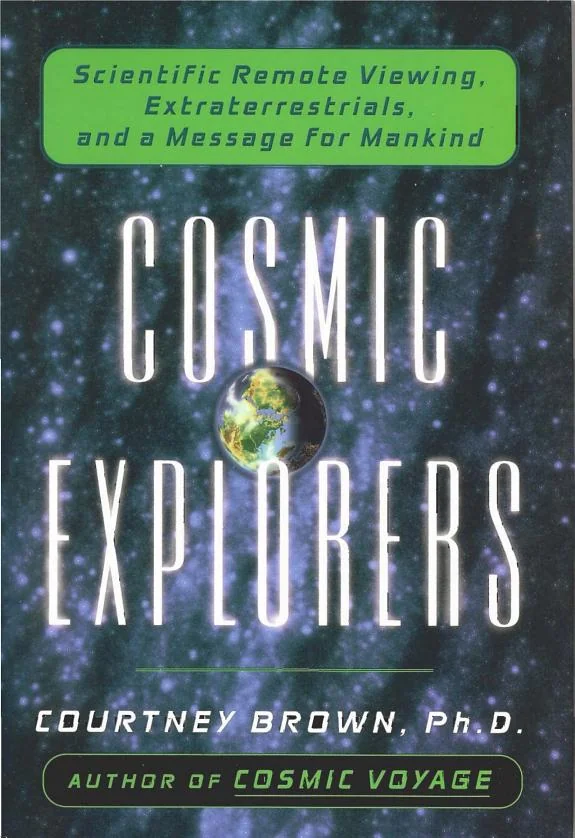
Cosmic Explorers
 83
83

Cosmic Explorers
Courtney Brown's "Cosmic Explorers" continues the exploration of extraterrestrial observation, presenting a more direct confrontation with potential alien threats than its predecessor. The author's assertion that aliens have been watching us for a long time, with potentially adverse intentions, forms the core of the book's argument. A notable strength lies in the detailed scenarios Brown constructs, which, while speculative, are presented with a conviction that can be compelling for believers in the field. However, the work suffers from a lack of rigorous scientific methodology, relying heavily on anecdotal evidence and interpretations that remain unverified. The passage discussing the potential for alien interference in human political systems, while alarming, lacks concrete evidence to substantiate its claims beyond Brown's own assertions.
Ultimately, "Cosmic Explorers" offers a specific, albeit unproven, perspective on humanity's place in the cosmos.
📝 Description
83
### What It Is Cosmic Explorers, first published in 1999 by Courtney Brown, extends the narrative established in "Cosmic Voyage." This work pivots from a general overview to a more focused examination of extraterrestrial intelligences that have reportedly engaged in prolonged observation of humanity. The book presents arguments and alleged evidence suggesting these entities are not merely passive observers but may harbor intentions that could impact Earth's future trajectory.
### Who It's For This book is intended for readers with an existing interest in ufology, ancient astronaut theories, and speculative cosmology. It will appeal to those who appreciate detailed accounts of alleged alien interactions and who are open to considering potential extraterrestrial influence on human history and future events. Those seeking a critical analysis of extraterrestrial contact scenarios will find material for contemplation.
### Historical Context Published at the cusp of the new millennium, "Cosmic Explorers" emerged during a period of heightened public fascination with UFO phenomena and alien abduction narratives. This era saw a proliferation of popular literature and media exploring these themes, often drawing from earlier foundational works like those by J. Allen Hynek and Jacques Vallée. Brown's contribution positioned itself within this ongoing discourse, offering a specific interpretation of alien motives and capabilities.
### Key Concepts The central concepts revolve around the idea of advanced extraterrestrial civilizations maintaining a long-term, potentially manipulative, presence on Earth. Brown explores the implications of such a presence for human sovereignty and development, introducing notions of alien hierarchies and their communication methods. The work engages with the idea that humanity may be part of a larger cosmic experiment or subject to external oversight with unknown agendas.
💡 Why Read This Book?
• Gain insight into specific theories regarding long-term extraterrestrial observation of Earth, as detailed in Courtney Brown's 1999 work, "Cosmic Explorers. • Understand the author's interpretation of potential alien motives that extend beyond mere curiosity, as presented in the book's discourse on extraterrestrial influence. • Explore the book's particular framing of humanity as potentially subject to external oversight, a concept central to the narrative of "Cosmic Explorers."
⭐ Reader Reviews
Honest opinions from readers who have explored this book.
❓ Frequently Asked Questions
What is the main premise of Courtney Brown's "Cosmic Explorers"?
The book's main premise is that advanced extraterrestrial civilizations have been observing humanity for an extended period and may pose a threat to Earth's future, building upon themes from "Cosmic Voyage."
When was "Cosmic Explorers" originally published?
"Cosmic Explorers" was first published in 1999, placing it within a period of significant public interest in UFOs and extraterrestrial contact.
Does "Cosmic Explorers" offer scientific proof of alien activity?
No, the book presents speculative arguments and alleged evidence rather than scientifically verifiable proof of alien activity. It operates within the realm of ufology and esoteric interpretation.
Who is Courtney Brown?
Courtney Brown is the author of "Cosmic Explorers" and "Cosmic Voyage," known for his work in ufology and his theories regarding extraterrestrial contact and observation.
What distinguishes "Cosmic Explorers" from "Cosmic Voyage"?
"Cosmic Explorers" is presented as a follow-up to "Cosmic Voyage," shifting focus from general observation to a more direct discussion of potential threats posed by observing aliens.
What subjects are explored in "Cosmic Explorers"?
The book explores subjects such as alien observation of humans, potential threats to Earth, extraterrestrial intelligence, and speculative cosmic scenarios.
🔮 Key Themes & Symbolism
Long-Term Alien Observation
The central thesis of "Cosmic Explorers" posits that extraterrestrial intelligences have engaged in prolonged, systematic observation of Earth and humanity. This is not presented as a fleeting phenomenon but as an ongoing, deliberate strategy. Brown suggests that this observation has occurred over vast periods, implying a deep, perhaps ancestral, connection or interest from these entities in human development and planetary affairs. The work aims to illuminate the nature and implications of this sustained cosmic scrutiny.
Potential Extraterrestrial Threat
Beyond mere observation, "Cosmic Explorers" introduces the significant concern that these watching aliens may pose a tangible threat to Earth. This threat is framed not necessarily as overt invasion, but as potential manipulation, interference, or an agenda that could be detrimental to human autonomy and survival. The book encourages readers to consider the possible negative ramifications of advanced alien presence and intentions towards our planet.
Extraterrestrial Intelligence Frameworks
The book delves into conceptualizing the nature of these observing extraterrestrial intelligences. It moves beyond simplistic depictions to explore potential hierarchies, motivations, and methods of interaction or non-interaction. Brown's work attempts to create a framework for understanding these entities, suggesting they operate under principles and objectives that may be vastly different from human comprehension, yet have direct implications for our world.
Humanity's Cosmic Role
"Cosmic Explorers" implicitly and explicitly questions humanity's position within a larger cosmic context. The presence of long-term observers suggests that Earth and its inhabitants might be part of a grander, possibly controlled, narrative or experiment. This theme prompts reflection on whether humans are evolving independently or under some form of external guidance or influence, and what that means for our destiny.
💬 Memorable Quotes
“Aliens have been watching us for a very long time.”
— This foundational statement underscores the book's core argument: extraterrestrial interest in Earth is not a new phenomenon but a sustained, historical presence.
“Their prolonged observation suggests potential intentions beyond simple curiosity.”
— This interpretation highlights the author's belief that the duration of alien observation implies a purpose, possibly one that could impact humanity negatively.
“We may be unaware of the extent of their influence on our planet.”
— This points to the idea that extraterrestrial involvement could be subtle and pervasive, operating beneath the surface of human awareness and control.
“The possibility of a threat to Earth cannot be dismissed.”
— This emphasizes the book's cautionary stance, urging readers to consider the potential dangers associated with advanced extraterrestrial civilizations observing our world.
“Understanding their motives is crucial for our future.”
— This statement stresses the importance of deciphering alien intentions, suggesting that such knowledge is vital for humanity's continued existence and development.
🌙 Esoteric Significance
Tradition
While not strictly adhering to a single esoteric lineage, "Cosmic Explorers" draws heavily from the broader tradition of UFOlogy and speculative cosmology that emerged in the mid-20th century. This field often intersects with Gnostic ideas about hidden knowledge and potentially manipulative external forces (archons), as well as Theosophical concepts of advanced beings influencing human evolution. Brown's work extends these themes by focusing on the specific narrative of alien observation and potential threat, offering a modern interpretation of cosmic guardianship or interference.
Symbolism
The primary symbolic motif is the 'observer' itself, representing advanced consciousness operating beyond human perception. The concept of 'long-term observation' symbolizes a cosmic timescale and a deliberate, potentially strategic, engagement with humanity's development. The implied 'threat' functions as a symbol of the unknown, the powerful 'other' whose intentions could drastically alter human destiny, echoing ancient archetypes of divine or demonic intervention.
Modern Relevance
Contemporary thinkers and communities interested in consciousness studies, simulation theory, and advanced extraterrestrial intelligence continue to engage with the ideas presented in "Cosmic Explorers." The book's focus on potential alien agendas and humanity's vulnerability resonates with modern anxieties about technological singularity and existential risks. It provides a foundational text for those exploring the more conspiratorial or cautionary aspects of the search for extraterrestrial intelligence (SETI) and the broader field of ufology.
👥 Who Should Read This Book
• Enthusiasts of ufology and speculative extraterrestrial contact narratives seeking detailed theories on alien observation. • Readers interested in alternative cosmologies and the potential influence of non-human intelligence on Earth's history and future. • Individuals exploring the intersection of science fiction, esoteric thought, and modern interpretations of cosmic phenomena.
📜 Historical Context
Published in 1999, "Cosmic Explorers" emerged during a period characterized by robust public engagement with UFOlogy, fueled by popular media like "The X-Files" and increasing online dissemination of anecdotal accounts. This era was a fertile ground for speculative works that built upon earlier foundations laid by figures such as Jacques Vallée and J. Allen Hynek, who sought to analyze UFO phenomena through more academic lenses. Brown's book tapped into a prevailing fascination with extraterrestrial intelligence and potential contact scenarios, positioning itself within a discourse that often contrasted with mainstream scientific skepticism. While not directly censored, works like Brown's often faced dismissal from academic circles, yet they contributed to a broader cultural conversation about humanity's place in the cosmos and the possibility of non-human intelligence impacting our world. The late 1990s saw continued interest in ancient astronaut theories, further contextualizing Brown's exploration of long-term alien observation.
📔 Journal Prompts
Consider the implications of sustained, long-term alien observation as described in "Cosmic Explorers."
Reflect on the nature of potential extraterrestrial threats presented in the book's discourse.
Analyze the concept of humanity's cosmic role as framed by the presence of observing aliens.
What might be the motivations behind prolonged extraterrestrial scrutiny of Earth?
How does the idea of external influence challenge human autonomy, according to the book's premise?
🗂️ Glossary
Extraterrestrial Intelligence
Refers to non-human intelligence originating from beyond Earth. In "Cosmic Explorers," this term specifically denotes the advanced beings alleged to be observing humanity.
Cosmic Voyage
The title of Courtney Brown's preceding book, which introduced themes of extraterrestrial contact and observation that are further developed in "Cosmic Explorers."
Alien Observation
The act of prolonged and systematic scrutiny of Earth and humanity by non-human entities, a central concept explored in "Cosmic Explorers."
Potential Threat
The possibility that observing extraterrestrial entities harbor intentions or capabilities that could be harmful or detrimental to human existence or planetary well-being.
Human Sovereignty
The concept of humanity's self-governance and autonomy, which may be challenged by the alleged interference or manipulative presence of extraterrestrial intelligences discussed in the book.
Speculative Cosmology
The exploration of the nature, origin, and future of the universe and humanity's place within it, often involving theories beyond current scientific consensus, as seen in "Cosmic Explorers."
Ufology
The study of unidentified flying objects (UFOs) and related phenomena. "Cosmic Explorers" is a significant work within this field.