CIA Reading Room cia-rdp96-00787r000200020018-1: HUMAN RESOURCES COMMITTEE, RESEARCH AND DEVELOPMENT SUBCOMMITTEE, MINUTES OF THE TWELFTH MEETING, 20 SEPTEMBER 1976

 74
74

CIA Reading Room cia-rdp96-00787r000200020018-1: HUMAN RESOURCES COMMITTEE, RESEARCH AND DEVELOPMENT SUBCOMMITTEE, MINUTES OF THE TWELFTH MEETING, 20 SEPTEMBER 1976



Isolde Whitaker (Sacred Texts Editor) — This declassified document, originating from the CIA's own internal discourse, is a remarkable find for anyone interested in the confluence of intelligence operations and esoteric inquiry. The minutes of the Human Resources Committee's Research and Development Subcommittee offer a fascinating, albeit oblique, perspective on what was being considered at the highest levels. While couched in bureaucratic language, the underlying themes hint at investigations into areas often relegated to the fringes of mainstream science and philosophy. Its strength lies in its authenticity as a primary source, revealing the institutional curiosity that can arise even within seemingly pragmatic domains. Ideal for the serious researcher or the enthusiast of hidden histories, this text provides a unique window into a less-explored facet of 20th-century thought.
📝 Description
74
Unearth the veiled machinations of hidden knowledge with the 'CIA Reading Room: Human Resources Committee, Research and Development Subcommittee Minutes, September 20, 1976.' This is not a mere bureaucratic record, but a tantalizing glimpse into the clandestine corridors where intellectual inquiry intersected with national security. Within these pages, the mundane language of committee meetings belies a deeper current of exploration into human potential and the very frontiers of consciousness. The atmosphere is one of hushed deliberation, of minds grappling with concepts that transcend the ordinary, hinting at research into the unseen forces that shape perception and influence. Intended for the discerning seeker, the scholar of esoteric history, or the practitioner intrigued by the intersection of statecraft and the subtle arts, this document offers a rare, unvarnished artifact. It invites contemplation on the nature of intelligence, not just in the geopolitical sense, but in its broader, more profound implications for understanding reality itself. The philosophical significance lies in its testament to the enduring human quest to probe the unknown, even within the most structured and guarded environments.
✍️ Author

CIA Reading Room
The Central Intelligence Agency (CIA) is a civilian foreign intelligence service of the federal government of the United States tasked with advancing national security through collecting and analyzing intelligence from around the world and conducting cover…
💡 Why Read This Book?
Delve into the hidden currents of intellectual exploration within a clandestine organization. This document offers a rare glimpse into discussions that touched upon the fringes of human potential and consciousness. It's essential reading for seekers of suppressed knowledge, scholars of intelligence history, and anyone fascinated by the subtle intersections of power and the unknown. Discover what was being contemplated beyond the veil of public awareness.
⭐ Reader Reviews
Honest opinions from readers who have explored this book.
❓ Frequently Asked Questions
What is the primary subject of these minutes?
The minutes detail discussions from the twelfth meeting of the CIA's Human Resources Committee, Research and Development Subcommittee, held on September 20, 1976, focusing on internal research and development initiatives.
Are these minutes overtly occult or mystical in nature?
While not explicitly labeled as occult, the nature of R&D within intelligence agencies often touches upon areas of consciousness, human potential, and subtle energies that resonate with esoteric themes.
Who was present at this meeting?
The attendees included representatives from various branches of the CIA, as well as from the DIA, NSA, Army, Air Force, and FBI, indicating a cross-agency interest in the subcommittee's work.
What is the significance of the 'SG1I' markings?
The 'SG1I' markings are security classifications indicating that specific portions of the document are still classified or have been redacted for national security reasons.
Can I find any specific research projects mentioned?
The minutes provide a high-level overview of discussions and approved actions rather than detailed descriptions of specific research projects, maintaining a level of operational discretion.
🔮 Key Themes & Symbolism
The Nature of Intelligence Beyond the Conventional
This document subtly probes the boundaries of what constitutes 'intelligence,' moving beyond purely analytical or tactical definitions. It suggests an institutional awareness of and interest in the more subtle, perhaps even psychic or consciousness-related, dimensions of human capability. The R&D subcommittee's focus implies a search for untapped potentials and unconventional methodologies that could offer a strategic advantage, hinting at a deeper, more philosophical inquiry into the mind's latent powers and their possible applications.
Bureaucracy as a Vessel for Esoteric Inquiry
The juxtaposition of formal, bureaucratic meeting minutes with the implied subject matter creates a unique tension. It demonstrates how even within the most structured and security-conscious environments, the human drive to explore the unknown can manifest. The language, though formal, serves as a protective shell, allowing for discussions on potentially fringe topics to occur under the guise of operational necessity, highlighting the complex interplay between secrecy and the pursuit of knowledge.
The Unseen Architecture of Influence
The discussions likely touched upon methods for understanding and potentially influencing human behavior and perception at deeper levels. This can be interpreted through an esoteric lens as an exploration into the subtle energies and psychological mechanisms that govern collective and individual consciousness. The very act of convening such a committee suggests a recognition that power and influence extend beyond the material, delving into the psychological and perhaps even the psychical realms.
💬 Memorable Quotes
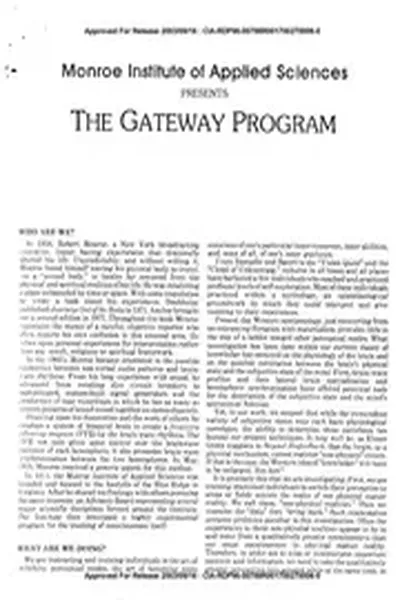
“Approved For Rise 2003/09/10: CIA-RDP96-00”
— This phrase signifies the declassification and release of the document, marking a transition from secrecy to public accessibility, a key moment for historical and esoteric researchers.
“HUMAN RESOURCES COMMITTEE”
— Suggests a focus on the human element as a strategic asset, hinting at investigations into capabilities beyond the standard physical or intellectual.
“RESEARCH AND DEVELOPMENT SUBCOMMITTEE”
— Indicates a forward-thinking approach, exploring new frontiers and potential advancements, even in areas not immediately apparent.
“MINUTES OF THE TWELFTH MEETING”
— The numbering implies a series of prior deliberations, suggesting a sustained and ongoing interest in the subcommittee's potentially sensitive research areas.
“20 SEPTEMBER 1976”
— Places the discussions within a specific historical context, relevant to understanding the geopolitical and cultural influences of the late Cold War era.
🌙 Esoteric Significance
Tradition
While not directly tied to a single named esoteric tradition, these minutes resonate with the broader Hermetic principles of 'As Above, So Below' and the understanding of consciousness as a fundamental force. The pursuit of understanding human potential and influence aligns with alchemical and magical philosophies that seek to transmute and harness unseen energies, suggesting an institutional engagement with concepts akin to vitalism and subtle energy fields.
Symbolism
The very act of declassification and the redacted nature of the document serve as potent symbols. The 'Reading Room' itself symbolizes a space of guarded knowledge, while the redactions represent the veil between the mundane and the hidden. The committee's focus on 'Human Resources' can be seen as a bureaucratic metaphor for exploring the 'human spirit' or 'inner potential,' a common theme in many mystical paths.
Modern Relevance
In an age increasingly concerned with artificial intelligence, neuroscience, and the manipulation of information, the themes explored in these 1976 minutes are profoundly relevant. They highlight a long-standing institutional recognition of the importance of understanding consciousness, perception, and human potential beyond purely material or mechanical frameworks, offering historical context to contemporary debates on mind, technology, and influence.
👥 Who Should Read This Book
This document is a compelling read for the serious historical researcher seeking to understand the breadth of governmental inquiry during the Cold War. Esoteric scholars will find value in analyzing the subtle implications of R&D discussions within a clandestine context, potentially revealing institutional engagement with concepts bordering on the psychical. For practitioners and seekers of hidden knowledge, it offers a rare primary source artifact that suggests the exploration of human potential and subtle influences occurred even at the highest levels of intelligence agencies. Beginners may find it a challenging but rewarding introduction to the intersection of history, psychology, and the less-acknowledged facets of human endeavor.
📜 Historical Context
The year 1976 was a period of significant global tension, deep within the Cold War. The United States was grappling with the aftermath of Vietnam, facing internal dissent, and engaged in a continuous technological and ideological race with the Soviet Union. This era also saw a burgeoning interest in parapsychology, consciousness studies, and alternative forms of knowing, fueled partly by societal shifts and partly by governmental inquiries into unconventional research. Within this climate, intelligence agencies were exploring every avenue to gain an edge, leading to classified projects and discussions that often skirted the edges of mainstream scientific acceptance. The existence of this subcommittee and its minutes reveals a fascinating, albeit redacted, chapter in this ongoing quest for understanding and control, where the 'human factor' was scrutinized for its deepest potentials.
📔 Journal Prompts
Reflect on the concept of 'human resources' beyond its conventional meaning. What are the potential 'unconventional' resources of the human being?
Consider the role of secrecy and bureaucracy in the pursuit of knowledge. How might these elements both hinder and facilitate discovery?
If you were a member of this subcommittee, what 'research and development' areas related to human potential would you propose?
How does the historical context of 1976 influence your interpretation of these minutes?
Explore the idea of 'intelligence' as encompassing more than just analytical processing. What other forms of intelligence might be considered valuable?
🗂️ Glossary
CIA Reading Room
A repository or designated area within the Central Intelligence Agency where classified or declassified documents are stored and made accessible for review, often for research or analysis purposes.
Human Resources Committee
An internal committee within an organization tasked with overseeing matters related to personnel, employee development, and organizational effectiveness, often with a strategic focus.
Research and Development Subcommittee
A specialized group within a larger committee dedicated to exploring new ideas, technologies, and methodologies, often with a focus on future applications and advancements.
Declassification
The process by which classified government information is officially released from its restricted status, making it available for public access, often after a specified period or review process.
SG1I
A classification marking used in declassified documents to indicate that specific sections or information within the document remain classified or have been redacted due to national security concerns.