Carl Jung

 76
76

Carl Jung
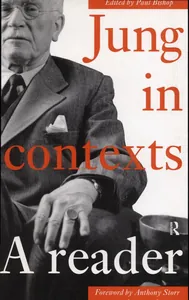
Paul Bishop’s "Carl Jung" offers a rigorous, unvarnished look at a figure whose influence permeates psychology and beyond. Bishop avoids hagiography, presenting Jung's ideas with intellectual seriousness. A notable strength is the book's clear exposition of Jung's often-convoluted concepts, such as the complex relationship between the personal and collective unconscious. The discussion of Jung's engagement with alchemy, presented not as mere historical curiosity but as a symbolic language for psychic transformation, is particularly illuminating. However, the text occasionally feels dense, demanding a reader already acquainted with some psychological terminology. While the book meticulously details Jung's theoretical framework, a more extended analysis of the practical therapeutic applications of his methods could have provided a richer dimension. The section detailing Jung's break with Freud in 1913 serves as a potent example of the intellectual and personal schisms that shaped his unique path. Ultimately, Bishop delivers a sober, academic assessment that serves as a solid foundation for further study.
📝 Description
76
### What It Is Carl Jung, a 2014 publication by Paul Bishop, functions as a critical introduction to the life and work of the Swiss psychiatrist and psychoanalyst. It examines Jung's development of analytical psychology, a field that diverged significantly from Freudian psychoanalysis. The book traces Jung's intellectual journey, his engagement with myth, alchemy, and religious thought, and his lasting impact on psychology and culture.
### Who It's For This volume is designed for readers seeking a comprehensive overview of Carl Jung's contributions beyond superficial familiarity. It is particularly suited for students of psychology, comparative religion, and cultural studies who need to understand the foundational concepts of analytical psychology. Those interested in the intersection of the psyche with mythology, spirituality, and esoteric traditions will find its exploration of Jung's personal explorations of these areas valuable.
### Historical Context Published in 2014, Paul Bishop's "Carl Jung" arrived at a time when Jungian psychology, though established, continued to be re-evaluated and reinterpreted. The intellectual landscape in the early 21st century saw a renewed interest in depth psychology and its mythological underpinnings, partly fueled by the digital dissemination of ideas. Jung's work, often seen as bridging the scientific and the mystical, found continued relevance amidst broader cultural shifts that questioned purely materialist worldviews. His contemporaries included figures like Sigmund Freud, with whom he had a significant theoretical break, and later scholars who continued to build upon or critique his theories.
### Key Concepts The book addresses Jung's central ideas, including the collective unconscious, archetypes (such as the Anima/Animus, Shadow, and Self), individuation, synchronicity, and the significance of dreams. It also covers his exploration of Gnosticism, alchemy, and Eastern philosophies, highlighting how these influenced his theories on the psyche's development and integration. The exploration of Jung's personal experiences, including his confrontation with his own unconscious during his "confrontation with the unconscious" period, is also a significant focus.
💡 Why Read This Book?
• Gain a structured understanding of Jung's core concepts like the collective unconscious and archetypes, essential for anyone studying analytical psychology. • Grasp the significance of Jung's engagement with alchemy, understanding it as a symbolic system for psychological growth, a perspective unique to his work. • Trace the historical development of analytical psychology, noting its divergence from Freudian psychoanalysis around 1913, providing crucial context for its evolution.
⭐ Reader Reviews
Honest opinions from readers who have explored this book.
❓ Frequently Asked Questions
When did Carl Jung develop the concept of the collective unconscious?
Carl Jung first articulated the concept of the collective unconscious in his 1916 work 'The Structure of the Unconscious,' though it was more fully developed and explored in later writings and lectures.
What was the primary reason for Jung's split with Freud?
The primary reason for Carl Jung's split with Sigmund Freud in 1913 was their fundamental disagreement over the nature of psychic energy and the role of sexuality. Jung broadened the concept of libido beyond a purely sexual drive.
How does Jung's concept of individuation differ from personal development?
Jung's individuation is a lifelong process of psychological differentiation, aiming to integrate the conscious and unconscious aspects of the self to become a whole, unique individual, distinct from mere personal adjustment or societal conformity.
What role did alchemy play in Jung's psychological theories?
Jung viewed alchemy not just as ancient chemistry but as a symbolic projection of unconscious processes and archetypal transformations, providing a framework for understanding the individuation journey and the integration of opposites.
Where was Carl Jung born and where did he primarily practice?
Carl Jung was born in Kesswil, Switzerland, in 1875. He spent most of his professional life practicing and developing his theories in Zurich, Switzerland.
What is the 'Shadow' in Jungian psychology?
The Shadow, in Jungian psychology, represents the unconscious, repressed, or unacknowledged aspects of the personality, often containing primitive instincts, desires, and impulses that the ego rejects.
🔮 Key Themes & Symbolism
Archetypes and the Collective Unconscious
This work meticulously unpacks Carl Jung's revolutionary concept of the collective unconscious, a reservoir of inherited psychic structures shared by all humanity. It details how archetypes—universal patterns like the Mother, the Hero, or the Shadow—manifest in myths, dreams, and cultural symbols across time and geography. Bishop highlights how these archetypes shape individual experience and collective behavior, offering a framework for understanding the deepest layers of the human psyche beyond personal history.
Individuation as a Life Path
Central to Jungian psychology is the process of individuation, which Paul Bishop elucidates as the lifelong journey toward psychic wholeness. This involves confronting and integrating the conscious ego with the unconscious, including the Shadow and Anima/Animus. The book explores how this difficult but necessary path leads to the realization of the Self, moving beyond societal roles and personal complexes to achieve a unique, authentic existence.
Alchemy and Psychic Transformation
Bishop examines Jung's fascination with alchemy, presenting it not as a proto-scientific pursuit but as a profound symbolic language for psychological transformation. The alchemical processes—coniunctio, separatio, calcination—are interpreted as metaphors for the inner work required to unite opposites within the psyche. This section reveals how Jung used alchemical imagery to articulate the complex, often paradoxical, stages of individuation and the integration of the unconscious.
Synchronicity and Meaningful Coincidence
The book addresses Jung's concept of synchronicity, defined as the acausal connecting principle that links inner psychic states with outer events. Bishop explains how Jung saw these meaningful coincidences as evidence of a deeper order in the universe, transcending mere causality. This exploration delves into how synchronicity can serve as a guidepost in the individuation process, suggesting a connection between the personal psyche and the objective world.
💬 Memorable Quotes
“The collective unconscious is a psychic inheritance.”
— This statement encapsulates Jung's view that the deepest layers of the psyche are not solely shaped by personal experience but are inherited structures common to all humans, influencing our perceptions and behaviors.
“Individuation means becoming who you are.”
— This concise phrase captures the essence of Jung's central life work: the process of developing one's unique, integrated self by bringing unconscious elements into conscious awareness.
“The alchemical magnum opus mirrors the process of psychological integration.”
— This highlights Jung's interpretation of ancient alchemy as a symbolic representation of the arduous journey toward psychic wholeness, where the transformation of base metals parallels the integration of inner psychic material.
“Synchronicity is an 'acausal connecting principle'.”
— This defines Jung's concept of meaningful coincidences, suggesting a connection between events that lack a direct cause-and-effect relationship but are linked by subjective meaning.
“The Shadow represents the dark side of the personality.”
— This points to the Jungian archetype of the Shadow, comprising repressed desires, instincts, and aspects of the self that are deemed unacceptable by the conscious ego.
🌙 Esoteric Significance
Tradition
Carl Jung's work is deeply interwoven with Western esoteric traditions, particularly Hermeticism, Gnosticism, and alchemy. While not a formal practitioner of any single lineage, he drew extensively from their symbolic language and cosmology to articulate his theories of the psyche. His concept of the collective unconscious and archetypes can be seen as a psychological interpretation of universal spiritual principles found in these traditions. Jung's approach offered a bridge, translating esoteric symbolism into a framework understandable within modern psychology.
Symbolism
Key symbols explored in relation to Jung include the Ouroboros, representing cyclicality and the union of opposites central to alchemical thought and the individuation process. The Mandala, a geometric configuration often found in spiritual traditions, symbolizes the totality of the Self and the ordering of psychic chaos. Jung also extensively analyzed the symbolism of the divine child and the wise old man archetypes, which appear across diverse mythologies and esoteric systems, representing potential and wisdom respectively.
Modern Relevance
Contemporary thinkers and practitioners in fields ranging from depth psychology and transpersonal psychology to mythology studies and even certain strands of literary theory continue to engage with Jung's ideas. His concepts of archetypes and the collective unconscious remain influential in understanding narrative, cultural patterns, and the human quest for meaning. Modern therapeutic approaches often integrate Jungian principles, particularly in exploring dreams and symbolic expression, ensuring his legacy endures in the exploration of the psyche.
👥 Who Should Read This Book
• Students of psychology and psychoanalysis seeking to understand the foundations of analytical psychology and its divergence from Freudian theory. • Individuals interested in the intersection of mythology, religion, and the human psyche, looking for frameworks to interpret universal human narratives. • Those exploring personal growth and self-understanding who are drawn to concepts like individuation and the integration of unconscious elements.
📜 Historical Context
Paul Bishop's "Carl Jung" (2014) situates Jung's work within a complex intellectual milieu. Jung, who broke with Sigmund Freud in 1913 over theoretical differences regarding the nature of libido and the unconscious, developed analytical psychology as a distinct school of thought. His explorations into the occult, Gnosticism, and alchemy placed him at odds with more empirically-minded psychologists of his era, such as behaviorists like John B. Watson. While Freud focused on repressed sexuality, Jung expanded the unconscious to include a collective layer of archetypal patterns. The reception of Jung's work has been varied; while celebrated in some circles for its depth and breadth, it has also faced criticism for its perceived mysticism and lack of empirical rigor. By 2014, Jungian thought had become a significant, albeit sometimes controversial, force in psychotherapy, cultural analysis, and literary criticism.
📔 Journal Prompts
The Shadow archetype and its presence in your personal life.
Reflecting on recurring symbols from dreams or waking life.
Analyzing a personal synchronicity event.
The process of individuation and your current stage.
Interpreting alchemical symbols through a psychological lens.
🗂️ Glossary
Collective Unconscious
A hypothesized universal layer of the unconscious mind containing archetypes, inherited from our ancestors, shared by all humans.
Archetype
Universal, archaic patterns and images that derive from the collective unconscious and are the psychic counterpart of instinct.
Individuation
The lifelong psychological process of differentiation of the self, enabling a person to become whole and unique by integrating conscious and unconscious aspects.
Anima/Animus
The unconscious feminine aspect in men (Anima) and the unconscious masculine aspect in women (Animus), representing contrasexual archetypes.
Synchronicity
The experience of two or more events that are seemingly causally unrelated but occur together in a meaningful manner.
Shadow
The unconscious, repressed, or unacknowledged aspects of the personality, often containing primal instincts and desires.
Self
In Jungian psychology, the archetype of wholeness, representing the unification of the conscious and unconscious aspects of the personality.