BRAVING THE WILDERNESS
 83
83

BRAVING THE WILDERNESS
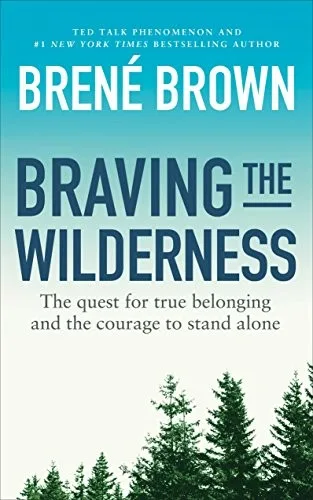
Brené Brown’s "Braving the Wilderness" arrives not as a self-help manual, but as a philosophical exploration of what it truly means to belong. The book’s strength lies in its unflinching honesty about the discomfort inherent in authentic self-expression, particularly when it diverges from societal norms. Brown’s identification of the "wilderness" as the space where we find our true selves, separate from the need for external validation, is particularly resonant. While the narrative is compelling, some readers might find the constant return to Brown’s personal anecdotes occasionally dilutes the broader philosophical inquiry. However, the concept of "braving"—showing up and being seen when we have no control over the outcome—is powerfully articulated and offers a practical framework for navigating personal and social challenges. It’s a valuable contribution for anyone seeking to reconcile their inner world with their outward life.
📝 Description
83
### What It Is Brené Brown's "Braving the Wilderness," first published in 2017, examines the concept of belonging not as fitting in, but as a state of being authentically oneself, even when it means standing alone. It explores how cultivating courage allows individuals to embrace vulnerability and find a deeper connection to themselves and others.
### Who It's For This work is for individuals seeking to understand the roots of true belonging, moving beyond superficial social acceptance to a more profound sense of self-connection. It appeals to those wrestling with feelings of isolation, the pressure to conform, or the desire to live a more courageous and integrated life.
### Historical Context Published in 2017, "Braving the Wilderness" emerged during a period of increasing social and political polarization. Brown's work offered a counter-narrative to the prevailing climate, advocating for empathy and authenticity as antidotes to division. It built upon her previous research into vulnerability and shame, first gaining widespread attention with her 2012 book "Daring Greatly."
### Key Concepts The book introduces several core ideas, including the distinction between fitting in and belonging, the importance of courage in the face of fear, and the concept of the "wilderness" as a metaphor for the journey toward self-discovery and authentic connection. It emphasizes embracing our full humanity, including our imperfections.
💡 Why Read This Book?
• You will learn to differentiate between superficial fitting-in and genuine belonging, understanding that true connection starts with self-acceptance, a concept Brown explores through the metaphor of the "wilderness." • You will gain insight into the courage required to stand firm in your convictions, even when isolated, a core tenet of Brown’s 2017 work that encourages authenticity. • You will feel empowered to embrace your full humanity, imperfections included, recognizing that vulnerability is the pathway to deeper connection, a theme central to her research since "Daring Greatly."
⭐ Reader Reviews
Honest opinions from readers who have explored this book.
❓ Frequently Asked Questions
What is the core message of Brené Brown's "Braving the Wilderness"?
The core message is that true belonging comes from within, not from conforming to external expectations. It's about having the courage to be yourself, even when it means standing alone in the "wilderness."
When was "Braving the Wilderness" by Brené Brown published?
"Braving the Wilderness" was first published in 2017.
How does "Braving the Wilderness" relate to Brené Brown's earlier work?
It builds upon her previous research on vulnerability and shame, notably in "Daring Greatly" (2012), extending these concepts to the idea of belonging and courage in a polarized world.
What does Brené Brown mean by the "wilderness" in the book?
The "wilderness" is a metaphor for the internal space where we confront our beliefs, fears, and desires, separate from societal pressures, to find our authentic selves and true belonging.
Is "Braving the Wilderness" a self-help book?
While offering practical insights, "Braving the Wilderness" is more of a philosophical exploration and research-based narrative than a prescriptive self-help guide. It encourages introspection and courage.
What are the key takeaways from "Braving the Wilderness"?
Key takeaways include understanding that belonging is an inside-out process, the necessity of courage for authenticity, and the value of embracing our full, imperfect selves to connect with others.
🔮 Key Themes & Symbolism
Authentic Belonging
Brown posits that true belonging isn't about assimilation or fitting in, but about the courage to be your authentic self. This requires embracing vulnerability and understanding that genuine connection stems from showing up fully, imperfections and all. The work challenges the notion that belonging is achieved through external validation, instead framing it as an internal state cultivated through self-acceptance and courage, even when that means standing apart from the crowd.
The Courage to Be Vulnerable
Central to "Braving the Wilderness" is the idea that courage is not the absence of fear, but the willingness to show up and be seen despite it. This involves embracing vulnerability as a strength, not a weakness. Brown argues that this courage is essential for forging deep connections and living a wholehearted life. The book explores how societal pressures often push us to armor ourselves, hindering true connection and self-discovery.
Navigating the "Wilderness"
The "wilderness" serves as a powerful metaphor for the challenging, often solitary, journey of self-discovery and authentic living. It's the space where we confront our own truths, beliefs, and fears, away from the comfort of the crowd. Brown suggests that embracing this internal landscape, with all its uncertainty and potential for discomfort, is where we find our true north and the capacity for genuine belonging. This journey requires resilience and a commitment to our own inner compass.
The Power of Empathy and Connection
Despite the emphasis on internal strength, "Braving the Wilderness" underscores the vital role of empathy in fostering connection. Brown argues that understanding and acknowledging the humanity in others, even those with whom we disagree, is crucial for bridging divides. This perspective offers a path towards connection in an increasingly polarized world, suggesting that true belonging extends to our ability to engage with others from a place of shared humanity.
💬 Memorable Quotes
“Belonging is being seen and heard. It’s not about fitting in. It’s about standing out and being willing to be seen.”
— This quote encapsulates Brown's central thesis: that belonging is an active, courageous state of self-expression rather than passive conformity. It redefines belonging away from societal acceptance towards individual authenticity and visibility.
“The wilderness is a place of profound, spiritual transformation.”
— Here, Brown elevates the concept of the 'wilderness' from a mere metaphor for isolation to a sacred space for personal growth. It suggests that the challenges and solitude encountered when being true to oneself are essential for deep, meaningful transformation.
“Courage is contagious. When brave people stand up, they inspire others.”
— This highlights the ripple effect of authentic action. Brown suggests that individual acts of courage, even in the face of uncertainty, can empower others to embrace their own bravery and contribute to a more courageous collective.
“Fitting in is the greatest barrier to belonging.”
— A direct challenge to conventional thinking, this statement asserts that the drive to conform and be accepted by a group actively prevents the deeper, more authentic connection that true belonging offers. It prioritizes individuality over group acceptance.
“We are looking for belonging, and we are looking for the place where we are seen and heard.”
— This quote emphasizes the innate human desire for connection and recognition. Brown frames this yearning as a fundamental need that can only be truly satisfied when we are authentically ourselves and allowed to be fully perceived.
🌙 Esoteric Significance
Tradition
While not strictly adhering to a single esoteric lineage, "Braving the Wilderness" taps into themes common in Jungian psychology and existential philosophy, which have strong overlaps with esoteric thought. Its exploration of the inner journey, the confrontation with the shadow self, and the search for authentic individuation echoes Gnostic and Hermetic principles of self-knowledge and spiritual transformation. Brown's "wilderness" can be seen as a modern interpretation of the spiritual desert or a challenging inner landscape described in various mystical traditions.
Symbolism
The primary symbol is the "wilderness" itself, representing the internal and external landscape of isolation, uncertainty, and self-discovery where true belonging is forged. Another motif is the "rumbling" – the internal feeling of unease that signals a need for attention or change, akin to intuitive nudges or the stirring of the soul in spiritual practices. The act of "braving" symbolizes the courageous engagement with these inner states and external challenges, essential for spiritual integrity.
Modern Relevance
Brown's work is highly relevant to contemporary mindfulness and self-compassion movements, which often draw on similar principles of acceptance and non-judgment. Thinkers and practitioners in fields like positive psychology, trauma-informed care, and leadership development frequently cite her research. Her emphasis on vulnerability and authenticity resonates with modern therapeutic approaches and personal growth communities seeking to foster genuine connection in an increasingly digital and often isolating world.
👥 Who Should Read This Book
• Individuals feeling alienated or struggling with the pressure to conform, seeking a framework to understand and cultivate genuine belonging from within. • Professionals in fields like therapy, coaching, or leadership development looking for research-backed insights into courage, vulnerability, and authentic connection. • Anyone on a personal growth journey interested in exploring the psychological and philosophical underpinnings of self-acceptance and finding one's true place in the world.
📜 Historical Context
Published in 2017, "Braving the Wilderness" emerged from Brené Brown's extensive research into vulnerability, shame, and courage, building on the success of her earlier works like "Daring Greatly" (2012). The book arrived during a period of intense social and political division in the United States, marked by the ascendancy of populist rhetoric and heightened public discourse on identity and belonging. Brown's work offered a counterpoint to the prevailing climate of polarization, advocating for empathy and authenticity as pathways to connection. While not directly engaging with academic theorists in the same vein as some earlier esoteric texts, Brown’s approach drew on psychological research and narrative storytelling, making complex concepts accessible. Her work gained significant traction in popular culture, influencing discussions on leadership, parenting, and personal development, and was widely reviewed in mainstream media outlets, underscoring its broad cultural impact.
📔 Journal Prompts
The concept of "braving" as an act of showing up and being seen.
Reflections on the distinction between fitting in and true belonging.
Identifying the internal "rumbling" that signals a need for authentic expression.
Exploring personal "wilderness" experiences and their transformative potential.
The courage required to be vulnerable in relationships and self-perception.
🗂️ Glossary
Belonging
In Brown's context, belonging is not about assimilation or fitting in, but about the internal state of being seen, heard, and valued for one's authentic self. It's an inside-out experience.
Fitting In
The act of conforming to group norms, expectations, and behaviors to gain acceptance. Brown argues this is the opposite of genuine belonging.
The Wilderness
A metaphor for the often-uncomfortable, solitary space of self-discovery where one confronts their true beliefs and values, separate from external pressures.
Braving
The act of showing up and being seen when you have no control over the outcome. It requires courage and vulnerability.
Rumbling
An internal, often subconscious, feeling or intuition that signals a need for attention, awareness, or change. It's a prompt toward authenticity.
Wholehearted Living
Living from a place of worthiness, connection, and courage, embracing vulnerability and authenticity in all aspects of life.
Shame
The intensely painful feeling or experience of believing we are flawed and therefore unworthy of love and belonging.