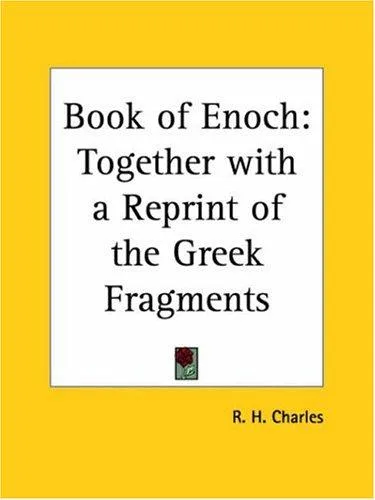
Book of Enoch
 82
82

Book of Enoch
Robert Henry Charles's 1991 edition of the Book of Enoch offers a critical translation that, while academically rigorous, can feel dense for the uninitiated. Charles meticulously unpacks the complexities of the text, providing invaluable historical and linguistic context. A standout feature is the detailed exploration of the Watchers' narrative, which significantly expands on the brief biblical account. However, the sheer volume of cosmological and prophetic detail, presented without extensive modern interpretation, might leave some readers grappling for direct application. The strength lies in its scholarly fidelity; its limitation is a potential barrier to entry for those not deeply versed in biblical studies or ancient apocalyptic literature. The passage detailing the angels' descent and their forbidden teachings (chapters 6-11) is particularly striking in its imaginative scope. This edition serves as a foundational resource for serious study.
📝 Description
82
Robert Henry Charles's 1991 edition translates the ancient Jewish apocalyptic text attributed to Enoch.
The Book of Enoch is an ancient Jewish apocalyptic text traditionally linked to Enoch, Noah's great-grandfather. While not part of the standard biblical canon for most Jewish and Christian groups, it holds considerable importance within certain theological and esoteric communities. This edition, translated and annotated by Robert Henry Charles, offers a scholarly examination of a text that provides unique insight into early Jewish thought and cosmology.
The Book of Enoch comprises various sections, with its origins likely spanning from the 3rd century BCE to the 1st century CE. It emerged during a dynamic period of Jewish religious and intellectual activity, a time characterized by varied scriptural interpretations. Its significance is noted in the New Testament, particularly in the Epistle of Jude, which quotes directly from it. Although excluded from the main Jewish and Christian canons, the complete text was preserved in Ge'ez by the Ethiopian Orthodox Tewahedo Church, demonstrating its historical relevance beyond the Western tradition.
This text is a significant artifact within early Jewish mysticism and Gnosticism. It details complex angelic orders, cosmic structures, and prophetic visions that influenced later esoteric thought. The narrative of fallen angels, the Watchers, and their corrupting influence on humanity provides a framework for understanding dualistic themes and the origins of evil, concepts that resonate deeply within Gnostic traditions. Its cosmological accounts and apocalyptic prophecies also connect it to broader streams of esoteric literature concerning the divine plan and humanity's place within it.
💡 Why Read This Book?
• Gain insight into the origins of angelology and demonology, particularly the narrative of the Watchers as detailed in chapters 6-11, a concept absent in the canonical Hebrew Bible. • Understand the historical context of Second Temple Judaism and the diverse apocalyptic traditions that shaped early religious thought, evidenced by its dating from the 3rd century BCE to the 1st century CE. • Explore early Jewish eschatological visions and cosmological frameworks, including detailed descriptions of the heavens and future judgment, which influenced later theological developments.
⭐ Reader Reviews
Honest opinions from readers who have explored this book.
❓ Frequently Asked Questions
What is the significance of the Book of Enoch in Ethiopian Orthodox Christianity?
The Book of Enoch is part of the canon for the Ethiopian Orthodox Tewahedo Church, unlike in most other Christian traditions. It is considered divinely inspired and holds significant theological importance, influencing their doctrines and liturgy.
When was the Book of Enoch likely written?
Scholarly consensus places the composition of the various sections of the Book of Enoch between the 3rd century BCE and the 1st century CE. Different parts of the text originated at different times within this period.
Who were the Watchers mentioned in the Book of Enoch?
The Watchers are a group of fallen angels described in the Book of Enoch who descended to Earth, married human women, and taught forbidden knowledge, leading to the corruption of humanity and the Nephilim. Their story is detailed in chapters 6-11.
Is the Book of Enoch considered scripture by mainstream Judaism?
No, the Book of Enoch is not considered part of the Hebrew Bible canon by mainstream Judaism. It is classified as apocryphal or pseudepigraphal literature, though it was influential in certain Jewish sects during the Second Temple period.
Where was the Book of Enoch preserved for centuries?
The Book of Enoch was primarily preserved in its entirety in the Ge'ez language by the Ethiopian Orthodox Tewahedo Church. Fragments were known elsewhere, but the complete text remained largely inaccessible in the West until modern translations.
What does the Book of Enoch reveal about early Messianic beliefs?
The Book of Enoch contains significant eschatological prophecies and descriptions of a future 'Son of Man' figure who will bring judgment and righteousness. This offers valuable insight into the development of Messianic expectations within Second Temple Judaism.
🔮 Key Themes & Symbolism
Angelology and Demonology
The text provides an extensive elaboration on the fall of the Watchers, a class of angels who descended to Earth, interbred with humans, and introduced forbidden arts and knowledge. This narrative significantly expands upon the scant biblical references, detailing their leaders like Semjaza and Azazel, their corruption of humanity, and the subsequent divine judgment leading to the Great Flood. It lays foundational concepts for later demonology and angelic hierarchies, crucial for understanding the evolution of these ideas in esoteric traditions.
Cosmology and Astronomy
Enoch undertakes celestial journeys, guided by angels, revealing the structure of the heavens, the abode of the dead, and the mechanisms of natural phenomena. The book details the courses of the sun, moon, and stars, the divisions of the year, and the workings of weather systems. This intricate cosmology reflects the intellectual curiosity of its time and presents a divinely ordered universe, influencing subsequent mystical and philosophical views on the cosmos and humanity's place within it.
Eschatology and Judgment
A significant portion of the Book of Enoch is dedicated to prophetic visions of the end times. It outlines the coming judgment upon the wicked, the resurrection of the righteous, and the establishment of a new, eternal kingdom. The text introduces a figure often interpreted as a pre-cursor to the Messiah, the 'Son of Man,' who will preside over this judgment. These eschatological elements were highly influential, shaping expectations for divine intervention and future salvation in both Jewish and early Christian thought.
The Origin of Sin and Evil
The book offers a detailed theological explanation for the pervasive presence of sin and evil in the world, attributing it directly to the transgressions of the Watchers. Their illicit teachings and corrupting influence are presented as the primary cause of humanity's moral decay, necessitating divine punishment through the Flood. This narrative provides an early, complex etiology of evil, focusing on the consequences of forbidden knowledge and angelic rebellion.
💬 Memorable Quotes
“And behold, the Lord called unto me and said unto me: 'Enoch, thou scribe of righteousness, go to and declare unto the sons of the Watchers of the heaven who have left the high heaven...'”
— This signifies Enoch's divine mandate to confront the fallen angels. It highlights his role as a divine messenger and scribe, tasked with conveying God's judgment and revelations to beings who have transgressed celestial law.
“And behold, every one of you, who has done what has been taught you, shall be bound.”
— This quote reflects the theme of accountability and judgment within the text. It underscores the principle that actions have consequences, particularly for those who have strayed from divine order or engaged in forbidden practices.
“For the days of the righteous shall be multiplied, and the years of the holy ones shall be multiplied.”
— This expresses a promise of longevity and prosperity for the righteous in the eschatological future. It contrasts the fate of the wicked with the abundant blessings awaiting those who uphold divine law.
“And the Lord will rest upon them in wrath, and there will be destruction from the Lord of Spirits.”
— This conveys the imminent and severe divine retribution awaiting the wicked. It emphasizes the power and wrath of the 'Lord of Spirits' as the ultimate force of judgment and cosmic correction.
“And from the days of the slaughter of the great archangels, by whom God wrought vengeance and wrought a great judgment in the earth...”
— This refers to a cataclysmic event, likely the Great Flood, understood as a divine act of vengeance and judgment carried out by archangels. It frames the Flood not merely as a natural disaster but as a divinely orchestrated cleansing of the corrupted Earth.
🌙 Esoteric Significance
Tradition
The Book of Enoch functions as a foundational text for certain branches of esoteric traditions, particularly those interested in angelology, demonology, and early apocalyptic eschatology. While not strictly Hermetic or Kabbalistic, its detailed cosmological maps and angelic hierarchies provide conceptual frameworks that resonate with mystical traditions seeking to understand the structure of the divine realms and the intermediaries between God and humanity.
Symbolism
Key symbols include the 'Watchers,' representing fallen divine beings whose transgression introduces corruption and forbidden knowledge, symbolizing the dangers of illicit spiritual or intellectual pursuits. The 'Son of Man' figure serves as a potent symbol of future divine justice and messianic redemption. Celestial journeys symbolize spiritual ascent and the acquisition of divine knowledge, mapping the path from earthly ignorance to cosmic understanding.
Modern Relevance
Contemporary esoteric practitioners and scholars of mysticism frequently reference the Book of Enoch for its detailed angelic classifications and its narrative on the origins of evil. It informs modern angel magick, demonology studies, and discussions on pre-Christian Messianism. Thinkers in comparative religion and occult studies continue to analyze its cosmological descriptions and prophetic elements for insights into ancient belief systems and their enduring influence.
👥 Who Should Read This Book
• Students of comparative religion and biblical apocrypha seeking primary source material on Second Temple Jewish thought and the development of angelology. • Practitioners of esoteric traditions interested in the historical roots of demonology, eschatology, and celestial hierarchies that inform later occult systems. • Scholars of early Christian origins looking to understand texts that influenced New Testament writers, such as the author of the Epistle of Jude.
📜 Historical Context
The Book of Enoch emerged during the Second Temple period of Judaism (roughly 516 BCE - 70 CE), a dynamic era characterized by diverse religious interpretations and the development of apocalyptic literature. Its origins are complex, with scholars generally dating its various sections from the 3rd century BCE to the 1st century CE. This period saw significant interaction with Hellenistic thought, yet Enoch represents a distinctively Jewish stream of eschatological and cosmological speculation. Its influence is notably seen in the New Testament, with the Epistle of Jude directly quoting from it, and other books showing thematic parallels. While excluded from the Tanakh and most Christian canons, its preservation by the Ethiopian Orthodox Tewahedo Church underscores its historical continuity and theological significance within that tradition. Its ideas on angels, demons, and the end times circulated widely, impacting early Christian theology and later esoteric movements, even as it was largely ignored or rejected by Rabbinic Judaism.
📔 Journal Prompts
The transgression of the Watchers and the forbidden knowledge they imparted.
Enoch's celestial journeys and the structure of the heavens.
The prophecy of the 'Son of Man' and future judgment.
The role of angels and their impact on human history.
Reflections on the origins of sin as depicted in the text.
🗂️ Glossary
Watchers
A class of angels who descended from heaven in the Book of Enoch, cohabited with human women, and taught forbidden knowledge, leading to widespread corruption and the Nephilim.
Nephilim
The offspring of the Watchers and human women, described as giants or mighty warriors. Their existence is presented as a result of the angelic transgression and a catalyst for the corruption of the Earth.
Son of Man
A messianic figure in the Book of Enoch who is presented as a pre-existent, chosen one who will sit in judgment and establish a new kingdom. This figure influenced later Christian interpretations of Jesus.
Ge'ez
An ancient South Semitic language that is the primary liturgical language of the Ethiopian Orthodox Tewahedo Church and the Eritrean Orthodox Tewahedo Church. The complete Book of Enoch was preserved in this language.
Apocalyptic Literature
A genre of revelatory literature with symbolic imagery, often concerning eschatology (end times), divine judgment, and the cosmic struggle between good and evil.
Second Temple Period
The era of Jewish history from the rebuilding of the Second Temple in Jerusalem (c. 516 BCE) until its destruction by the Romans in 70 CE. A time of diverse religious thought and textual development.
Archangel
A high-ranking angel. The Book of Enoch names several archangels, including Michael, Gabriel, Raphael, and Uriel, detailing their roles in divine administration and judgment.