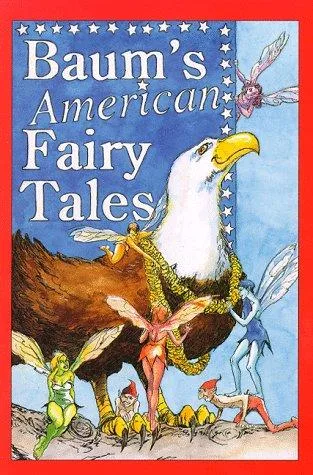
Baum's American Fairy Tales
 73
73

Baum's American Fairy Tales
L. Frank Baum's American Fairy Tales offers a glimpse into the author's foundational storytelling before the emerald city. The collection's strength lies in its distinctly American settings, injecting a familiar pragmatism into otherwise fantastical scenarios. For instance, the tale of 'The Discontented Pixies' grounds their magical mischief in a rural American landscape, making the enchantment feel more immediate. However, some narratives occasionally lean into a moralizing tone that feels a bit heavy-handed by contemporary standards, a common characteristic of children's literature from the late 19th and early 20th centuries. The overall charm is undeniable, though, with Baum demonstrating an early knack for creating relatable, if sometimes simple, characters facing unusual predicaments. It's a valuable addition for understanding Baum's development as a fantasist.
📝 Description
73
L. Frank Baum published American Fairy Tales in 1901, predating his Oz books.
Published in 1901, Baum's American Fairy Tales collects stories that adapt classic fairy tale structures to distinctly American settings. These narratives often imbue everyday objects and common occupations with magical properties. Baum's writing accessible, drawing readers into worlds where the ordinary transforms into the extraordinary. The tales touch on wish fulfillment, moral lessons, and the unexpected wonders that can arise from mundane circumstances.
This collection appeals to readers seeking fairy tales with a unique cultural inflection, moving beyond traditional European folklore. It is also for those interested in the evolution of American children's literature and Baum's early works. The stories suit younger readers ready for more complex narratives and adults who appreciate whimsical storytelling with subtle social commentary.
Published at the turn of the 20th century, Baum's American Fairy Tales emerged during a period of rapid industrialization and westward expansion in the United States. This era saw a burgeoning interest in uniquely American cultural expressions, including literature for children. Baum's work reflects a desire to create folklore that felt native to the American experience, distinct from imported tales. His engagement with children's fantasy literature sought to capture the American imagination, blending the familiar with the fantastical.
💡 Why Read This Book?
• Understand how L. Frank Baum transplanted classic fairy tale archetypes into American settings, as seen in "The Enchanted Spring," demonstrating a shift from European folklore to a native narrative voice. • Discover Baum's early explorations of wish fulfillment and its consequences, particularly in stories like "The Glass Dog," which provides a unique perspective on desire and its materialization. • Appreciate the integration of everyday American objects and occupations into magical narratives, exemplified by the enchanted thimble in "The Wonderful Thimble," offering a fresh take on how wonder can manifest in the mundane.
⭐ Reader Reviews
Honest opinions from readers who have explored this book.
❓ Frequently Asked Questions
When was L. Frank Baum's American Fairy Tales first published?
L. Frank Baum's American Fairy Tales was first published in 1901, several years before the debut of his most famous creation, the land of Oz.
What is the main difference between Baum's American Fairy Tales and traditional European fairy tales?
The primary distinction lies in the settings and cultural context. Baum's tales transplant classic fairy tale elements into distinctly American landscapes, featuring familiar occupations and objects, diverging from the medieval European settings common in tales by the Brothers Grimm or Hans Christian Andersen.
Are these stories related to The Wizard of Oz?
While not directly part of the Oz series, American Fairy Tales showcases Baum's early imaginative style and his ability to craft fantastical narratives. Many themes and storytelling techniques present here would later inform his creation of the Oz books, starting with The Wonderful Wizard of Oz in 1900.
What kind of moral lessons can be found in Baum's American Fairy Tales?
The stories often impart gentle moral lessons, emphasizing kindness, resourcefulness, and the potential for wonder in everyday life. They explore themes like the consequences of greed or the value of contentment, presented through engaging plots suitable for young readers.
Who were some of L. Frank Baum's contemporaries in children's literature around the time of this book's publication?
Around 1901, Baum was writing alongside authors like Frances Hodgson Burnett, known for 'The Secret Garden,' and Kenneth Grahame, author of 'The Wind in the Willows.' This period was rich with imaginative children's literature, and Baum carved out a unique niche with his American perspective.
Does this collection include the story 'The Wonderful Wizard of Oz'?
No, 'The Wonderful Wizard of Oz' was published as a separate novel in 1900. Baum's American Fairy Tales is a collection of distinct short stories, each with its own characters and plots, first compiled in 1901.
🔮 Key Themes & Symbolism
The Americanization of Folklore
Baum's American Fairy Tales deliberately transplants European fairy tale structures into American soil. Stories like "The Enchanted Spring" replace medieval castles with familiar rural landscapes, and archetypal characters are often given American occupations or sensibilities. This reflects a turn-of-the-century desire to establish a distinctly American literary tradition, one that found magic not in ancient forests but in the burgeoning nation's own settings and experiences. The collection highlights how enchantment can be found within the ordinary fabric of American life, from common objects to everyday challenges.
The Magic of the Mundane
A central tenet of these tales is the infusion of magic into everyday objects and situations. An enchanted thimble, a talking teapot, or a magical spring become the catalysts for extraordinary events. This approach democratizes magic, suggesting it is not the exclusive domain of royalty or mythical beings but accessible through the common items and experiences of ordinary people. Baum uses these enchanted objects to explore themes of desire, consequence, and the unexpected ways life can transform, making the fantastical relatable to his readers.
Moral Instruction Through Whimsy
While not overtly didactic, Baum's stories often carry subtle moral undercurrents. Characters learn lessons about contentment, the dangers of greed, the importance of kindness, or the value of resourcefulness. For example, in "The Discontented Pixies," the mischievous sprites learn the consequences of their actions. Baum achieves this moral development through engaging narratives and fantastical scenarios rather than heavy-handed pronouncements, making the lessons palatable and memorable for a young audience while retaining a whimsical tone.
Wish Fulfillment and its Consequences
Many of the tales explore the classic fairy tale trope of wishes granted, but Baum often adds a layer of nuanced consequence. The stories examine what happens when desires are materialized, prompting reflection on whether the granted wish truly brings happiness or if it complicates matters. This exploration of wish fulfillment, as seen in narratives like "The Glass Dog," provides a framework for understanding the gap between desire and satisfaction, adding a touch of realism to the magical elements.
💬 Memorable Quotes
Direct passages from the work, attributed to the author.
“The Thimble was enchanted, and whoever possessed it could wish for anything they desired, but it would only be granted if it was for the good of others.”
— This highlights a core theme: magic is often tethered to altruism. It suggests that true power or fulfillment comes not from selfish gain but from actions that benefit the community or those in need.
“The little Pixies were always wanting to play tricks, for they thought it great fun to make people unhappy.”
— This presents a classic fairy tale conflict: the mischievous, chaotic element versus order and happiness. It sets up the narrative where consequences must be learned, often through the disruption caused by such beings.
“He found that wishing for riches did not make him happy, but only brought him trouble.”
— This is a direct exploration of the adage that money can't buy happiness. It serves as a moral compass, cautioning against the pursuit of material wealth as the ultimate goal.
“The Talking Teapot explained that it could only speak the truth, and sometimes the truth is difficult to hear.”
— This introduces the idea that knowledge or honesty, even when magical, can be challenging. It suggests that facing reality, however unpleasant, is a crucial part of growth.
“She wished for a friend, and in a moment, a little dog appeared, wagging its tail.”
— This illustrates the immediate and often literal fulfillment of wishes in fairy tales. It sets up the subsequent narrative arc where the nature of this wished-for friend is explored.
🌙 Esoteric Significance
Tradition
While not explicitly aligned with a single esoteric lineage, Baum's work can be seen as touching upon currents within late 19th and early 20th-century occultism and New Thought movements. The emphasis on the power of the mind, wish fulfillment, and the manifestation of desire through enchanted objects echoes principles found in New Thought philosophy, which gained significant traction during this period. The idea that inner states could influence external reality aligns with magical thinking prevalent in spiritualist and theosophical circles of the time, though Baum's treatment remains firmly within the field of children's fantasy.
Symbolism
The enchanted objects within Baum's tales, such as the magical thimble or the talking teapot, function as potent symbols. The thimble, a tool of creation and mending, symbolizes constructive magic and the power of benevolent intent, as its wishes are tied to the good of others. The talking teapot, capable of speaking only truth, represents wisdom and clarity, albeit sometimes difficult truth, highlighting the symbolic weight of communication and revelation. These objects serve as conduits for transformation, symbolizing the potential for the extraordinary to emerge from the ordinary.
Modern Relevance
Baum's subtle exploration of wish fulfillment and the manifestation of desires through seemingly mundane objects holds relevance for contemporary self-help and manifestation practices. Modern thinkers and practitioners in fields influenced by New Thought or Law of Attraction principles might find traces of their ideas in Baum's narratives. His work offers a foundational, albeit fictional, exploration of how belief and desire can shape reality, presented in an accessible and engaging format that continues to captivate readers interested in the power of the mind.
👥 Who Should Read This Book
• Aspiring writers and storytellers interested in the evolution of children's fantasy, particularly how authors adapt traditional archetypes to new cultural contexts. • Readers exploring the history of American children's literature and the development of uniquely national narrative styles at the turn of the 20th century. • Enthusiasts of L. Frank Baum's broader work seeking to understand his foundational storytelling techniques before his creation of the Oz series.
📜 Historical Context
L. Frank Baum's American Fairy Tales, first published in 1901, emerged during a central period in American cultural and literary history. The late 19th and early 20th centuries witnessed rapid industrialization, urbanization, and a burgeoning sense of national identity. In literature, this translated into a growing interest in creating stories that felt distinctly American, moving away from the dominance of European folklore. Baum, already gaining fame for his Oz books (beginning with 'The Wonderful Wizard of Oz' in 1900), sought to craft tales that resonated with the American experience. His work competed for attention with other popular children's authors of the era, such as Frances Hodgson Burnett and Howard Pyle, who were also shaping the range of juvenile fiction. Baum’s approach, emphasizing American settings and themes, contributed to the development of a unique national children's literature, distinct from the established traditions of the Brothers Grimm or Hans Christian Andersen.
📔 Journal Prompts
The enchanted thimble's requirement for benevolent wishes.
The consequences of the Glass Dog's wish fulfillment.
The Talking Teapot's pronouncements of difficult truths.
The Discontented Pixies' motivation for mischief.
The transformation of the ordinary in "The Enchanted Spring."
🗂️ Glossary
American Fairy Tale
A fairy tale that incorporates settings, characters, or cultural elements specific to the United States, distinguishing it from traditional European folklore.
Enchanted Object
An everyday item imbued with magical properties or abilities, serving as a catalyst for plot development and thematic exploration in fantasy literature.
Wish Fulfillment
A common narrative device in fairy tales where characters' desires are granted, often leading to unforeseen consequences or moral lessons.
Archetype
A recurring symbol, character type, or motif in literature that represents universal patterns of human nature or experience, such as the trickster or the benevolent magical helper.
New Thought
A spiritual movement that emerged in the 19th century, emphasizing the power of positive thinking and the ability of the mind to influence reality and achieve health and prosperity.
Folklore
The traditional beliefs, customs, and stories of a community, passed through the generations by word of mouth.
Moral Lesson
An underlying principle or teaching conveyed through a story, often related to ethics, behavior, or societal values.
🔮 Readers Also Liked
Browse all →








More by L. Frank Baum
All books →





More Free Occult Philosophy Books
View all →