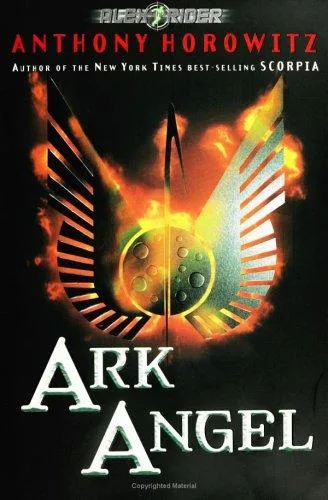
Ark Angel
 76
76

Ark Angel
Anthony Horowitz’s Ark Angel presents a familiar premise—an ordinary teen discovering he’s destined for extraordinary, angelic duties—with energetic prose and a keen sense of pacing. The strength of the novel lies in its brisk plot progression and the relatable struggles of its protagonist, Peter, as he grapples with his newfound identity and the immense pressure of cosmic warfare. However, the exploration of complex theological or philosophical concepts often feels superficial, serving more as plot devices than deep dives into angelic nature or existential dilemmas. A particularly notable element is the depiction of the angelic realm as a functional, almost bureaucratic entity, which, while interesting, can sometimes detract from the mythical gravitas. The climax, while action-packed, resolves with a predictability that lessens its impact. Ultimately, Ark Angel is an entertaining, if somewhat shallow, dive into celestial conflict.
📝 Description
76
### What It Is Ark Angel, by Anthony Horowitz, first published in 2005, is a young adult novel that blends thriller elements with supernatural intrigue. The narrative follows a teenage protagonist who discovers he is an angel, tasked with preventing a cosmic catastrophe. The book operates within a framework of celestial hierarchies and ancient prophecies, positioning its young hero as a reluctant warrior against dark forces.
### Who It's For This novel appeals to readers who enjoy fast-paced plots, supernatural themes, and stories centered on adolescent protagonists grappling with extraordinary destinies. Fans of urban fantasy and angelology narratives will find familiar elements, while those new to these concepts will encounter them through an accessible, action-driven story. It is particularly suited for young adults seeking adventure with a spiritual or metaphysical undercurrent.
### Historical Context Published in 2005, Ark Angel emerged during a period of sustained interest in young adult fantasy and paranormal fiction, a trend significantly amplified by series like Harry Potter and Twilight. Horowitz’s work taps into this popular vein, offering a contemporary take on angelic lore that deviates from purely theological interpretations. The novel’s success reflects a broader cultural appetite for accessible explorations of spiritual themes within secular entertainment formats.
### Key Concepts The book introduces concepts such as fallen angels, divine missions, and the inherent struggle between good and evil, framed within a modern setting. It explores the idea of destiny and the weight of responsibility placed upon an unlikely individual. The narrative also touches upon the nature of free will versus predestination, as the protagonist navigates his angelic duties alongside his human life.
💡 Why Read This Book?
• Gain insight into the modern reinterpretation of angelic lore, seeing how concepts like celestial hierarchy are adapted for contemporary YA fiction, similar to how works in the late 20th century engaged with Gnostic ideas. • Experience a narrative that explores the burden of destiny through the character of Peter, a reluctant hero who must reconcile his human existence with his angelic calling, a theme echoing in many 21st-century paranormal romances. • Follow a plot driven by a cosmic struggle between good and evil, presented with the urgency and action typical of thrillers, offering a distinct approach to spiritual conflict compared to older allegorical works.
⭐ Reader Reviews
Honest opinions from readers who have explored this book.
❓ Frequently Asked Questions
What is the core premise of Anthony Horowitz's Ark Angel?
Ark Angel follows Peter, a teenager who discovers he is an angel with a crucial mission to prevent a catastrophic event. The book explores his struggle to balance his human life with his celestial destiny.
Is Ark Angel part of a series by Anthony Horowitz?
Yes, Ark Angel is part of Anthony Horowitz's 'The Gatekeepers' series, which began with The Diamond of Jeru in 2004 and continued with Ark Angel in 2005.
What esoteric or supernatural elements are present in Ark Angel?
The novel features angels, fallen angels, divine missions, prophecies, and a cosmic battle between good and evil, all framed within a contemporary setting.
Who is the intended audience for Ark Angel?
The book is primarily aimed at young adult readers who enjoy fantasy, supernatural thrillers, and stories about protagonists discovering hidden powers and responsibilities.
What distinguishes Ark Angel from other angel-themed stories?
Horowitz imbues the story with a fast-paced, thriller-like structure and presents the angelic realm with a somewhat modern, almost bureaucratic, sensibility, making it accessible to a broad readership.
When was Ark Angel first published?
Ark Angel was first published in 2005, placing it within the boom of young adult paranormal fiction in the early 21st century.
🔮 Key Themes & Symbolism
The Reluctant Hero's Journey
The narrative centers on Peter, a seemingly ordinary teenager thrust into an extraordinary role as an angel. His reluctance to accept his destiny and the immense pressure it entails forms the core of his character arc. This theme resonates with the archetype of the unwilling chosen one, often found in myth and legend, but here updated for a modern adolescent audience. The work explores how external divine mandates clash with personal desires and the challenges of embracing a fate one did not choose, a concept that has parallels in discussions of predestination versus free will within various theological frameworks.
Cosmic Conflict and Celestial Bureaucracy
Ark Angel presents a celestial conflict not just as a spiritual battle but as an organized, albeit often chaotic, operation. The depiction of angels and their missions can feel almost bureaucratic, with hierarchies, assignments, and consequences. This interpretation of the divine realm provides a unique lens through which to view the eternal struggle between good and evil. It grounds the fantastical elements in a more structured, almost procedural, approach, making the vastness of cosmic warfare more comprehensible and relatable to the reader by mirroring earthly organizational structures.
The Nature of Identity and Free Will
As Peter grapples with his dual identity—human boy and celestial being—the book delves into questions of selfhood and agency. Is he defined by his angelic nature or his human experiences? The narrative explores the tension between his predetermined role as an Ark Angel and his personal choices. This internal conflict mirrors philosophical debates about determinism and free will, questioning whether his actions are preordained or genuinely his own. The novel suggests that true identity is forged through the choices made when faced with overwhelming destiny.
Modern Mythology of Angels
Horowitz updates traditional angelology for a contemporary audience, blending biblical concepts with modern storytelling conventions. Angels are portrayed not just as ethereal beings but as agents with specific roles in a cosmic struggle, interacting with the human world in tangible ways. This approach makes the ancient lore of angels accessible and engaging for young adults, positioning them as active participants in a grander, supernatural narrative. The work reflects a broader trend in popular culture to reinterpret mythological and religious figures in secular contexts.
💬 Memorable Quotes
“He was an angel, a warrior with wings of fire and a sword of light.”
— This phrase captures the dramatic transformation of the protagonist from an ordinary boy to a celestial warrior. It emphasizes the visual and combative aspects of his angelic nature, setting the stage for the epic conflicts he will face.
“The fate of the world rested on the shoulders of a teenager who just wanted to pass his exams.”
— This highlights the central irony and conflict of the story: the immense responsibility placed upon an unlikely, ordinary individual. It underscores the theme of the reluctant hero and the clash between mundane adolescent concerns and cosmic stakes.
“Evil was not just a concept; it was a tangible force seeking to unravel creation.”
— This interpretation emphasizes the active and pervasive nature of the antagonist forces in the book. It moves beyond abstract notions of 'evil' to present it as an aggressive entity with the specific goal of destroying existence.
“His angelic duty was a burden he could not escape, a destiny etched in the stars.”
— This paraphrased concept speaks to the inescapable nature of the protagonist's calling. It conveys the weight and predestined quality of his mission, suggesting that his role as an 'Ark Angel' is immutable and profoundly significant.
“He had to fight not just for humanity, but for the very fabric of reality.”
— This statement elevates the conflict beyond a simple good versus evil scenario. It suggests that the stakes are existential, involving the fundamental structure of the universe itself, thus amplifying the importance of the protagonist's role.
🌙 Esoteric Significance
Tradition
Ark Angel engages with Christian angelology but reframes it within a modern YA thriller context, departing significantly from traditional theological or mystical frameworks. While it references concepts like divine missions and celestial hierarchies, it does so with a narrative focus on action and adolescent relatable struggles rather than deep exploration of angelic nature or esoteric doctrine. It draws loosely on the idea of angelic orders and their roles in cosmic battles, a theme present in various Abrahamic traditions, but secularizes it for a popular audience, making it more akin to modern fantasy tropes than strict adherence to any specific esoteric lineage.
Symbolism
The primary symbolism revolves around the protagonist's transformation into an 'Ark Angel,' representing a vessel or guardian of immense power and responsibility. Wings, a common angelic symbol, signify spiritual elevation and the capacity for divine action, contrasting with his grounded human existence. The 'sword of light' symbolizes divine justice and the power to combat darkness, a recurring motif in spiritual warfare narratives. These symbols are employed to externalize the internal conflict between Peter’s human nature and his celestial destiny.
Modern Relevance
Contemporary YA fiction, particularly in the urban fantasy and paranormal romance genres, continues to draw inspiration from narratives like Ark Angel. The trope of the ordinary person discovering hidden supernatural heritage and destiny is a staple. Modern authors exploring themes of angels, demons, and cosmic battles often employ similar narrative structures and character archetypes, making Horowitz's work a relevant precursor. Thinkers and creators interested in how ancient myths are adapted for new generations will find this novel a case study in modern myth-making.
👥 Who Should Read This Book
• Young adult readers aged 13-18 seeking fast-paced adventure stories with supernatural elements and relatable teenage protagonists. • Fans of paranormal fiction and urban fantasy who enjoy narratives featuring angels, cosmic battles, and the discovery of hidden powers. • Readers interested in modern interpretations of biblical or mythological figures, presented in an accessible, non-academic format.
📜 Historical Context
Published in 2005, Anthony Horowitz's Ark Angel arrived during a significant period for young adult literature, marked by a surge in fantasy and paranormal themes. The success of series like J.K. Rowling’s Harry Potter and Stephenie Meyer’s Twilight had solidified a market eager for stories featuring extraordinary protagonists navigating complex worlds. Horowitz’s novel tapped into this cultural milieu by offering a fresh take on angelic lore, presenting celestial beings and their cosmic battles within a contemporary, action-oriented framework. This approach differed from more traditional, theological interpretations of angels, aligning instead with a popular trend of secularizing and dramatizing spiritual concepts for mass entertainment. The book's reception reflected the broader audience's appetite for accessible supernatural narratives that offered adventure and a sense of wonder, diverging from the more academic or purely religious explorations of angelology that existed concurrently. While not engaging directly with specific intellectual currents like Gnosticism or Kabbalah in its narrative, its popularity implicitly engaged with a cultural fascination with hidden powers and hidden worlds, a theme explored across various media in the early 21st century.
📔 Journal Prompts
Peter's dual identity as human and angel.
The concept of a 'cosmic battle' in contemporary fiction.
The burden of destiny placed upon an unlikely hero.
Interpreting the symbolism of angelic wings in the narrative.
The contrast between divine mission and personal desires.
🗂️ Glossary
Ark Angel
A specific type of angel, implied to be a warrior or guardian with a critical role in cosmic conflicts. In the context of the book, it refers to the protagonist's ultimate identity and purpose.
Fallen Angel
An angel who has rebelled against divine authority and is often associated with malevolent forces or opposition to celestial order. Their presence signifies the active conflict between good and evil.
Celestial Hierarchy
The structured order or ranking of angels and other divine beings within the heavenly realm. The book implies such a structure influences the assignment of missions and the dynamics of angelic society.
Divine Mission
A task or purpose assigned by a higher divine power to an individual, often of great importance and consequence. For the protagonist, this involves preventing a world-ending catastrophe.
Prophecy
A prediction of future events, often delivered through a divine or supernatural source. Prophecies in the book guide the characters and foreshadow major plot developments.
Cosmic Battle
A large-scale conflict that extends beyond the human realm, involving supernatural forces and determining the fate of existence itself. It is the central struggle within the narrative.
Predestination
The doctrine that all events have been willed by God, usually with reference to the eventual fate of the individual soul. This concept is explored through the protagonist's struggle with his predetermined angelic role.