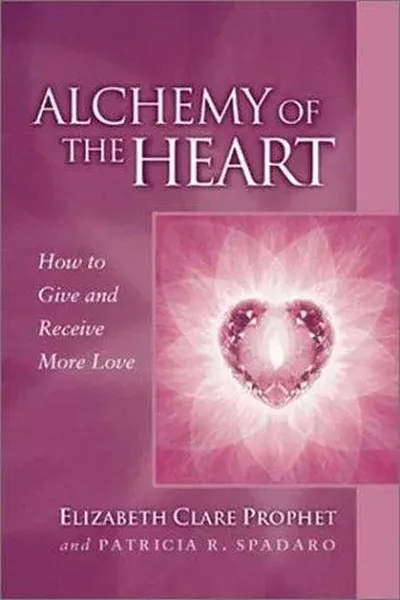
Alchemy of the Heart

 74
74

Alchemy of the Heart
Patricia R. Spadaro’s *Alchemy of the Heart* (2000) attempts to bridge disparate spiritual vocabularies by positioning alchemical metaphors as a universal language of transformation. Its strength lies in the ambitious scope, drawing connections between, for instance, Tantric practice and Western Hermeticism. However, the sheer breadth occasionally leads to a surface-level treatment of complex traditions. A particularly illustrative section discusses the *coniunctio oppositorum*, framing it as a core goal across various mystical paths. While insightful, the work sometimes feels more like an extended essay on a theme than a deep dive into any single tradition. Spadaro's analysis offers a valuable perspective for those exploring the commonalities of spiritual striving, though seasoned scholars of specific traditions might find the synthesis lacking in granular detail. It serves as a compelling introduction to the symbolic resonance of inner alchemy.
📝 Description
74
### What It Is Alchemy of the Heart by Patricia R. Spadaro, first published in 2000, offers a comparative exploration of spiritual traditions through the lens of alchemical symbolism. It examines how various mystical paths, from Western esotericism to Eastern philosophies, utilize similar allegorical language to describe inner transformation. The book is not a practical guide to chemical alchemy but a symbolic interpretation of its processes as metaphors for psychological and spiritual development.
### Who It's For This work is intended for individuals interested in comparative religion, esoteric studies, and the psychology of transformation. Readers seeking to understand the universal archetypes underlying different spiritual disciplines will find value here. It is particularly suited for those who appreciate symbolic language and the historical threads connecting diverse mystical traditions, offering a framework for personal spiritual inquiry.
### Historical Context Published at the turn of the millennium, Alchemy of the Heart emerged during a period of renewed interest in Jungian psychology and comparative mysticism. The early 2000s saw a surge in popular and academic engagement with esoteric traditions, influenced by figures like Carl Jung, whose work on archetypes and the collective unconscious provided a psychological framework for understanding ancient symbols. Spadaro’s book contributes to this intellectual climate by drawing parallels between diverse traditions, a common approach in esoteric literature of the late 20th and early 21st centuries.
### Key Concepts The book centers on the idea that alchemy, beyond its literal chemical pursuits, serves as a profound metaphor for the soul's purification and integration. Spadaro explores concepts such as the 'Prima Materia' as the raw, undifferentiated self, the 'Philosopher's Stone' as the integrated, enlightened consciousness, and the alchemical stages (nigredo, albedo, rubedo) as stages of psychological and spiritual breakdown, purification, and synthesis. The 'coniunctio oppositorum,' or union of opposites, is presented as a central aim of this inner work.
💡 Why Read This Book?
• Understand the symbolic language of inner transformation: You will learn how alchemical processes, like the *nigredo* and *rubedo*, are used metaphorically across diverse traditions to describe psychological integration, a concept explored in detail within the book's chapters. • Discover universal archetypes in spirituality: The book illustrates how concepts like the 'Philosopher's Stone' function as archetypal symbols of enlightenment, providing a comparative framework that Spadaro uses to connect Western and Eastern mystical thought. • Gain a new perspective on personal growth: By examining the 'coniunctio oppositorum' as a central aim of spiritual alchemy, you can reframe your understanding of integrating inner conflicts and achieving psychological wholeness, as presented in the text.
⭐ Reader Reviews
Honest opinions from readers who have explored this book.
❓ Frequently Asked Questions
Is Alchemy of the Heart a practical guide to chemical alchemy?
No, Alchemy of the Heart by Patricia R. Spadaro (2000) is not a manual for performing chemical alchemy. Instead, it uses alchemical processes and symbolism as metaphors for psychological and spiritual transformation, exploring their relevance across various esoteric and religious traditions.
What does the 'Philosopher's Stone' represent in Spadaro's work?
In Patricia R. Spadaro's Alchemy of the Heart, the 'Philosopher's Stone' is presented metaphorically. It symbolizes the achieved state of spiritual enlightenment, inner wholeness, or the perfected consciousness that results from the arduous process of alchemical transformation described in the book.
Which spiritual traditions does Alchemy of the Heart compare?
Alchemy of the Heart compares numerous spiritual traditions, including Western Hermeticism, Gnosticism, and Eastern philosophies such as Tantra and Buddhism. Spadaro highlights shared symbolic language and transformative aims across these diverse paths, originally published in 2000.
What are the alchemical stages mentioned in the book?
The book discusses key alchemical stages often interpreted symbolically for inner work: *nigredo* (blackening, dissolution), *albedo* (whitening, purification), and *rubedo* (reddening, unification). Spadaro uses these to map stages of psychological and spiritual development.
Who is Patricia R. Spadaro?
Patricia R. Spadaro is an author known for her work exploring esoteric traditions and comparative mysticism. Alchemy of the Heart, first published in 2000, is one of her significant contributions to the literature on spiritual transformation through symbolic interpretation.
What is the 'coniunctio oppositorum' in the context of this book?
The 'coniunctio oppositorum,' or union of opposites, is a central concept in Alchemy of the Heart. Spadaro interprets it as the alchemical goal of integrating dualities within the self—such as masculine/feminine, spirit/matter—to achieve a state of psychic wholeness and spiritual completion.
🔮 Key Themes & Symbolism
Alchemical Metaphor for Inner Work
The core of Alchemy of the Heart lies in its extensive use of alchemical processes and symbols as metaphors for psychological and spiritual development. Spadaro argues that the stages of the Great Work—from the initial dissolution (*nigredo*) to purification (*albedo*) and final integration (*rubedo*)—parallel the human journey toward self-realization. This perspective reframes historical alchemical texts not as literal scientific pursuits but as symbolic maps for the soul's transformation, a concept explored throughout the book's comparative analysis.
The Union of Opposites
A significant theme is the 'coniunctio oppositorum,' or the union of opposites, which Spadaro identifies as a universal goal across diverse spiritual traditions. This concept signifies the integration of conflicting aspects within the psyche—such as anima and animus, divine and human, or spirit and matter—into a harmonious whole. The book posits that achieving this balance is central to the attainment of the 'Philosopher's Stone,' representing a state of integrated consciousness and spiritual maturity.
Comparative Mystical Symbolism
Spadaro's work excels in drawing parallels between the symbolic language of Western esotericism, particularly alchemy and Hermeticism, with Eastern mystical traditions like Tantra and Buddhism. She demonstrates how similar archetypal patterns and transformative processes are described using different cultural vocabularies. This comparative approach highlights a shared human impulse toward spiritual realization and offers readers a broader understanding of mystical pathways.
The Quest for Wholeness
Ultimately, Alchemy of the Heart explores the perennial human quest for wholeness and spiritual completion. The 'Philosopher's Stone' serves as the ultimate symbol of this integrated state—a state of being characterized by profound self-knowledge, spiritual enlightenment, and psychological equilibrium. The book suggests that by understanding the symbolic language of inner alchemy, individuals can better navigate their own paths toward achieving this state of perfected consciousness.
💬 Memorable Quotes
“The alchemist’s goal was not to transmute base metals into gold, but to transmute the base elements of his own nature into gold.”
— This interpretation highlights the book's central thesis: that alchemy, at its most profound level, is an inner work. Spadaro uses this idea to connect the ancient art to modern psychological and spiritual aspirations for self-improvement and enlightenment.
“The stages of the alchemical process mirror the stages of personal transformation.”
— This paraphrased concept underscores the book's methodological approach. It suggests that the symbolic stages like *nigredo* and *albedo* are not just historical curiosities but represent a psychological roadmap for inner growth and purification.
“The union of opposites is the key to achieving the Philosopher’s Stone.”
— This core idea emphasizes the integration of dualities as essential for spiritual attainment. Spadaro applies this principle across various traditions, suggesting it's a universal requirement for wholeness and enlightenment.
“The Prima Materia is the undifferentiated chaos from which all creation, inner and outer, arises.”
— This definition clarifies a fundamental alchemical concept. Spadaro uses the 'Prima Materia' to represent the raw, unformed potential within the individual, the starting point for the transformative journey detailed in the book.
“Symbolism provides a universal language for the soul’s journey.”
— This statement encapsulates Spadaro's belief in the connective power of symbols. It explains the book's focus on alchemical imagery as a means to bridge the perceived gaps between different spiritual and psychological paths.
🌙 Esoteric Significance
Tradition
Alchemy of the Heart fits within the Hermetic and Jungian esoteric traditions. It draws heavily on Western Hermeticism, particularly the symbolic language of chemical alchemy, reinterpreting it through the psychological framework developed by Carl Jung. The work also engages with Gnostic ideas of spiritual transformation and echoes concepts found in Eastern mystical paths like Tantra and Buddhism, positioning alchemical symbolism as a universal language for the soul's journey toward integration and enlightenment.
Symbolism
Key symbols explored include the 'Prima Materia,' representing the undifferentiated potential of the self; the 'Philosopher's Stone,' symbolizing the achieved state of spiritual wholeness and enlightenment; and the alchemical stages (*nigredo*, *albedo*, *rubedo*), which map the process of psychological breakdown, purification, and synthesis. The 'coniunctio oppositorum' (union of opposites) is presented as the ultimate goal of this inner alchemical work.
Modern Relevance
Spadaro's work remains relevant for contemporary practitioners of depth psychology, transpersonal psychology, and comparative religion. Thinkers and groups exploring Jungian archetypes, the integration of shadow aspects, and the universal patterns of spiritual awakening find resonance in her symbolic interpretations. The book's approach to inner alchemy continues to inform modern spiritual seekers interested in self-transformation through symbolic exploration and the synthesis of diverse wisdom traditions.
👥 Who Should Read This Book
• Students of comparative religion and mysticism: Individuals seeking to understand the common threads and symbolic language that connect diverse spiritual traditions will find value in Spadaro's comparative analysis. • Seekers interested in Jungian psychology and archetypes: Those drawn to Carl Jung's work on psychological transformation and the interpretation of ancient symbols will appreciate the book's application of these concepts to alchemy. • Personal growth and spiritual development enthusiasts: Readers looking for metaphorical frameworks to understand their own inner journeys toward wholeness and self-realization will find practical insights in the symbolic processes described.
📜 Historical Context
Published in 2000, Patricia R. Spadaro's *Alchemy of the Heart* arrived at a juncture where Jungian psychology and comparative mysticism were gaining significant popular traction. Carl Jung's extensive work on archetypes and the collective unconscious had already provided a framework for interpreting alchemical symbolism through a psychological lens, influencing scholars and spiritual seekers alike. Spadaro’s book tapped into this trend, presenting alchemical processes as metaphors for inner transformation, drawing parallels between Western Hermetic traditions and Eastern philosophies. It emerged in an intellectual climate that was receptive to ideas of spiritual synthesis and the universality of human experience, a stark contrast to the more fragmented and specialized academic approaches prevalent earlier in the 20th century. Unlike purely academic treatises, Spadaro’s work aimed for a broader audience interested in personal spiritual growth through symbolic understanding, contributing to the growing esoteric literature of the era.
📔 Journal Prompts
Reflect on the 'Prima Materia' as your own raw, unmanifested potential.
Consider the 'coniunctio oppositorum' in relation to integrating personal dualities.
Map your own inner 'nigredo' phase and its symbolic meaning.
How does the concept of the 'Philosopher's Stone' inform your current spiritual goals?
Explore the alchemical stages as a symbolic progression in your life's narrative.
🗂️ Glossary
Prima Materia
The fundamental, undifferentiated substance from which all things are believed to originate in alchemical philosophy. In the context of the book, it represents the raw, unformed potential of the individual psyche.
Philosopher's Stone
A legendary alchemical substance said to be capable of transmuting base metals into gold or silver, and also to produce the elixir of life. Spadaro interprets it as a symbol of spiritual perfection, enlightenment, and integrated consciousness.
Nigredo
The first stage of the alchemical Great Work, often symbolized by blackness, dissolution, or putrefaction. It represents a phase of breakdown, confronting the shadow, and the necessary disintegration of the old self.
Albedo
The second stage of the alchemical Great Work, symbolized by whiteness or purification. It follows the *nigredo* and represents the cleansing of impurities and the emergence of a refined, purified consciousness.
Rubedo
The third and final stage of the alchemical Great Work, symbolized by redness. It signifies completion, integration, the union of opposites, and the attainment of the 'Philosopher's Stone' or spiritual perfection.
Coniunctio oppositorum
Latin for 'union of opposites.' In alchemy and psychology, it refers to the integration of seemingly contradictory elements within the psyche, leading to wholeness and balance.
Hermeticism
A philosophical and religious tradition based primarily upon writings attributed to Hermes Trismegistus. It emphasizes esoteric knowledge, spiritual transformation, and the interconnectedness of all things, often including alchemical principles.