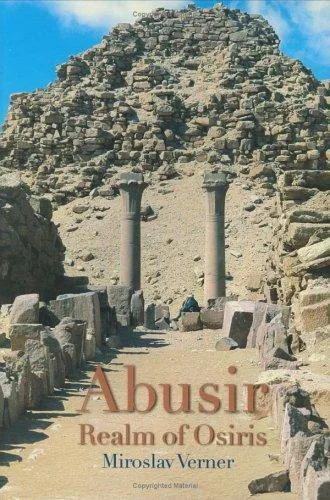
Abusir
 72
72

Abusir
Miroslav Verner's Abusir offers a granular, almost forensic, look at one of Egypt's most significant Old Kingdom necropolises. The sheer density of archaeological data presented is impressive, particularly the detailed descriptions of the various pyramid complexes and their surrounding structures. Verner’s expertise, honed over decades of fieldwork at the site, shines through in his careful reconstruction of architectural phases and ritualistic purposes. A particular strength lies in the meticulous cataloging of finds, which allows for a tangible connection to the past.
However, the book's scholarly rigor, while its primary asset, can also be its limitation for the non-specialist. The prose, though clear, is often dense with technical terminology and detailed measurements, demanding a focused and knowledgeable reader. While the historical context is present, the work prioritizes archaeological evidence over narrative flair. The exploration of Sahure's pyramid complex, detailing its unique reliefs and mortuary temple, exemplifies this balance, offering deep insight but requiring sustained attention.
Read more ↓
Abusir is an invaluable, if demanding, contribution to Egyptology, a testament to meticulous fieldwork and scholarly dedication.
📝 Description
72
### What It Is Abusir, a foundational text by Miroslav Verner, presents a rigorous examination of the ancient Egyptian necropolis located near modern Cairo. First published in 2017, the work meticulously details the archaeological findings and historical significance of this vital royal burial ground. It moves beyond mere cataloging to reconstruct the lives, rituals, and architectural evolution of the Old Kingdom's elite. The book synthesizes decades of excavation and scholarly analysis, offering a comprehensive overview of the site's development from its inception through various dynastic periods.
### Who It's For This volume is essential for Egyptologists, archaeologists, and historians specializing in the Old Kingdom period. Its detailed approach will also appeal to serious students of ancient civilizations and religious practices who seek a deep, evidence-based understanding of Egyptian funerary customs and royal ideology. Readers interested in the material culture of ancient Egypt, particularly the construction and purpose of pyramids and associated structures, will find substantial value here. It is not a casual introduction but a scholarly resource for those committed to in-depth study.
### Historical Context The exploration of Abusir has been a continuous endeavor since the 19th century, with significant systematic excavations commencing in the 1970s under Czech leadership. Verner's work builds upon the legacy of earlier archaeologists and consolidates the findings of the Czechoslovak/Czech Institute of Egyptology. This period of intense archaeological activity in Egypt, particularly from the 1950s onward, saw numerous international teams uncovering vast amounts of material, contributing to a richer, albeit sometimes debated, understanding of dynastic Egypt. The book situates Abusir within the broader landscape of Old Kingdom royal mortuary complexes, alongside sites like Saqqara and Giza.
### Key Concepts Central to Abusir is the concept of the royal pyramid complex as a microcosm of the universe and a locus for the pharaoh's eternal cult. The book elucidates the intricate layout of these complexes, including the pyramid itself, the mortuary temple, the valley temple, and the causeway, explaining their ritualistic functions. It also explores the development of these structures over time, noting shifts in architectural style and religious emphasis across different dynasties. The administration and economy supporting these massive constructions, including the provision for the deceased king's cult through land endowments and personnel, are also examined in detail.
💡 Why Read This Book?
• Gain a concrete understanding of the Old Kingdom's royal burial practices by examining the specific architectural layouts and ritualistic functions detailed for Sahure's pyramid complex, a cornerstone of Abusir. • Appreciate the evolution of Egyptian funerary architecture and ideology through Verner's analysis of the site's development across different dynasties, highlighting shifts evident from the 5th and 6th Dynasties. • Understand the logistical and economic underpinnings of pharaonic power by exploring the temple endowments and administrative structures that supported the eternal cults at Abusir, as meticulously documented.
⭐ Reader Reviews
Honest opinions from readers who have explored this book.
❓ Frequently Asked Questions
What is the primary focus of Miroslav Verner's "Abusir"?
The book's primary focus is the detailed archaeological and historical analysis of the ancient Egyptian necropolis of Abusir, particularly its Old Kingdom royal pyramid complexes and associated structures, based on extensive excavation data.
When was "Abusir" first published?
"Abusir" by Miroslav Verner was first published in 2017, consolidating decades of research and fieldwork.
What historical period does "Abusir" primarily cover?
The book predominantly covers the Old Kingdom period of ancient Egypt, with a specific emphasis on the 5th and 6th Dynasties, during which many of the key structures at Abusir were constructed.
Who is Miroslav Verner and what is his connection to Abusir?
Miroslav Verner is a renowned Czech Egyptologist who led extensive excavations at Abusir for many years, particularly focusing on the pyramid complexes of the Old Kingdom rulers.
What kind of information can readers expect regarding the pyramids at Abusir?
Readers can expect detailed descriptions of the architecture, construction methods, inscriptions, and ritualistic purposes of the pyramids and associated temples of rulers like Sahure, Neferirkare, and Nyuserre.
Is "Abusir" suitable for beginners in Egyptology?
While comprehensive, "Abusir" is a scholarly work dense with archaeological detail and technical terminology, making it more suitable for advanced students, researchers, and those with a strong existing interest in Egyptology rather than absolute beginners.
🔮 Key Themes & Symbolism
Royal Necropolis Architecture
The book meticulously details the architectural plans and construction phases of the pyramid complexes at Abusir, focusing on rulers of the 5th Dynasty like Sahure and Neferirkare. It explores the standardized yet evolving layout, including the pyramid, mortuary temple, valley temple, and causeway, and discusses the materials and techniques employed. This theme emphasizes the pyramid as a monumental expression of royal power and a vessel for the king's eternal cult, central to Old Kingdom cosmology and administration.
Funerary Cult and Ritual
Abusir delves into the religious and ritualistic significance of the necropolis. It reconstructs the daily operations of the mortuary cults, supported by endowments of land and resources, detailing the personnel and offerings required to sustain the deceased king's afterlife. The book examines the iconography and inscriptions within the temples, revealing beliefs about the afterlife, divine kingship, and the pharaoh's role in maintaining cosmic order (Ma'at).
Archaeological Methodology
Verner's work exemplifies rigorous archaeological practice, synthesizing findings from extensive excavations conducted over decades. The book highlights the process of uncovering and interpreting material evidence, from architectural remains to inscriptions and artifacts. It showcases how systematic excavation and comparative analysis contribute to understanding the chronology, function, and historical context of the Abusir site, particularly its role within the broader landscape of Old Kingdom royal power centers.
Old Kingdom Administration
The establishment and maintenance of the Abusir necropolis required significant administrative and economic organization. This theme explores the complex systems put in place to manage the vast resources, labor, and personnel necessary for constructing and operating the royal funerary complexes. It sheds light on the state's capacity and the integrated nature of religious, political, and economic activities during the Old Kingdom, underscoring the pharaoh's central role.
💬 Memorable Quotes
“The pyramid complex was not merely a tomb but a functioning religious and economic institution.”
— This statement encapsulates the book's argument that the royal pyramids of Abusir served a purpose far beyond mere burial, acting as centers for ongoing cultic activity and resource management essential for the pharaoh's eternal sustenance and influence.
“Excavations revealed detailed plans for the mortuary temples of Sahure and Neferirkare, showcasing distinct architectural innovations.”
— This highlights the book's focus on specific archaeological discoveries, pointing to the unique features and evolutionary changes in temple design during the Old Kingdom, as evidenced by the detailed plans presented for key rulers.
“The scale of the Abusir necropolis reflects the immense power and organizational capacity of the 5th Dynasty state.”
— This interpretation emphasizes the connection between the physical remains of Abusir and the political and economic structures of the period, suggesting that the monumental scale of the site is a direct indicator of the state's capabilities.
“Inscriptions within the temples provide crucial insights into the religious beliefs and royal ideology of the era.”
— This points to the importance of epigraphy and textual evidence in understanding the spiritual and political underpinnings of the Abusir complexes, revealing how ancient Egyptians viewed kingship and the afterlife.
“The careful study of construction techniques offers clues about the labor force and engineering skills available.”
— This interpretation underscores the book's attention to the practical aspects of pyramid building, using architectural analysis to infer information about the ancient Egyptian workforce, their organization, and their technological proficiency.
🌙 Esoteric Significance
Tradition
While "Abusir" is primarily a work of secular archaeology and history, its subject matter—ancient Egyptian funerary practices and royal cult—intersects with esoteric traditions. Ancient Egyptian religion, with its emphasis on afterlife, resurrection, and divine kingship, has been a cornerstone of many Western esoteric systems, including Hermeticism and Theosophy. Verner's meticulous documentation of the physical structures and ritualistic paraphernalia at Abusir provides the raw material for esoteric interpretation, offering a concrete basis for understanding concepts such as the Ka, Ba, and the journey through the Duat.
Symbolism
The pyramid itself is a potent symbol of ascension, cosmic order, and the primordial mound, central to creation myths. The Abusir complexes, particularly the pyramids of Sahure and Neferirkare, feature intricate reliefs depicting religious scenes, offerings, and royal iconography. These visual narratives are rich with symbolic meaning, representing the pharaoh's divine status, his role as intermediary between gods and humans, and the cyclical nature of life, death, and rebirth inherent in Egyptian cosmology.
Modern Relevance
Contemporary esoteric practitioners and scholars of comparative religion often draw upon detailed archaeological and historical studies like Verner's to ground their understanding of ancient Egyptian beliefs. The specific rituals, architectural layouts, and symbolic representations documented at Abusir inform modern explorations of Egyptian-influenced magic, meditation techniques, and philosophical systems that seek to understand the nature of consciousness, immortality, and the divine. The enduring fascination with Egypt's spiritual legacy ensures that works like "Abusir" remain vital resources.
👥 Who Should Read This Book
• Advanced students and researchers in Egyptology and Near Eastern Archaeology seeking detailed primary data on Old Kingdom pyramid complexes. • Historians and archaeologists specializing in ancient state formation, monumental architecture, and religious practices in the ancient world. • Esoteric scholars and practitioners interested in the historical and archaeological underpinnings of ancient Egyptian beliefs regarding death, the afterlife, and divine kingship.
📜 Historical Context
Miroslav Verner's "Abusir" emerges from a rich tradition of Egyptological research, particularly intensive fieldwork in the latter half of the 20th century. The systematic exploration of Abusir, a site known since the 19th century, gained significant momentum with the establishment of the Czechoslovak (later Czech) Institute of Egyptology at Charles University in Prague. Their work, commencing in the 1970s, focused on the Old Kingdom necropolis, particularly the pyramids of the 5th Dynasty. This era saw numerous international expeditions across Egypt, contributing to a growing corpus of knowledge about dynastic civilizations, often debated and refined through ongoing discoveries. Verner's synthesis consolidates findings from this period, building upon the legacy of figures like Flinders Petrie and George Reisner, while also engaging with contemporary scholarship on Egyptian state formation and religious practices. The book's detailed archaeological focus places it within the ongoing scholarly discourse on Old Kingdom royal ideology and monumental architecture, a field actively pursued by institutions worldwide.
📔 Journal Prompts
The architectural layout of the mortuary temples at Abusir, as described by Verner, prompts reflection on the purpose of such monumental structures.
Consider the concept of the 'eternal cult' for the pharaoh, as supported by the endowments detailed in the book.
Analyze the symbolic representations within Sahure's pyramid complex and their potential meanings for ancient Egyptian cosmology.
Reflect on the administrative and economic systems required to construct and maintain the Abusir necropolis during the Old Kingdom.
The detailed cataloging of finds from Abusir invites contemplation on the material culture of ancient Egyptian royalty.
🗂️ Glossary
Necropolis
An ancient or large cemetery, especially one with elaborate tomb monuments. In the context of Abusir, it refers specifically to the royal burial ground for pharaohs and high officials of the Old Kingdom.
Old Kingdom
The period in ancient Egyptian history spanning from roughly 2686 to 2181 BC, characterized by strong central government and the construction of the great pyramids at Giza and Abusir.
Pyramid Complex
A group of structures associated with a royal pyramid, typically including the pyramid itself, a mortuary temple, a valley temple, and a causeway connecting them.
Mortuary Temple
A temple adjoining a pyramid or tomb, dedicated to the cult of the deceased ruler and used for offerings and rituals in their name.
Valley Temple
A temple situated at the edge of the Nile or a canal, connected to the pyramid complex by a causeway; often served as an entrance and reception area.
Causeway
A raised, roofed passageway connecting the valley temple to the mortuary temple, often decorated with reliefs depicting religious scenes and royal activities.
Funerary Cult
The religious practices and rituals performed for the deceased, particularly for royalty, to ensure their continued existence and well-being in the afterlife.