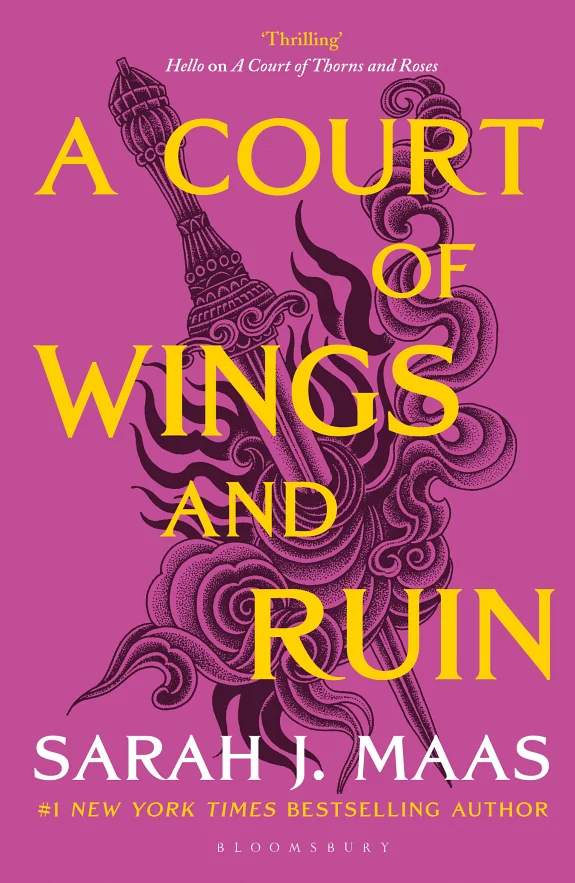
A Court of Wings and Ruin
 81
81

A Court of Wings and Ruin
The conclusion to the initial *A Court of Thorns and Roses* trilogy arc, *A Court of Wings and Ruin*, delivers on the promise of large-scale conflict. Maas excels at depicting the emotional toll of war on her characters, particularly Feyre as she steps into her power and leadership role. The strategic maneuvering and the sheer scope of the final battles are vividly rendered, creating a sense of urgency and high stakes. However, the sheer volume of plot threads and characters occasionally leads to pacing issues, with certain character arcs feeling somewhat rushed in their resolution. A particular strength lies in the exploration of the different Fae courts and their integration into the war effort, showcasing a breadth of magical diversity. The work ultimately provides a satisfying, albeit dense, conclusion to the established narrative.
📝 Description
81
Sarah J. Maas concluded the first arc of her Fae saga with A Court of Wings and Ruin in 2017.
This 2017 novel brings Feyre Archeron's initial story arc to a close, centering on the looming war against Hybern and the complex relationships between the Fae courts. The narrative escalates the stakes established in earlier books, demanding difficult choices from Feyre and her allies as they prepare for a widespread conflict.
The book appeals to readers invested in Feyre's continuing story, particularly those who enjoy epic fantasy with political maneuvering, romantic elements, and detailed world-building. It aims to provide a satisfying resolution to the central conflict that has driven the series, while also developing a large cast of characters facing immense pressure.
The story delves into themes of sacrifice and duty, as characters must forge alliances despite long-standing enmities. It examines the personal toll of war, the responsibilities of leadership in crisis, and the lengths to which individuals will go to protect their homes and loved ones. The interactions among the diverse Fae courts and their unique magical systems are also central to the plot.
While not strictly an esoteric text, *A Court of Wings and Ruin* draws on archetypes common in occult and magical traditions, particularly concerning power dynamics between different factions and the concept of a chosen individual (Feyre) rising to meet a world-altering threat. The Fae courts and their distinct magical abilities echo folkloric understandings of elemental or nature-based powers. The narrative also touches on themes of destiny and the struggle against overwhelming dark forces, concepts frequently explored in spiritual and occult literature.
💡 Why Read This Book?
• Gain insight into the strategic and emotional demands of large-scale conflict resolution, as depicted through Feyre's leadership challenges during the war against Hybern. • Experience the complexities of inter-factional diplomacy and alliance-building, exemplified by the High Lords' council and their disparate motivations. • Understand the personal cost of magical power and destiny, as characters grapple with their roles and sacrifices in the face of impending doom.
⭐ Reader Reviews
Honest opinions from readers who have explored this book.
❓ Frequently Asked Questions
What is the main conflict in A Court of Wings and Ruin?
The primary conflict involves the looming war against the tyrannical King of Hybern and his forces, threatening the lands of Prythian and its inhabitants.
Who are the key Fae courts involved in the war?
The key Fae courts include the Spring Court, the Night Court, the Summer Court, the Winter Court, and the Dawn Court, each with their own leaders and distinct contributions to the war effort.
What is Feyre's primary role in this book?
Feyre takes on a central leadership role, acting as High Lady of the Night Court and strategizing the defense of Prythian against Hybern's invasion.
Does A Court of Wings and Ruin conclude the series?
This book concludes the initial arc of the series, resolving the main conflict established in the first three books, though the world and characters continue in subsequent installments.
What are some of the major themes explored?
Major themes include sacrifice, duty, the nature of power, the consequences of war, and the importance of unity and found family.
When was A Court of Wings and Ruin published?
A Court of Wings and Ruin was published in 2017.
🔮 Key Themes & Symbolism
War and Sacrifice
The narrative is dominated by the looming and eventual outbreak of war against Hybern, forcing characters to confront immense loss and make profound sacrifices. Feyre, in particular, shoulders the burden of leadership and the heavy cost of protecting her loved ones and her realm. The book meticulously details the planning, the battles, and the aftermath, highlighting the devastating impact of conflict on individuals and societies. This theme is central to understanding the characters' growth and the stakes of their struggle.
Alliances and Unity
A critical element of the story is the necessity of forging alliances between disparate and often antagonistic Fae courts. The High Lords' council struggles with old grudges and political maneuvering, but the impending threat of Hybern compels them toward a semblance of unity. This theme explores how shared danger can overcome deeply ingrained divisions, leading to collective action and the formation of unexpected bonds. The success of Prythian hinges on this fragile unity.
Power and Responsibility
Feyre's ascension to High Lady of the Night Court brings with it immense power and an equally immense weight of responsibility. The book examines how she wields this power, not just through magical might but through strategic thinking, empathy, and leadership. Other characters also grapple with their own abilities and the moral implications of their actions, exploring the fine line between wielding power for good and succumbing to its corrupting influence.
Found Family and Love
Beyond the grand conflict, the enduring strength of found family and romantic love provides an emotional anchor. The bonds between Feyre, Rhysand, and their Inner Circle are tested but ultimately prove resilient. The sacrifices made are often driven by love for these chosen family members, underscoring the idea that connection and loyalty are potent forces against despair and destruction. This theme provides a crucial counterbalance to the grim realities of war.
💬 Memorable Quotes
Direct passages from the work, attributed to the author.
“War is not a game. It is a beast that devours us all.”
— This sentiment captures the brutal reality of the conflict depicted, emphasizing that war's destructive nature spares no one, regardless of their station or intentions.
“Every choice has a consequence, every sacrifice a price.”
— This reflects the complex moral field of the narrative, where characters must make difficult decisions with far-reaching and often painful repercussions.
“Even in the darkest hour, love can be our greatest weapon.”
— This speaks to the thematic importance of emotional bonds, suggesting that love and loyalty provide the resilience and motivation necessary to face and conquer seemingly insurmountable challenges.
💡 Key Ideas
Editorial paraphrase of the work's core concepts — not direct quotes.
We are the light in the darkness, the hope in the despair.
This quote highlights the protagonists' self-perception and their role as beacons of resilience against overwhelming odds, rallying themselves and others to fight for a better future.
The strength of the Fae is not in their magic alone, but in their unity.
This paraphrased concept underscores the importance of cooperation and solidarity among the different Fae courts as the key to overcoming the existential threat.
🌙 Esoteric Significance
Tradition
While not explicitly aligned with a single esoteric tradition, *A Court of Wings and Ruin* draws upon archetypal themes common in Western esotericism, particularly those found in Gnosticism and Neoplatonism. Concepts of inherent duality (light/dark, mortal/immortal), the struggle against a malevolent external force (Hybern mirroring a demiurge or corrupting influence), and the awakening of hidden potential within the protagonist resonate with these traditions. The emphasis on inner knowledge and the protagonist's journey of self-discovery aligns with Hermetic principles of 'As above, so below'.
Symbolism
The 'Cauldron,' a mythical source of magic, functions as a potent symbol of creation, potential, and the raw, untamed forces of the universe, akin to the primordial chaos or the divine spark. Wings, a recurring motif, represent freedom, transcendence, and the potential for ascension beyond mortal limitations. The blood oath, a ritualistic act of binding commitment, symbolizes the tangible manifestation of spiritual or political allegiance, carrying significant weight and consequence within the narrative's magical framework.
Modern Relevance
Contemporary readers and writers in the fantasy genre, particularly those exploring themes of power, destiny, and complex relationships, often cite Maas's work as influential. Modern practitioners of spiritual or self-help philosophies that emphasize personal empowerment, overcoming adversity, and the importance of chosen family might find resonance in the narrative's exploration of these themes, even without direct esoteric intent.
👥 Who Should Read This Book
• Readers interested in exploring archetypal narratives of war and redemption, particularly those who appreciate complex character arcs and large-scale conflict resolution. • Individuals drawn to stories featuring strong female protagonists who navigate immense responsibility and personal growth under pressure. • Fans of intricate fantasy world-building who enjoy exploring diverse magical systems, political landscapes, and the dynamics between different supernatural factions.
📜 Historical Context
Published in 2017, *A Court of Wings and Ruin* arrived during a vibrant period for adult fantasy, a genre experiencing a resurgence driven by complex world-building and mature themes. Sarah J. Maas's work found a significant readership alongside contemporaries like V.E. Schwab, whose *Shades of Magic* series also explored intricate magical systems and political intrigue, and Leigh Bardugo, who was building the Grishaverse. The fantasy field of the mid-2010s was characterized by a move towards darker, more character-driven narratives, diverging from earlier, more archetypal fantasy. While not directly engaging with specific philosophical movements, the series tapped into a popular interest in intricate lore, found families, and romantic relationships woven into epic stakes, mirroring trends seen in popular YA and New Adult fiction.
📔 Journal Prompts
The High Lords' council and the necessity of unity against Hybern.
Feyre's strategic decisions and their immediate consequences.
The symbolism of wings and their connection to freedom and power.
Rhysand's burdens as High Lord and the Inner Circle's support.
Personal sacrifices made by characters during the war effort.
🗂️ Glossary
Hybern
The primary antagonist force and its tyrannical king, representing a destructive, expansionist threat to Prythian and its inhabitants.
High Lord
The ruler of a specific Fae court, possessing significant magical power and political authority within Prythian.
Inner Circle
The close-knit group of individuals loyal to Rhysand and Feyre, serving as their advisors and protectors within the Night Court.
The Cauldron
A mythical source of immense magical power, central to the creation and sustenance of magic within the Fae world.
Prythian
The land inhabited by Fae, existing separately from the human world, which becomes the battleground for the war against Hybern.
Archon
A powerful entity or ruler, often associated with ancient Fae lineages or specific magical domains.
Starfall
A significant celestial event and festival celebrated by the Fae, often associated with Rhysand's past and the Night Court's history.
🔮 Readers Also Liked
Browse all →









More by Sarah J. Maas
All books →



More Free Occult Philosophy Books
View all →