The Way to Nirvana

 78
78

The Way to Nirvana



Ophelia Vance, Mystical Literature Reviewer — L. De La Vallée Poussin's 'The Way to Nirvana' is an indispensable cornerstone for anyone serious about understanding the esoteric underpinnings of Buddhism. This volume offers a scholarly yet deeply insightful exploration of salvation as a discipline, meticulously unpacking ancient doctrines with an almost alchemical precision. Poussin's clarity in contrasting original teachings with later interpretations is a masterstroke, revealing the pure stream of the Buddha's path. Its strength lies in its authoritative depth, making it ideal for advanced practitioners and scholars seeking to grasp the philosophical bedrock of enlightenment. A truly illuminating text for the dedicated seeker.
📝 Description
78
L. De La Vallée Poussin's 1916 Hibbert Lectures investigate Buddhism as a living discipline of salvation.
Originally presented as the Hibbert Lectures in 1916, L. De La Vallée Poussin's 'The Way to Nirvana' examines Buddhism not as a historical subject, but as a practical path to liberation. Poussin, a notable scholar of his time, analyzes the philosophical structure of early Buddhist thought. He focuses on the concepts central to escaping suffering and achieving enlightenment. The book aims to provide a clear view of these core doctrines, distinguishing them from later developments in Buddhist thought. It addresses the fundamental principles that guide the search for spiritual peace.
This work contrasts the original teachings of the Buddha with subsequent interpretations. Poussin's objective is to clarify the essential elements of the spiritual path. The text invites readers to grasp the workings of spiritual awakening as understood in early Buddhism. It serves as a guide for those seeking a deeper understanding of Buddhist soteriology.
This book situates itself within the study of Buddhism as a spiritual discipline, distinct from purely academic or historical accounts. It engages with the practical and philosophical dimensions of achieving enlightenment, a central concern in various esoteric traditions. By contrasting early teachings with later divergences, Poussin seeks to reveal the core mechanics of spiritual transformation, aligning with the esoteric interest in direct experience and the attainment of higher consciousness.
✍️ Author
L De La Vallee Poussin
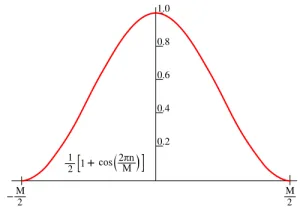
In signal processing and statistics, a window function (also known as an apodization function or tapering function) is a mathematical function that is zero-valued outside of some chosen interval. Typically, window functions are symmetric around the middle …
💡 Why Read This Book?
Uncover the foundational discipline of salvation within ancient Buddhism. This book offers a rare, scholarly yet accessible exploration of liberation, ideal for seekers of profound spiritual truth, academic scholars delving into comparative religion, and practitioners aiming to deepen their understanding of core Buddhist philosophy and its esoteric dimensions. It provides clarity on the path to Nirvana.
⭐ Reader Reviews
Honest opinions from readers who have explored this book.
❓ Frequently Asked Questions
What is the primary focus of 'The Way to Nirvana'?
The book focuses on ancient Buddhism as a practical discipline for achieving salvation, exploring its philosophical nuances and the path to liberation from suffering.
Who was L. De La Vallée Poussin?
L. De La Vallée Poussin was a highly respected Belgian scholar renowned for his extensive expertise in Buddhist studies and comparative religion.
What distinguishes this book from later Buddhist texts?
The book meticulously contrasts the original Buddhist teachings with later developments, highlighting the core essence and distinctiveness of the Buddha's original path to enlightenment.
What is the 'Hibbert Lecture series'?
The Hibbert Lectures are prestigious lectureships established to promote the study of religion and theology, often delivered by leading scholars on significant spiritual or philosophical topics.
Is this book suitable for beginners in Buddhism?
While scholarly, the book offers foundational insights. Beginners may benefit from prior introductory texts, but its depth makes it invaluable for serious students and practitioners.
🔮 Key Themes & Symbolism
The Discipline of Salvation
This theme looks at Buddhism as a practical, actionable path towards liberation, moving beyond mere philosophical discourse to emphasize the disciplined cultivation of mind and spirit. It explores the systematic practices and ethical frameworks designed to dismantle the roots of suffering and guide the practitioner towards ultimate peace. The emphasis is on the 'how-to' of spiritual attainment, presented through the lens of ancient wisdom, offering a potent blueprint for transformation and release from the cycle of existence.
The Essence of Ancient Buddhism
This core theme focuses on reconstructing and understanding the foundational doctrines of early Buddhism, distinguishing them from later interpretations and sectarian developments. It seeks to uncover the pure, unadulterated teachings of the Buddha, emphasizing their philosophical rigor and their profound psychological insights. The exploration aims to illuminate the original intent and the sophisticated metaphysical framework that underpins the quest for Nirvana, offering readers a clear perspective on the historical and doctrinal roots of Buddhist thought.
The Path to Nirvana
This theme intricately details the journey towards Nirvana, the ultimate state of liberation and enlightenment. It examines the psychological, ethical, and contemplative steps involved in transcending suffering and the illusions of the mundane world. The text provides a profound exploration of the cessation of craving, the extinguishing of the self, and the realization of ultimate truth. It offers a roadmap for the dedicated spiritual aspirant, informative the profound, transformative nature of this ultimate goal.
💬 Memorable Quotes
Direct passages from the work, attributed to the author.
“Buddhism is a discipline of salvation.”
— This concise statement expresses the book's central thesis, emphasizing Buddhism as a practical, transformative path rather than a mere belief system.
“The Way to Nirvana is a path of cessation.”
— Highlights the ultimate goal of Buddhist practice: the end of suffering, craving, and the cyclical nature of existence through mindful detachment.
“Understanding the Buddha's Dharma is understanding the nature of reality.”
— Connects the core teachings of Buddhism with a deep, perhaps esoteric, comprehension of existence itself, suggesting profound metaphysical insights.
“Ignorance is the root from which all suffering springs.”
— Points to the central role of delusion and lack of true knowledge in perpetuating the cycle of pain and dissatisfaction, a key concept in Buddhist soteriology.
“The enlightened mind is free from all bonds.”
— Describes the ultimate state of liberation, where the individual is no longer constrained by desires, attachments, or the limitations of the ego.
🌙 Esoteric Significance
Tradition
This work is a foundational text for understanding the esoteric dimensions of early Mahayana and Theravada Buddhism. It looks at the core principles of Buddhist soteriology—the doctrine of salvation—treating it as a sophisticated spiritual discipline. The book offers insights into the psychological alchemy and contemplative practices that lead to liberation, aligning with broader esoteric traditions that seek inner transformation and communion with ultimate reality.
Symbolism
While not overtly focused on ritualistic symbolism, the text implicitly engages with profound Buddhist symbols such as the Wheel of Life (Samsara), the Bodhi Tree, and the concept of emptiness (Sunyata). These symbols represent the cyclical nature of existence, the attainment of enlightenment, and the ultimate nature of reality, respectively. La Vallée Poussin's scholarly approach reveals the philosophical underpinnings of these symbols, offering a deeper, contemplative understanding of their esoteric meaning.
Modern Relevance
In an era increasingly seeking mindfulness, inner peace, and meaningful spiritual practice, 'The Way to Nirvana' offers timeless wisdom. Its exploration of suffering, its causes, and its cessation provides a robust framework for modern psychological and spiritual well-being. The book's emphasis on discipline and useful insights remains highly relevant for individuals seeking to work through the complexities of modern life with greater wisdom, equanimity, and a deeper understanding of the human condition.
👥 Who Should Read This Book
This important work is essential for scholars of comparative religion, Buddhist studies, and philosophy, offering rigorous analysis of ancient doctrines. Spiritual seekers and practitioners will find it an invaluable guide to the core principles of Buddhist salvation, providing a deeper understanding of the path to enlightenment. It is particularly suited for those who appreciate scholarly depth combined with a profound reverence for esoteric wisdom, and who are interested in the philosophical underpinnings of liberation. Advanced practitioners seeking to refine their understanding of core concepts will also greatly benefit.
📜 Historical Context
Published in 1917, 'The Way to Nirvana' emerged during a period of burgeoning Western interest in Eastern philosophies and religions. The early 20th century saw a significant intellectual engagement with Buddhism, often viewed through the lens of comparative religion and philosophy. Scholars like La Vallée Poussin were instrumental in translating and interpreting complex Buddhist texts for a Western audience, seeking to understand its doctrines not only as historical phenomena but as profound systems of thought with universal relevance. The Hibbert Lectures, where these lectures were delivered, provided a respected platform for such scholarly discourse, contributing to the intellectual landscape that sought to reconcile Western rationalism with Eastern mysticism, and paving the way for deeper engagement with Buddhist esotericism.
📔 Journal Prompts
Reflect on the concept of 'Buddhism as a discipline of salvation'. How does this framing influence your understanding of spiritual practice?
What are the core 'roots' of suffering as described in ancient Buddhist thought, and how do they manifest in your own life?
Consider the contrast between original Buddhist teachings and later developments. What does this distinction reveal about the evolution of spiritual traditions?
Explore the meaning of 'Nirvana' beyond its literal translation. What does this ultimate state represent in terms of personal transformation and liberation?
How can the 'discipline' of Buddhist practice be integrated into a modern, secular lifestyle for personal growth and well-being?
🗂️ Glossary
Nirvana
The ultimate goal of Buddhism, representing the cessation of suffering, craving, and the cycle of rebirth (Samsara). It is a state of profound peace, liberation, and enlightenment.
Dharma
In Buddhism, Dharma refers to the teachings of the Buddha, the cosmic law, or the fundamental nature of reality. It is the truth that liberates.
Samsara
The cycle of birth, death, and rebirth, driven by karma and ignorance. It is the continuous process of existence characterized by suffering and impermanence.
Gnosis
Spiritual knowledge or insight, often attained through direct experience or intuition, leading to a deeper understanding of divine or ultimate reality. In this context, it relates to profound Buddhist wisdom.
Soteriology
The doctrine or study of salvation. In Buddhism, it refers to the teachings and practices aimed at achieving liberation from suffering and the cycle of Samsara.
This book appears in 4 collections
🔮 Readers Also Liked
Browse all →






From the “Meditation” Collection
View all →







More Free Mysticism & Contemplation Books
View all →