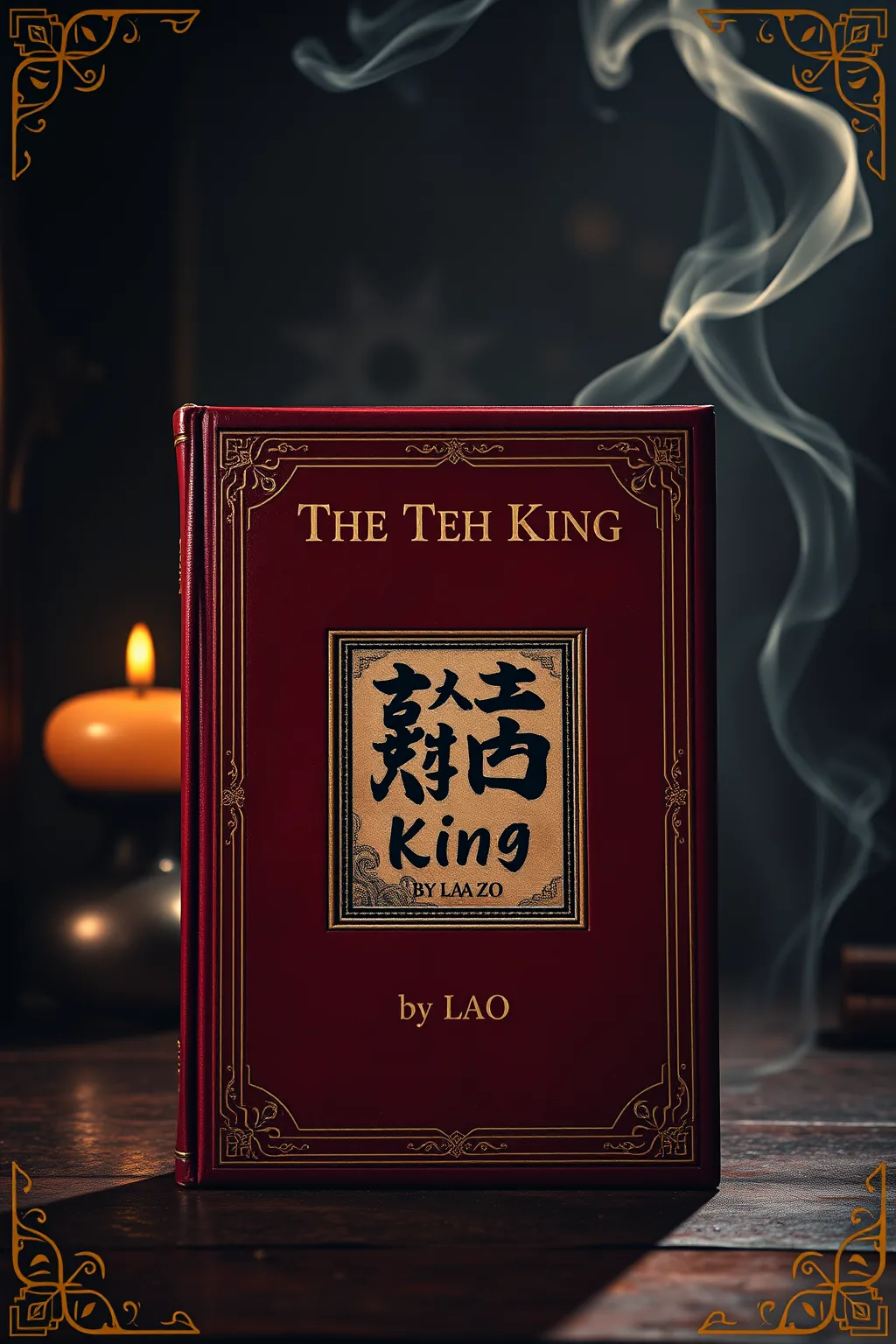
The Tao Teh King Free PDF e-book
 73
73

The Tao Teh King Free PDF e-book



Lorelei Sage (Contemplative Literature Editor) — As a cornerstone of Taoist thought, Lao Tzu's 'Tao Teh King' remains an unparalleled guide to the subtle energies of existence. James Legge's translation masterfully captures the philosophical nuances and poetic grace of this ancient text. This edition is an indispensable resource for anyone seeking to understand the esoteric principles of Wu Wei, the balance of Yin and Yang, and the profound interconnectedness of all things. Its wisdom resonates deeply, offering practical insights for navigating the complexities of modern life through stillness and intuitive understanding. Highly recommended for serious students of mysticism and contemplative practice.
📝 Description
73
Lao Tzu's Tao Teh King, translated by James Legge, outlines the principles of the Tao.
The Tao Teh King, attributed to Lao Tzu, is a foundational text in mystical philosophy. This edition uses James Legge's translation. The book discusses the Tao, a fundamental, ineffable force that guides the universe. It explains principles such as Wu Wei, or effortless action, and the balance of opposing forces. The text uses poetic language to guide readers toward a greater understanding of existence and inner calm.
This work is more than a philosophical text; it encourages contemplation and reflection on subtle truths. It serves as an accessible entry point for individuals interested in Eastern spirituality, the natural world, and living in harmony with fundamental reality. The book invites readers to observe and internalize its teachings.
The Tao Teh King is a central scripture of Taoism, a philosophical and religious tradition originating in ancient China. It articulates the concept of the Tao, the underlying principle and source of all existence. The text emphasizes living in accordance with this natural order, often through practices of simplicity, humility, and non-interference. Its teachings have influenced various esoteric traditions within East Asian spirituality, offering a path toward inner peace and understanding through observation of the natural world.
✍️ Author
💡 Why Read This Book?
Embark on a journey of profound self-discovery and cosmic understanding. 'The Tao Teh King' offers a unique perspective on living in harmony with the universe, revealing the power of simplicity and stillness. Ideal for seekers of ancient wisdom, practitioners of mindfulness, and scholars of Eastern philosophy who wish to explore the foundational texts of Taoism.
⭐ Reader Reviews
Honest opinions from readers who have explored this book.
❓ Frequently Asked Questions
What is the Tao Teh King?
The Tao Teh King, also known as the Lao Tzu, is a foundational text of Taoism, attributed to the ancient Chinese philosopher Lao Tzu. It explores the nature of the Tao, the Way, and offers guidance on living in harmony with it.
Who was Lao Tzu?
Lao Tzu is traditionally considered the author of the Tao Teh King and a central figure in Taoism. His historical existence is debated, but his teachings form the bedrock of this influential philosophical and spiritual tradition.
What does 'Tao' mean?
The Tao is a complex concept, often translated as 'The Way.' It refers to the fundamental, ineffable principle that underlies and governs all existence, the natural order of the universe, and the path to enlightenment.
What is 'Wu Wei'?
Wu Wei translates to 'non-action' or 'effortless action.' It's a core Taoist principle advocating for acting in accordance with the natural flow of things, without forcing or striving, leading to greater effectiveness and harmony.
Is this translation accurate?
The James Legge translation is a widely respected and classic rendition of the Tao Teh King, known for its scholarly approach and fidelity to the original text, making it an excellent choice for in-depth study.
🔮 Key Themes & Symbolism
The Nature of the Tao
This theme examines the ineffable and all-encompassing 'Tao,' the primordial source and governing principle of the universe. It explores the Tao's elusive nature, its immanence in all things, and the challenge of comprehending it through conventional language. The text emphasizes that the Tao, while unseen and unheard, is the foundation of all reality, shaping existence through its subtle, unforced operations. Understanding the Tao is presented not as intellectual pursuit, but as an intuitive realization, a state of being in alignment with the cosmic flow.
Wu Wei: The Art of Effortless Action
Central to the Tao Teh King is the concept of Wu Wei, often translated as 'non-action' or 'effortless action.' This principle advocates for acting in harmony with the natural course of events, without forceful intervention or ego-driven striving. It's about yielding, adapting, and allowing things to unfold organically. The book illustrates how true power and effectiveness arise not from exertion, but from a deep understanding of natural rhythms and a cultivation of inner stillness, enabling one to achieve profound results with minimal effort.
The Harmony of Opposites
The Tao Teh King posits that apparent contradictions and dualities are not in conflict but are integral parts of a unified whole. Concepts like Yin and Yang, strength and weakness, presence and absence, are presented as interdependent forces that define and balance each other. This theme encourages a shift in perspective from binary thinking to a holistic appreciation of the interplay between opposing forces. By embracing this balance, one can achieve a more profound understanding of reality and navigate life's complexities with greater equanimity and wisdom.
💬 Memorable Quotes
Direct passages from the work, attributed to the author.
“The Tao that can be told is not the eternal Tao.”
— This opening line highlights the ineffable nature of the ultimate reality, suggesting that any attempt to define it verbally will inevitably fall short of its true essence.
“When I let go of what I am, I become what I might be.”
— This profound statement speaks to the transformative power of shedding ego and preconceived notions to allow for personal growth and the realization of one's true potential.
“The softest things in the world overcome the hardest things.”
— This illustrates the power of gentleness, flexibility, and persistence over brute force, a key tenet of Taoist philosophy emphasizing subtle strength.
“To know that you do not know is the highest wisdom.”
— This emphasizes humility and intellectual honesty, suggesting that true wisdom lies not in possessing knowledge, but in recognizing the vastness of what remains unknown.
💡 Key Ideas
Editorial paraphrase of the work's core concepts — not direct quotes.
Nature does not hurry, yet everything is accomplished.
This quote captures the principle of Wu Wei, illustrating how natural processes achieve their goals through patient, unforced unfolding, a model for human action.
🌙 Esoteric Significance
Tradition
The Tao Teh King is the foundational scripture of Taoism, a profound spiritual and philosophical tradition originating in ancient China. Within esoteric circles, it is revered as a guide to understanding the fundamental energies of the universe and the path to spiritual liberation. It's considered a key text for alchemical practices, meditation, and the cultivation of inner harmony, providing an esoteric framework for aligning oneself with the cosmic 'Way' and achieving a state of transcendence.
Symbolism
The text is rich with subtle symbolism. The 'Tao' itself is the ultimate symbol of the ineffable, the void from which all arises. Water is a recurring symbol of yielding, adaptability, and persistent strength. The 'uncarved block' (Pu) symbolizes primal simplicity and the state of pure potential before artificial distinctions arise. Concepts like the 'valley spirit' represent receptivity and the feminine principle. These symbols are not merely decorative but are gateways to deeper understanding of cosmic principles and the nature of reality.
Modern Relevance
In an age characterized by rapid change, technological advancement, and often overwhelming complexity, the Tao Teh King offers a vital antidote. Its emphasis on stillness, simplicity, and living in harmony with natural rhythms provides a timeless framework for managing stress, fostering inner peace, and cultivating sustainable practices. The principles of Wu Wei offer a powerful approach to problem-solving and leadership, suggesting that true effectiveness often lies in effortless alignment rather than forceful imposition. Its wisdom remains profoundly relevant for navigating personal and societal challenges with greater wisdom and grace.
👥 Who Should Read This Book
This timeless work is a treasure for a diverse audience. **Beginners** seeking an accessible entry into Eastern philosophy will find its poetic language and universal themes captivating. **Scholars** of religion, philosophy, and comparative literature will appreciate the depth and historical significance of this seminal text. **Spiritual seekers** drawn to mysticism and contemplative practices will discover clear insights for their personal journey. **Practitioners** of mindfulness, meditation, or those interested in alternative approaches to life and leadership will find practical wisdom and guidance for cultivating inner peace and effortless action.
📜 Historical Context
Originating possibly in the late 4th century BCE, 'The Tao Teh King' emerged during a period of significant intellectual and social flux in ancient China, often referred to as the 'Hundred Schools of Thought.' This era saw the rise of various philosophical and ethical systems, including Confucianism, Mohism, and Legalism, each offering different visions for governance and personal conduct. Amidst this intellectual ferment, Taoism, as articulated in the Tao Teh King, presented a radical alternative. It eschewed societal conventions and rigid doctrines in favor of a profound connection with the natural order, the Tao. The text reflects a disillusionment with the prevailing social disorder and a search for a more authentic, harmonious way of life. Its influence has been immense, shaping not only Chinese philosophy and religion but also art, medicine, and martial arts, and eventually spreading its clear insights across the globe.
📔 Journal Prompts
Reflect on a situation where 'effortless action' (Wu Wei) could have been more effective than forceful intervention.
Consider the 'Tao' as the underlying flow in your daily life. Where do you feel its presence most strongly?
Explore the concept of yielding. How can you apply this principle in a challenging relationship or situation?
What does 'knowing you do not know' mean to you in your current understanding of life?
Identify a 'hard' aspect of your life and an associated 'soft' approach that could bring balance.
🗂️ Glossary
Tao (Dao)
The fundamental, ineffable principle that underlies and governs all existence; the natural order of the universe; the 'Way.'
Teh (De)
Often translated as 'virtue' or 'power,' it refers to the manifestation of the Tao in individual beings and things; the inherent moral quality or inner power derived from alignment with the Tao.
Wu Wei
Non-action or effortless action; acting in accordance with the natural flow of things without forced effort or striving.
Pu
The 'uncarved block'; a state of primal simplicity, innocence, and potential before the imposition of artificial distinctions and desires.
Yin and Yang
Complementary, interconnected, and interdependent forces that describe the dualistic nature of reality, representing passive/feminine and active/masculine principles respectively.
This book appears in 1 collection
🔮 Readers Also Liked
Browse all →




From the “Christian Mysticism” Collection
View all →





More Free Mysticism & Contemplation Books
View all →