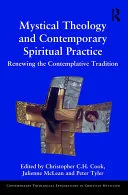
Mystical Theology and Contemporary Spiritual Practice
 79
79

Mystical Theology and Contemporary Spiritual Practice
Christopher C. H. Cook, Julienne McLean, and Peter Tyler's "Mystical Theology and Contemporary Spiritual Practice" offers a robust exploration of how historical Christian mysticism informs present-day spiritual life. Its strength lies in its scholarly rigor, connecting seminal figures like Baron von Hugel and Vladimir Lossky with contemporary concerns. The inclusion of Ludwig Wittgenstein's philosophical lens is a particularly compelling, if dense, addition, prompting reflection on the limits of language in articulating mystical experience. However, the collection occasionally suffers from an academic distance that might deter those seeking purely devotional material. A limitation is the uneven accessibility across essays; while some are quite lucid, others demand significant prior knowledge of patristic theology or specific philosophical movements. The discussion of Margery Kempe's visceral, often challenging, devotional life provides a crucial counterpoint to more abstract theological explorations. It is a valuable resource for serious students of mysticism, demanding engagement but rewarding it with depth.
📝 Description
79
### What It Is
This collection presents scholarly essays examining the Christian mystical tradition, bridging historical scholarship with current spiritual engagement. It investigates how ancient contemplative practices and theological concepts remain relevant for modern seekers. The volume explores the intersection of theological discourse and lived spiritual experience, offering a framework for understanding mysticism beyond academic abstraction.
### Who It's For
This work is intended for theological students, scholars of religion, and individuals actively engaged in spiritual disciplines seeking a deeper theoretical grounding. It will particularly appeal to those interested in the Christian contemplative path but also to comparative mystics and philosophers of religion. Readers will find value in its rigorous academic approach to subjective spiritual phenomena.
### Historical Context
The book addresses the enduring influence of figures like Baron von Hugel and Vladimir Lossky, whose theological contributions shaped mid-20th-century mystical thought. It situates contemporary spiritual practice within a lineage that includes historical figures like Margery Kempe, acknowledging the long arc of Christian mysticism. The work engages with philosophical underpinnings, referencing Ludwig Wittgenstein's later philosophy, which also grappled with language, meaning, and experience in ways relevant to theological and mystical expression.
### Key Concepts
Central to the text is the concept of 'mystical theology' itself – the understanding of God through direct, ineffable experience rather than solely through rational dogma. It examines apophatic and cataphatic approaches to divinity, the role of the 'cloud of unknowing,' and the transformative power of spiritual disciplines such as pilgrimage and lectio divina. The book also considers the integration of the spiritual life with ordinary existence, drawing on thinkers who sought to reconcile transcendence and immanence.
💡 Why Read This Book?
• Understand the theological underpinnings of Christian mysticism as explored through the works of Baron von Hugel and Vladimir Lossky, offering a scholarly framework for contemplative practice. • Gain practical insights into historical spiritual disciplines, such as pilgrimage and lectio divina, as discussed in the context of 21st-century spiritual needs. • Connect with philosophical perspectives on mystical experience, particularly through the lens of Ludwig Wittgenstein's ideas on language and ineffability, enhancing your own articulation of the inexpressible.
⭐ Reader Reviews
Honest opinions from readers who have explored this book.
❓ Frequently Asked Questions
What is the primary focus of "Mystical Theology and Contemporary Spiritual Practice"?
The book's primary focus is demonstrating the relevance of Christian mystical theology to contemporary spiritual practice, examining historical figures and concepts in light of modern spiritual engagement.
Which historical figures are discussed in the book?
Key figures explored include Baron von Hugel, Vladimir Lossky, Margery Kempe, Thomas Merton, and Francisco de Osuna, alongside philosophical contributions from Ludwig Wittgenstein.
What kind of spiritual practices are examined?
The book addresses a range of practices, including pilgrimage, lectio divina, and other forms of Christian contemplation, connecting them to mystical theological themes.
Is this book suitable for beginners in mysticism?
While accessible to dedicated beginners, the book's scholarly approach and engagement with complex theological and philosophical ideas make it particularly valuable for advanced students and practitioners.
What is the publication year of this collection?
This collection was first published on September 8, 2017.
What is the relationship between mystical theology and everyday spirituality in this book?
The book argues for a direct connection, showing how the profound theological insights of Christian mysticism can inform and enrich daily spiritual life and practice.
🔮 Key Themes & Symbolism
Bridging Historical and Contemporary Mysticism
This volume critically examines how figures like Baron von Hugel and Vladimir Lossky articulated Christian mystical theology, and how their insights remain pertinent for contemporary spiritual seekers. It moves beyond historical cataloging to explore the active application of these traditions, considering how practices such as pilgrimage or contemplative prayer can be understood and enacted today through a mystical theological lens.
Theology of Experience
Central to the work is the concept of 'mystical theology'—a way of knowing God through direct, often ineffable, experience rather than solely through doctrine. The book delves into the theological frameworks that support such experiential knowing, referencing apophatic traditions and the contemplative methods employed by figures like Thomas Merton and Francisco de Osuna.
Wittgenstein and Mystical Language
A unique aspect is the exploration of Ludwig Wittgenstein's philosophical investigations into language and silence in relation to mystical experience. This engagement probes the limits of linguistic expression when describing encounters with the divine, offering a philosophical counterpoint to theological discourse and providing tools for articulating the ineffable.
Embodied Spiritual Practice
The collection gives significant attention to the embodied nature of spiritual practice, exemplified by discussions of Margery Kempe and the act of pilgrimage. It underscores that mystical theology is not merely an intellectual pursuit but is deeply intertwined with lived, often physically demanding, spiritual disciplines and the transformative journeys they entail.
💬 Memorable Quotes
“The relevance of mystical theology to contemporary spiritual practice.”
— This is the core thesis, emphasizing that the profound theological explorations of Christian mystics are not relics of the past but vital resources for modern spiritual life and personal transformation.
“Attention is given to the works of Baron von Hugel, Vladimir Lossky, Margery Kempe...”
— This highlights the book's scholarly foundation, grounding contemporary discussions in the significant contributions of key historical figures in Christian mysticism and spirituality.
“...as well as to a wide range of spiritual practices, including pilgrimage.”
— This points to the volume's practical orientation, connecting abstract theological concepts to concrete, lived spiritual activities that readers can recognize or engage with.
“Ludwig Wittgenstein's philosophical influence.”
— This indicates a sophisticated interdisciplinary approach, using philosophical insights to illuminate the challenges and possibilities of articulating mystical experience.
“The Christian mystical tradition, contemporary and historical.”
— This defines the book's scope, promising a comprehensive view that bridges the historical development of Christian mysticism with its current manifestations and applications.
🌙 Esoteric Significance
Tradition
This work firmly situates itself within the Christian esoteric tradition, specifically focusing on its mystical theological dimensions. It draws heavily on both Western (Catholic, Protestant) and Eastern Orthodox mystical theology, tracing a lineage from patristic writers through medieval mystics like Margery Kempe and later figures like Baron von Hugel and Vladimir Lossky. It departs from purely dogmatic approaches by emphasizing direct experience of the divine.
Symbolism
While not overtly focused on symbolic systems in the Hermetic or Kabbalistic sense, the book engages with potent motifs within Christian mysticism. The 'cloud of unknowing' serves as a primary symbol for apophatic theology, representing the divine mystery beyond conceptual grasp. Pilgrimage is explored not just as a practice but as a symbolic journey of transformation, mirroring the soul's ascent towards God.
Modern Relevance
Contemporary thinkers and spiritual directors engaged with Christian contemplative practices find significant resonance in this work. Its exploration of mystical theology provides a robust intellectual framework for those seeking to integrate ancient wisdom with modern psychological and philosophical understandings. Schools focusing on Ignatian spirituality, Centering Prayer, and ecumenical mystical dialogue often draw upon the kind of scholarship presented here.
👥 Who Should Read This Book
• Students of theology and comparative religion seeking to understand the historical development and contemporary application of Christian mystical thought. • Practitioners of Christian contemplative prayer, meditation, or pilgrimage looking for a deeper theological and scholarly context for their spiritual disciplines. • Philosophers of religion and scholars interested in the intersection of language, experience, and the divine, particularly through the lens of figures like Ludwig Wittgenstein.
📜 Historical Context
First published in 2017, "Mystical Theology and Contemporary Spiritual Practice" emerged during a period of renewed interest in contemplative traditions within both academic and popular spheres. It engaged with ongoing scholarly debates concerning the historical Jesus and the development of Christian doctrine, while also responding to a perceived spiritual hunger in secularized Western societies. The book's intellectual landscape was shaped by mid-20th-century figures like Vladimir Lossky, whose work on the Eastern Orthodox mystical tradition provided a significant theological counterpoint to Western scholasticism. Baron von Hugel, a key figure in Catholic Modernism, also represented a bridge between historical scholarship and spiritual renewal. The collection's inclusion of Ludwig Wittgenstein reflects an engagement with contemporary philosophical trends that questioned the limits of language, a theme pertinent to mystical discourse. While not facing direct censorship, such works often navigated a delicate path between theological conservatism and progressive interpretations of spirituality, finding an audience among scholars and practitioners seeking deeper theological grounding for their inner lives.
📔 Journal Prompts
Margery Kempe's devotional intensity and its theological implications.
The concept of the 'cloud of unknowing' in relation to personal spiritual practice.
Thomas Merton's synthesis of monastic tradition and contemporary relevance.
Baron von Hugel's bridge between historical scholarship and lived faith.
Wittgenstein's ideas on language and the ineffable in mystical experience.
🗂️ Glossary
Mystical Theology
A branch of theology concerned with direct, experiential knowledge of God, often through contemplation and divine union, rather than solely through rational dogma or scripture.
Apophatic Theology
A theological approach that describes God by negation, emphasizing what God is not, due to God's transcendence beyond human comprehension (e.g., the 'cloud of unknowing').
Cataphatic Theology
A theological approach that describes God using positive affirmations and concepts, drawing from scripture, tradition, and creation (e.g., 'God is love').
Lectio Divina
A traditional monastic practice of prayerful reading of scripture, involving reading, meditation, prayer, and contemplation to encounter God's presence.
Theosis
A central concept in Eastern Orthodox theology, meaning 'deification' or 'union with God,' where humanity is transformed by God's grace and likeness.
Contemplative Practice
Spiritual disciplines aimed at cultivating direct experience of the divine or ultimate reality, often involving stillness, silence, and focused attention.
Vladimir Lossky
A 20th-century Russian theologian and philosopher known for his work on apophatic theology and the concept ofosis within the Eastern Orthodox tradition.