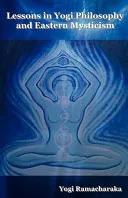
Lessons in Yogi Philosophy and Eastern Mysticism
 72
72

Lessons in Yogi Philosophy and Eastern Mysticism
Yogi Ramacharaka's 'Lessons in Yogi Philosophy and Eastern Mysticism' provides a clear, if somewhat dated, framework for understanding yogic thought. The strength lies in its methodical progression, moving from basic principles to complex phenomena like the astral world and psychic influence. The chapter on 'Thought Dynamics' offers particularly actionable advice on mental control. However, the book's presentation can feel overly didactic, lacking the experiential nuance found in more contemporary yogic literature. The explanations of concepts like 'human magnetism' and 'occult therapeutics' rely on a specific metaphysical worldview that may not align with all modern readers' perspectives. Despite this, the work remains a valuable primer for those seeking a foundational grasp of early 20th-century interpretations of yogic philosophy.
📝 Description
72
### What It Is Lessons in Yogi Philosophy and Eastern Mysticism, first published in 2011, offers a systematic exploration of yogic principles and Eastern metaphysical thought. The work is structured around distinct chapters that address foundational concepts, mental discipline, spiritual development, and practical applications of yogic philosophy. It aims to provide readers with a coherent understanding of the yogic path, moving from basic tenets to advanced spiritual attainments.
### Who It's For This book is intended for individuals curious about the philosophical underpinnings of yoga beyond its physical postures. It caters to those seeking to understand concepts such as the human aura, thought dynamics, telepathy, psychic influence, and the nature of the astral world. It is suitable for students of comparative religion, metaphysics, and those interested in Eastern spiritual traditions seeking a structured, philosophical approach.
### Historical Context While this edition is from 2011, the work itself originates from the early 20th century, a period of burgeoning Western interest in Eastern philosophies, greatly influenced by figures like Helena Blavatsky and the Theosophical Society. This era saw numerous Western authors interpreting and disseminating Eastern spiritual concepts, often through their own unique lenses. Yogi Ramacharaka's writings emerged within this milieu, contributing to a popularization of yogic thought that paralleled movements like New Thought and spiritualism, engaging with intellectual currents that sought to reconcile science, spirituality, and ancient wisdom traditions.
### Key Concepts The book systematically outlines concepts central to yogic philosophy and Eastern mysticism. It begins with fundamental principles, then moves to the power of the mind, detailing 'thought dynamics' and the generation of mental energy. Spiritual aspects are explored, including the 'human aura' and 'psychic influence'. The work also touches upon more advanced subjects like 'telepathy and clairvoyance', 'human magnetism', and the nature of the 'astral world', all framed within the yogic pursuit of spiritual evolution and eventual 'spiritual cause and effect' understanding, culminating in a 'yogi path of attainment'.
💡 Why Read This Book?
• Understand the foundational yogic principles and mental disciplines as presented in the early 20th century, moving beyond asana to explore 'thought dynamics' and the 'mental principles' of yogic philosophy. • Gain insight into concepts of the subtle body and consciousness, including the 'human aura' and the nature of the 'astral world', as described in the chapter 'The Astral World'. • Explore the yogi path of attainment through the lens of spiritual evolution and 'spiritual cause and effect', as outlined in the later chapters of the book.
⭐ Reader Reviews
Honest opinions from readers who have explored this book.
❓ Frequently Asked Questions
What are the core 'mental principles' discussed in Yogi Ramacharaka's book?
The book outlines key mental principles including the power of concentration, the development of will, and the understanding of 'thought dynamics'. It emphasizes how focused mental energy can influence one's reality and spiritual development.
Does 'Lessons in Yogi Philosophy' explain the concept of the 'human aura'?
Yes, the book dedicates a section to the 'human aura', describing it as an energetic field surrounding the physical body. It discusses its connection to health and spiritual state, offering an early perspective on this esoteric concept.
What does Yogi Ramacharaka teach about 'telepathy and clairvoyance'?
The work explores 'telepathy and clairvoyance' as natural extensions of mental development and psychic sensitivity. It posits that these abilities can be understood and, to some extent, cultivated through yogic practices and mental discipline.
Is the 'astral world' concept explained in detail?
The book addresses the 'astral world' as a plane of existence accessible through subtle perception and spiritual development. It is presented as a realm of consciousness and experience beyond the physical, explored in the chapter 'The Astral World'.
What is the 'yogi path of attainment' according to the book?
The 'yogi path of attainment' is depicted as a structured progression of spiritual growth, involving mastery of mental and spiritual principles. It focuses on understanding 'spiritual cause and effect' to achieve higher states of consciousness and union.
When was 'Lessons in Yogi Philosophy and Eastern Mysticism' first published?
While this specific edition is from 2011, the original publication of 'Lessons in Yogi Philosophy and Eastern Mysticism' by Yogi Ramacharaka predates this, placing it within the early 20th century's surge of interest in Eastern spiritual teachings.
🔮 Key Themes & Symbolism
Mental Principles and Thought Dynamics
The book places significant emphasis on the power of the mind. It elaborates on 'mental principles' that govern consciousness and reality, particularly detailing 'thought dynamics'. This concept explores how thoughts are not merely passive occurrences but active forces that can shape one's experiences, environment, and spiritual trajectory. Ramacharaka suggests that by understanding and controlling these mental processes, individuals can achieve greater self-mastery and influence the subtle energies around them, a core tenet for spiritual progress within this philosophical framework.
The Human Aura and Psychic Phenomena
A central theme is the exploration of the 'human aura', described as an energetic field reflecting an individual's physical, mental, and spiritual state. The book connects the aura to concepts of health and vitality, suggesting it can be perceived and understood. This leads into discussions of 'telepathy and clairvoyance' and 'psychic influence', presenting these as phenomena related to the manipulation and perception of subtle energies, including those emanating from the aura.
Spiritual Evolution and the Astral World
The work outlines a path of 'spiritual evolution' guided by principles of 'spiritual cause and effect'. It introduces the 'astral world' not merely as a concept but as a significant plane of existence that yogis can perceive and navigate. Understanding this realm and its connection to consciousness is presented as crucial for transcending limitations and progressing towards higher spiritual states and ultimate attainment.
The Yogi Path of Attainment
Ultimately, 'Lessons in Yogi Philosophy' maps out a comprehensive 'yogi path of attainment'. This path is not solely about physical discipline but a holistic integration of mental control, spiritual understanding, and ethical living. The book details the systematic steps and principles required to achieve mastery over oneself and to realize one's spiritual potential, moving from foundational knowledge to profound experiential realization.
💬 Memorable Quotes
“The mind is a center of force, and the more you train it, the greater your power.”
— This highlights the book's focus on mental discipline. It posits that the mind is not just for thinking but is an active force, capable of generating energy and influencing the world. Training the mind, therefore, is presented as a direct path to increasing personal power and efficacy.
“The human aura is the radiating manifestation of the inner state.”
— This succinctly explains the energetic field surrounding individuals. It suggests the aura is a visible or perceivable expression of one's physical health, emotional state, and spiritual development, serving as an indicator of internal conditions.
“Thought is a vibration, and like affects like.”
— This paraphrased concept from 'thought dynamics' illustrates the principle of energetic resonance. It implies that the nature of one's thoughts—their vibrational frequency—attracts similar vibrations, influencing experiences and circumstances according to the law of attraction.
“The astral world is a realm of consciousness, not merely a place.”
— This interpretation emphasizes the non-physical nature of the astral plane. It suggests that this realm is primarily experienced through states of consciousness and mental perception, rather than being a tangible location in the conventional sense.
“Spiritual evolution is the unfolding of the divine within.”
— This captures the essence of the spiritual path described. It frames spiritual growth not as an external acquisition, but as an internal process of revealing one's inherent divine nature, a journey of self-realization and awakening.
🌙 Esoteric Significance
Tradition
This work draws heavily from the Hatha and Raja Yoga traditions of India, filtered through an early 20th-century Western esoteric lens, influenced by movements like Theosophy. It attempts to systematize yogic philosophy, presenting its principles in a manner digestible for a Western readership unfamiliar with direct guru-disciple transmission. It departs from strict orthodox traditions by emphasizing practical mental techniques and psychic phenomena often associated with Western occultism, integrating them into the yogic framework.
Symbolism
Key symbolic motifs include the 'human aura', representing the energetic body and its connection to consciousness and health, and the 'astral world', symbolizing planes of existence beyond the physical, accessible through altered states of consciousness. The concept of 'thought dynamics' itself functions symbolically, representing the mind as a powerful, almost alchemical, force capable of transforming reality through focused intention and energy.
Modern Relevance
Contemporary interest in mindfulness, neuroplasticity, and subtle energy practices echoes themes explored in Ramacharaka's work. Modern practitioners of yoga seeking deeper philosophical understanding, researchers in consciousness studies, and those exploring energy healing modalities often find value in its foundational explanations of mind-body connection and energetic principles, albeit with a need to contextualize its historical perspective.
👥 Who Should Read This Book
• Aspiring students of comparative philosophy and religion seeking to understand early Western interpretations of yogic thought and Eastern mysticism. • Individuals interested in the historical development of esoteric movements in the early 20th century and their engagement with Eastern spiritual traditions. • Practitioners of yoga or meditation looking to deepen their theoretical understanding of the mind, consciousness, and subtle energetic principles beyond physical postures.
📜 Historical Context
Emerging in the early 20th century, Yogi Ramacharaka's 'Lessons in Yogi Philosophy and Eastern Mysticism' contributed to a significant wave of Western engagement with Indian spiritual traditions. This era, marked by the rise of Theosophy and the popularization of figures like Swami Vivekananda, saw a burgeoning intellectual curiosity about yoga, Vedanta, and other Eastern philosophies. Ramacharaka’s work offered a structured, accessible interpretation of these complex ideas, often adapted for a Western audience accustomed to more rationalistic or scientific frameworks. It appeared alongside numerous other texts aiming to demystify Eastern mysticism, such as those by Annie Besant or early works on Hatha Yoga. While embraced by many seeking spiritual knowledge, these interpretations were sometimes criticized by traditionalists for oversimplification or misrepresentation. The book's focus on mental powers, the aura, and the astral plane aligned with contemporary interests in psychical research and occultism prevalent in Western esoteric circles.
📔 Journal Prompts
The application of 'thought dynamics' to personal goals.
Perception of one's own 'human aura' and its potential meaning.
The nature of the 'astral world' as described versus personal intuition.
Reflecting on the 'spiritual cause and effect' in daily life.
The initial steps one might take on the 'yogi path of attainment'.
🗂️ Glossary
Human Aura
An energetic field or luminous emanation surrounding the physical body, believed to reflect an individual's physical, emotional, mental, and spiritual state. It is considered a manifestation of inner conditions.
Thought Dynamics
The principles governing the creation, transmission, and influence of thoughts as active forces or vibrations. It explores how directed mental energy can affect oneself and one's environment.
Astral World
A plane of existence or dimension of consciousness considered to be subtler than the physical realm, often associated with dreams, emotions, and non-physical experiences.
Psychic Influence
The subtle effect one individual's mind or consciousness can exert on another's, often operating through telepathic or empathic channels, beyond ordinary physical communication.
Spiritual Cause and Effect
A universal law governing the consequences of actions, thoughts, and intentions on a spiritual level, influencing an individual's progress and destiny across lifetimes.
Yogi Path of Attainment
The systematic course of study and practice undertaken by a yogi to achieve spiritual realization, self-mastery, and union with the divine or ultimate reality.
Human Magnetism
A form of personal magnetism or charisma attributed to the cultivation of inner energy and will, which can attract others or influence them subtly.