Contemplative Prayer
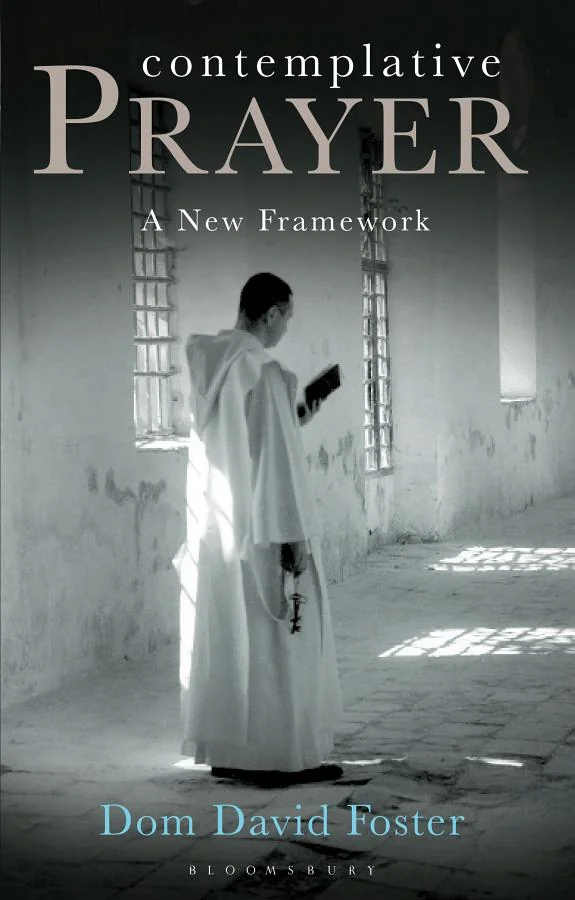
 80
80

Contemplative Prayer
David Foster’s "Contemplative Prayer" attempts a sophisticated philosophical dissection of silent prayer, a commendable ambition. The strength lies in its detailed engagement with continental philosophy, particularly how thinkers like Heidegger might inform our understanding of silence not as absence, but as a space for revelation. Foster’s analysis of the epistemological challenges in articulating mystical experience is sharp. However, the book occasionally gets lost in its own philosophical scaffolding. The contrast between traditional frameworks and continental philosophy, while central, can feel overly academic, sometimes obscuring the lived reality of contemplative practice it seeks to illuminate. A passage discussing the ‘unconcealment’ of Being through silence, referencing Heidegger, is particularly potent but demands significant reader investment. Ultimately, Foster delivers a challenging, intellectually demanding study that enriches philosophical theology but may leave some seeking more direct spiritual guidance.
📝 Description
80
David Foster's 2015 book examines contemplative practices through philosophical lenses.
David Foster's "Contemplative Prayer" analyzes silent prayer not merely as a devotional exercise, but as a subject for philosophical inquiry. Published in 2015, the book places these practices within contemporary discussions of religious experience and mysticism. Foster moves beyond simple descriptions to investigate the metaphysical and epistemological foundations that support silent prayer.
The work contrasts traditional theological views with philosophical concepts drawn from continental thought. This creates a detailed perspective on how silent prayer is understood and articulated. The book is aimed at scholars of comparative religion and philosophy of religion, as well as experienced practitioners of contemplative traditions. It will appeal to those who engage with modern continental philosophy and wish to see its application to theological ideas. Readers who appreciate thorough arguments and a critical examination of religious experience will find value here, as it goes beyond devotional accounts to address theoretical aspects.
This book engages with a long tradition of mystics and theologians who grapple with the limits of language in articulating direct experience of the divine. Foster situates his analysis within this lineage, referencing figures like Evelyn Underhill and Simone Weil. By bridging Christian contemplation with continental philosophy, the work offers a modern philosophical critique of esoteric traditions that emphasize interior spiritual knowledge over external dogma.
💡 Why Read This Book?
• Gain a philosophical framework for understanding silence in prayer, moving beyond devotional language to explore its epistemological role, as detailed in the contrast between traditional and continental philosophical approaches. • Understand the metaphysical questions surrounding religious experience through the lens of continental philosophy, offering a unique perspective not typically found in standard theological texts published before 2015. • Appreciate the nuanced role of silence as discussed in relation to Heideggerian concepts of 'unconcealment,' providing a specific intellectual tool for deepening one's own contemplative practice.
⭐ Reader Reviews
Honest opinions from readers who have explored this book.
❓ Frequently Asked Questions
What is the primary philosophical approach used in "Contemplative Prayer"?
The book primarily employs continental philosophy, contrasting its frameworks with traditional theological understandings of contemplative prayer. This includes exploring concepts from phenomenology and post-structuralism to analyze religious experience.
Who is David Foster, the author of "Contemplative Prayer"?
David Foster is an author known for works on spirituality and theology, including the Bloomsbury titles "Reading with God" and "Deep Calls to Deep." "Contemplative Prayer" extends his discussion on these themes.
When was "Contemplative Prayer" first published?
The book "Contemplative Prayer" was first published on May 7, 2015.
What kind of discussions does the book engage with regarding religious experience?
It engages with contemporary discussions on religious experience and mysticism, analyzing contemplative prayer through philosophical lenses rather than purely devotional or historical ones.
Does the book focus on a specific religious tradition?
While focusing on contemplative prayer, which has roots in various traditions, the book's philosophical framework, particularly its engagement with continental philosophy, offers a more universal or comparative theological approach.
What role does silence play in Foster's analysis?
Silence is explored as a crucial element in contemplative prayer, examined through philosophical concepts. Foster investigates its place within a philosophy of silence, contrasting its traditional understanding with philosophical interpretations.
🔮 Key Themes & Symbolism
Philosophical Frameworks for Prayer
The book's core endeavor is to re-examine contemplative prayer not just as a devotional practice, but as a subject for rigorous philosophical inquiry. David Foster contrasts traditional theological interpretations with contemporary continental philosophy, particularly regarding metaphysical and epistemological questions. This approach seeks to articulate the structure of silent prayer using concepts that resonate with modern philosophical discourse, moving beyond established dogma to explore the phenomenology of divine encounter and the nature of spiritual apprehension.
The Epistemology of Silence
Silence is presented as more than mere absence of sound; it is a space pregnant with meaning and a condition for a particular kind of knowing. The work explores how silence functions epistemologically within contemplative prayer, questioning how truth or divine presence can be apprehended or revealed in such a state. Foster examines the challenges in articulating this non-discursive knowledge, engaging with philosophical traditions that grapple with the limits of language and reason in spiritual contexts.
Mysticism and Contemporary Thought
Positioning contemplative prayer within contemporary discussions of religious experience, Foster bridges historical mystical traditions with modern intellectual currents. The book addresses how concepts of mysticism, often discussed in relation to altered states or direct experience of the divine, can be understood and analyzed through the lens of continental philosophy. This interdisciplinary approach aims to offer new insights into the enduring human quest for transcendent experience and its philosophical implications.
Metaphysical Underpinnings
The text probes the metaphysical assumptions underlying different approaches to contemplative prayer. By contrasting traditional views with those informed by continental philosophy, Foster investigates fundamental questions about reality, being, and the nature of the divine. The work seeks to uncover the implicit metaphysical structures that shape our understanding of prayer and spiritual reality, offering a critical examination of what it means to encounter the sacred in silence.
💬 Memorable Quotes
Direct passages from the work, attributed to the author.
“Contrasting a traditional framework with one based on continental philosophy, Foster explores a number of metaphysical and epistemological questions.”
— This highlights the book's unique methodology, positioning it at the intersection of theology and contemporary philosophy. It signals an intent to re-evaluate long-held spiritual concepts through modern critical thought.
“The place of silence in a philosophy of la”
— This fragment suggests an in-depth exploration of silence, not just as a feature of prayer, but as a fundamental concept within philosophical discourse. It implies a move towards understanding silence as a generative or revelatory space.
“A study of contemplative prayer in the context of contemporary discussions of religious experience and mysticism.”
— This framing indicates the book's academic and intellectual ambition, situating its subject within current scholarly debates rather than treating it in isolation.
“Extends their discussion of contemplative prayer in terms of its philosophical framework.”
— This suggests that Foster builds upon prior work, deepening the analysis by focusing specifically on the philosophical architecture that supports contemplative practices.
“Author of the bestselling Reading with God and Deep Calls to Deep (Bloomsbury)”
— This establishes David Foster's credentials and prior success in related fields, indicating a readership familiar with his theological and spiritual writings.
🌙 Esoteric Significance
Tradition
While rooted in Christian contemplative traditions, Foster's work transcends a single lineage by employing universal philosophical language. It aligns with esoteric traditions that emphasize direct experience and inner transformation over dogma, viewing contemplation as a method for apprehending ultimate reality, akin to Neoplatonic or Hermetic ideals of divine union.
Symbolism
Silence serves as a central symbol, representing not emptiness but a potent field for revelation, echoing Gnostic concepts of the ineffable Pleroma or the Theosophical idea of the Logos emerging from primordial silence. The 'epistemological challenge' itself symbolizes the esoteric quest for knowledge beyond ordinary sensory perception or rational intellect.
Modern Relevance
Contemporary thinkers and practitioners in fields like contemplative science, philosophical theology, and depth psychology find value in Foster's bridging of traditional spiritual practices with modern philosophical inquiry. His work informs discussions on mindfulness, meditation, and altered states of consciousness by providing a sophisticated theoretical context for subjective religious experience.
👥 Who Should Read This Book
• Students of Comparative Religion and Philosophy of Religion: Those seeking to understand how contemporary philosophical thought can illuminate ancient spiritual practices and theological concepts. • Advanced Contemplative Practitioners: Individuals engaged in silent prayer or meditation who wish to explore the theoretical and metaphysical underpinnings of their practice beyond devotional literature. • Scholars of Mysticism: Researchers interested in how abstract philosophical frameworks, particularly from continental traditions, can be applied to the study of religious experience and non-dual awareness.
📜 Historical Context
Published in May 2015, "Contemplative Prayer" entered a landscape where the study of religion was increasingly interdisciplinary, drawing on philosophy, sociology, and neuroscience. David Foster's work engaged with a lineage of thinkers exploring the phenomenology of religious experience, including figures like William James and Evelyn Underhill, but sought to push beyond historical or psychological accounts. His explicit application of continental philosophy, particularly post-Heideggerian thought, to traditional Christian contemplative practices was a distinct contribution. This approach countered more empirical or phenomenological studies prevalent at the time, offering a more abstract, yet deeply reasoned, philosophical engagement. The book arrived as interest in mysticism and contemplation saw a resurgence, partly fueled by popular accounts and a desire for spiritual grounding in a secularizing world. Foster's work, therefore, offered a more intellectually rigorous option for those seeking to understand the theoretical underpinnings of these practices.
📔 Journal Prompts
The metaphysical questions surrounding the place of silence.
Contrasting the traditional framework with a continental philosophical one for prayer.
Contemporary discussions of religious experience and their relation to silence.
The epistemological challenges of apprehending divine presence.
How continental philosophy can frame the phenomenology of mysticism.
🗂️ Glossary
Apophatic Theology
A theological approach that describes God by negation, emphasizing what God is not rather than what God is, often associated with mystical traditions and the concept of the divine being beyond human comprehension.
Continental Philosophy
A broad term encompassing philosophical traditions originating in mainland Europe from the mid-19th century onwards, including phenomenology, existentialism, hermeneutics, and post-structuralism, often contrasting with analytic philosophy.
Epistemology
The branch of philosophy concerned with the theory of knowledge, investigating its nature, scope, and justification, including how we come to know things and the validity of our knowledge.
Metaphysics
The branch of philosophy that deals with the first principles of things, including abstract concepts such as being, knowing, substance, cause, identity, time, and space; it explores the fundamental nature of reality.
Phenomenology
A philosophical approach that focuses on the study of conscious experience as experienced from the first-person point of view, aiming to describe the structures of consciousness and the phenomena that appear in it.
Religious Experience
Subjective experiences that are interpreted within a religious framework, often involving feelings of awe, transcendence, divine encounter, or altered states of consciousness.
Silence (Philosophical Context)
In this work, silence is not merely an absence of sound but a conceptual space explored through philosophy, potentially related to revelation, presence, or a condition for specific forms of knowing.
This book appears in 1 collection
🔮 Readers Also Liked
Browse all →







From the “Contemplative Prayer” Collection
View all →







More Free Mysticism & Contemplation Books
View all →