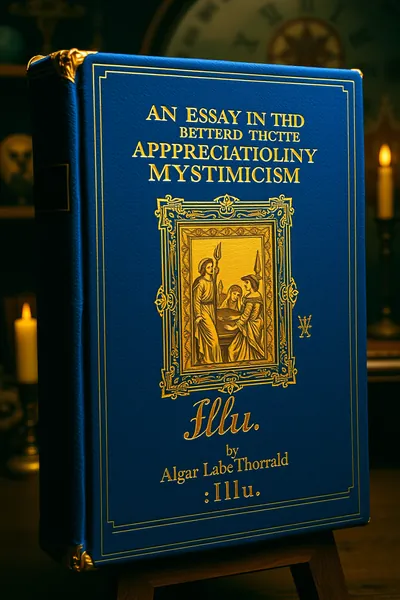
Christian Mysticism

 74
74

Christian Mysticism
William Inge’s "Christian Mysticism" presents a compelling case for the inherent divinity within the human spirit, a perspective often obscured by more literal or externalized interpretations of Christian doctrine. Inge articulates this immanence with clarity, drawing heavily on scripture and philosophical reasoning. His exploration of "spiritual and physical unity" as a manifestation of divine love is particularly insightful, offering a grounded approach to mystical experience. However, the work, while scholarly, can sometimes feel dense, particularly for readers unfamiliar with theological discourse of the early 20th century. The extensive referencing, while a strength for academic study, might present a barrier to those seeking a more devotional or introductory text. The central argument regarding God's presence "in the here and now" remains a powerful and enduring takeaway. Inge’s "Christian Mysticism" offers a robust intellectual framework for understanding the indwelling Christ, though its academic style demands focused attention.
📝 Description
74
### What It Is William Inge's "Christian Mysticism" is an examination of the inner spiritual life within the Christian tradition. It explores the concept of immanent divinity, the idea that God's consciousness resides within each individual, rather than being a distant entity. The work posits that recognizing this indwelling divine presence leads to an experience of unity, particularly through the manifestation of love. Inge draws upon scriptural references, notably Jesus' declaration that "The Kingdom of God is within," to support the notion that spiritual realization is an internal process.
### Who It's For This book is intended for serious students of Christian theology and spirituality who wish to understand the contemplative and mystical dimensions of their faith. It will appeal to those interested in the historical development of Christian thought concerning the divine-human relationship and the nature of spiritual experience. Readers seeking to deepen their personal understanding of prayer, meditation, and the pursuit of divine union within a Christian framework will find substantial material here.
### Historical Context First published in 1917, "Christian Mysticism" emerged during a period of significant intellectual and spiritual ferment in Britain. The early 20th century saw a resurgence of interest in mystical traditions, both within and outside established religious institutions. Inge, a prominent theologian and academic, was engaging with contemporary philosophical idealism and the burgeoning field of psychology, which often intersected with discussions of consciousness and the self. His work offered a scholarly yet accessible exploration of concepts that were being debated by thinkers like Evelyn Underhill, another key figure in the study of Christian mysticism.
### Key Concepts The central concept is the immanence of God, understood as "pure spiritual consciousness" present within all beings. This immanence is linked to the experience of love, which bridges the perceived gap between the human and the divine. The book also delves into the idea of spiritual unity, where the individual consciousness recognizes its fundamental connection to the divine consciousness. Inge interprets scriptural teachings, such as "The Kingdom of God is within," as pointers to this internal, accessible spiritual reality. The nature of divine union and the path toward achieving it are also explored.
💡 Why Read This Book?
• Understand the concept of God's immanence as articulated by William Inge, moving beyond externalized worship to recognize the divine "within, not far removed from us." This offers a new lens for personal spiritual practice. • Gain historical perspective on early 20th-century Christian thought through Inge's engagement with theological currents and his detailed analysis of mystical traditions, providing context for contemporary spiritual inquiry. • Explore the connection between divine consciousness and love as presented in "Christian Mysticism," learning how this unity can be experienced in the "here and now" as described in the book's core arguments.
⭐ Reader Reviews
Honest opinions from readers who have explored this book.
❓ Frequently Asked Questions
What is the primary argument of William Inge's "Christian Mysticism"?
The book's central argument is that God's pure spiritual consciousness is immanent, residing within each individual. This understanding, particularly when experienced through love, reveals a unity between the human and the divine in the present moment, echoing Jesus' teaching that "The Kingdom of God is within."
When was William Inge's "Christian Mysticism" originally published?
The original publication date for "Christian Mysticism" by William Inge was 1917, placing it within the early 20th century's intellectual landscape.
Who is William Ralph Inge D D?
William Ralph Inge D.D. (1860-1954) was a prominent English theologian, Anglican priest, and academic. He served as Lady Margaret Professor of Divinity at Cambridge and was a Fellow of the British Academy, known for his extensive writings on mysticism and theology.
What does "Christian Mysticism" say about the Kingdom of God?
Following Jesus' teaching, the book interprets the "Kingdom of God" not as a future physical place, but as an internal spiritual reality accessible in the present moment through consciousness and divine unity.
Is "Christian Mysticism" suitable for beginners?
While foundational, the book is written from an academic and theological perspective of the early 20th century. It offers depth for those already interested in Christian spirituality and theology but might require prior knowledge for a smoother introduction.
What is the relationship between love and unity in Inge's work?
Inge posits that love is a key experiential pathway to recognizing the spiritual and physical unity that arises from God's immanent consciousness. This love acts as a bridge, revealing the divine presence within.
🔮 Key Themes & Symbolism
Divine Immanence
The core of Inge's exploration is the concept of God's presence dwelling within each individual, a "pure spiritual consciousness" rather than a distant deity. This theme challenges traditional views of separation, suggesting that the divine is intimately accessible in the here and now. Inge uses scriptural evidence, such as Jesus' words on the Kingdom of God, to illustrate that spiritual realization is an internal journey of recognizing this indwelling presence.
Spiritual Unity and Love
Inge connects the realization of divine immanence with an experience of unity, specifically through the power of love. This unity is presented as both spiritual and physical, suggesting a holistic integration of being. The book argues that love acts as the primary vehicle through which the individual consciousness can perceive and merge with the divine consciousness, fostering a profound sense of connection.
The Kingdom Within
Referencing Jesus' statement, "The Kingdom of God is within," Inge interprets this not as a future event but as a present, internal state of being. The book explores how our thoughts and actions, both internal and external, contribute to or obstruct the experience of this inner kingdom. It emphasizes that the path to spiritual fulfillment lies in cultivating an awareness of this ever-present divine reality.
Consciousness and Awareness
The work delves into the nature of human consciousness and its potential to align with divine consciousness. Opening one's awareness is presented as crucial for experiencing the unity of God's presence. Inge suggests that through focused attention and spiritual practice, individuals can transcend ordinary perception and apprehend the deeper, mystical truths of their existence.
💬 Memorable Quotes
“God is within each one of us so opening our consciousness to the unity of God's pure spiritual consciousness in Christian Mysticism reveals God in the condition of love, which is a kind of spiritual and physical unity.”
— This passage encapsulates the book's central thesis: divine immanence discovered through love leads to a unified experience of being, bridging the material and spiritual realms.
“This unity shows us that God's pure consciousness is within, not far removed from us, but with us in the here and now.”
— Inge emphasizes the immediate accessibility of the divine. It's not a distant goal but a present reality, urging readers to look inward for spiritual connection rather than outward.
“Jesus also said this when he gave us the saying; The Kingdom of God is within.”
— This biblical reference is used to support the idea that spiritual fulfillment and divine presence are internal states, accessible through consciousness and inner awareness.
“Christian Mysticism explains how our actions and thoughts within and without resolv[e]...”
— This suggests that the practice of Christian mysticism involves integrating inner spiritual realization with outer conduct, implying that true spiritual understanding manifests in daily life.
“The Kingdom of God is within.”
— A foundational quote, interpreted by Inge as proof that the divine realm is not external or future, but an immediate, internal experience available to all who cultivate awareness.
🌙 Esoteric Significance
Tradition
While firmly rooted in Christian theology, Inge's work engages with concepts that align with broader esoteric traditions, particularly those emphasizing divine immanence and the direct experience of the Absolute. It bridges orthodox Christian discourse with perennialist ideas about the universality of mystical experience, making it a significant text for those seeking esoteric interpretations within a Christian framework.
Symbolism
The primary symbol is the "Kingdom of God within," representing the internal spiritual reality accessible to the individual consciousness. "Love" functions as a key symbol and unifying force, bridging the human and divine, and facilitating the experience of spiritual and physical unity. The concept of "pure spiritual consciousness" itself acts as a symbol for the ultimate divine reality residing within.
Modern Relevance
Inge's exploration of divine immanence and the "Kingdom within" continues to influence contemporary Christian contemplative practices, mindfulness movements, and spiritual psychology. Thinkers and practitioners interested in the intersection of psychology, theology, and direct spiritual experience often reference his work for its grounded yet profound articulation of inner divinity.
👥 Who Should Read This Book
• Students of Christian theology and history: Gain a scholarly perspective on the development of mystical thought within Christianity during the early 20th century. • Seekers of inner spiritual experience: Discover theological arguments supporting the idea of direct, immanent divine connection and unity through love. • Comparative religion scholars: Understand how Christian mystical concepts, as presented by Inge, align with or diverge from broader esoteric and spiritual traditions.
📜 Historical Context
Published in 1917, William Inge's "Christian Mysticism" arrived during a period of intense intellectual and spiritual reevaluation in Britain. The early 20th century saw a burgeoning interest in subjective religious experience, partly as a reaction against prevailing materialism and institutional rigidity. Inge, a prominent theologian and Dean of St Paul's Cathedral, engaged with both traditional Christian thought and contemporary philosophical movements like idealism. His work contributed to a broader discussion on mysticism, alongside contemporaries such as Evelyn Underhill, whose "Mysticism" (1911) also explored inner spiritual paths. While Inge remained within orthodox Christianity, his emphasis on immanence and direct experience of the divine resonated with spiritual seekers exploring alternatives to conventional dogma. The era was marked by scholarly explorations of religious phenomena, and Inge’s book offered a substantial theological and philosophical grounding for understanding Christian contemplative traditions.
📔 Journal Prompts
The concept of God's pure spiritual consciousness residing within.
The experience of unity through love as described by Inge.
Jesus' teaching on the Kingdom of God being within.
Opening consciousness to divine presence in the here and now.
The connection between internal thoughts and external spiritual realization.
🗂️ Glossary
Immanence
The theological concept that divine presence is within the material universe and human consciousness, rather than solely transcendent or outside of creation.
Transcendence
The theological concept that God or the divine exists beyond the material universe and human comprehension; existing apart from and not subject to the limitations of the material universe.
Spiritual Consciousness
A state of awareness focused on or attuned to divine realities, inner truths, and the non-material aspects of existence, as distinct from ordinary sensory perception.
Divine Unity
The state of oneness or integration experienced when the individual consciousness recognizes its fundamental connection to the divine consciousness.
Mysticism
The pursuit of achieving communion with, identity with, or conscious awareness of an ultimate reality, the divine, or spiritual truth, often through direct experience.
The Kingdom of God
In Christian theology, often interpreted as God's reign or rule, which Inge, following Jesus, posits is an internal spiritual reality accessible in the present.
Here and Now
The present moment, emphasized by Inge as the locus of divine presence and spiritual experience, rather than a future event or distant location.