Beholders of divine secrets

 74
74

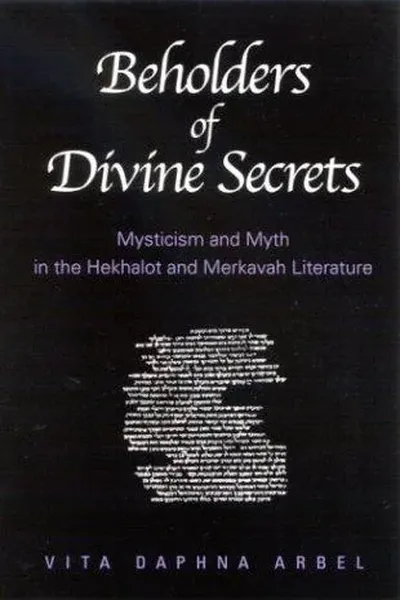
Beholders of divine secrets
Vita Daphna Arbel's 'Beholders of Divine Secrets' presents a compelling case study of individuals who claimed direct communion with the divine. The book's strength lies in its meticulous examination of the symbolic frameworks these figures employed, moving beyond hagiography to critical analysis. Arbel effectively highlights how the interpretation of divine secrets is intrinsically tied to the cultural and intellectual milieu of the seer. For instance, the discussion of medieval mystics' use of alchemical symbolism provides a concrete example of this intersection. However, the work occasionally struggles with accessibility, at times becoming dense with academic terminology that may alienate readers less familiar with specialized esoteric scholarship. While the 2003 publication date situates it within a growing field of esoteric studies, some of its arguments could benefit from engagement with more recent interdisciplinary research. Ultimately, 'Beholders of Divine Secrets' offers a valuable, albeit demanding, perspective on the historical conduits of alleged divine knowledge.
📝 Description
74
### What It Is 'Beholders of Divine Secrets' by Vita Daphna Arbel offers a unique exploration into esoteric traditions, focusing on individuals who claim to access hidden knowledge. The work examines the nature of divine inspiration, prophecy, and mystical experience through a historical and symbolic lens. It moves beyond simple biographical accounts to analyze the methods, claims, and societal impact of those who perceived themselves as conduits for celestial or occult wisdom.
### Who It's For This book is intended for serious students of comparative religion, mysticism, and the history of esoteric thought. Readers interested in the psychological underpinnings of visionary states, the evolution of symbolic language in spiritual contexts, and the persistent human quest for transcendent understanding will find substantial material here. It is particularly relevant for those who study figures often relegated to the fringes of academic religious studies.
### Historical Context Published in 2003, 'Beholders of Divine Secrets' emerges at a time when academic interest in esoteric movements and non-canonical spiritual experiences had been growing for decades. It builds upon scholarship that re-evaluated Gnosticism, Hermeticism, and various forms of medieval and Renaissance mysticism. The work implicitly engages with the broader discourse surrounding altered states of consciousness, as studied by figures like William James, and the interpretation of ancient religious texts outside orthodox frameworks.
### Key Concepts The central concepts revolve around the phenomenology of divine revelation and the interpretation of symbols believed to originate from a higher source. Arbel scrutinizes the role of ecstatic states, visionary experiences, and the symbolic language used by those who claimed divine access. The book investigates how these experiences were recorded, disseminated, and understood within their respective historical and cultural milieus, questioning the boundaries between genuine insight and psychological projection.
💡 Why Read This Book?
• Gain an understanding of how figures like Hildegard of Bingen interpreted divine visions through the symbolic language of their era, a perspective illuminated by the book's focus on symbolic frameworks. • Explore the concept of ecstatic states as conduits for knowledge, as detailed in the text's analysis of visionary experiences and their historical recording. • Appreciate the nuanced relationship between cultural context and spiritual insight, a key takeaway from the book's examination of how societal influences shape the reception of 'divine secrets'.
⭐ Reader Reviews
Honest opinions from readers who have explored this book.
❓ Frequently Asked Questions
What is the primary focus of Vita Daphna Arbel's 'Beholders of Divine Secrets'?
The book primarily focuses on individuals who claimed to receive divine secrets or revelations, examining their experiences, symbolic language, and the historical context surrounding their claims. It analyzes how these 'beholders' interpreted and communicated their perceived divine access.
When was 'Beholders of Divine Secrets' first published?
'Beholders of Divine Secrets' was first published in 2003, placing it within a period of increasing academic interest in esoteric studies and religious phenomena.
Does the book analyze specific historical figures?
Yes, the work explores various historical figures who claimed divine inspiration, analyzing their methods and the symbolic systems they used to articulate their experiences, though specific names vary based on the edition and focus.
What kind of esoteric traditions are discussed?
The book touches upon several esoteric traditions by examining individuals who claimed access to hidden knowledge, often within frameworks that intersect with mysticism, prophecy, and visionary experiences across different historical periods.
Is 'Beholders of Divine Secrets' suitable for beginners in esoteric studies?
While informative, the book's academic depth and specialized terminology might make it more suitable for those with some existing background in religious studies or esoteric thought, rather than absolute beginners.
What is the book's approach to divine revelation?
Arbel's approach is analytical and critical, investigating the phenomenology of revelation and the symbolic interpretation employed by those who experienced it, rather than endorsing or dismissing the claims themselves.
🔮 Key Themes & Symbolism
Phenomenology of Revelation
The book meticulously dissects the subjective experience of divine revelation, exploring how individuals perceive and articulate contact with higher realities. It moves beyond mere description to analyze the cognitive and emotional processes involved in receiving what is interpreted as divine secrets. Arbel examines the internal states, altered consciousness, and intuitive leaps that characterize these moments, questioning the boundaries between divine inspiration and psychological phenomena within historical contexts.
Symbolic Language of the Divine
A core theme is the critical examination of the symbolic systems employed by those claiming divine access. Whether through visions, dreams, or ecstatic utterances, these individuals often utilized a rich symbolic lexicon unique to their time and culture. The work investigates how symbols from alchemy, biblical exegesis, or personal visionary language were used to translate ineffable experiences into communicable forms, serving as a bridge between the mundane and the transcendent.
Historical and Cultural Mediation
Arbel emphasizes that the reception and interpretation of divine secrets are deeply embedded within historical and cultural frameworks. The book demonstrates how societal norms, prevailing intellectual currents, and religious orthodoxies shape both the experience of revelation and how it is understood by the individual and their community. This contextualization is crucial for understanding the diversity of claims and their varying degrees of acceptance or condemnation throughout history.
The Seeker as Conduit
The work centers on the figure of the 'beholder' – the individual positioned as a conduit for divine knowledge. It analyzes the characteristics attributed to such figures, their perceived role in society, and the challenges they faced. This includes exploring notions of prophecy, gnosis, and direct spiritual insight, and how these individuals navigated the complex space between personal experience and communal belief, often becoming focal points for spiritual movements.
💬 Memorable Quotes
“The interpretation of divine secrets is inseparable from the symbolic language available to the visionary.”
— This highlights the central argument that perceived divine messages are filtered through the seer's cultural and linguistic framework, suggesting that symbols are the essential tools for translating transcendent experiences.
“Ecstatic states serve as a bridge, allowing for the reception of knowledge otherwise inaccessible.”
— This emphasizes the book's focus on altered states of consciousness as a key mechanism for accessing divine or hidden information, framing these states as crucial gateways for esoteric understanding.
“Historical context dictates not only the form but also the perceived validity of divine pronouncements.”
— This points to the socio-historical dimension of esoteric claims, suggesting that the era in which a revelation occurs significantly influences how it is understood and whether it is accepted by society.
“The symbols employed by mystics often draw from both universal archetypes and specific cultural motifs.”
— This suggests a dual origin for esoteric symbolism, acknowledging both innate psychological patterns and culturally specific imagery in the articulation of divine secrets.
“Understanding the 'beholder' requires examining their lived experience within their specific milieu.”
— This underscores the importance of a biographical and contextual approach to studying individuals who claim divine access, emphasizing that their experiences are shaped by their unique circumstances.
🌙 Esoteric Significance
Tradition
The work engages with the broad lineage of Western esotericism, particularly touching upon traditions that emphasize direct spiritual apprehension and hidden knowledge, such as Gnosticism and certain forms of Christian mysticism. It departs from purely dogmatic approaches by focusing on the phenomenological and symbolic aspects of these experiences, analyzing them as distinct from, though often intertwined with, established religious structures.
Symbolism
Key symbols explored include those related to divine light, celestial journeys, and encoded language, often found in visionary texts. For instance, the symbol of the 'divine blueprint' might represent an underlying cosmic order perceived by the seer, while intricate geometric patterns could signify the structured nature of heavenly realms or sacred geometry.
Modern Relevance
Contemporary thinkers in fields ranging from consciousness studies to the psychology of religion continue to draw on historical analyses of visionary states. 'Beholders of Divine Secrets' contributes to ongoing discussions about the nature of intuition, the interpretation of symbolic language in therapeutic and spiritual contexts, and the enduring human impulse to connect with perceived transcendent realities.
👥 Who Should Read This Book
• Students of comparative religion and mysticism seeking to understand the historical claims of divine revelation across cultures. • Researchers of esoteric traditions interested in the symbolic language and psychological experiences of individuals who perceived themselves as conduits of hidden knowledge. • Readers of spiritual autobiography and visionary literature who wish to critically analyze the underpinnings of such accounts.
📜 Historical Context
Published in 2003, Vita Daphna Arbel's 'Beholders of Divine Secrets' arrived during a resurgence of academic interest in esoteric history and comparative mysticism. The late 20th and early 21st centuries saw scholars increasingly re-evaluating previously marginalized spiritual traditions, moving beyond purely theological or philosophical analyses to incorporate sociological, psychological, and anthropological perspectives. This work engages with the legacy of figures like William James, whose 'The Varieties of Religious Experience' (1902) explored the nature of mystical states, and the broader academic study of Gnosticism and Hermeticism that gained traction throughout the 20th century. Arbel's book implicitly responds to scholarship that sought to understand the 'inner life' of religious figures, offering a critical lens on claims of divine knowledge. Unlike purely devotional accounts, it situates these experiences within specific intellectual currents, acknowledging the influence of prevailing worldviews, such as the burgeoning interest in Jungian psychology and its archetypal theories.
📔 Journal Prompts
Analyze the symbolic language used by a historical figure who claimed divine secrets.
Reflect on the cultural mediation of spiritual experiences, as discussed in the book's historical context.
Consider the concept of the 'beholder' as a conduit for knowledge. What challenges might they face?
Examine the role of ecstatic states in accessing information beyond ordinary perception.
How do the symbols discussed in the book relate to broader archetypal patterns?
🗂️ Glossary
Phenomenology of Revelation
The study of the structure of subjective experience and consciousness as it relates to divine or transcendent insights, focusing on how revelations are perceived and understood by the individual.
Symbolic Lexicon
The specific set of symbols, signs, and their associated meanings that an individual or group uses to communicate complex ideas, particularly those related to spiritual or esoteric concepts.
Gnosticism
An ancient religious movement characterized by a belief in a divine spark within humans that can be liberated from the material world through secret knowledge (gnosis).
Hermeticism
A religious, philosophical, and esoteric tradition based on writings attributed to Hermes Trismegistus, emphasizing divine knowledge, astrology, alchemy, and the interconnectedness of the cosmos.
Alchemical Symbolism
The system of symbolic language used in alchemy, often relating to the transformation of matter and the spiritual purification of the alchemist, which can also be applied metaphorically to spiritual journeys.
Visionary States
Altered states of consciousness characterized by vivid sensory experiences, such as seeing visions or hearing voices, often interpreted as having spiritual or divine significance.
Archetypes
In Jungian psychology, universal, archaic patterns and images that derive from the collective unconscious and are the psychic counterpart of the instinct. They manifest in myths, symbols, and dreams.