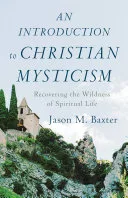
An Introduction to Christian Mysticism
 73
73

An Introduction to Christian Mysticism
Baxter’s 2021 volume tackles a significant challenge: making the deep well of Christian mysticism accessible without sacrificing intellectual rigor. He succeeds admirably in presenting key figures and concepts, particularly highlighting the inadequacy of "shallow conceptions" of God prevalent today. The strength lies in his ability to connect historical figures like Bernard of Clairvaux to enduring questions of faith. A limitation, however, is that the "brief" nature sometimes leaves the exploration of complex texts, such as those from the 14th-century anonymous author of *The Cloud of Unknowing*, feeling somewhat condensed. The engagement with primary sources is commendable, offering readers direct windows into the mystics' own words. Baxter’s argument that mystics offer a more robust understanding of God than current shallow conceptions is compelling and well-supported by his selections. It’s a valuable primer for anyone seeking a more visceral connection to the divine within the Christian tradition.
📝 Description
73
Jason M. Baxter's 2021 book introduces Christian mysticism's contemplative tradition.
This introduction examines the contemplative Christian tradition, arguing that contemporary faith often lacks depth. Jason M. Baxter, an educator known for clarity, highlights key figures, core texts, and recurring themes within this historical path. The book suggests that the mystical approach offers a richer encounter with God than superficial understandings.
It is intended for students, clergy, and laypeople who wish to enrich their spiritual lives through historical Christian contemplative practices. The volume serves as an accessible starting point for those unfamiliar with mystics like Meister Eckhart or Teresa of Ávila. It also suits educators who want a text that engages with primary sources, particularly individuals questioning current faith conceptions and seeking more substantial theological depth.
Published in 2021, the book appears during a time of renewed interest in contemplative spirituality across denominations. It aims to fill a gap in accessible scholarship on Christian mysticism, distinguishing itself from dense academic studies and overly devotional popular works. Baxter presents the mystical tradition as a necessary element for current theological discussions, acting as a counterbalance to purely intellectual or ritualistic faith.
Christian mysticism represents a specific lineage within the broader esoteric traditions that seek direct, experiential knowledge of the divine. This path emphasizes inner experience and transformation over dogma or external ritual, aligning with mystical movements across various religions. Baxter's work places this Christian contemplative tradition within a historical continuum, framing it as an essential, experiential dimension of orthodox faith that offers a more robust theological understanding than many modern interpretations.
💡 Why Read This Book?
• Gain a nuanced understanding of Christian contemplative prayer as presented by figures like Julian of Norwich, moving beyond superficial devotional practices. • Discover how historical mystics like Pseudo-Dionysius the Areopagite proposed richer conceptions of God, offering an alternative to simplistic theological models. • Learn how engaging with primary texts from the 14th century, such as *The Cloud of Unknowing*, can foster a more profound spiritual experience than contemporary, often secularized, spiritualities.
⭐ Reader Reviews
Honest opinions from readers who have explored this book.
❓ Frequently Asked Questions
What is Christian mysticism according to Jason M. Baxter?
Baxter defines Christian mysticism as the tradition of seeking direct, experiential knowledge of God within the framework of Christian faith. It emphasizes contemplative practices and an interior life, offering a deeper understanding of the divine than often found in contemporary Christianity.
Which key figures are discussed in An Introduction to Christian Mysticism?
The book introduces prominent mystics such as Bernard of Clairvaux, Meister Eckhart, Teresa of Ávila, and the anonymous author of *The Cloud of Unknowing*, exploring their lives and contributions to the mystical tradition.
What primary texts does the book engage with?
It features engagement with primary sources, including writings from the aforementioned mystics and other foundational texts that illustrate the core themes and practices of Christian contemplative life.
How does Baxter argue mystics offer a 'more robust understanding of God'?
Baxter contends that mystics like Eckhart emphasize an immanent, direct experience of God within the soul, offering a profound encounter that contrasts with more distant or abstract theological conceptions prevalent today.
Is this book suitable for academic courses?
Yes, Baxter designed the book for use in various courses, citing its accessible writing style and engagement with primary sources, making it suitable for introducing students to the field of Christian mysticism.
When was An Introduction to Christian Mysticism first published?
The book was first published on March 16, 2021, reflecting a contemporary interest in revisiting and understanding historical Christian contemplative traditions.
🔮 Key Themes & Symbolism
Experiential Divine Encounter
This theme centers on the mystical pursuit of direct, unmediated experience of God. Baxter contrasts this with purely intellectual or dogmatic approaches, highlighting how mystics like Teresa of Ávila sought an intimate, personal relationship with the divine. The work suggests this experiential dimension is crucial for a vibrant faith, moving beyond abstract theological concepts to a felt reality of God's presence within the soul.
Theosis and Divinization
The concept of theosis, or divinization, is explored as a central goal in Christian mysticism. This theme examines how mystics understood the human potential to participate in the divine nature through grace and contemplative practice. Baxter illustrates how figures like Gregory of Nyssa articulated this transformative process, suggesting that spiritual growth involves a profound union with God, becoming 'gods by grace'.
The Cloud of Unknowing
Baxter dedicates significant attention to the anonymous 14th-century text, *The Cloud of Unknowing*. This theme focuses on its teachings regarding the inadequacy of conceptual knowledge for grasping God and the emphasis on a loving, unitive gaze beyond intellect. It represents a pivotal moment in English mysticism, advocating for a surrender of thought to direct spiritual apprehension of the divine mystery.
Critique of Shallow Conceptions
A recurring motif is the critique of superficial or inadequate understandings of God prevalent in modern religious discourse. Baxter argues that the mystical tradition offers a corrective, providing a more robust, profound, and relational understanding of the divine. This theme underscores the relevance of historical mystics for contemporary spiritual life, urging readers to seek deeper engagement with faith.
💬 Memorable Quotes
“the mystical tradition offers a more robust understanding of God than our current shallow conceptions”
— This statement encapsulates Baxter's central thesis: that historical Christian mystics provide a depth and richness in their theology of God that surpasses many contemporary, often simplified, views of the divine.
“Features engagement with primary sources”
— This factual statement highlights the book's pedagogical approach, emphasizing its reliance on direct quotes and excerpts from foundational mystical texts rather than solely secondary interpretations.
“suitable for use in a variety of courses”
— Indicating its academic utility, this phrase suggests the book's broad applicability for educators seeking an accessible yet informative text on Christian mysticism for different levels of study.
“shows how and why the mystics can speak to the church today”
— This points to the book's aim of bridging historical spiritual practices with contemporary religious challenges, arguing for the enduring relevance and practical application of mystical wisdom.
“explains that the mystical tradition offers a more robust understanding of God”
— Reiterating a core argument, this phrase underscores Baxter's focus on the qualitative difference between mystical theology and more common, less profound, conceptions of the divine.
🌙 Esoteric Significance
Tradition
This work fits within the broad stream of Western Esotericism by illuminating a key contemplative branch of Christianity. While Christian mysticism is a distinct tradition, its emphasis on direct gnosis (knowledge) and interior transformation aligns with broader esoteric goals. Baxter's focus on experiential knowledge of the divine places it adjacent to Neoplatonic and Gnostic influences that historically permeated Christian thought, particularly in figures like Pseudo-Dionysius the Areopagite.
Symbolism
Key symbols explored include the 'Cloud of Unknowing,' representing the apophatic path where God transcends conceptual understanding, accessible only through loving surrender. The concept of 'theosis' (divinization) symbolizes the ultimate goal of union with God, wherein the human soul participates in the divine nature. Light and darkness are also recurrent motifs, signifying both the overwhelming brilliance of divine presence and the apophatic negation of all created forms.
Modern Relevance
Contemporary thinkers and spiritual seekers interested in contemplative prayer, mindfulness, and embodied spirituality often draw on the foundations laid by Christian mystics. Baxter's work speaks to modern practitioners seeking authentic spiritual experience beyond superficial religiosity. It connects with movements advocating for deeper theological reflection and interfaith dialogue, demonstrating how ancient mystical paths can inform contemporary quests for meaning and divine connection.
👥 Who Should Read This Book
• Students of theology and religious studies seeking an accessible introduction to the historical Christian mystical tradition, grounded in primary texts. • Clergy and spiritual directors looking for resources to guide congregants toward deeper contemplative practices and a richer understanding of God. • Individuals questioning conventional religious frameworks and searching for more profound, experiential ways to connect with the divine within a Christian context.
📜 Historical Context
Published in 2021, Jason M. Baxter's *An Introduction to Christian Mysticism* arrives during a resurgence of interest in contemplative practices, both within and outside traditional religious institutions. It enters a scholarly landscape marked by both dense academic studies and popular, sometimes simplified, introductions to spirituality. Baxter's work positions itself as an accessible bridge, engaging with primary sources for a contemporary audience. Its argument that mystics offer a more profound understanding of God directly challenges prevailing, often perceived as 'shallow,' conceptions of faith. The book implicitly engages with the historical tension between mystical experience and institutional dogma, a dynamic present since the early Church Fathers like Gregory of Nyssa. While not explicitly detailing reception of the book itself, its publication date and accessible nature suggest it aims to serve as a vital educational tool, contrasting with more niche academic explorations or devotional literature.
📔 Journal Prompts
The concept of 'shallow conceptions' of God, as contrasted with mystical theology.
The practice of contemplative prayer as a means to direct divine encounter.
Meister Eckhart's emphasis on the 'Godhead' beyond conventional theological language.
Teresa of Ávila's description of the soul's journey through the 'Interior Castle'.
The anonymous author's guidance in *The Cloud of Unknowing* regarding love over knowledge.
🗂️ Glossary
Theosis
A central concept in Eastern Orthodox theology and influential in Christian mysticism, meaning 'deification' or 'union with God.' It refers to the process by which a believer, through grace and spiritual practice, becomes more like God and participates in the divine nature.
Apophatic Theology
Also known as negative theology, this approach to understanding God emphasizes what God is *not*, rather than what God *is*. It posits that God is beyond human comprehension and language, accessible only through negation and silence, as exemplified in texts like *The Cloud of Unknowing*.
Contemplative Prayer
A form of prayer characterized by intentional silence and stillness, aiming for direct, experiential union with God. It moves beyond petitionary or discursive prayer, focusing on passive reception and loving attention to the divine presence.
Mystical Experience
A subjective experience of direct, immediate encounter with the divine or ultimate reality. These experiences are often described as ineffable, transformative, and beyond ordinary sensory perception or rational understanding.
The Cloud of Unknowing
A 14th-century English mystical text that guides the reader toward God through the apophatic path. It emphasizes setting aside intellectual concepts and discursive prayer in favor of a loving, unmediated gaze upon God.
The Interior Castle
A spiritual autobiography and mystical treatise by Teresa of Ávila, published in 1577. It uses the metaphor of a castle with multiple mansions to describe the soul's journey toward union with God through stages of spiritual development.
Meister Eckhart
A German theologian and mystic (c. 1260–1328) known for his profound and sometimes controversial teachings on the direct union of the soul with God, the 'Godhead,' and the birth of God in the soul.