Witchcraft and Demonism

 63
63

Witchcraft and Demonism

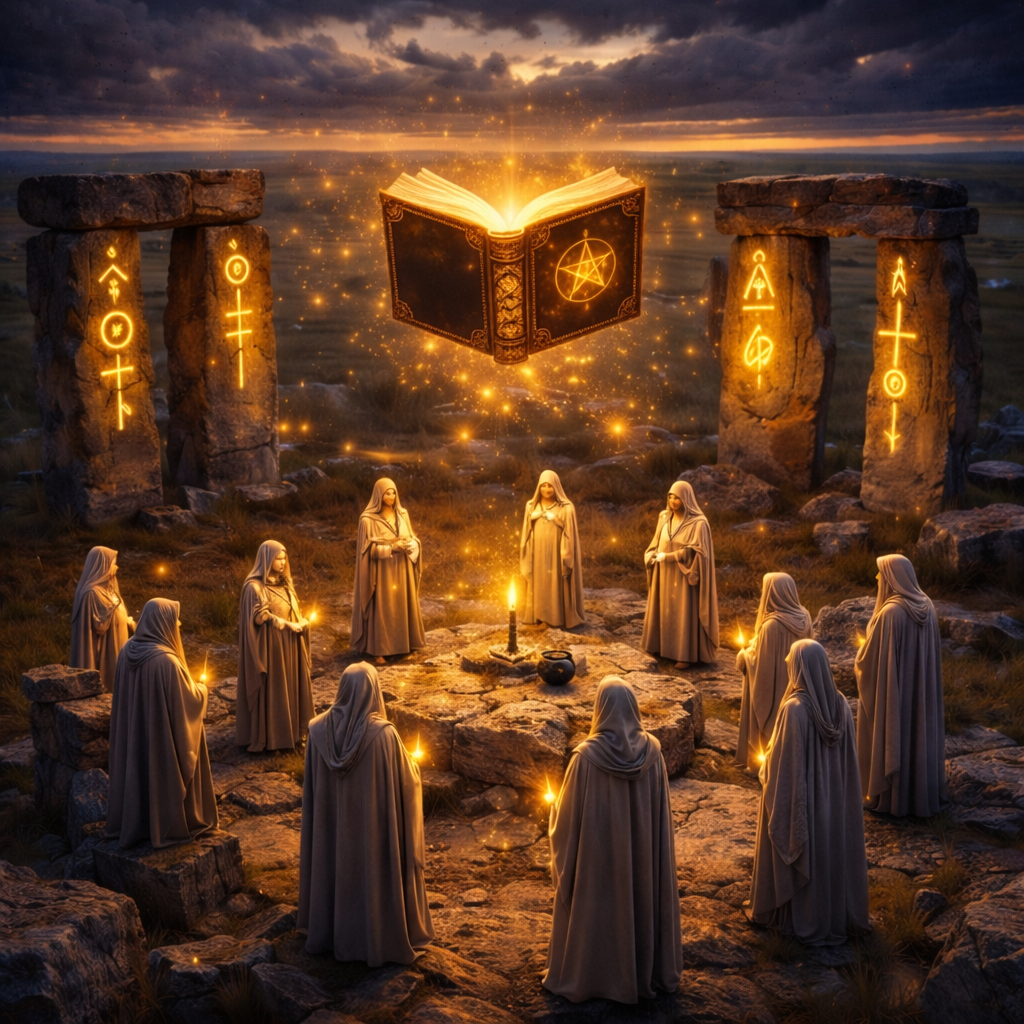

Evander Ashcroft (Alchemy & Hermeticism Editor) — C. L'Estrange Ewen's 'Witchcraft and Demonism' is an indispensable cornerstone for any serious student of Western esotericism. Ewen masterfully traces the lineage of magical practices and demonological beliefs from their earliest manifestations in Britain. He illuminates the crucial, often overlooked, symbiotic relationship between these nascent occult arts and the foundational religious frameworks of ancient peoples. This work offers profound insights into the psychological and spiritual drivers behind ritualistic behavior, presenting a nuanced understanding far removed from sensationalized interpretations. It is a treasure trove for scholars and practitioners alike, providing a vital historical and philosophical context for the enduring fascination with the darker, more potent aspects of the magical arts.
📝 Description
63
Delve into the shadowed origins of supernatural belief with C. L'Estrange Ewen's seminal work, 'Witchcraft and Demonism.' This meticulously researched volume unearths the ancient roots of magical practice and its intricate relationship with early religious rites in Britain. Beyond mere historical record, Ewen guides the reader through a landscape where the veil between the mundane and the mystical was thin, exploring the universal human yearning for influence over unseen forces. Witness the evolution of sacrificial rituals and arcane ceremonies, not as primitive superstitions, but as the primal language of humankind seeking favor and protection from potent, often terrifying, mythic deities. This is essential reading for those who seek to understand the deep currents of occultism that have shaped human consciousness, offering a profound glimpse into the foundational beliefs that continue to resonate in esoteric traditions today. Prepare to encounter the raw, untamed power of ancient faiths and the enduring human quest for dominion over the unknown.
✍️ Author
C. L'Estrange Ewen
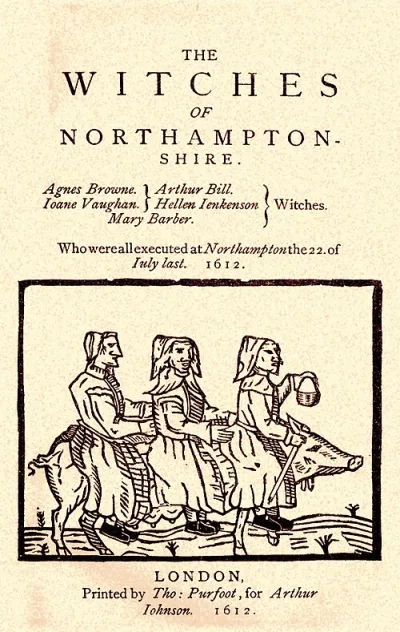
The Northamptonshire witch trials mainly refer to five executions carried out on 22 July 1612 at Abington Gallows, Northampton. In 1612 at the Lent Assizes held in Northampton Castle a number of women and a man were tried for witchcraft of various kinds, fr…
💡 Why Read This Book?
Uncover the primal spiritual impulses that fueled early magic and demonism in Britain. This book offers a unique historical lens into the universal human need to connect with and influence supernatural powers. Essential for seekers of ancient wisdom, scholars of occult history, and practitioners interested in the foundational roots of magical traditions.
⭐ Reader Reviews
Honest opinions from readers who have explored this book.
❓ Frequently Asked Questions
What is the primary focus of this book?
The book primarily focuses on the historical development and societal context of witchcraft and demonism in Britain, exploring their origins within early religious and magical practices.
Does the book contain actual spells or rituals?
While it details the beliefs and practices surrounding witchcraft and demonism, it is primarily a historical and analytical work, not a grimoire intended for performing rituals.
Who is C. L'Estrange Ewen?
C. L'Estrange Ewen was a notable historian and scholar specializing in the history of witchcraft and demonology, known for his meticulous research and objective approach to the subject.
Is this book suitable for beginners in occult studies?
Yes, it provides a solid historical foundation and context, making it an excellent starting point for understanding the historical underpinnings of witchcraft and demonism before delving into more practical or theoretical texts.
What is the historical period covered?
The book delves into the earliest inhabitants of Britain, tracing the evolution of these beliefs through subsequent historical periods, with a particular emphasis on early and medieval eras.
🔮 Key Themes & Symbolism
Primal Religious Ritual and Magic
This theme explores the intrinsic connection between early religious practices and the genesis of magical ceremonies. It posits that the human drive to appease, influence, and gain favor from supernatural entities was a fundamental aspect of primitive religious ritual. The book examines how sacrificial rites and magical acts were not separate from religious worship but integral components, designed to secure preferential treatment from the divine or mythical powers that governed the natural world. This perspective offers a profound understanding of the universality of belief in unseen forces and the ancient origins of humanity's quest for spiritual agency and protection.
The Evolution of Demonology
The book meticulously traces the historical trajectory of demonological beliefs, examining how concepts of malevolent supernatural entities evolved alongside societal structures and religious doctrines. It investigates the societal anxieties and psychological archetypes that contributed to the formation of demon figures and their perceived influence over human affairs. Understanding this evolution is key to grasping the historical persecution and demonization associated with witchcraft, revealing how fear and societal control were often intertwined with supernatural narratives. This theme provides critical context for interpreting historical accounts of witchcraft trials and the cultural anxieties they represented.
Witchcraft in British History
This theme provides a deep dive into the historical manifestations of witchcraft in Great Britain. It moves beyond simplistic portrayals to explore the complex social, cultural, and legal landscapes in which witchcraft accusations and beliefs flourished. The book examines the evidence, the accused, and the accusers, offering a nuanced perspective on the phenomenon. It highlights how notions of witchcraft were shaped by local traditions, religious shifts, and prevailing societal fears. By focusing on the British context, this theme offers specific insights into the unique historical trajectory of witchcraft beliefs and their impact on communities and individuals.
💬 Memorable Quotes
“Belief in supernatural powers has been universal.”
— This statement underscores the inherent human inclination to acknowledge and interact with forces beyond the empirical, a foundational premise for understanding occult traditions.
“Sacrificial and magical ceremony designed to attract favourable attention.”
— This highlights the practical, goal-oriented nature of early ritual, demonstrating its role in seeking divine or supernatural intervention for earthly benefit.
“Introduced into Britain by the earliest inhabitants.”
— This emphasizes the ancient lineage of these practices, suggesting their deep roots in human history and their presence from the very dawn of civilization in the region.
“Part and parcel of the primitive religious ritual.”
— This asserts the inseparable nature of magic and religion in early societies, viewing them not as distinct, but as integrated aspects of a holistic spiritual worldview.
“Remote heathen races.”
— This phrase evokes a sense of ancient, pre-Christian spiritual practices, hinting at the non-Abrahamic origins of many mystical beliefs and rituals.
🌙 Esoteric Significance
Tradition
This work is foundational for understanding the historical underpinnings of Western Esotericism, particularly its roots in pre-Christian and early religious practices. It offers crucial context for traditions that explore folk magic, ancient deities, and the perceived interplay between the human and supernatural realms. By examining the earliest forms of ritual and belief, Ewen provides a lens through which to view the enduring human fascination with magical agency and its historical manifestations.
Symbolism
The book implicitly explores the symbolism inherent in early rituals and demonological concepts. Sacrificial acts, offerings, and the personification of unseen forces all carry deep symbolic weight, representing humanity's attempts to codify and interact with the mysteries of existence. The perceived attributes of demonic entities, often tied to natural phenomena or primal fears, also serve as potent symbols of the collective unconscious and societal anxieties, providing a rich tapestry for symbolic interpretation.
Modern Relevance
In an era where interest in paganism, witchcraft, and alternative spiritualities is experiencing a resurgence, 'Witchcraft and Demonism' offers vital historical context. It helps modern practitioners and seekers understand the deep, ancient roots of their beliefs and practices, moving beyond superficial interpretations. The book’s examination of the universal human drive for spiritual connection and influence remains profoundly relevant, highlighting the enduring nature of these fundamental human quests across millennia.
👥 Who Should Read This Book
This book is essential for historians of religion and occultism, providing a rigorous academic foundation. Seekers of esoteric knowledge will find it illuminating, offering a glimpse into the primal forces that have shaped spiritual thought. For practitioners of modern witchcraft and pagan traditions, it offers invaluable historical context and a deeper understanding of their lineage. Beginners interested in the historical reality of witchcraft and demonology will find it an accessible yet profound introduction, while seasoned occult scholars will appreciate its meticulous research and nuanced analysis.
📜 Historical Context
Published during a period of renewed academic interest in folklore, anthropology, and the history of magic, C. L'Estrange Ewen's 'Witchcraft and Demonism' emerged from a scholarly environment seeking to understand the roots of human belief systems. The early to mid-20th century saw a shift from sensationalized accounts of witchcraft to more critical, historical investigations. Ewen's work fits within this tradition, aiming to provide a factual and analytical framework for understanding the complex interplay of religion, magic, and societal anxieties in ancient Britain. It contributed to a growing body of literature that sought to demystify historical occult practices, placing them within their proper socio-cultural and historical contexts, and influencing subsequent generations of scholars and occultists.
📔 Journal Prompts
Reflect on the concept of 'universal belief in supernatural powers.' How does this resonate with your personal spiritual or philosophical outlook?
Consider the early human impulse to 'attract favourable attention' from deities. What modern equivalents exist in your life or society?
How might the 'primitive religious ritual' described in the book differ from contemporary organized religions?
Explore the notion of 'remote heathen races' and their spiritual practices. What assumptions or biases might be present in such terminology?
If you were to interpret the 'sacrificial and magical ceremony' from a purely symbolic perspective, what might it represent about the human condition?
🗂️ Glossary
Demonism
The belief in and worship of demons, often understood as malevolent supernatural beings, and the practices associated with them.
Heathen
Historically, a term used to describe individuals or groups who practiced religions other than the dominant Abrahamic faiths, often implying a connection to older, pagan beliefs.
Ritual
A set of actions performed in a prescribed order, often with religious or symbolic significance, intended to achieve a specific outcome or evoke a particular state of being.
Supernatural
Attributed to or relating to phenomena that cannot be explained by the known laws of nature; beyond or above the normal or physical world.
Occultism
The study of hidden or secret knowledge, particularly concerning magic, mysticism, and other supernatural phenomena, often seeking to understand the deeper, underlying principles of existence.