कामसूत्र
 77
77

कामसूत्र


Ophelia Vance, Mystical Literature Reviewer: Vatsyayana's Kamasutra, often misunderstood, is a cornerstone of esoteric literature, revealing the erotic as a potent vehicle for spiritual exploration. Beyond its practical advice on sexual congress, it offers a profound framework for understanding the energetic exchange between beings, the cultivation of desire as a divine force, and the integration of pleasure into the pursuit of liberation. Its early translation into English marked a pivotal moment, bringing these ancient, mystical insights to a Western audience hungry for deeper truths about human connection. For seekers and scholars alike, the Kamasutra is an indispensable text, illuminating the sacred in the sensual.
📝 Description
77
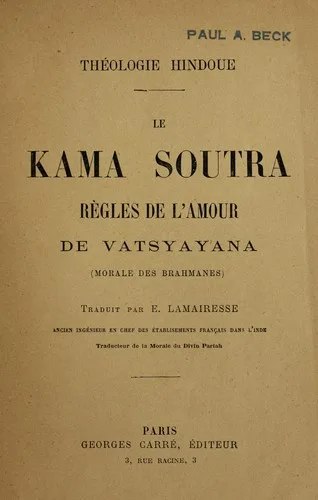
Vatsyayana composed the Kamasutra around the 4th century CE, detailing more than just sexual acts.
The Kamasutra, authored by Vatsyayana, is not solely a manual for sexual technique. It presents a structured approach to cultivating pleasure and harmonious relationships within the context of dharma, artha, and kama. The text divides human experience into distinct phases and offers advice on social graces, courtship, and the maintenance of partnerships. Vatsyayana addresses the art of seduction, the dynamics of marriage, and even the conduct of courtesans, framing these as integral to a well-lived life.
Beyond its practical advice, the Kamasutra touches upon the philosophical underpinnings of desire and connection. It suggests that understanding and engaging with these forces can lead to a more complete existence. The work aims to guide individuals in balancing their physical desires with their social and spiritual obligations, promoting a holistic view of human fulfillment. It is a guide to understanding attraction and the interactions between individuals.
Within certain Indian traditions, the Kamasutra is viewed not just as a secular text but as a guide to understanding the energetic and psychological aspects of human connection. Some interpretations see the pursuit and skillful management of desire as a path toward self-awareness and even spiritual growth. This perspective suggests that the integration of sensual experience, when approached with knowledge and intention, can contribute to a balanced life. It connects the earthly realm of pleasure with broader concepts of well-being and conscious living.
💡 Why Read This Book?
The Kamasutra offers a rare glimpse into ancient wisdom that elevates intimacy to a spiritual practice. It's essential for scholars of esoteric traditions, practitioners seeking to deepen their understanding of energetic unions, and seekers of profound self-knowledge who believe pleasure is a divine pathway. Read it to unlock the hidden spiritual dimensions of love and connection.
⭐ Reader Reviews
Honest opinions from readers who have explored this book.
❓ Frequently Asked Questions
Is the Kamasutra only about sex?
While it details sexual practices, the Kamasutra's esoteric depth lies in its philosophical exploration of desire, attraction, and the spiritual integration of intimacy, making it far more than a mere manual.
What esoteric traditions does the Kamasutra draw from?
It synthesizes principles from various Indian philosophical schools, including Tantra and Yoga, viewing sexual energy as a potent force for spiritual growth and self-realization.
How can the Kamasutra be considered 'mystical'?
It posits that true union transcends the physical, involving energetic alignment and the awakening of higher consciousness through shared pleasure and deep connection.
Who is the intended reader for this esoteric interpretation?
This edition is for those who approach sexuality with reverence, seeking to understand its role in spiritual evolution, self-discovery, and the manifestation of cosmic harmony.
What is the philosophical significance of pleasure in the Kamasutra?
Pleasure is viewed not as a mere indulgence, but as a divine gift and a catalyst for spiritual awakening, a means to experience the bliss of the divine within oneself and in union.
🔮 Key Themes & Symbolism
The Alchemy of Desire
This theme explores how desire, often seen as base, is transmuted into a powerful spiritual force within the Kamasutra's framework. It examines the energetic currents that fuel attraction and connection, presenting desire not as something to be suppressed, but as a divine spark that can ignite profound personal transformation and spiritual growth when understood and channeled harmoniously. The text reveals how the cultivation of mindful desire can lead to deeper self-awareness and a more vibrant connection to the life force.
Sacred Union and Energetic Exchange
Beyond the physical act, the Kamasutra illuminates the concept of sacred union as a profound energetic exchange between two souls. It describes how partners can achieve a state of alchemical fusion, harmonizing their vital energies to elevate consciousness and foster spiritual evolution. This theme emphasizes the importance of intention, respect, and mutual resonance in creating a union that is both deeply fulfilling on a physical level and profoundly transformative on a spiritual one.
Pleasure as a Divine Pathway
This crucial theme reframes pleasure not as a fleeting earthly indulgence, but as a divine gateway to experiencing the ultimate reality. The Kamasutra teaches that by embracing and understanding pleasure with consciousness and intention, one can tap into the inherent bliss of existence and achieve a state of spiritual liberation. It posits that the ecstatic moments shared in intimacy can mirror the bliss of the divine, offering a direct path to self-realization and union with the cosmos.
💬 Memorable Quotes
Direct passages from the work, attributed to the author.
“Desire is the divine spark.”
— This suggests that desire, when understood and honored, is a sacred energy capable of initiating spiritual awakening and profound transformation.
“Love is the highest form of ritual.”
— This elevates intimate connection to a sacred practice, implying that love, expressed through union, holds immense spiritual power.
“Pleasure is the echo of the divine.”
— This profound statement equates ecstatic experience with the divine presence, positioning pleasure as a means to touch the sacred.
“Know thyself through thy partner.”
— This emphasizes the introspective and self-discovery aspect of intimacy, suggesting that deep connection reveals hidden facets of one's own being.
💡 Key Ideas
Editorial paraphrase of the work's core concepts — not direct quotes.
The union of the soul is the ultimate pleasure.
This quote highlights the esoteric belief that true fulfillment lies not just in physical connection, but in the spiritual resonance and merging of two beings.
🌙 Esoteric Significance
Tradition
The Kamasutra draws heavily from ancient Indian philosophical traditions, particularly synthesizing elements of Tantra and Yoga. It views sexual energy as a potent force, akin to Kundalini, that can be awakened and channeled for spiritual growth. The text implicitly aligns with the concept of Shakti, the divine feminine energy, and its union with Shiva, the divine masculine, presenting intimate connection as a microcosm of cosmic creation and dissolution, a path to realizing the divine within.
Symbolism
Key symbols include the embrace, the union of lingam and yoni (representing masculine and feminine principles), and the various postures which can be seen as yogic asanas designed to harmonize energy flow. The meticulous descriptions of courtship and interaction symbolize the intricate dance of cosmic forces, while the pursuit of pleasure itself symbolizes the ultimate bliss of spiritual realization, the attainment of a state of ecstatic union with the divine.
Modern Relevance
In contemporary society, often fraught with sexual repression or superficial understanding, the Kamasutra offers a profound re-framing. It provides a framework for conscious intimacy, emphasizing respect, communication, and the spiritual potential inherent in sexual connection. Its principles can guide individuals and couples towards deeper, more meaningful relationships, fostering self-awareness, emotional well-being, and a holistic approach to human sexuality that integrates pleasure with spiritual growth.
👥 Who Should Read This Book
This edition of the Kamasutra is a treasure for the dedicated seeker of esoteric knowledge. Scholars of ancient philosophies and mystical traditions will find it an invaluable primary source. Practitioners of subtle energy work, Tantra, or conscious relating will discover useful insights and practical guidance. Beginners curious about the spiritual dimensions of sexuality will find an accessible yet deep exploration. Anyone ready to transcend mundane views of intimacy and embrace pleasure as a sacred path to self-discovery and divine connection will find this text transformative.
📜 Historical Context
Composed likely between the 2nd and 4th centuries CE in India, Vatsyayana's Kamasutra emerged during a period of flourishing philosophical and artistic expression. Ancient Indian society, while structured, often embraced a holistic view of life where dharma (duty), artha (prosperity), kama (pleasure), and moksha (liberation) were considered integral pursuits. The text reflects this worldview, presenting kama not as a forbidden or base desire, but as a vital component of a well-lived life, a pathway to spiritual understanding and personal fulfillment. Its survival and eventual translation into numerous languages attest to its enduring influence on both Eastern and Western thought regarding human sexuality, relationships, and the interconnectedness of the physical and spiritual realms.
📔 Journal Prompts
Reflect on the concept of desire as a divine spark in your own life. How has it guided or challenged you?
Consider a moment of profound connection with another. What energetic exchange do you believe occurred?
How can you infuse the practice of pleasure into your daily life as a form of spiritual ritual?
Explore the symbolism of union in your relationships. What does 'sacred union' mean to you personally?
What does it mean to 'know thyself through thy partner' in the context of your relationships?
🗂️ Glossary
Kama
In ancient Indian philosophy, one of the four aims of human life, representing desire, pleasure, love, and aesthetic enjoyment, viewed as a legitimate and important pursuit when balanced with dharma and artha.
Dharma
The cosmic order, one's duty, righteous conduct, virtue, and the inherent nature of things. It's a foundational concept in Indian traditions, guiding ethical and spiritual living.
Artha
Material prosperity, economic security, wealth, and political success. It represents the pursuit of worldly success and resources necessary for a fulfilling life.
Moksha
Liberation, emancipation, or spiritual enlightenment; the ultimate goal in many Indian spiritual traditions, signifying release from the cycle of birth and death.
Shakti
The primordial cosmic energy, the divine feminine power that animates the universe. It is often associated with creation, fertility, and transformative power.
This book appears in 2 collections
🔮 Readers Also Liked
Browse all →






From the “Ritual Magic” Collection
View all →








More Free Magic & Ritual Books
View all →