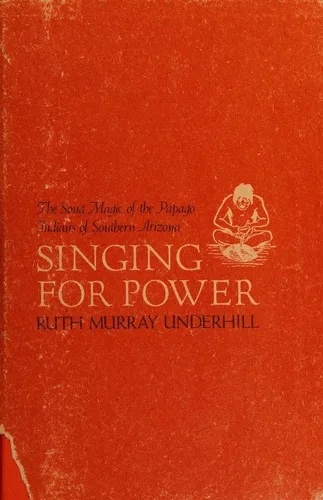
Singing for Power
 63
63

Singing for Power



Isolde Whitaker, Sacred Texts Editor: 'Singing for Power' is a monumental achievement, a luminous exposition of the Tohono O'odham's intricate relationship with sonic magic. Ruth Murray Underhill masterfully illuminates how song functions as a sacred technology, a means of direct communion with the divine and a tool for shaping existence. This is not simply ethnomusicology; it is a profound exploration of a living esoteric tradition. The book's strength lies in its sensitive portrayal of the spiritual underpinnings of their musical practices, revealing layers of symbolism and ritual efficacy. Ideal for scholars of indigenous spirituality, comparative religion, and practitioners interested in the power of mantra and sacred sound.
📝 Description
63
Delve into the profound sonic tapestry of the Tohono O'odham people in Ruth Murray Underhill's 'Singing for Power.' This seminal work unfurls a hidden world where song is not mere melody, but a potent force, a conduit for transformation, and the very architecture of spiritual reality. Underhill meticulously unearths ancient chants, ceremonial songs, and sacred melodies, revealing them as intricate keys to unlocking cosmic understanding and communal harmony. Beyond a scholarly examination of indigenous music, this book offers a glimpse into a living, breathing magical system where vocalization shapes destiny, heals affliction, and summons the unseen. It is an invitation to those who seek to understand the primordial power of sound, the deep currents of animistic belief, and the enduring wisdom encoded within the vocal traditions of a people intimately connected to the earth and the spirit world. Prepare to be mesmerized by a narrative that resonates with the echoes of creation itself.
✍️ Author
Ruth Murray Underhill
John Underhill (c. 1608/09 – 21 July 1672) was an early English settler and soldier in the Massachusetts Bay Colony, the Province of New Hampshire, where he also served as governor; the New Haven Colony, New Netherland, and later the Province of New York, settling on Long Island.
💡 Why Read This Book?
Unlock the ancient power of sound as a mystical force. 'Singing for Power' offers a rare portal into the Tohono O'odham's sacred sonic traditions, revealing how song shapes reality, facilitates healing, and fosters spiritual connection. It is an essential read for seekers of indigenous wisdom, scholars of comparative mysticism, and anyone drawn to the profound, often overlooked, esoteric significance of music and chant.
⭐ Reader Reviews
Honest opinions from readers who have explored this book.
❓ Frequently Asked Questions
What is the primary focus of 'Singing for Power'?
The book primarily focuses on the sacred songs and ceremonial music of the Tohono O'odham people, exploring their use in spiritual practices, healing, and shaping their world.
Who was Ruth Murray Underhill?
Ruth Murray Underhill was an influential anthropologist and ethnographer known for her extensive research on Native American cultures, particularly the Tohono O'odham, and her empathetic portrayal of their lives and traditions.
Does the book contain actual song lyrics or musical notation?
Yes, the book includes transcriptions and analyses of many songs, offering insights into their structure, meaning, and performance within ritual contexts.
Is this book suitable for beginners in esoteric studies?
While scholarly, the book's evocative prose and profound themes make it accessible and deeply rewarding for beginners interested in indigenous spirituality and the power of sound.
What makes this book 'esoteric'?
Its esoteric nature lies in its exploration of how sound functions as a direct channel for spiritual power, influencing reality and consciousness, moving beyond purely academic observation into the realm of lived mystical experience.
🔮 Key Themes & Symbolism
The Sonic Architecture of Reality
This theme delves into the profound belief that sound is not merely an auditory phenomenon but a fundamental force that shapes and sustains the cosmos. The Tohono O'odham understood songs as active agents, capable of influencing weather, healing illness, and guiding spiritual journeys. The book reveals how specific vocalizations and melodic structures were meticulously crafted to harmonize with natural forces and spiritual energies, creating a dynamic interplay between the human voice and the fabric of existence. It highlights a worldview where the spoken and sung word holds immense creative and transformative power, echoing ancient shamanic traditions.
Vocalization as Spiritual Technology
Beyond artistic expression, the songs within this tradition are presented as sophisticated spiritual technologies. Each chant, hymn, or invocation serves a specific purpose, acting as a precise tool for accessing different states of consciousness, invoking particular spirits, or enacting desired outcomes. Underhill meticulously details how the intentionality, rhythm, pitch, and context of singing were crucial elements in its efficacy. This theme explores the practical application of sonic magic, demonstrating how vocalizations were integrated into daily life and sacred ceremonies to maintain balance, ensure prosperity, and navigate the spiritual landscape.
The Interconnectedness of Sound, Spirit, and Nature
A central tenet explored is the deep, inseparable connection between sound, the spiritual realm, and the natural world. The Tohono O'odham perceived the voices of birds, the rustling of winds, and the flow of water as imbued with spiritual significance and potential for song. Their music served as a bridge, allowing humans to communicate with ancestral spirits, deities, and the animating forces of the land. This theme underscores a holistic understanding of existence, where sound acts as a universal language that binds together all aspects of creation, fostering a profound sense of belonging and reverence.
💬 Memorable Quotes
“The world is made of song.”
— This profound statement encapsulates the worldview where sound is the fundamental essence of creation, implying that reality itself is a manifestation of divine or cosmic melody.
“To sing is to remember the beginning.”
— This suggests that singing acts as a mnemonic device for primordial truths, connecting the singer to the foundational moments of existence and the original creative forces.
“Their songs are spells woven into air.”
— This evocative phrase highlights the active, magical nature of their music, portraying it as a form of enchantment that influences the spiritual and material realms.
“Power flows through the voice.”
— This directly addresses the core concept of the book, emphasizing the inherent spiritual energy and transformative potential residing within human vocalization.
“The land breathes its own music.”
— This highlights the animistic perspective, where natural elements possess their own inherent melodies and spiritual significance, which can be harmonized with through human song.
🌙 Esoteric Significance
Tradition
This work is deeply rooted in the esoteric traditions of the Tohono O'odham people, a lineage of indigenous spirituality that predates Western esoteric systems. It embodies a form of animistic shamanism where the natural world is imbued with spirit and consciousness. The songs are not merely cultural artifacts but living conduits to the spirit world, ancestral knowledge, and the fundamental forces of creation. It represents a powerful, ancient form of sound magic and vibrational healing, integral to their worldview and daily existence.
Symbolism
The symbolism within 'Singing for Power' is rich and multifaceted. Each song, melody, and rhythmic pattern carries layers of meaning, often tied to natural phenomena, animal spirits, celestial bodies, and ancestral beings. The act of singing itself symbolizes the human connection to the divine and the cosmos. Specific vocalizations can represent prayers, incantations, or the very essence of a desired outcome. The book reveals how this symbolism is not abstract but directly applied, functioning as a potent language for spiritual communication and manifestation.
Modern Relevance
In an age increasingly seeking deeper spiritual connection and holistic well-being, 'Singing for Power' offers profound modern relevance. It highlights the potent, often overlooked, therapeutic and transformative power of sound and intentional vocalization. The book provides a model for understanding how music can be a direct pathway to healing, consciousness expansion, and spiritual integration. For practitioners of sound healing, mindfulness, and comparative mysticism, it offers timeless wisdom on harnessing sonic energies for personal growth and a more profound connection to the Earth and the unseen realms.
👥 Who Should Read This Book
This illuminating work is essential for a broad spectrum of readers. **Beginners** seeking an accessible yet profound introduction to indigenous spirituality and the power of sound will find a captivating narrative. **Scholars** of anthropology, religious studies, and ethnomusicology will appreciate its meticulous research and insightful analysis. **Seekers** yearning for deeper spiritual understanding and practical applications of ancient wisdom will discover a treasure trove of knowledge. **Practitioners** of sound healing, meditation, and ritual will find inspiration and profound techniques for their own work, connecting with a lineage of sonic mastery.
📜 Historical Context
Published in 1936, Ruth Murray Underhill's 'Singing for Power' emerged during a pivotal era in anthropology, a time when scholars were increasingly recognizing the profound cultural and spiritual significance of indigenous traditions. The early to mid-20th century saw a growing, albeit often patronizing, interest in preserving and understanding the lifeways of Native American peoples before they were perceived to be lost to assimilation. Underhill’s work stands out for its sensitive and deeply respectful approach, moving beyond mere ethnographic documentation to capture the spiritual essence and worldview of the Tohono O'odham. Her research provided invaluable insights into their cosmology, ritual practices, and the crucial role of music in maintaining their cultural identity and spiritual connection during a period of immense societal change and pressure. The book contributed significantly to a more nuanced understanding of indigenous belief systems.
📔 Journal Prompts
Reflect on a time when a particular sound or song evoked a strong emotional or spiritual response. What was it about that sound?
Consider the concept of 'song as creation.' How might your own voice or the sounds around you actively shape your reality?
Journal about the connection between nature's sounds (wind, water, birds) and your own inner state. How can you harmonize with these natural sonic energies?
Explore the idea of a 'sacred song' in your own life or tradition. What purpose does it serve, and what power does it hold?
Imagine you could sing a song to manifest a specific positive outcome. What would the song sound like, and what would it aim to achieve?
🗂️ Glossary
Tohono O'odham
A Native American people indigenous to the Sonoran Desert, primarily in Arizona and Sonora, Mexico, known for their rich cultural heritage and spiritual traditions.
Animism
The belief that all natural objects, phenomena, and the universe itself possess an independent spiritual or sentient essence, often personified as deities or spirits.
Shamanism
A spiritual practice characterized by the belief in and ability to interact with the spirit world, often involving altered states of consciousness, healing, and divination.
Cosmology
A framework of beliefs and ideas about the nature of the universe, its origins, and its fundamental structure, often including spiritual and mythical dimensions.
Ritual
A set of actions, often symbolic and performed in a prescribed order, typically used in religious or magical ceremonies to achieve a specific spiritual or practical outcome.