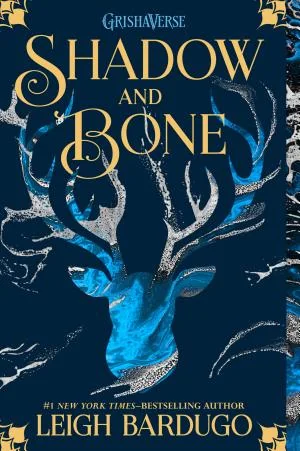
Shadow and Bone
 83
83

Shadow and Bone
Bardugo’s debut, Shadow and Bone, presents a familiar fantasy premise – an unlikely orphan discovering extraordinary power – but elevates it with a meticulously crafted world and a compelling, if sometimes predictable, trajectory. The magic system, dubbed 'Small Science,' feels refreshingly grounded, moving beyond simple spellcasting to a more elemental, almost biological, manipulation of the world. Alina’s journey from overlooked mapmaker to potential savior is the novel's engine, though her rapid ascent and romantic entanglements occasionally strain credulity. The antagonist, the Darkling, is a particularly strong creation, embodying a seductive, dangerous charisma that hints at deeper, darker motivations. A significant limitation is the pacing in the middle section, which can feel somewhat stagnant as Alina grapples with her new reality and the machinations of the court. However, the novel's strengths lie in its evocative descriptions of Ravka and its unique Grisha hierarchy. The climax, while leaning on a common trope, delivers a satisfying, albeit abrupt, conclusion to this initial chapter. Shadow and Bone ultimately succeeds as an engaging introduction to a vast, intriguing world.
📝 Description
83
### What It Is Shadow and Bone, the 2017 debut novel by Leigh Bardugo, introduces the Grishaverse, a world where certain individuals, known as Grisha, can manipulate matter and elements through a practice called 'Small Science.' The narrative centers on Alina Starkov, an orphan cartographer who discovers she possesses a rare and powerful Grisha ability: summoning light. This revelation thrusts her from a life of obscurity into the heart of a burgeoning conflict, forcing her to confront her own dormant potential and the societal structures that govern Grisha.
### Who It's For This novel is for readers who appreciate intricate world-building and character-driven fantasy narratives. Those interested in exploring themes of power, identity, and belonging within a system of magic will find much to engage with. It appeals to a younger adult audience but offers thematic depth that can resonate with older readers who enjoy speculative fiction with a strong emotional core.
### Historical Context Published in 2017, Shadow and Bone emerged within a vibrant period for young adult fantasy. Bardugo’s work joined a landscape populated by authors like Sarah J. Maas and Victoria Aveyard, each exploring variations on royal intrigue, hidden powers, and romantic entanglements. The novel’s distinct magic system, the 'Small Science' of the Grisha, offered a unique contribution, drawing comparisons by some critics to the quasi-scientific approach found in some earlier fantasy works, while distinguishing itself with its specific application to elemental manipulation.
### Key Concepts The core of Shadow and Bone revolves around the concept of Grisha and their unique abilities. These individuals are categorized into distinct orders based on their powers: Corporalki (healers and heartrenders), Etherealki (elementalists), and Materialki (those who manipulate physical substances). The narrative also introduces the Fold, a region of unnatural darkness populated by monstrous creatures called Volcra, a significant geographical and thematic element. The struggle for control over these powers and the fate of the nation of Ravka form the central conflict.
💡 Why Read This Book?
• Gain insight into the unique magic system of 'Small Science,' where Grisha manipulate elements through learned techniques, offering a more structured approach to fantasy abilities than often seen. • Experience the personal transformation of Alina Starkov, whose journey from obscurity to wielding immense power provides a relatable exploration of self-discovery and destiny within the nation of Ravka. • Understand the symbolic weight of the Fold, a terrifying expanse of darkness and monstrous creatures, and its role in shaping the political and personal stakes for the characters in this 2017 novel.
⭐ Reader Reviews
Honest opinions from readers who have explored this book.
❓ Frequently Asked Questions
What is the magic system called in Shadow and Bone?
The magic system in Shadow and Bone is referred to as 'Small Science.' It is practiced by individuals called Grisha, who possess the ability to manipulate the elements or the human body.
Who are the main antagonists in Shadow and Bone?
The primary antagonists include the monstrous Volcra that inhabit the Fold, and General Kirigan, also known as the Darkling, who seeks to control Grisha power for his own ends.
What is the significance of the Fold?
The Fold, or the Unsea, is a vast expanse of impenetrable darkness filled with flesh-eating creatures called Volcra. It physically divides the nation of Ravka and poses a constant threat.
What are the different types of Grisha?
Grisha are divided into three main orders: Corporalki (manipulators of the human body), Etherealki (manipulators of elements like fire, water, air, and sun/light), and Materialki (manipulators of physical substances).
What is Alina Starkov's unique Grisha power?
Alina Starkov possesses the extremely rare power of summoning light, a form of Etherealki magic that makes her unique even among the Grisha, and a key element in the novel's plot.
When was Shadow and Bone first published?
Shadow and Bone was first published in 2017, marking the debut of Leigh Bardugo's Grishaverse series.
🔮 Key Themes & Symbolism
Power and Responsibility
The narrative heavily explores the corrupting influence of power and the immense responsibility that accompanies it. Alina Starkov grapples with her newfound abilities, initially fearing them and later struggling with the expectations placed upon her as a potential savior. Her journey highlights the internal conflict between using power for personal gain or for the greater good of Ravka, a theme amplified by the actions of characters like the Darkling, whose pursuit of power has devastating consequences. The novel questions whether absolute power can ever be wielded without moral compromise.
Identity and Belonging
Alina’s arc is fundamentally about discovering her true identity and finding a place where she belongs. Initially an ostracized orphan, her discovery of being a powerful Grisha shatters her perception of self. She navigates the complex social strata of Ravka, caught between the human world that once ignored her and the Grisha world that now elevates her. This theme is reinforced by the societal division between Grisha and non-Grisha, and the internal politics within the Grisha ranks, forcing Alina to confront who she is and where her loyalties lie.
Light Versus Darkness
The juxtaposition of light and darkness is a central motif, both literally and metaphorically. Alina's power to summon light is contrasted with the oppressive darkness of the Fold and the manipulative nature of the Darkling. This duality extends to the characters themselves, who often exhibit both benevolent and malevolent traits. The struggle isn't simply about defeating external darkness, but about confronting the shadows within oneself and making choices that illuminate a path toward a better future for Ravka.
The Nature of Magic
Bardugo presents magic not as an inherent, unexplainable force, but as 'Small Science,' a trainable and categorizable skill. The Grisha are taught to refine their abilities, distinguishing between different orders like Corporalki, Etherealki, and Materialki. This systematic approach lends a unique flavor to the fantasy world, grounding the extraordinary in a semblance of logic. The narrative explores the potential and limitations of this magic, particularly Alina’s unique light-summoning ability, and how it is perceived and exploited by others.
💬 Memorable Quotes
“I had been a dancer, a soldier, a lover, a traitor. I had been a queen. And I had been a pawn.”
— This quote, attributed to Alina, encapsulates her tumultuous journey. It speaks to the multifaceted roles she adopts and the feeling of being manipulated by larger forces, highlighting the central themes of identity and agency within the narrative.
“The Darkling is not a monster. He is a man.”
— This interpretation of the Darkling's nature challenges simple black-and-white morality. It suggests a complex antagonist driven by understandable, albeit dangerous, motivations, moving beyond a purely villainous portrayal.
“When you're a hammer, everything looks like a nail.”
— This proverb, applied to the Grisha’s approach to their powers, reflects the idea that one's tools and abilities can shape perception and dictate solutions, sometimes leading to overly simplistic or forceful methods.
“The only reason I could do it was because I was not afraid.”
— This concept reflects Alina's internal shift. Her ability to overcome the Fold's horrors stems not from a lack of fear, but from a transformation where fear no longer paralyzes her, enabling her to act decisively.
“Power is a dangerous thing.”
— A direct statement about the core theme, this concept underscores the narrative's exploration of how power can corrupt, be misused, or become a burden, influencing both the wielder and those around them.
🌙 Esoteric Significance
Tradition
While not directly aligned with a single historical esoteric tradition, Shadow and Bone draws upon archetypal themes found in Gnosticism and Hermeticism, particularly concerning the duality of light and darkness and the concept of hidden knowledge. The Grisha's 'Small Science' can be seen as a secularized, systematized form of manipulating natural forces, echoing alchemical principles of understanding and controlling elemental energies. The narrative’s exploration of an innate power within an individual, which must be awakened and controlled, mirrors the Gnostic emphasis on gnosis—a special knowledge leading to spiritual liberation.
Symbolism
The primary symbol is the Fold, representing primordial chaos, the abyss, or the shadow self that must be confronted and overcome. Light, embodied by Alina, symbolizes enlightenment, hope, and spiritual awakening, acting as the direct counterpoint to the oppressive darkness. The Grisha’s ordered hierarchy (Corporalki, Etherealki, Materialki) can be interpreted as a reflection of Kabbalistic Sephiroth or other structured mystical cosmologies, representing different facets of a unified power or divine force that must be understood and balanced.
Modern Relevance
Contemporary fantasy authors and creators continue to draw inspiration from Bardugo's intricate world-building and magic systems. Practices related to shadow work and confronting inner darkness find parallels in the narrative’s struggle against the Fold and the Darkling's manipulative influence. The concept of 'Small Science' itself, as a structured, almost scientific approach to magic, resonates with modern occultists and fantasy enthusiasts who appreciate logical frameworks within fantastical settings, influencing discussions on magic systems in speculative fiction and role-playing games.
👥 Who Should Read This Book
• Aspiring fantasy world-builders seeking examples of structured magic systems and geopolitical landscapes that feel both unique and internally consistent. • Readers interested in character-driven narratives exploring themes of identity, destiny, and the burden of power within a young adult framework. • Fans of elemental magic and stories that feature a clear dichotomy between light and darkness, offering a blend of adventure and personal growth.
📜 Historical Context
Shadow and Bone, released in 2017, arrived during a surge in young adult fantasy, a genre then dominated by authors like Veronica Roth and Suzanne Collins, who had popularized dystopian and high-stakes adventure narratives. Bardugo’s contribution was the intricate world-building of the Grishaverse, centered on Ravka and its unique magic system, 'Small Science.' This approach, categorizing magical abilities into distinct orders like Corporalki and Etherealki, offered a more structured alternative to looser magic systems prevalent at the time. While the book garnered positive reviews, its reception was part of a broader trend where YA fantasy often faced scrutiny for its romantic subplots and protagonist tropes. It did not face significant censorship or widespread controversy upon release, but its success positioned Bardugo as a key voice in the evolving landscape of fantasy literature, alongside contemporaries like V.E. Schwab who were also exploring darker, more complex magical worlds.
📔 Journal Prompts
Alina’s discovery of her Sun Summoner abilities.
The societal structure of Ravka and the Grisha hierarchy.
The nature of the Fold and its inhabitants.
The Darkling’s motivations and methods.
Alina’s evolving understanding of her own power.
🗂️ Glossary
Grisha
Individuals in the Grishaverse born with the ability to manipulate the elements or the human body, often referred to as 'Small Science' practitioners. They are categorized into distinct orders based on their abilities.
Small Science
The term used to describe the practice of Grisha abilities, emphasizing a learned, almost scientific approach to manipulating matter, energy, and biology, rather than innate, unpredictable magic.
The Fold (Unsea)
A vast, perpetual region of unnatural darkness in Ravka, filled with monstrous creatures called Volcra, which physically divides the nation and poses a constant threat to travelers.
Volcra
Flesh-eating, bat-like creatures that inhabit the Fold. They are blind but possess acute hearing, making them a deadly hazard to anyone attempting to cross the dark expanse.
Corporalki
One of the three main orders of Grisha, specializing in manipulating the human body. This includes Heartrenders (who can manipulate emotions and vital organs) and Healers.
Etherealki
The order of Grisha who manipulate the elements: Inferni (fire), Squallers (wind and water), and the rare Sun Summoners (light).
Materialki
Grisha who manipulate physical substances, referred to as Durasts (manipulating glass, metal, etc.) and Alkemi (manipulating poisons and acids).