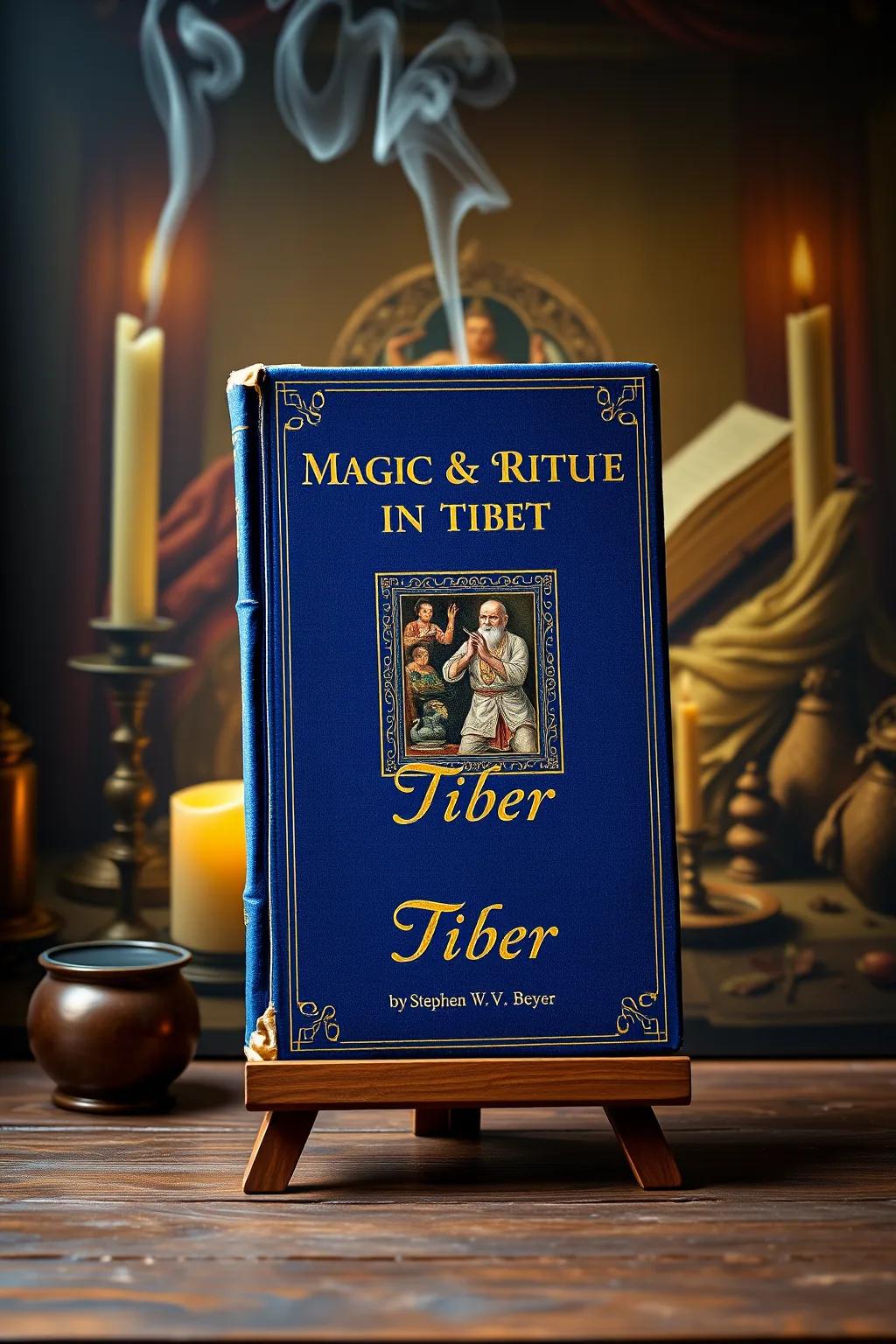
Magic & Ritual in Tibet
 61
61

Magic & Ritual in Tibet


Stephan V. Beyer's "Magic & Ritual in Tibet" stands as a monumental achievement in the study of esoteric traditions. Isolde Whitaker, Sacred Texts Editor, praises its unparalleled depth, illuminating the often-obscure practices of Tibetan Buddhism with clarity and insight. Beyer masterfully navigates the complex interplay of ritual, cosmology, and psychological transformation inherent in these ancient systems. This work offers invaluable esoteric insights for practitioners and scholars alike, demystifying tantric rituals and revealing their profound philosophical underpinnings. It is an indispensable resource for anyone seeking a scholarly yet deeply respectful exploration of Tibet's magical heritage, providing a rich foundation for understanding the spiritual landscape of the Himalayas.
📝 Description
61
Embark on an illuminating journey into the heart of Tibetan spiritual and magical practices with Stephan V. Beyer's "Magic & Ritual in Tibet." This seminal work unveils the intricate tapestry of tantric traditions, revealing secret doctrines and profound ritualistic methodologies that have shaped centuries of Himalayan spiritual development. Beyer meticulously deciphers the complex symbolism and esoteric philosophy underlying these sacred arts, offering readers a rare glimpse into the hidden knowledge preserved within Tibetan Buddhism. Explore the potent forces of invocation, visualization, and the transformative power of ritual, presented with scholarly rigor and an appreciative eye for the mystical dimensions of human experience. This book is an essential companion for anyone seeking to understand the depths of Vajrayana's magical currents, the profound connection between inner states and outer manifestations, and the very essence of spiritual liberation as pursued through ritualistic engagement. It beckons the serious student, the curious seeker, and the dedicated practitioner toward a deeper comprehension of a world where the mundane and the miraculous seamlessly intertwine.
✍️ Author

Beyer, Stephan V.
The Dorotheenstadt Cemetery, officially the Cemetery of the Dorotheenstadt and Friedrichswerder Parishes, is a landmarked Protestant burial ground located in the Berlin district of Mitte which dates to the late 18th century. The entrance to the 1.7-hectare …
💡 Why Read This Book?
This book is essential for understanding the profound depth and breadth of Tibetan magical and ritualistic traditions. It offers a scholarly yet accessible exploration of tantric practices, demystifying complex symbolism and philosophical concepts. Ideal for spiritual seekers, academic researchers, and practitioners of Eastern mysticism, it unlocks hidden knowledge and provides a unique perspective on the transformative power of ritual. Explore the esoteric heart of Himalayan spirituality with Beyer's expert guidance.
⭐ Reader Reviews
Honest opinions from readers who have explored this book.
❓ Frequently Asked Questions
What is the primary focus of "Magic & Ritual in Tibet"?
The book's primary focus is the detailed exploration of the magical and ritualistic practices within Tibetan Buddhism, examining their philosophical underpinnings, symbolism, and practical application across various tantric traditions.
Is this book suitable for beginners in Tibetan Buddhism?
While comprehensive, the book's scholarly depth makes it most rewarding for those with some foundational knowledge of Buddhism. However, its rich explanations can also serve as an excellent introduction for dedicated beginners.
What kind of rituals are discussed?
The book delves into a wide array of tantric rituals, including visualizations, mantra recitations, deity empowerments, protective rites, and practices aimed at spiritual transformation and the attainment of enlightenment.
Does the book explain the symbolism of Tibetan deities and mandalas?
Yes, a significant portion of the book is dedicated to deciphering the intricate symbolism of Tibetan deities, mandalas, mudras, and other ritualistic elements, revealing their profound philosophical and psychological meanings.
Can this book be used as a practical guide for ritual practice?
While it provides deep insight into the theory and context of rituals, it is primarily an academic and philosophical exploration. It offers understanding rather than direct instruction for performing rituals without proper guidance.
🔮 Key Themes & Symbolism
The Esoteric Core of Tantra
This theme delves into the secret doctrines and profound methodologies of Tibetan tantric Buddhism, revealing how ritual is not merely ceremonial but a potent vehicle for spiritual transformation. It explores the intricate relationship between outer ritual actions and inner states of consciousness, emphasizing the tantric path as a direct means to achieve enlightenment through the skillful manipulation of energy and perception. Beyer illuminates how these practices aim to transmute ordinary experience into enlightened awareness, making the hidden accessible and the mundane sacred.
Symbolism and the Cosmic Dance
Central to Tibetan magic and ritual is a rich tapestry of symbolism, which Beyer meticulously unravels. This theme focuses on the profound meanings embedded within deities, mandalas, mudras, and mantras. It illustrates how these symbolic representations are not mere icons but gateways to understanding the universe and the human psyche. The book demonstrates how the cosmic order is mirrored in these symbolic forms, and how engaging with them through ritual allows practitioners to align themselves with universal energies and achieve profound insights into the nature of reality.
Ritual as a Path to Liberation
This theme highlights the transformative power of ritual within the Tibetan Buddhist context. Beyer elucidates how rituals are designed not just for appeasement or petition but as dynamic processes that actively reshape consciousness and reality. The book explores practices aimed at overcoming obstacles, cultivating virtues, and ultimately achieving liberation from suffering. It showcases how the disciplined and intentional engagement with ritualistic forms can lead to profound psychological integration and spiritual awakening, offering a tangible path towards enlightenment.
💬 Memorable Quotes
“The ritual is the key that unlocks the hidden chambers of the mind.”
— This quote underscores the active, transformative role of ritual, suggesting it's not passive observance but a dynamic force that reveals profound psychological and spiritual depths.
“In Tibet, magic is not separate from religion; it is its potent expression.”
— This highlights the integral nature of magic within Tibetan spiritual practice, framing it as an essential, powerful manifestation of religious belief and spiritual pursuit.
“The mandala is a map of the cosmos and the self.”
— This emphasizes the dual function of the mandala as both a representation of universal order and a tool for self-exploration and understanding of one's inner landscape.
“Through visualization, the practitioner paints reality anew.”
— This suggests the creative and re-formative power of meditative visualization in Tibetan practices, allowing individuals to actively shape their perception and experience of the world.
“Deities are not external beings, but facets of awakened consciousness.”
— This profound statement reframes the understanding of deities within Tibetan Buddhism, presenting them as internal archetypes or manifestations of enlightened mind rather than separate entities.
🌙 Esoteric Significance
Tradition
This book primarily explores the esoteric dimensions of Tibetan Buddhism, specifically the Vajrayana tradition. It delves into the tantric paths, which are characterized by their emphasis on direct experience, sophisticated ritual practices, and the use of specialized techniques like mantra, mudra, and visualization to achieve rapid spiritual transformation and Buddhahood within a single lifetime.
Symbolism
The esoteric significance lies in Beyer's meticulous decoding of Tibetan symbolism. Deities are understood not as literal beings but as archetypal representations of awakened qualities or cosmic forces. Mandalas are intricate maps of enlightened mind and universe. Mantras are sonic keys to unlock consciousness. Mudras are symbolic gestures that channel energy. Each element is a profound signifier, a tool for inner alchemy and a testament to the interconnectedness of all phenomena.
Modern Relevance
In an age often marked by fragmentation and disconnection, the esoteric principles within "Magic & Ritual in Tibet" offer profound relevance. The book's exploration of consciousness, symbolism, and the power of focused intention through ritual provides a framework for psychological integration and a deeper understanding of reality. Its teachings on transforming negative states into wisdom and cultivating compassion remain vital tools for navigating personal challenges and fostering global harmony.
👥 Who Should Read This Book
This book is indispensable for scholars of religion, particularly those focusing on Buddhism and comparative esotericism, who seek a rigorous academic understanding of Tibetan tantric traditions. Spiritual seekers drawn to the profound depths of Himalayan spirituality will find it an illuminating guide to complex practices and philosophies. Practitioners of meditation and mindfulness may discover new dimensions and techniques for enhancing their inner work. Even those new to the subject but possessing intellectual curiosity will benefit from Beyer's clear exposition of a rich and often misunderstood spiritual path.
📜 Historical Context
Stephan V. Beyer's "Magic & Ritual in Tibet" emerged during a period of intense Western interest in Eastern spirituality, particularly in the 1970s. Following the political upheavals in Tibet, many spiritual texts and practitioners became more accessible to the outside world, sparking a surge in scholarly and popular curiosity. This era saw a growing desire to understand the philosophical and practical aspects of traditions like Tibetan Buddhism, moving beyond superficial exoticism. Beyer's work contributed significantly by providing a rigorous, yet evocative, academic analysis of the intricate tantric systems, grounding the esoteric practices in their rich historical and philosophical lineage, thereby offering a crucial bridge for cross-cultural understanding.
📔 Journal Prompts
Reflect on a personal ritual, however small, and consider its underlying symbolism or intention. How does it shape your experience?
How might the concept of 'deities as aspects of consciousness' alter your perception of inner strengths and challenges?
Explore a recurring symbol in your dreams or waking life. What might it signify about your inner world?
Consider a challenging situation you face. How could the principles of ritualistic transformation, as described in the book, be metaphorically applied?
What does the idea of 'magic as potent expression' of belief mean to you in a modern context?
🗂️ Glossary
Tantra
In Tibetan Buddhism, a system of spiritual practices and esoteric teachings focused on harnessing energy and consciousness for rapid spiritual realization, often involving complex rituals, visualizations, and mantra recitation.
Vajrayana
The 'Diamond Vehicle' or 'Thunderbolt Vehicle' of Buddhism, prevalent in Tibet, characterized by its tantric methods, emphasis on the guru-disciple relationship, and goal of achieving Buddhahood swiftly.
Mandala
A sacred geometric diagram representing the universe, a deity's pure land, or the enlightened mind. Used in meditation and ritual as a symbolic representation and a tool for focus and transformation.
Mantra
A sacred syllable, word, or phrase chanted or recited during meditation and ritual to invoke spiritual energies, purify the mind, and achieve specific spiritual or psychological states.
Mudrā
Symbolic hand gestures used in Buddhist rituals and iconography, believed to embody specific meanings, channel spiritual energy, and represent enlightened qualities or actions.