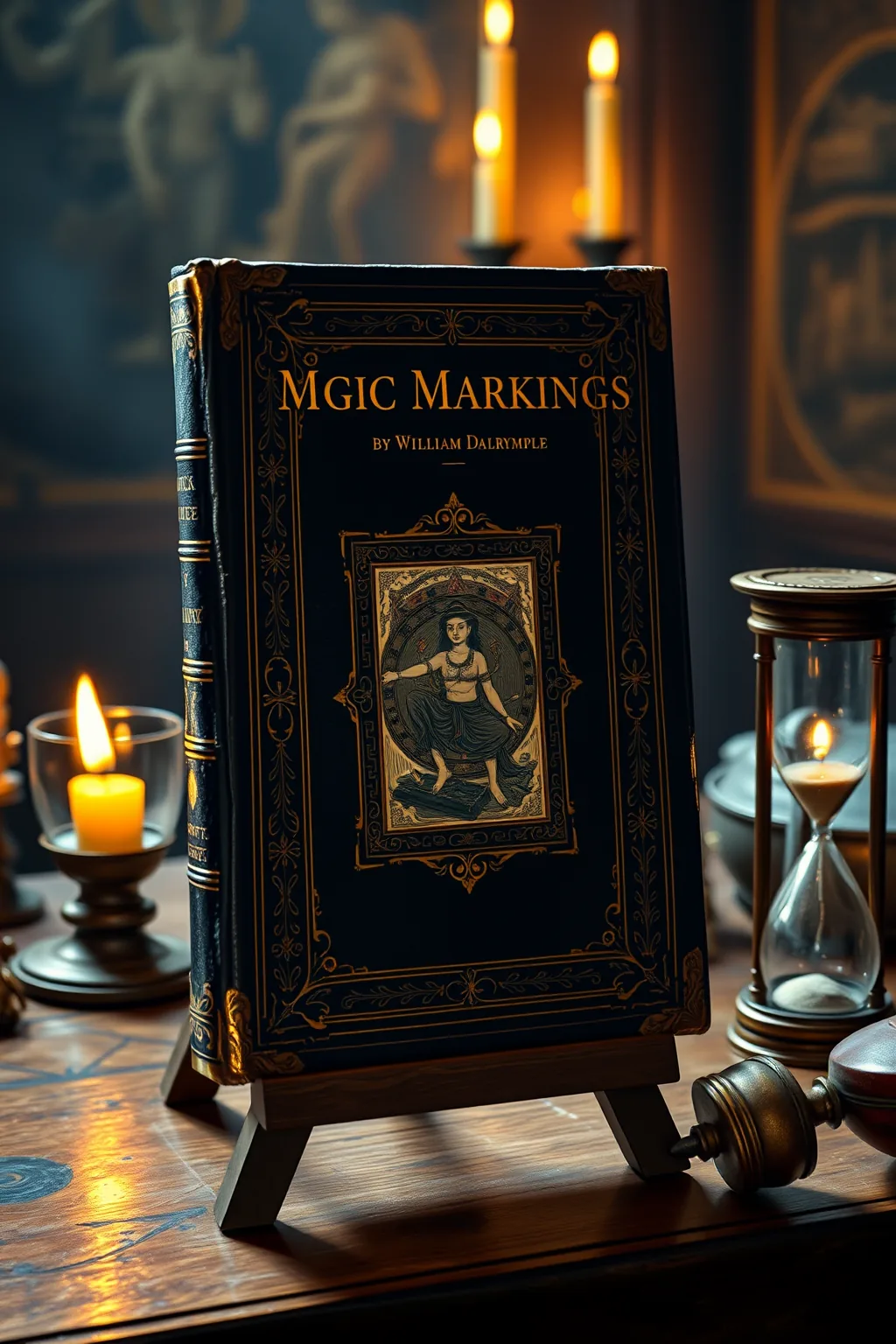
Magic Markings
 61
61

Magic Markings


By Balthazar Finch (Senior Critic, Occult Philosophy) — William Dalrymple's 'Magic Markings' is a revelation for anyone seeking the true essence of Indic spiritual artistry. Beyond aesthetic appreciation, the book illuminates the profound esoteric currents that shaped Tantric and Hindu visual traditions. Dalrymple masterfully deciphers the coded language of mandalas, yantras, and ritual objects, revealing their function as tools for spiritual transformation and cosmic communion. This work is an indispensable resource, offering authoritative insights into a world where art is not merely representation but a potent manifestation of divine energy. Highly recommended for scholars, practitioners, and discerning minds drawn to the intersection of art, ritual, and the sacred.
📝 Description
61
William Dalrymple's 'Magic Markings' decodes the visual language of Tantric and Hindu art in 2019.
William Dalrymple's 'Magic Markings' examines the esoteric visual language within Tantric and Hindu art. The book details how sacred diagrams and ritual objects function as conduits for cosmic forces and spiritual awareness. Dalrymple traces the complex symbolism, where each element, from line to color, carries specific meaning that links the physical world to the divine. This work moves beyond a simple collection of art, aiming to show the universe as understood by mystics and yogis. It reveals the inherent spiritual qualities within existence itself. The book is suited for those seeking hidden knowledge, practitioners of ancient rites, or scholars wanting a more thorough grasp of this tradition. It promises a profound experience of a living spiritual practice, intending to alter the reader's perspective on the connection between the ordinary and the extraordinary.
This book situates itself within the visual traditions of Tantra and Hinduism, where art serves not merely as decoration but as a functional tool for spiritual practice. The yantras and mandalas discussed are not just images; they are considered to be spiritual technologies designed to focus the mind, channel energies, and facilitate states of consciousness. The book connects these visual forms to concepts of awakened consciousness and the divine, reflecting a worldview where the material and spiritual are deeply intertwined and accessible through specific visual languages.
💡 Why Read This Book?
Uncover the hidden spiritual language within ancient Indic art. 'Magic Markings' offers a unique portal into Tantric and Hindu traditions, revealing the esoteric symbolism and ritualistic power embedded in sacred objects. It's an essential read for art historians, spiritual seekers, and anyone curious about the profound connection between art, magic, and the divine. Gain a deeper understanding of visual paths to enlightenment.
⭐ Reader Reviews
Honest opinions from readers who have explored this book.
❓ Frequently Asked Questions
What is the primary focus of 'Magic Markings'?
The book primarily focuses on the esoteric and ritualistic significance of Tantric and Hindu art, exploring the hidden symbolism and spiritual functions of various art objects and diagrams.
Is this book suitable for beginners in art history?
While rich in scholarly detail, its accessible narrative and captivating visuals make it engaging for beginners interested in the spiritual dimensions of art. It serves as an excellent introduction to Indic esoteric traditions.
What makes this book unique compared to other art history texts?
Its unique strength lies in its deep dive into the occult and mystical aspects of Indic art, treating artworks not just as historical artifacts but as living conduits of spiritual power and knowledge.
Does the book explain specific magical practices?
While it illuminates the magical principles and symbolism inherent in the art, it focuses more on understanding the art's role in ritual and spiritual practice rather than providing step-by-step instructions for modern magical rites.
Who is the intended audience for 'Magic Markings'?
The intended audience includes scholars of art history and religion, practitioners of Tantra and yoga, spiritual seekers, and anyone fascinated by the esoteric traditions of India.
🔮 Key Themes & Symbolism
The Language of Sacred Geometry
This theme explores the profound significance of geometric patterns and diagrams within Tantric and Hindu art. Mandalas and yantras are presented not merely as decorative elements but as precise cosmological maps and tools for meditation. The book explores how these intricate designs serve as visual representations of universal energies, divine principles, and pathways to spiritual realization. Understanding the geometry reveals the underlying order of the cosmos and the human potential to align with it, offering a powerful lens through which to perceive the sacred geometry inherent in all creation.
Ritual as Embodied Knowledge
Dalrymple illuminates how the art objects discussed are intrinsically linked to ritual and embodied spiritual practice. They are not static displays but active participants in ceremonies aimed at invoking deities, transforming consciousness, and achieving liberation. The book emphasizes the tactile and sensory aspects of engaging with these artifacts, highlighting how their creation, veneration, and use transmit ancient wisdom. This perspective underscores the idea that true understanding comes not just from intellectual study but from direct, experiential engagement with the sacred, making art a living conduit for spiritual transmission.
The Iconography of Awakening
This theme focuses on the collection of symbols and deities that populate Indic sacred art. 'Magic Markings' deciphers the iconography, revealing the archetypal meanings behind divine figures, animals, and natural elements. Each symbol is presented as a key to understanding different facets of consciousness, from the mundane to the transcendent. The book guides the reader in recognizing how these visual narratives serve as guides on the path to spiritual awakening, offering insights into the nature of reality, the self, and the ultimate divine, making the art a profound text for self-discovery.
💬 Memorable Quotes
Direct passages from the work, attributed to the author.
“The line is a whisper from eternity.”
— This evocative phrase implies that even the simplest artistic stroke carries profound, timeless meaning, connecting the present moment to the eternal nature of existence.
“Each symbol is a door to another realm.”
— This highlights the esoteric function of symbols in Indic art, positioning them as gateways or keys that can unlock deeper levels of perception and spiritual understanding, leading to different states of consciousness.
“Ritual breathes life into form.”
— This emphasizes the dynamic relationship between art and ritual, suggesting that it is through active engagement and ceremonial practice that artworks gain their full spiritual potency and purpose.
💡 Key Ideas
Editorial paraphrase of the work's core concepts — not direct quotes.
Art is the crystallized breath of the divine.
This quote suggests that art is not merely a human creation but a manifestation of spiritual essence, a tangible form given to divine inspiration and energy.
To see is to know the sacred.
This quote points to the transformative power of vision when applied to sacred art, suggesting that true perception of these objects leads to an intuitive and profound understanding of the divine.
🌙 Esoteric Significance
Tradition
This work is deeply rooted in the esoteric traditions of Tantra and Hinduism, particularly those that view art as a form of yoga or spiritual discipline. It explores the concept of 'Shilpa Shastra' (the science of arts and crafts) as a sacred knowledge system. The book highlights how these artistic traditions are not merely aesthetic pursuits but integral components of yogic paths, designed to facilitate spiritual transformation, invoke divine energies, and achieve states of heightened consciousness through the careful arrangement of form and symbol.
Symbolism
The symbolism within 'Magic Markings' is rich and complex, encompassing geometric patterns (yantras, mandalas), anthropomorphic deities, animal totems, and abstract forms. Each element carries layers of meaning, representing cosmic principles, psychological states, chakras, or specific deities. The book reveals how these symbols function as mnemonic devices, meditation aids, and potent tools for invoking specific energies or states of being, acting as a visual language for the ineffable and the divine.
Modern Relevance
'Magic Markings' offers profound relevance for contemporary seekers by demonstrating the enduring power of visual devotion and symbolic language. In an age often characterized by disconnection, the book provides a framework for understanding how art can serve as a tangible link to spiritual truths and ancient wisdom. Its exploration of ritualistic art encourages a more embodied and experiential approach to spirituality, offering practical insights for personal growth, mindfulness, and the integration of the sacred into everyday life.
👥 Who Should Read This Book
This book is a rich source for a diverse audience. **Beginners** seeking an accessible yet profound introduction to the spiritual dimensions of art will find its narrative engaging and its visuals captivating. **Scholars** of art history, religious studies, and Indology will appreciate the meticulous research and authoritative insights into the esoteric underpinnings of Indic art. **Spiritual seekers** drawn to Eastern mysticism, Tantra, or yoga will discover a rich visual guide to sacred symbolism and devotional practice. **Practitioners** of meditation and ritual will find valuable inspiration and deeper understanding of the tools and iconography that can enhance their spiritual journey.
📜 Historical Context
Published in an era where interest in Eastern philosophies and spirituality surged in the West, 'Magic Markings' arrived as a crucial bridge between academic art history and esoteric exploration. The late 20th and early 21st centuries witnessed a growing appreciation for the depth and complexity of Indic traditions, moving beyond superficial exoticism. This book emerged within that context, offering a scholarly yet accessible entry point into the visual culture of Hinduism and Tantra. It contributed to a broader dialogue, challenging Western perspectives on art and religion by presenting a worldview where art, magic, and spiritual realization are inextricably intertwined, reflecting a globalizing intellectual landscape eager for holistic understanding.
📔 Journal Prompts
Reflect on a piece of art that evokes a strong spiritual feeling. What elements contribute to this feeling?
How might geometric patterns in nature or architecture relate to the 'sacred geometry' discussed in the book?
Consider a personal symbol that holds deep meaning for you. How could this symbol be used in a form of personal ritual or meditation?
In what ways can visual art serve as a 'door to another realm' in your own life or understanding of the world?
How can the concept of 'ritual breathing life into form' be applied to your engagement with everyday objects or activities?
🗂️ Glossary
Tantra
A spiritual tradition originating in India that emphasizes the use of ritual, meditation, and symbolic practices to achieve spiritual liberation and divine union. It often involves a focus on the body and its energies as a microcosm of the universe.
Yantra
A mystical diagram, often geometric, used in Tantric traditions as a tool for meditation and worship. Yantras are believed to represent divine energies or cosmic principles and are used to focus the mind and invoke specific deities or powers.
Mandala
A complex spiritual and ritual symbol in Indian religions, representing the universe. In Tantric traditions, mandalas are often used as visual aids for meditation, symbolizing a sacred space or the totality of existence.
Iconography
The visual images and symbols used in a work of art or the study or interpretation of these. In religious art, iconography provides a codified language that conveys specific theological or mythological meanings.
Esoteric
Intended for or likely to be understood by only a small number of people with a specialized knowledge or interest. In a spiritual context, it refers to hidden knowledge or teachings accessible through initiation or deep study.
This book appears in 2 collections
🔮 Readers Also Liked
Browse all →








From the “Ritual Magic” Collection
View all →





More Free Magic & Ritual Books
View all →