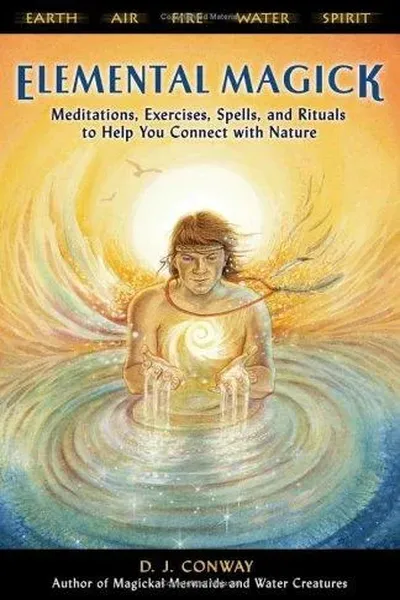
Elemental Magick
 83
83

Elemental Magick
D. J. Conway’s *Elemental Magick* approaches the foundational energies of Earth, Air, Fire, and Water with a clarity that benefits practitioners of all levels. The book’s strength lies in its direct, no-nonsense instruction on invoking and banishing elemental forces, offering concrete exercises rather than abstract theory. Conway’s discussion on attuning to the 'spirit of place' through elemental observation, for instance, provides a palpable connection to the natural world that feels grounded and accessible. However, the work occasionally feels encyclopedic, presenting a vast array of correspondences without always deeply exploring the philosophical underpinnings that might satisfy the more scholarly reader. While it offers a solid framework for elemental work, a deeper engagement with the psychological interplay of the elements, beyond their ritualistic application, would have elevated it further. It’s a functional grimoire for the modern witch, prioritizing practical application above all.
📝 Description
83
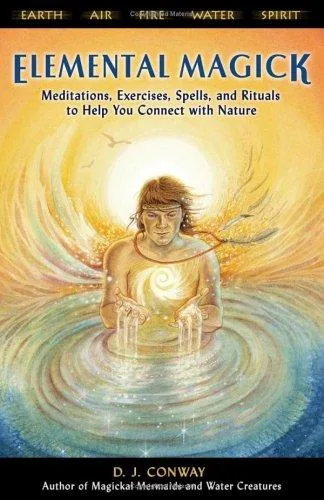
### What It Is Elemental Magick by D. J. Conway, first published in 2020, offers a practical guide to understanding and working with the four classical elements: Earth, Air, Fire, and Water. The book presents a structured approach to invoking, banishing, and harmonizing these fundamental forces as they manifest in nature and within the human psyche.
### Who It's For This work is intended for practitioners of esoteric arts seeking to deepen their connection to the natural world and its inherent magical energies. It appeals to those interested in personal development through elemental work, as well as those aiming to enhance ritual efficacy by grounding spells and meditations in elemental principles. It serves both novice practitioners and those with some experience.
### Historical Context Conway's exploration of elemental magick draws from a long Western esoteric tradition. While the specific publication date is 2020, the concepts discussed have roots stretching back to ancient Greek philosophy and were significantly developed within Renaissance Hermeticism and later magical orders. The book engages with a lineage that includes figures like Agrippa and Paracelsus, who extensively detailed the correspondence between elements and the cosmos.
### Key Concepts The core of Elemental Magick lies in the practical application of elemental correspondences. Conway outlines methods for identifying an element's qualities, understanding its symbolic representation, and utilizing these attributes in magical practice. This includes techniques for attuning oneself to specific elements, performing elemental invocations, and balancing the elemental forces within one's personal energy field.
💡 Why Read This Book?
• Gain actionable techniques for elemental invocation and banishing, directly applicable to personal rituals and spellcasting, a methodology clearly laid out in chapters discussing each element. • Develop a more profound connection to the natural world by learning to recognize and work with the specific energetic signatures of Earth, Air, Fire, and Water in your environment. • Enhance your magical practice with a structured understanding of elemental correspondences, enabling you to ground intentions and amplify the power of your workings as described in the sections on elemental balance.
⭐ Reader Reviews
Honest opinions from readers who have explored this book.
❓ Frequently Asked Questions
When was D. J. Conway's Elemental Magick first published?
D. J. Conway's *Elemental Magick* was first published in 2020, making it a contemporary contribution to the study of elemental forces in esoteric practices.
What are the four classical elements discussed in Elemental Magick?
The book focuses on the four classical elements: Earth, Air, Fire, and Water, exploring their individual qualities and their interplay in both nature and magical workings.
Is Elemental Magick suitable for beginners?
Yes, the book is designed to be accessible to both novice practitioners and those with existing experience in esoteric arts, offering clear instruction on elemental principles.
What is the main goal of the elemental work presented in the book?
The primary goal is to provide practical methods for invoking, banishing, and harmonizing the four elemental forces to deepen connection with nature and enhance magical efficacy.
Does Elemental Magick draw from specific historical traditions?
The work is informed by the long Western esoteric tradition, including influences from Renaissance Hermeticism and earlier philosophical explorations of elemental theory.
What kind of exercises can readers expect in Elemental Magick?
Readers can expect exercises focused on attuning to elemental energies, performing elemental invocations, and balancing elemental forces within oneself and during rituals.
🔮 Key Themes & Symbolism
Elemental Invocation and Banishment
The book meticulously details the practices of invoking and banishing the four classical elements. Conway provides structured rituals and meditations designed to call forth the energies of Earth, Air, Fire, and Water for specific magical purposes, as well as methods to safely dismiss them. This focus offers practitioners a clear framework for directing elemental forces, crucial for grounding spells, purification rites, and personal energy work. The practical application of these techniques is central to the book's utility.
Attunement to Nature's Energies
A significant theme is the development of a direct connection to the Earth's natural energies through elemental awareness. Conway guides readers to observe and interact with the subtle manifestations of each element in their surroundings—the steadfastness of Earth, the movement of Air, the transformative heat of Fire, and the flow of Water. This fosters a deeper ecological consciousness and enhances one's ability to draw power directly from the living world, moving beyond abstract symbolism to felt experience.
Elemental Balance for Well-being
Elemental Magick emphasizes the importance of internal elemental balance for personal health and magical potency. The work explores how imbalances in Earth, Air, Fire, or Water within an individual can manifest as physical, emotional, or spiritual disharmony. Conway offers techniques for diagnosing these imbalances and rectifying them through targeted elemental work, promoting a holistic approach to well-being that integrates esoteric practice with personal equilibrium.
Symbolism of the Elements in Ritual
The book delves into the rich symbolic language of the elements as applied in esoteric ritual. Each element is presented not just as a force but as a complex symbol representing distinct qualities, directions, and phases of the magical process. Understanding this symbolism allows practitioners to imbue their rituals with greater meaning and precision, aligning their intent with the archetypal energies of the elements for more effective manifestation.
💬 Memorable Quotes
“Each element has its own spirit, its own nature, and its own work to do.”
— This statement highlights the animistic perspective often found in elemental magic, viewing the elements not as inert substances but as living forces with distinct personalities and functions within the cosmos and magical practice.
“To banish is as important as to invoke, for balance requires both.”
— This emphasizes the necessity of both drawing in and releasing energy in magical work. Proper banishing ensures that energies are contained and that rituals conclude effectively, preventing unwanted energetic residue.
“Water teaches us of flow, adaptability, and emotional depth.”
— This paraphrase captures Conway's likely approach to the symbolic qualities of Water, associating it with concepts of fluidity, emotional intelligence, and the capacity for change and adaptation in life and magic.
“Fire is the spark of creation and the power of transformation.”
— This interpretation suggests Conway's view of Fire as a potent symbol of initiation, destruction leading to renewal, and the raw energy required to effect significant change in the outer or inner worlds.
“Earth grounds our intentions, giving them form and substance.”
— This concept underscores the role of the Earth element in manifestation, providing the stable foundation and tangible reality necessary for magical workings to manifest in the physical plane.
🌙 Esoteric Significance
Tradition
Elemental Magick firmly situates itself within the Western Esoteric Tradition, drawing heavily from Hermeticism and Neoplatonic thought. It engages with the classical understanding of elements as fundamental building blocks of reality, a concept central to alchemical and magical systems since antiquity. Conway's approach is practical, focusing on the direct application of elemental energies, aligning with traditions that prioritize experiential practice over purely theoretical exploration.
Symbolism
The book's core symbolism revolves around the four classical elements. Earth represents stability, grounding, and the physical world; Air embodies intellect, communication, and movement; Fire signifies transformation, passion, and spirit; and Water signifies emotion, intuition, and the subconscious. Conway likely uses these to represent directions, seasons, stages of ritual, and aspects of the human psyche, offering a symbolic language for understanding and manipulating energetic forces.
Modern Relevance
In contemporary esoteric circles, there is a renewed interest in foundational magical principles. *Elemental Magick* offers a clear, practical manual for those exploring Wicca, modern witchcraft, or general esoteric studies who seek to build a strong understanding of elemental forces. Its emphasis on nature attunement also resonates with eco-spiritual movements and modern animistic practices, providing a tangible link between ancient elemental theory and present-day concerns for the environment and personal well-being.
👥 Who Should Read This Book
• Aspiring practitioners of witchcraft and modern paganism seeking a foundational understanding of elemental forces and their role in ritual. • Individuals interested in developing a deeper connection with nature and learning to harness natural energies for personal growth and magical efficacy. • Students of comparative religion and esoteric history looking for a practical guide to the application of classical elemental theory in contemporary magical systems.
📜 Historical Context
Published in 2020, D. J. Conway's *Elemental Magick* enters a modern landscape of esoteric revival, yet its conceptual framework is deeply rooted in Western occultism. The emphasis on the four classical elements—Earth, Air, Fire, Water—echoes ancient Greek philosophy and was significantly elaborated by Renaissance figures like Heinrich Cornelius Agrippa in his *Three Books of Occult Philosophy* (1531). Conway's work also aligns with the broader Hermetic tradition, which seeks to understand the cosmos through correspondences and elemental interactions. While Conway doesn't directly engage with contemporary occultists in this text, her approach to practical elemental work can be seen as a continuation of traditions explored by authors such as Dion Fortune in the early 20th century, who integrated elemental symbolism into psychological and ritualistic frameworks. The book's publication offers a accessible entry point to these ancient concepts for a new generation, distinct from more complex Kabbalistic or Gnostic systems that also informed Western esotericism.
📔 Journal Prompts
Reflect on the qualities of Earth as they manifest in your immediate environment.
Consider a recent challenge and analyze which elemental energies might have been dominant or lacking.
Meditate on the symbolic meaning of Fire and its role in personal transformation.
Explore the concept of Air's connection to communication and how it influences your interactions.
Journal about the fluid nature of Water and its lessons for emotional adaptability.
🗂️ Glossary
Elemental Invocation
The practice of calling forth and consciously working with the energies and consciousness associated with one of the four classical elements (Earth, Air, Fire, Water) for magical or spiritual purposes.
Elemental Banishment
The ritualistic process of releasing or sending away elemental energies after they have been invoked or used in a working, ensuring energetic closure and balance.
Correspondences
In esoteric traditions, the system of relationships and associations between different elements, symbols, planets, colors, directions, and magical tools, used to structure rituals and understanding.
Attunement
The process of aligning one's personal energy and consciousness with external forces, such as elemental energies or natural phenomena, to foster a deeper connection and understanding.
Magical Efficacy
The degree to which a magical working or ritual is successful in producing its intended outcome or effect.
Spirit of Place
The unique energetic or consciousness that is believed to inhabit a specific geographical location, often tied to its natural elements and history.
Elemental Balance
The state of equilibrium among the four classical elements within an individual, a ritual space, or the environment, considered essential for harmony and well-being.