Cultures of the Jews
 71
71

Cultures of the Jews



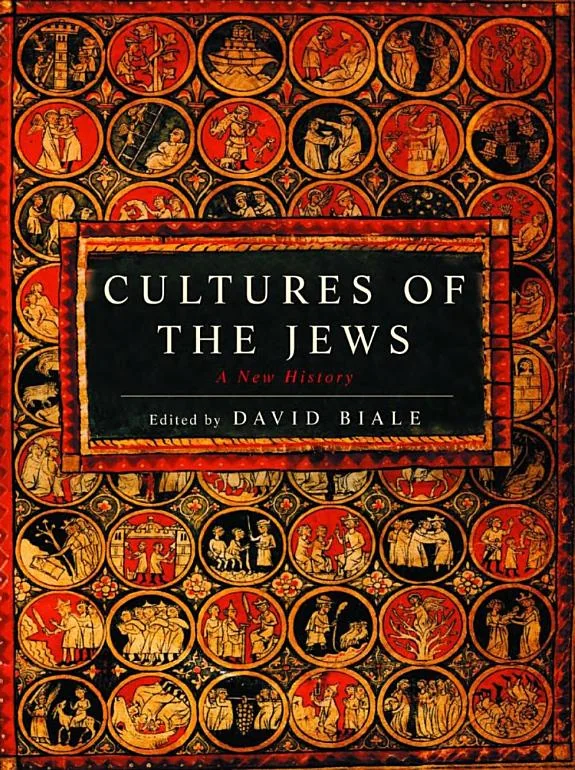
David Biale's "Cultures of the Jews" presents a formidable survey, assembling a constellation of scholarly voices to map the multifaceted experience of Jewish peoples across history. Its greatest strength lies in its sheer scope and the erudition of its contributors, offering detailed explorations of Jewish life in disparate locales, from the Geonic academies of Babylonia to the Haskalah movement in 19th-century Europe. The inclusion of over 100 illustrations, though often small, provides valuable visual context, particularly when detailing ancient artifacts or manuscript traditions. However, the book's ambition sometimes leads to a fragmentation of focus; the sheer number of scholars and topics can make sustained thematic development challenging in certain sections. One particularly illuminating passage discusses the adaptation of Kabbalistic ideas within Hasidic communities, showcasing how esoteric traditions were reinterpreted for broader popular engagement. While a valuable resource, its encyclopedic nature demands a dedicated reader prepared for dense scholarly discourse. It serves as an indispensable reference rather than a seamless narrative.
📝 Description
71
### What It Is David Biale's "Cultures of the Jews" offers a comprehensive examination of Jewish identity and its evolution across diverse geographical and temporal landscapes. This extensive work, first published in 2012, features contributions from twenty-three leading scholars, including archaeologists, cultural historians, and literary critics. It addresses fundamental questions about Jewish distinctiveness and its relationship with surrounding cultures throughout history. The volume is richly illustrated with over 100 black-and-white images, enhancing its textual exploration of Jewish civilization.
### Who It's For This book is essential for anyone seeking a nuanced understanding of Jewish history beyond singular narratives. It caters to students of history, religious studies, and anthropology, as well as general readers interested in the complexities of cultural identity and diaspora. Those intrigued by how a people maintain distinct traditions while interacting with vastly different societies will find this volume particularly illuminating. It's also for scholars requiring a broad yet deep survey of Jewish cultural formations.
### Historical Context "Cultures of the Jews" situates its subject within a vast historical sweep, tracing Jewish presence and adaptation from antiquity to the modern era. The book acknowledges the dispersed nature of Jewish communities, exploring how traditions were preserved, altered, or reimagined in response to various host cultures. It examines the dynamic interplay between internal Jewish life and external societal influences, providing a framework for understanding Jewish continuity and change over millennia.
### Key Concepts The work delves into concepts such as Jewish distinctiveness in diaspora, the impact of surrounding cultures on Jewish practices and beliefs, and the varied expressions of Jewish identity across different regions and time periods. It investigates how notions of peoplehood, religious observance, and cultural expression were negotiated in contexts ranging from ancient Babylonia to medieval Spain and modern Eastern Europe. The scholarship presented encourages a multidimensional view of Jewish civilization.
💡 Why Read This Book?
• Gain specific insights into the evolution of Jewish identity by examining the Jewish experience in diaspora from antiquity to the 20th century, as detailed in chapters covering diverse geographical regions. • Understand the intricate relationship between Jewish culture and its neighbors through specific case studies, such as the interactions described in the context of medieval Spain and the Sephardic diaspora. • Appreciate the diversity of Jewish religious and cultural expression by exploring concepts like the Haskalah movement and its impact on intellectual life, as presented by contributing scholars.
why_read
⭐ Reader Reviews
Honest opinions from readers who have explored this book.
❓ Frequently Asked Questions
When was David Biale's "Cultures of the Jews" first published?
David Biale's "Cultures of the Jews" was first published on August 29, 2012. This comprehensive work brings together the expertise of numerous scholars to explore Jewish history and identity.
What is the primary focus of "Cultures of the Jews"?
The book focuses on the diverse expressions of Jewish identity and culture across different times and places, examining how Jewish communities interacted with and were influenced by their surrounding environments throughout history.
Who are the contributors to "Cultures of the Jews"?
The volume features contributions from twenty-three distinguished scholars, including archaeologists, cultural historians, and literary critics, each offering specialized knowledge on various aspects of Jewish civilization.
What kind of illustrations are included in the book?
"Cultures of the Jews" is enhanced by over 100 black-and-white illustrations. These visuals range from ancient artifacts and maps to manuscript details and historical imagery, complementing the textual content.
Is "Cultures of the Jews" suitable for beginners in Jewish studies?
While dense with scholarly material, the book's comprehensive nature and broad scope make it a valuable resource for serious students and readers looking for an in-depth understanding of Jewish history and culture beyond introductory texts.
What historical periods does "Cultures of the Jews" cover?
The book spans a vast historical range, from ancient times through the medieval period and into the modern era, exploring Jewish life and culture across numerous epochs and geographical locations.
🔮 Key Themes & Symbolism
Diaspora and Identity
This theme investigates the enduring question of Jewish peoplehood amidst constant dispersion. The work examines how Jewish identity was maintained, transformed, and negotiated across varied geographical contexts, from ancient lands to modern continents. It highlights the tension between retaining a distinct heritage and adapting to diverse host cultures, exploring the myriad ways Jewish communities defined themselves and were perceived by others throughout history.
Cultural Exchange and Influence
Central to the book is the examination of the dynamic interplay between Jewish civilization and the cultures it encountered. This includes analyzing how neighboring societies shaped Jewish religious practices, philosophical thought, artistic expression, and social structures. Conversely, it also touches upon Jewish contributions to broader cultural landscapes, demonstrating a continuous process of reciprocal influence and adaptation across millennia.
Expressions of Jewish Life
The work catalogues the diverse manifestations of Jewish life, moving beyond monolithic conceptions. It explores variations in religious observance, intellectual pursuits, legal traditions, and community organization across different epochs and regions. From the specific legal frameworks developed in rabbinic Judaism to the intellectual currents of the Haskalah, it illustrates the multifaceted nature of Jewish experience.
Historical Continuity and Change
A core concern is understanding how Jewish culture persisted over three millennia while simultaneously undergoing significant transformations. The book addresses the mechanisms of cultural transmission and innovation, exploring how traditions were preserved, reinterpreted, and sometimes reinvented in response to historical challenges and opportunities, ensuring a complex narrative of continuity and evolution.
💬 Memorable Quotes
“Are they one people or many?”
— This fundamental question frames the entire exploration, prompting an examination of the diverse experiences and identities that fall under the umbrella term 'Jew,' challenging singular definitions of peoplehood.
“Scattered over much of the world throughout most of their three-thousand-year-old history”
— This observation underscores the persistent reality of Jewish diaspora, setting the stage for understanding how communities maintained coherence and identity while geographically dispersed.
“How do they resemble and how do they differ from Jews in other places and times?”
— This query drives the comparative approach of the book, encouraging readers to analyze the commonalities and divergences in Jewish life across different eras and locations.
“What have their relationships been to the cultures of their neighbors?”
— This question highlights the crucial theme of external influence and interaction, recognizing that Jewish history is inseparable from its engagement with surrounding societies and their cultural frameworks.
“Twenty-three of the finest scholars of our day”
— This statement emphasizes the collaborative and authoritative nature of the volume, assuring readers of the depth and breadth of expertise brought to bear on the subject matter.
🌙 Esoteric Significance
Tradition
While not explicitly a work of esoteric doctrine, "Cultures of the Jews" is invaluable for understanding the historical development and transmission of traditions that have esoteric dimensions, particularly Kabbalah and Hasidism. It situates these movements within broader Jewish cultural and intellectual history, demonstrating how mystical ideas were integrated, adapted, and disseminated within different communities and historical periods. It provides the essential historical and cultural context for appreciating the evolution of Jewish mystical thought.
Symbolism
The book indirectly touches upon potent symbols within Jewish tradition that carry esoteric weight. For instance, discussions of ancient synagogues or medieval illuminated manuscripts often reveal visual motifs that, within mystical traditions, represent divine presence, cosmic order, or spiritual ascent. The concept of the 'Shekhinah' (Divine Presence) and its varied interpretations across different cultural milieux is a recurring motif that resonates with esoteric concerns about immanence and transcendence.
Modern Relevance
Contemporary practitioners and scholars of Kabbalah, Jewish Renewal, and various forms of Western esotericism draw heavily on works like Biale's to ground their understanding of these traditions historically. Understanding the cultural and social contexts in which Kabbalistic texts and practices emerged and evolved, as detailed in this volume, is crucial for a non-anachronistic engagement with these spiritual paths today.
👥 Who Should Read This Book
• Students of comparative religion and cultural history seeking to understand the dynamics of group identity formation and maintenance across diverse civilizations. • Researchers of Jewish Studies interested in a scholarly survey that moves beyond theological or political narratives to explore lived cultural experiences and intellectual trends. • Individuals curious about the historical development and contextualization of Jewish mystical traditions, such as Kabbalah and Hasidism, within broader Jewish society.
📜 Historical Context
Published in 2012, David Biale's "Cultures of the Jews" emerged in an era of advanced digital humanities and a burgeoning academic interest in transnational history and identity studies. It built upon decades of scholarship that moved beyond theological or purely historical accounts to embrace cultural, social, and anthropological perspectives. The work directly engaged with the field of Jewish Studies, which had seen significant developments in microhistory and comparative diaspora studies since the late 20th century. It implicitly responded to earlier, more monolithic visions of Jewish history by emphasizing diversity and regional specificity. While not directly engaging in public controversy, its comprehensive approach offered a counterpoint to more nationalist or essentialist interpretations of Jewish identity prevalent in some circles. Its methodology reflects a contemporary academic milieu where interdisciplinary collaboration and detailed regional studies are highly valued, standing in contrast to earlier, more singular authored syntheses.
📔 Journal Prompts
The concept of Jewish distinctiveness in diaspora.
Jewish relationships with neighboring cultures across historical periods.
The varied expressions of Jewish religious and cultural life.
The interplay between cultural continuity and change in Jewish history.
The meaning of 'one people or many' in historical context.
🗂️ Glossary
Diaspora
The dispersion of any people from their original homeland. For Jewish history, it refers to the living of Jews in communities outside of the Land of Israel, beginning with the Babylonian exile.
Haskalah
A Jewish Enlightenment movement in the late 18th and 19th centuries that advocated for modernization, secular education, and integration into European society, while also seeking to reform Jewish religious and communal life.
Kabbalah
A system of Jewish mysticism that explores the nature of God, the creation of the universe, and the relationship between the divine and the human through esoteric interpretations of the Torah.
Geonic Period
The era in Jewish history (roughly 6th to 11th centuries CE) when the leaders of the Babylonian Jewish academies (Gaonim) were the preeminent authorities in Jewish law and learning.
Sephardic Jews
Jews descending from the medieval communities of the Iberian Peninsula (Spain and Portugal). Their distinct traditions and cultural heritage developed in this environment before their expulsion in the late 15th century.
Ashkenazi Jews
Jews of Central and Eastern European descent, whose cultural and religious traditions developed in regions like Germany, Poland, and Russia. They constitute the majority of Jews in the Western world.
Peoplehood
A concept referring to the collective identity and sense of belonging shared by a group, often encompassing shared history, culture, language, and destiny, as explored in relation to the Jewish experience.