Celtic women's spirituality

 78
78

Celtic women's spirituality
Edain McCoy’s **Celtic Women's Spirituality** endeavors to reconstruct a picture of female spiritual authority in ancient Celtic lands, a commendable goal given the often patriarchal lens of historical documentation. McCoy’s strength lies in her meticulous compilation of available scholarship, presenting a detailed account of goddesses, priestesses, and sacred sites. She effectively highlights the agency women likely held within these spiritual frameworks. However, the work occasionally feels more like an academic survey than a deeply felt spiritual guide. While the section on the goddess Brigid is particularly illuminating, showcasing her multifaceted nature, the book sometimes struggles to connect these historical insights to contemporary practice. A limitation is the reliance on interpretation where direct evidence is sparse, which, while acknowledged, can leave the reader wanting more definitive grounding. Ultimately, it serves as a valuable reference for understanding historical Celtic women's roles in spirituality.
📝 Description
78
Edain McCoy's 2002 book examines the divine feminine in ancient Celtic cultures.
Celtic Women's Spirituality, written by Edain McCoy, focuses on the spiritual roles and beliefs of women in pre-Christian Celtic societies. The book moves past broad statements to discuss specific goddesses, rituals, and social structures that gave women authority. McCoy's research uses archaeological evidence, old writings, and ethnographic research to build a picture of women's spiritual leadership and practices. This approach contrasts with later patriarchal systems and offers a detailed view of female spiritual life within its historical and cultural setting.
The book is suitable for readers interested in historical paganism, Celtic mythology, and feminist spirituality. It provides a resource for those wanting to understand the spiritual experiences of women in a particular time and place. Students of comparative religion and mythology will also find this work useful for its focused examination of a specific cultural tradition.
Published in 2002, this book appeared during a resurgence of Neopaganism and Goddess-focused spiritual movements. McCoy's work contributes to this tradition by reconstructing the spiritual authority and practices of women in ancient Celtic societies. It draws upon archaeological findings and historical texts to present a view of female spirituality that predates and contrasts with later patriarchal religious structures. The book engages with scholarship on Celtic cultures to inform its depiction of these practices.
💡 Why Read This Book?
• Understand the specific roles of Celtic priestesses and their societal influence, moving beyond generic notions of female deities. McCoy details their functions, offering concrete examples of historical spiritual leadership. • Explore the significance of sacred natural sites, like wells and groves, in Celtic women's worship, as detailed in chapters focusing on specific locations and their spiritual associations. • Gain insight into the multifaceted nature of goddesses like Brigid, whose patronage over poetry, healing, and smithcraft reflects a holistic view of feminine power in pre-Christian Ireland.
⭐ Reader Reviews
Honest opinions from readers who have explored this book.
❓ Frequently Asked Questions
What historical period does Celtic Women's Spirituality primarily cover?
The book focuses on the pre-Christian Celtic period, roughly from the Iron Age through the early medieval period, examining spiritual practices before widespread Christian influence.
Who is Edain McCoy and what is her background?
Edain McCoy was an author known for her work in witchcraft and Paganism, with a background in research into historical and folkloric traditions.
Does the book discuss specific Celtic goddesses?
Yes, it prominently features goddesses such as Brigid, Danu, and the Morrigan, exploring their attributes and worship in relation to women.
Are there practical rituals or spells included?
While rooted in historical practices, the book emphasizes understanding the context of women's spirituality rather than providing direct spellcraft instructions.
How does this book differ from general Celtic mythology books?
It specifically centers the female experience and spiritual authority within Celtic cultures, offering a focused perspective often absent in broader mythological surveys.
When was Celtic Women's Spirituality first published?
The original publication date for Celtic Women's Spirituality by Edain McCoy was 2002.
🔮 Key Themes & Symbolism
The Triple Goddess Archetype
The work extensively explores the manifestation of the triple goddess in Celtic traditions, particularly through figures like Brigid. This archetype, representing the maiden, mother, and crone aspects of the divine feminine, is presented not as a singular deity but as a dynamic force influencing life, death, and rebirth cycles. McCoy details how this structure informed women's understanding of their own life stages and spiritual roles within the community, connecting it to natural cycles and societal functions.
Sacred Sites and Natural Worship
A significant focus is placed on the connection between Celtic women and the natural world, emphasizing the spiritual importance of specific locations such as sacred groves, wells, and springs. These sites were often centers for women's rituals, healing practices, and communication with the divine. The book illustrates how women acted as custodians of these places, drawing power and wisdom directly from the land itself, integrating earthly and spiritual realms.
Priestesses and Female Authority
Celtic Women's Spirituality reconstructs the roles and influence of priestesses and wise women within ancient Celtic societies. McCoy examines evidence suggesting women held positions of spiritual authority, acting as healers, diviners, lore keepers, and mediators between the human and spirit worlds. This theme challenges patriarchal interpretations by highlighting the significant, often central, role women played in maintaining the spiritual and social fabric of their communities.
The Goddess Brigid
The goddess Brigid receives particular attention as a prime example of a powerful Celtic female deity. McCoy details her complex nature, encompassing poetry, healing, smithcraft, and sovereignty. The book explores how Brigid's attributes reflect the diverse skills and spiritual contributions expected of women, demonstrating a sophisticated understanding of the divine feminine that integrates creative, nurturing, and protective energies.
💬 Memorable Quotes
Direct passages from the work, attributed to the author.
“Women were the primary keepers of the sacred groves and wells.”
— This statement highlights the central role women played in maintaining and officiating at places of natural spiritual power, suggesting a deep connection to the land and its energies.
“The concept of the triple goddess permeated Celtic spiritual understanding.”
— This suggests that the cyclical nature of the divine feminine, represented by maiden, mother, and crone aspects, was a fundamental framework for understanding divinity and life itself.
“Healers and diviners were often women of significant community standing.”
— This points to the practical and respected spiritual roles women held, functioning as essential community members who provided guidance and well-being through their esoteric knowledge.
“Brigid's association with smithcraft reflects feminine power in creation.”
— This interpretation emphasizes that female divinity was not limited to passive or nurturing roles, but also encompassed active, creative, and transformative powers associated with craft and industry.
“Pre-Christian Celtic society offered women more spiritual agency than later periods.”
— This comparative statement frames the book's argument, suggesting a historical shift where women's spiritual influence diminished under subsequent cultural and religious pressures.
🌙 Esoteric Significance
Tradition
This work primarily engages with Neo-Pagan and Goddess-centered traditions, drawing heavily on historical and folkloric research to reconstruct ancient Celtic spiritual practices. While not strictly Hermetic or Gnostic, it shares with these traditions an interest in recovering suppressed or marginalized esoteric knowledge, particularly concerning the divine feminine and its societal integration. McCoy's approach emphasizes immanent divinity within nature and the cyclical patterns of life, aligning with many earth-based spiritual paths.
Symbolism
Key symbols explored include the sacred grove, representing the connection between the physical and spiritual worlds and a space for feminine rituals; the well, symbolizing healing, divination, and the underworld; and the triple goddess motif, embodying the interconnected cycles of maiden, mother, and crone, reflecting the complex nature of female power and wisdom in Celtic cosmology.
Modern Relevance
Contemporary practitioners of Wicca, Druidry, and other Neo-Pagan paths often draw upon McCoy's research for understanding historical roots of Goddess reverence. Thinkers and writers focused on ecofeminism and earth-based spirituality find resonance in her emphasis on nature-based worship and the spiritual authority of women tied to the land. Her work continues to inform modern interpretations of Celtic deities and the reconstruction of ancient rituals.
👥 Who Should Read This Book
• Students of comparative religion and ancient European history seeking specific insights into gender roles within pre-Christian spiritual systems. • Practitioners of Neo-Paganism and Wicca looking to deepen their understanding of historical Goddess traditions and their potential applications. • Individuals interested in feminist spirituality and the recovery of marginalized historical narratives concerning women's spiritual authority and societal influence.
📜 Historical Context
Published in 2002, Edain McCoy's **Celtic Women's Spirituality** arrived amidst a resurgence of interest in Goddess-centered spiritualities and a critical re-examination of historical patriarchal narratives. The work engaged with scholarship on Celtic cultures that had been developing since the late 19th century, seeking to recover evidence of female spiritual authority often obscured by Christianization and later male-dominated historical accounts. McCoy's research draws upon archaeological findings and textual analysis, positioning her work within the broader Neopagan and feminist spirituality movements. It offered a counterpoint to established interpretations of Celtic religion, which frequently marginalized or misinterpreted the roles of women. While not engaging directly with contemporaries like Marion Zimmer Bradley in fiction, McCoy's non-fiction approach shared a similar goal of highlighting female figures and power within ancient Celtic contexts, contributing to a growing body of literature challenging traditional historical perspectives.
📔 Journal Prompts
Reflect on the complex nature of Brigid as presented in the text.
Consider the spiritual significance attributed to natural sites like groves and wells.
Explore the concept of female spiritual authority in ancient Celtic society versus modern contexts.
Analyze the symbolism of the triple goddess archetype in relation to personal life stages.
How might the historical roles of Celtic priestesses inform contemporary spiritual leadership?
🗂️ Glossary
Brigid
A major Celtic goddess associated with poetry, healing, smithcraft, and sovereignty, often depicted in triple form and later syncretized with Saint Brigid.
Sacred Grove
A natural wooded area considered holy and used for religious rituals and ceremonies in many ancient cultures, including Celtic traditions.
Triple Goddess
An archetypal representation of the divine feminine, typically embodying the stages of maiden, mother, and crone, symbolizing cycles of life, death, and rebirth.
Priestess
A female religious leader or officiant in ancient or pagan traditions, often holding significant spiritual and communal authority.
Danu
Considered by some scholars to be the primary mother goddess of the Tuatha Dé Danann, representing the land, waters, and abundance in Irish mythology.
Sovereignty Goddess
A type of goddess who embodies the land and the rightful rule over it, often requiring a ritual union with the chosen king to ensure prosperity.
Tuatha Dé Danann
A supernatural race in Irish mythology who were said to have inhabited Ireland before the arrival of humans, often associated with deities and magic.
🔮 Readers Also Liked
Browse all →






More by Edain McCoy
All books →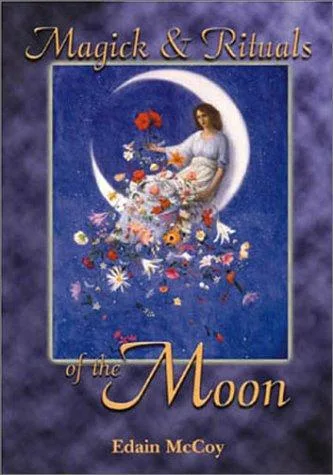



More Free Magic & Ritual Books
View all →