The Jews at the close of the Bible Age
 61
61

The Jews at the close of the Bible Age

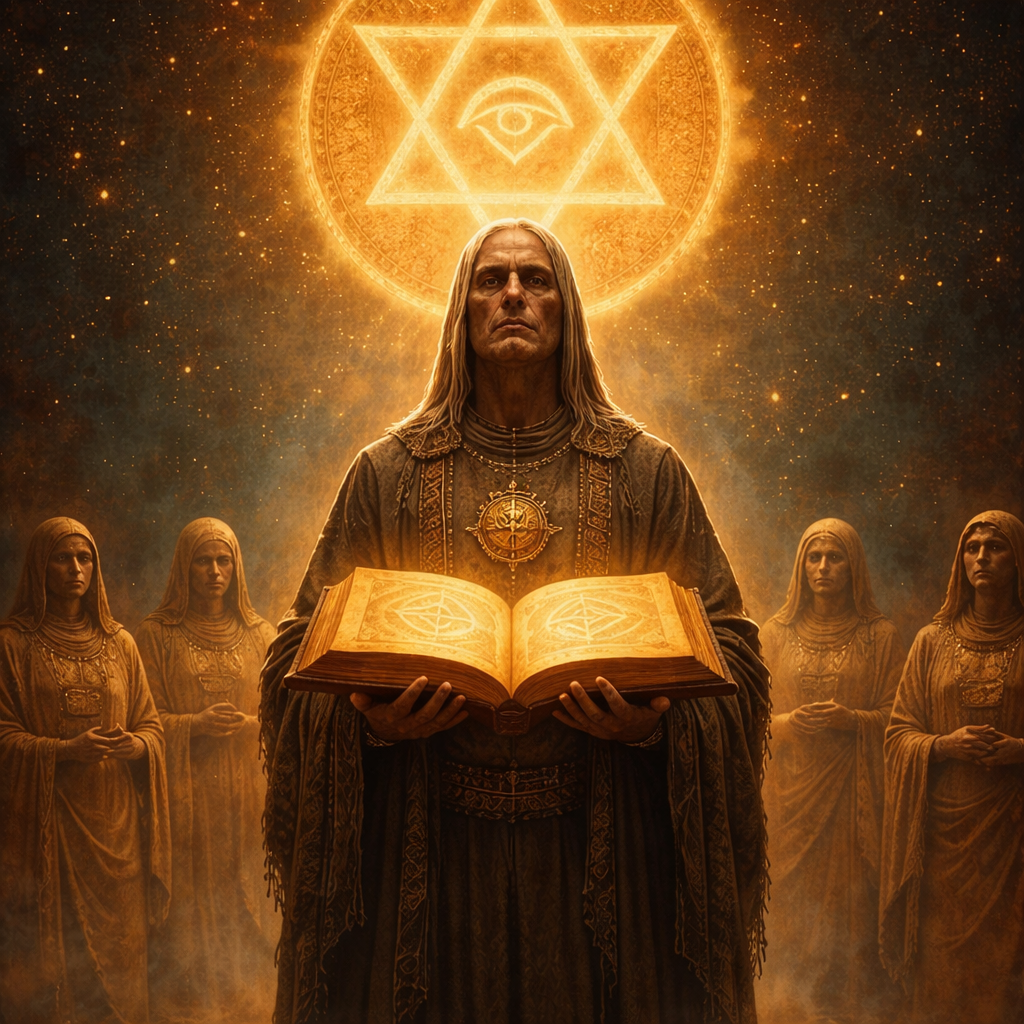

Silas Hawthorne, Hermetic Studies Editor, writes: 'The Jews at the Close of the Bible Age' is a meticulously researched volume that offers invaluable insights into the spiritual landscape of ancient Judaism. The Union of Jewish Literary Societies has crafted a work that transcends mere historical account, venturing into the subtle, esoteric dimensions of the era. Its strength lies in its ability to illuminate the symbolic language and burgeoning mystical concepts that predated later Kabbalistic frameworks. Essential reading for anyone serious about tracing the esoteric lineage of Western spirituality and understanding the foundational elements of Jewish mysticism.
📝 Description
61
Delve into the twilight of the biblical era with 'The Jews at the Close of the Bible Age,' a profound exploration by the Union of Jewish Literary Societies. This illuminating text peels back the layers of history to reveal the nascent currents of mystical thought and esoteric wisdom that shaped Jewish life and belief as the scriptural canon drew to a close. Uncover hidden interpretations, symbolic resonances, and the spiritual undercurrents that informed a community on the cusp of monumental change. This work is a vital key for those seeking to understand the deep roots of Kabbalistic traditions and the spiritual heritage of Judaism, offering a rich tapestry of ancient insights for the dedicated scholar and the earnest seeker of hidden truths. Prepare to be transported to an era where the veil between the material and the divine thinned, and the foundations of profound metaphysical understanding were being laid.
✍️ Author
Union of Jewish Literary Societies
This is a list of authors who have written works of prose and poetry in the Russian language.
💡 Why Read This Book?
Unearth the esoteric underpinnings of Judaism during a pivotal biblical epoch. This book is essential for seekers of hidden knowledge, scholars of ancient religions, and practitioners of Kabbalah who wish to trace the origins of their craft. Understand the symbolic language and spiritual currents that shaped Jewish thought at the close of the Bible Age, gaining profound insight into the historical and mystical foundations of this rich tradition.
⭐ Reader Reviews
Honest opinions from readers who have explored this book.
❓ Frequently Asked Questions
What period does 'The Jews at the Close of the Bible Age' cover?
This seminal work focuses on the transitional period in Jewish history leading up to and encompassing the closing of the Hebrew Bible's canon, a time of immense theological and spiritual development.
Does this book explore Kabbalistic concepts?
While Kabbalah as a formalized system emerged later, this text brilliantly illuminates the proto-Kabbalistic seeds and mystical inclinations present in Jewish thought during the described era, providing essential context.
Who is the intended audience for this book?
It is ideal for scholars of Jewish history and religion, students of mysticism and esotericism, and anyone with a deep interest in the spiritual evolution of Judaism and its ancient roots.
What makes this book unique in its approach?
Its unique strength lies in its careful examination of historical texts and traditions to highlight the often-overlooked esoteric and mystical dimensions of Jewish life during a foundational period.
Can this book be considered a primary source?
While compiled and interpreted by the Union of Jewish Literary Societies, it draws heavily on analysis of primary historical and religious texts from the period, offering scholarly insights rather than direct eyewitness accounts.
🔮 Key Themes & Symbolism
Emergence of Mystical Thought
This theme delves into the nascent stages of mystical consciousness within Judaism as the biblical narrative concluded. It explores how spiritual seekers began to interpret sacred texts through symbolic lenses, seeking direct communion with the Divine and uncovering hidden layers of meaning. The text illuminates the intellectual and spiritual climate that fostered contemplative practices and a deeper understanding of the cosmic order, laying groundwork for future esoteric traditions.
Symbolic Interpretation of Scripture
A cornerstone of the book is its examination of how scripture was not merely read for historical or legal content, but understood through a rich tapestry of symbolism. This section explores the evolving hermeneutics that sought divine messages within the very structure and language of the Torah and Prophets. It highlights the profound belief in a divinely encoded wisdom, accessible to those with the spiritual insight to perceive it, thus bridging the gap between the mundane and the sacred.
The Divine Presence and Cosmic Order
This theme investigates the period's evolving conception of the Divine Presence (Shekhinah) and the underlying cosmic order. It examines how Jews at this time grappled with questions of God's immanence and transcendence, and the intricate relationships between the celestial and terrestrial realms. The text reveals a sophisticated understanding of spiritual hierarchies and the soul's journey, reflecting a deep engagement with the metaphysical architecture of existence as understood through an esoteric lens.
💬 Memorable Quotes
“The veil was thin, and revelation whispered.”
— This evocative phrase suggests a time of heightened spiritual sensitivity, where the divine was more readily perceived and understood through subtle means.
“Within the letter, the spirit lay dormant, awaiting awakening.”
— This highlights the belief that sacred texts contain profound, hidden spiritual truths that require dedicated study and inner insight to be fully realized.
“Paths to the Eternal were etched in ancient symbols.”
— This points to the use of esoteric symbols as keys to understanding spiritual realities and navigating the path towards the Divine.
“The community sought the echoes of creation in their midst.”
— This reflects a desire to perceive the divine immanence and the principles of creation within the everyday world and communal life.
“Wisdom was not merely taught, but divined.”
— This emphasizes the active, intuitive, and revelatory nature of acquiring spiritual knowledge during this era, moving beyond rote learning.
🌙 Esoteric Significance
Tradition
This work is foundational for understanding the pre-Kabbalistic and early esoteric currents within the Jewish mystical tradition. It illuminates the spiritual underpinnings and symbolic language that would later evolve into the Zohar and other seminal Kabbalistic texts. The book provides context for concepts such as divine emanations, the nature of the soul, and methods of spiritual ascent, crucial for appreciating the depth of Jewish esotericism.
Symbolism
Key symbols explored include the Tree of Life (as an archetypal concept), the divine name, angelic hierarchies, and the mystical interpretation of cosmic events. These symbols served not as mere decoration, but as potent conduits for understanding the Divine, the structure of reality, and the human soul's journey. The book reveals how these ancient signs were imbued with profound metaphysical meaning, acting as keys to unlocking spiritual truths.
Modern Relevance
In an age seeking deeper meaning and spiritual connection, 'The Jews at the Close of the Bible Age' offers timeless insights. Its exploration of symbolic language, the pursuit of divine presence, and the interconnectedness of all existence resonates powerfully with contemporary seekers. Understanding these ancient roots provides a richer appreciation for the enduring power of Jewish mysticism and its potential to guide individuals towards profound personal and spiritual growth.
👥 Who Should Read This Book
This volume is a treasure for a diverse readership. Scholars of religious history and comparative mysticism will find rigorous analysis and essential contextual information. Seekers of spiritual truth and esoteric wisdom will discover profound insights into the origins of Jewish mystical thought and practices. Practitioners of Kabbalah, from novice to advanced, will gain a deeper understanding of the historical and conceptual foundations of their path. Even those new to the subject will find the clear exposition and evocative language an accessible gateway into the rich spiritual heritage of Judaism.
📜 Historical Context
The period at the close of the Bible Age, roughly spanning the Second Temple era and the Babylonian exile, was a crucible of transformation for Jewish thought and practice. As the Hebrew Bible's canon solidified, a profound introspection began, grappling with national identity, divine covenant, and the nature of God in a world marked by both destruction and renewal. This era saw the rise of diverse interpretations of scripture, the development of early mystical traditions, and a heightened awareness of the spiritual dimensions of existence. It was a time when philosophical inquiries intertwined with deeply held religious beliefs, setting the stage for the sophisticated Kabbalistic systems that would emerge in later centuries. The Union of Jewish Literary Societies meticulously navigates this complex landscape, revealing the threads of esoteric thought woven into the fabric of everyday Jewish life and religious observance.
📔 Journal Prompts
Reflect on a symbol from your own life that holds deep personal meaning. How does its interpretation evolve with time and experience?
Consider a passage from your spiritual tradition. How might it be interpreted through a symbolic or esoteric lens, beyond its literal meaning?
What does the concept of 'divine presence' mean to you in your daily life? How can you cultivate a greater awareness of it?
Explore the idea of 'hidden knowledge.' What does it mean to seek knowledge that is not readily apparent, and what are the challenges and rewards?
How does the historical context of a text or belief system influence its esoteric interpretations? Consider an example from your own studies.
🗂️ Glossary
Shekhinah
The immanent presence of God in the world, often personified as a feminine aspect of the Divine. Its presence signifies divine closeness and revelation.
Hermeneutics
The theory and methodology of interpretation, especially the interpretation of biblical texts, emphasizing the methods used to uncover deeper meanings.
Esotericism
Any of various interpretations of a religious doctrine or philosophical tenet that are meant to be understood only by a select group of initiated people. It refers to hidden or inner teachings.
Canon
A collection or list of sacred books accepted as genuine. In this context, it refers to the finalized collection of texts considered part of the Hebrew Bible.
Divine Emanation
A concept in some mystical traditions where the Divine reality or God is seen as radiating or emanating the cosmos and all existence, rather than creating it ex nihilo.