Alchemy tried in the fire
 80
80

Alchemy tried in the fire
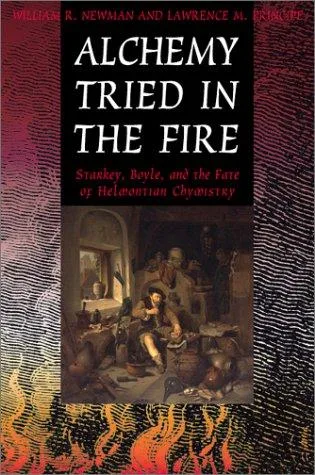
William R. Newman and Lawrence Principe's *Alchemy Tried in the Fire* provides a much-needed antidote to romanticized notions of alchemy. The authors meticulously reconstruct the material realities of alchemical practice, demonstrating that for many practitioners, it was a serious, albeit often misunderstood, artisanal and intellectual pursuit. The strength of the book lies in its granular detail, particularly in its analysis of laboratory techniques and equipment, which allows readers to grasp the practical challenges and theoretical assumptions of the period. A limitation, however, is that the sheer technicality might prove daunting for readers without a background in the history of science or chemistry. The detailed exploration of the "labora" – the workshop – as a conceptual space is particularly illuminating, showing how the physical environment shaped alchemical thought. This is not an introduction to esoteric symbolism but a rigorous academic dissection of a historical discipline.
📝 Description
80
### What It Is Alchemy Tried in the Fire offers a rigorous examination of early modern alchemy, moving beyond myth to present a detailed historical and technical account. It focuses on the practical aspects of alchemical experimentation and theory as understood by practitioners themselves. The work scrutinizes laboratory procedures, equipment, and the conceptual frameworks that underpinned alchemical pursuits during a formative period in scientific history.
### Who It's For This volume is designed for serious students of the history of science, philosophy, and esoteric traditions. It will appeal to academics and researchers seeking a precise understanding of alchemical practices. Enthusiasts of early modern chemistry, Renaissance philosophy, and the intellectual history of Western esotericism will find substantial material for study.
### Historical Context The book situates its subject within the late Renaissance and early modern scientific revolution, a period marked by intense intellectual ferment and the transition from scholasticism to empirical investigation. Alchemists of this era, such as those discussed by Newman and Principe, operated at the intersection of artisanal knowledge, philosophical speculation, and nascent scientific inquiry. Their work often contended with established Aristotelian physics and emerging corpuscular theories, forming a complex intellectual landscape.
### Key Concepts Central to the book is the concept of "laboratory consciousness," which explores how alchemists perceived and interacted with their experimental environments. It examines the material culture of alchemy, including furnaces, vessels, and substances, and how these shaped alchemical understanding. The work also delves into the philosophical underpinnings of alchemical transformation, such as the idea of prima materia and the process of transmutation, viewed through the lens of practical execution.
💡 Why Read This Book?
• Gain a concrete understanding of alchemical laboratory practices, including specific apparatus and techniques, as detailed in the book's analysis of early modern workshops, offering a grounded perspective absent in purely symbolic interpretations. • Learn about the intellectual milieu of late Renaissance science, specifically how alchemists engaged with prevailing philosophical currents and the burgeoning empirical methods that characterized the period, as illuminated by their experimental records. • Grasp the concept of "laboratory consciousness" as explored by Newman and Principe, providing insight into how the physical environment and material culture of the alchemist's workshop directly influenced their theoretical frameworks and understanding of transformation.
⭐ Reader Reviews
Honest opinions from readers who have explored this book.
❓ Frequently Asked Questions
What is the primary focus of Alchemy Tried in the Fire?
The book focuses on the practical, technical, and theoretical aspects of early modern alchemy, aiming to reconstruct how alchemists actually worked and understood their experiments, moving beyond purely symbolic interpretations.
Who are the authors and what is their expertise?
William R. Newman and Lawrence Principe are distinguished historians of science, with extensive research backgrounds in early modern chemistry and alchemy. Their collaboration brings deep scholarly expertise to the subject.
Does the book discuss famous alchemists?
While focusing on broader practices, the work examines the conceptual frameworks and laboratory realities that would have been common to many alchemists of the period, implicitly contextualizing figures from the late Renaissance.
What kind of evidence does the book use?
The authors draw upon alchemical texts, laboratory manuals, and historical accounts from the late 16th and 17th centuries to reconstruct alchemical practices and theories.
Is this book suitable for beginners interested in alchemy?
While informative, the book is highly academic and technical. It is best suited for those with a background or serious interest in the history of science, chemistry, or philosophy, rather than casual readers.
What does the title 'Alchemy Tried in the Fire' refer to?
The title alludes to the empirical testing and practical manipulation of substances through heat and chemical processes, central to alchemical experimentation and the "trial by fire" of materials.
🔮 Key Themes & Symbolism
Laboratory Practice
This theme centers on the reconstruction of alchemical laboratory work, emphasizing the tangible aspects of experimentation. It details the specific equipment, materials, and procedures employed by early modern alchemists. The work scrutinizes how the physical space of the laboratory and the interaction with raw substances shaped alchemical understanding. By focusing on the "labora," the book offers a counterpoint to purely theoretical or symbolic interpretations, grounding alchemy in its material context and the skilled artisan's touch.
Technical Theory
Alchemy Tried in the Fire investigates the theoretical frameworks that underpinned alchemical operations during the late Renaissance and early modern periods. It explores how alchemists conceptualized processes like distillation, calcination, and sublimation, and how these aligned with or diverged from contemporary philosophical and emerging scientific ideas. The book highlights the intellectual rigor involved in developing these technical theories, demonstrating that alchemy was not simply superstition but a complex system of knowledge tied to observable phenomena and material transformation.
The Alchemist's Workshop
The workshop, or "labora," is presented not just as a physical space but as a conceptual environment integral to alchemical practice. This theme examines the "laboratory consciousness" – the specific mindset and modes of perception developed by alchemists within their experimental settings. The book details the tools, furnaces, and vessels that populated these spaces and how their use fostered particular ways of thinking about nature, matter, and transformation, influencing the very nature of alchemical discovery and discourse.
Transition to Modern Science
The work implicitly addresses alchemy's role in the transition from ancient and medieval natural philosophy to early modern science. By detailing the empirical methods and material focus of alchemists in the 16th and 17th centuries, Newman and Principe illuminate the practical foundations upon which disciplines like chemistry were built. It shows how alchemical experimentation, despite its philosophical aims, contributed to a growing emphasis on empirical observation and the manipulation of matter, thus forming a crucial, albeit often overlooked, stage in scientific development.
💬 Memorable Quotes
“The alchemist's laboratory was a space where theory and practice were inextricably linked.”
— This highlights how the physical act of experimentation in the workshop directly informed and shaped the alchemist's theoretical understanding of the world and its processes.
“Understanding alchemy requires attending to the material culture of the laboratory.”
— This emphasizes that to truly grasp alchemical thought and practice, one must consider the tools, substances, and environment with which alchemists interacted daily.
“Early modern alchemists engaged in complex technical reasoning about material transformations.”
— This paraphrased concept suggests that alchemical pursuits involved sophisticated intellectual processes concerning the manipulation and alteration of substances, rather than mere random experimentation.
“The furnace was central to the alchemist's process of trial and purification.”
— This points to the critical role of heat and controlled fire in alchemical operations, serving as both a tool for transformation and a means of testing the resilience and purity of materials.
“Laboratory consciousness shaped how alchemists interpreted their experimental results.”
— This concept implies that the specific mental framework and perceptual habits developed within the alchemical laboratory environment influenced how practitioners understood what they observed.
🌙 Esoteric Significance
Tradition
While not strictly adhering to a single esoteric lineage, Alchemy Tried in the Fire engages with the Hermetic tradition and the broader Hermetic-alchemical corpus that influenced Western esotericism. It examines how the practical application of alchemical principles, often imbued with philosophical and spiritual undertones, formed a significant stream within this tradition. The work departs from purely mystical interpretations by focusing on the empirical and technical dimensions, offering a grounded perspective on practices that often intertwined the material and the metaphysical.
Symbolism
The book implicitly addresses the material basis for alchemical symbolism. While not a primary focus, concepts like the prima materia (first matter) are understood through the lens of practical experimentation—what substances were considered primal and how they were physically manipulated. The furnace, a recurring motif, symbolizes not just a tool but the transformative heat and trial by fire essential for purification and change, linking physical processes to symbolic stages of spiritual or material refinement.
Modern Relevance
Contemporary scholars of the history of science and technology continue to draw on Newman and Principe's meticulous reconstruction of alchemical practices. Modern Hermetic and alchemical revivalist groups also find value in understanding the historical technical underpinnings of their tradition. The work's emphasis on the material culture of science informs current discussions on the relationship between artisanal knowledge, scientific development, and the philosophical underpinnings of empirical investigation.
👥 Who Should Read This Book
• Students of the history of science: Gain a detailed, evidence-based understanding of alchemical laboratory practices and theories, moving beyond popular misconceptions. • Researchers in Renaissance and Early Modern Studies: Access a rigorous analysis of the technical and intellectual world of alchemists, essential for contextualizing broader philosophical and scientific developments of the period. • Enthusiasts of Western Esotericism: Develop a grounded appreciation for the practical and material dimensions of alchemy, complementing studies of its symbolic and philosophical aspects.
📜 Historical Context
Alchemy Tried in the Fire emerges from the scholarly landscape of the late 20th and early 21st centuries, which increasingly sought to understand early modern science not as a monolithic entity but as a complex web of competing ideas and practices. The book was published in 2002, a time when historians were moving beyond viewing alchemy solely as a precursor to chemistry, recognizing its own intricate intellectual and practical systems. It engages with the work of contemporaries like Allen Debus, who extensively studied the chemical philosophers of the 17th century. The era of its publication saw a growing interest in the material culture of science and the lived experience of early modern practitioners, moving away from purely textual analysis. This approach allowed Newman and Principe to situate alchemical laboratories and their operations within the broader intellectual currents of the late Renaissance and the Scientific Revolution, a period marked by figures like Paracelsus and the ongoing debates between Aristotelianism and new mechanical philosophies.
📔 Journal Prompts
The material culture of the laboratory, as described in the book, implies a specific relationship between alchemists and their tools.
Reflect on the concept of "laboratory consciousness" and how the physical environment might shape one's perception of reality.
Consider the technical reasoning behind alchemical transformations discussed in the text.
How did the alchemical pursuit of transmutation differ from the emerging scientific goals of the period?
Analyze the role of the furnace as both a practical tool and a symbolic element in alchemical work.
🗂️ Glossary
Prima Materia
In alchemy, the fundamental, undifferentiated substance from which all other materials are believed to be formed. It was the starting point for alchemical operations aimed at creating the Philosopher's Stone or other transmutations.
Distillation
A process of heating a liquid to create vapor, which is then cooled to condense back into a liquid. Alchemists used various forms of distillation to purify substances and separate their components.
Calcination
A process of heating a solid substance to a high temperature, often in the presence of air, to effect a chemical change, typically to oxidize or decompose it, often resulting in a powder.
Sublimation
The process where a solid changes directly into a gas without first becoming a liquid. Alchemists used sublimation to purify certain volatile solids.
Labora
Latin for 'workshop' or 'laboratory'. In the context of alchemy, it refers to the physical space where alchemical operations were carried out.
Laboratory Consciousness
A term used to describe the specific mindset, perceptual habits, and ways of understanding that developed within the unique environment of an alchemical laboratory.
Transmutation
The alchemical process of changing one element or substance into another, most famously the conversion of base metals into gold.