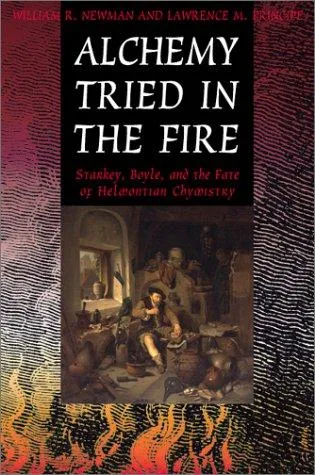
Alchemy tried in the fire
 82
82

Alchemy tried in the fire
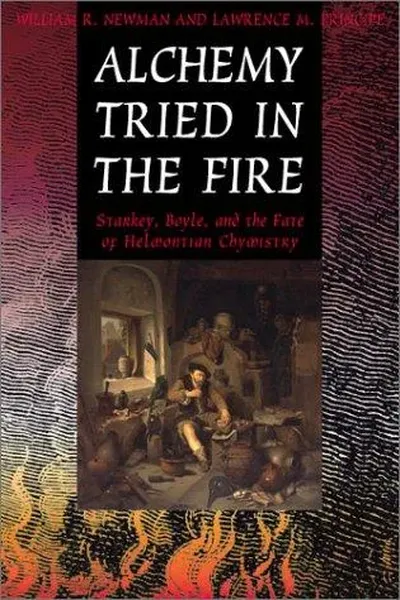
William R. Newman and Lawrence Principe’s Alchemy Tried in the Fire offers a welcome antidote to romanticized notions of alchemy. Rather than focusing on mystical outcomes, the authors meticulously reconstruct the practical and intellectual world of early modern alchemists. Their strength lies in their deep engagement with primary texts and laboratory realities, demonstrating how alchemical operations were understood within their own conceptual frameworks. The section detailing the analysis of early alchemical apparatus, for instance, provides a tangible connection to the alchemist’s bench. However, the book’s scholarly density, while a virtue for specialists, might present a steep learning curve for those less familiar with the period’s scientific vernacular. The work’s examination of specific alchemical procedures, such as the meticulous breakdown of distillation techniques, showcases its rigorous approach. This is a foundational text for understanding alchemy as a historical practice, not a mystical shortcut.
📝 Description
82
### What It Is Alchemy Tried in the Fire presents a rigorous scholarly examination of early modern alchemical texts, moving beyond sensationalized portrayals of gold-making. Newman and Principe focus on the practical and theoretical aspects of laboratory work, analyzing the very language and material culture alchemists employed. It dissects how alchemists understood their processes, their materials, and their theoretical frameworks, offering a deep dive into the intellectual and practical history of a complex tradition.
### Who It's For This work is intended for serious students of the history of science, early modern intellectual history, and the history of alchemy. It appeals to scholars and advanced researchers seeking detailed primary source analysis and a nuanced understanding of alchemical practice as a form of early modern natural philosophy. It is less suited for those seeking a purely spiritual or beginner-level introduction to alchemical symbolism, focusing instead on historical context and laboratory realities.
### Historical Context The book situates alchemical pursuits within the broader landscape of early modern European intellectual life, a period marked by significant scientific and philosophical shifts. It examines how alchemists interacted with emerging mechanical philosophies and empirical methods, while retaining unique theoretical constructs. The original publication in 2002 placed it within a renewed scholarly interest in the history of alchemy, building on the work of scholars like Allen Debus and offering a counterpoint to earlier, more mythologized interpretations of the practice.
### Key Concepts Central to the book is the concept of "operative alchemy," distinguishing between the theoretical writings and the actual hands-on manipulation of substances. The authors explore the "chemical philosophy" that underpinned alchemical reasoning, emphasizing its distinct logic. It also addresses the material culture of the alchemical laboratory, including instruments and reagents, and how these shaped alchemical understanding and experimentation. The distinction between "philosophical" and "practical" alchemy is a recurring thread.
💡 Why Read This Book?
• Gain a grounded understanding of alchemical practice by examining the "chemical philosophy" and laboratory techniques discussed in relation to early modern scientific inquiry. • Appreciate the material culture of alchemy through detailed analysis of alchemical apparatus and reagents, connecting theoretical texts to tangible tools used circa the 17th century. • Differentiate between historical alchemical pursuits and later occult interpretations by understanding the specific operational logic and experimental frameworks alchemists employed.
⭐ Reader Reviews
Honest opinions from readers who have explored this book.
❓ Frequently Asked Questions
What is the "chemical philosophy" as presented in Alchemy Tried in the Fire?
The "chemical philosophy" refers to the theoretical framework and conceptual understanding that alchemists used to interpret their experiments and substances. Newman and Principe explore this as a distinct form of early modern natural philosophy, separate from later chemical science.
When was Alchemy Tried in the Fire originally published, and by whom?
Alchemy Tried in the Fire was first published in 2002. It is authored by William R. Newman and Lawrence M. Principe, prominent historians of science.
Does the book focus on the transmutation of metals?
While transmutation is a part of historical alchemy, this book emphasizes the practical laboratory work and the intellectual underpinnings of alchemical operations, rather than solely focusing on the sensational aspects of gold-making.
What historical period does Alchemy Tried in the Fire primarily cover?
The book primarily examines alchemical practices and texts from the early modern period, roughly spanning the 16th and 17th centuries, a critical time for the development of natural philosophy in Europe.
How does this book differ from more esoteric or New Age interpretations of alchemy?
This work approaches alchemy as a historical scientific and philosophical discipline. It focuses on empirical evidence, textual analysis, and the material realities of alchemical laboratories, rather than modern spiritual or psychological allegories.
Who are the primary authors and what is their expertise?
The authors are William R. Newman and Lawrence M. Principe, both renowned historians of science specializing in alchemy and early modern chemistry. Their expertise lends significant academic rigor to the work.
🔮 Key Themes & Symbolism
Laboratory Practice
The book critically examines the practical, hands-on aspects of alchemical work. It moves beyond abstract theory to detail the actual processes, instruments, and materials used in early modern laboratories. By analyzing alchemical recipes and experimental reports, Newman and Principe illustrate the operational logic that guided alchemists, revealing how their understanding of matter and transformation was shaped by direct engagement with physical substances and apparatus.
Chemical Philosophy
Central to the work is the concept of "chemical philosophy," which served as the theoretical bedrock for alchemists. This theme explores how alchemists conceptualized the nature of matter, the principles of change, and the ultimate goals of their work. It highlights the distinct intellectual framework of alchemy, differentiating it from later, more systematized chemical sciences and demonstrating its role as a precursor to modern scientific thought.
Material Culture of Alchemy
This theme investigates the physical environment and tools of the alchemist. The authors delve into the specific apparatus, such as retorts, alembics, and furnaces, and the various reagents employed. Understanding this material culture is crucial for grasping how alchemists conducted their experiments and interpreted their results, revealing the tangible realities that informed their esoteric pursuits and scientific investigations.
Language and Interpretation
Alchemy Tried in the Fire analyzes the specialized language and symbolic discourse alchemists used to describe their processes and theories. This theme explores how alchemists communicated their findings, often using allegorical or coded language. Understanding this linguistic dimension is key to correctly interpreting alchemical texts and appreciating the challenges of reconstructing their historical meaning.
💬 Memorable Quotes
“The distinction between the philosophical and the practical was always present in alchemy.”
— This highlights a core tension within alchemy: the pursuit of ultimate knowledge versus the hands-on manipulation of materials. Newman and Principe emphasize that understanding both aspects is crucial for a complete picture of the alchemical tradition.
“Alchemical language was often deliberately obscure.”
— This points to the complex and often coded communication methods used by alchemists. It underscores the need for careful textual analysis to decipher their meanings and intentions.
“The laboratory was the site where alchemical theory met material reality.”
— This emphasizes the empirical foundation of alchemical practice. The book argues that alchemists were active experimenters, and their understanding of the world was shaped by their direct interaction with substances.
“Understanding alchemical instruments is key to understanding alchemical processes.”
— This focuses on the material culture of alchemy. The specific tools and equipment used directly influenced how alchemists approached their work and interpreted the results they obtained.
“Early modern alchemy constituted a distinct form of natural philosophy.”
— This positions alchemy within the broader intellectual history of the period, arguing for its legitimacy as a scientific pursuit of its time, separate from both magic and later chemistry.
🌙 Esoteric Significance
Tradition
Alchemy Tried in the Fire engages with the Western Hermetic tradition, specifically its manifestation in early modern Europe. It positions alchemical practice as a form of natural philosophy deeply rooted in ancient Hermetic principles and Neoplatonic ideas, but evolving through direct experimentation. The work departs from purely mystical interpretations by grounding the tradition in observable laboratory processes and material transformations, demonstrating how esoteric concepts were intertwined with practical investigation.
Symbolism
While not solely focused on symbolism, the book implicitly addresses motifs like the Philosopher's Stone and the Great Work. These are presented not just as esoteric goals but as conceptual frameworks guiding alchemical operations. The symbolism of transformation, purification, and the unity of matter, central to alchemical thought, is explored through the lens of actual experimental procedures and the language used to describe them.
Modern Relevance
Contemporary scholars of the history of science and technology continue to draw on Newman and Principe's meticulous reconstruction of alchemical practices. Their work informs modern discussions on the epistemology of early modern science, the relationship between theory and practice, and the intellectual lineage of chemistry. Researchers exploring the historical development of scientific disciplines or the cultural impact of practical arts find this book essential for understanding a foundational, albeit complex, precursor to modern scientific understanding.
👥 Who Should Read This Book
• Students of the history of science seeking a deep dive into early modern chemical practices and theories, moving beyond sensationalized accounts. • Researchers of Western Esotericism interested in the practical, laboratory-based aspects of alchemical traditions and their intellectual context. • Historians of early modern Europe who wish to understand a significant, yet often misunderstood, intellectual and practical discipline of the era.
📜 Historical Context
Published in 2002, Alchemy Tried in the Fire emerged during a resurgence of scholarly interest in the history of alchemy, moving beyond simplistic views of the practice. The early modern period (roughly 1500-1700) was a crucible for scientific thought, where traditions like alchemy coexisted and contended with the burgeoning mechanical philosophy and empirical investigations. This era saw figures like Robert Boyle, often considered a founder of modern chemistry, engaging with alchemical ideas, albeit critically. Newman and Principe’s work situates itself within this complex intellectual milieu, examining how alchemists navigated evolving scientific paradigms. Their detailed analysis of laboratory practices and theoretical frameworks provided a crucial counterpoint to earlier scholarship that had often dismissed alchemy as mere charlatanry or purely symbolic mysticism. The book’s rigorous methodology contributed significantly to establishing alchemy’s place as a legitimate, albeit complex, historical scientific endeavor.
📔 Journal Prompts
The "chemical philosophy" as a distinct framework for understanding matter.
Material culture of the alchemical laboratory and its impact on theory.
Interpreting alchemical texts: deliberate obscurity versus genuine innovation.
The operational logic behind alchemical processes described in the book.
Alchemy's position within early modern natural philosophy.
🗂️ Glossary
Chemical Philosophy
The theoretical framework and conceptual system used by alchemists to understand the nature of matter, its transformations, and the principles governing chemical operations. It served as the intellectual basis for alchemical practice in the early modern period.
Operative Alchemy
Refers to the practical, hands-on aspect of alchemy, involving laboratory work, experimentation, and the manipulation of physical substances. This contrasts with purely theoretical or philosophical discussions of alchemical principles.
Transmutation
In alchemy, the process of changing one substance into another, most famously the conversion of base metals into gold or silver. It was a central, though not exclusive, goal of alchemical pursuit.
Distillation
A process involving heating a liquid and then cooling the vapor to condense it back into a liquid, used in alchemy to purify substances or separate components. Various forms of distillation were crucial laboratory techniques.
Reagents
Substances used in chemical reactions or experiments. Alchemists employed a wide array of reagents, often with specific, sometimes obscure, names, in their laboratory work.
Natural Philosophy
The pre-modern term for the study of nature and the physical universe, encompassing what we now consider physics, chemistry, biology, and other sciences. Alchemy was considered a branch of natural philosophy in the early modern period.
Apparatus
The collection of instruments and equipment used in a laboratory. The specific design and use of alchemical apparatus were critical to the practice and understanding of alchemical processes.