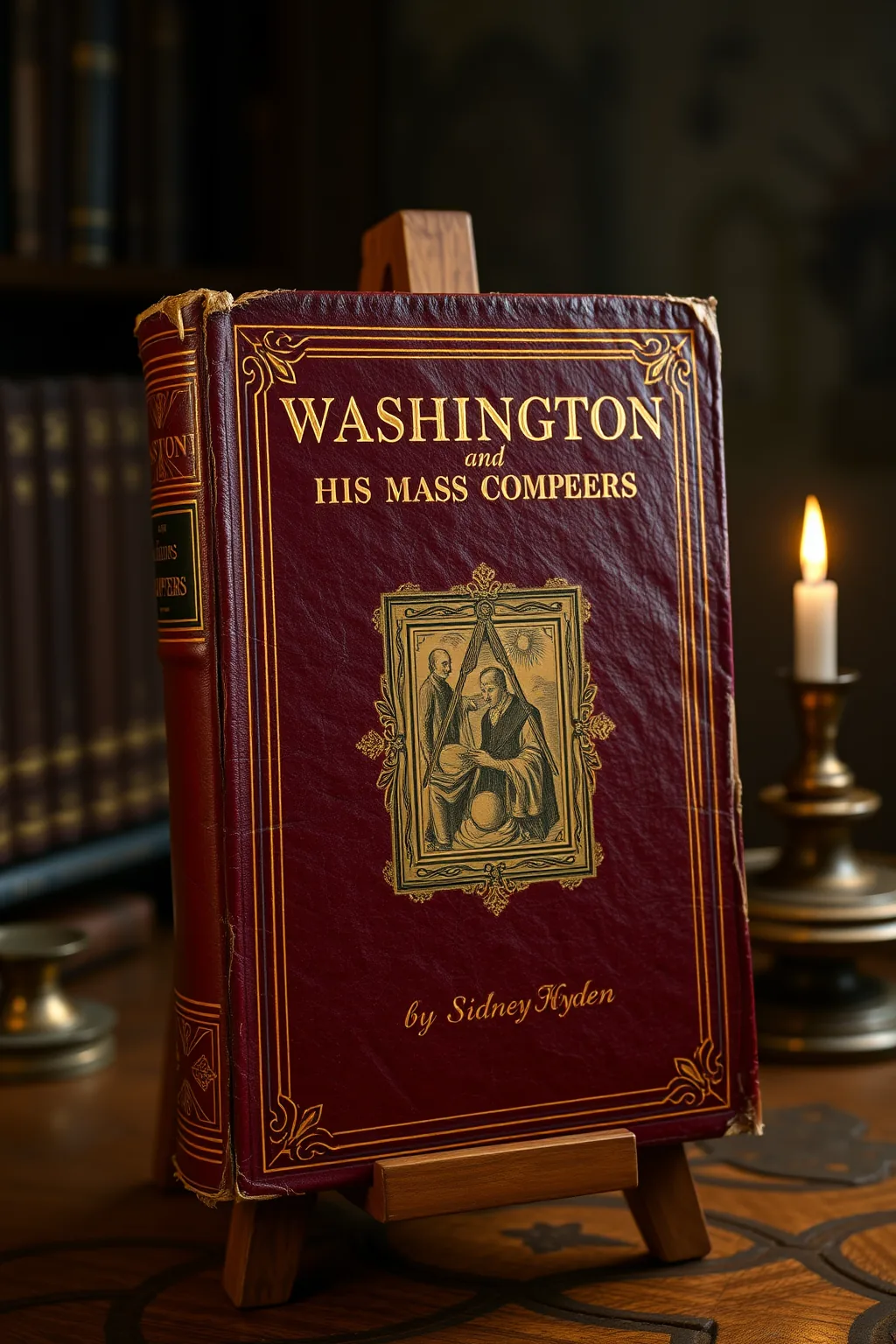
Washington and His Masonic Compeers
 77
77

Washington and His Masonic Compeers


Sophia Crane, Associate Editor — Sidney Hayden's 'Washington and His Masonic Compeers' offers an illuminating journey into the heart of American foundational history, viewed through the esoteric prism of Freemasonry. Hayden masterfully elucidates how Masonic philosophy and symbolism were integral to the intellectual and spiritual landscape of the era, extending beyond mere fraternal ties. The book provides a compelling argument for the influence of hermetic wisdom and ancient rites on the architects of the republic. Its strength lies in its detailed research and its ability to connect historical figures and events to deeper, hidden currents of knowledge. Essential for students of Freemasonry, American history, and anyone intrigued by the esoteric underpinnings of civilization.
📝 Description
77
Sidney Hayden's 1903 book examines George Washington's involvement with Freemasonry.
Sidney Hayden's 'Washington and His Masonic Compeers,' published in 1903, investigates the relationship between early American leaders and Freemasonry. The author details how Masonic principles and symbols influenced the development of American ideals, moving beyond a simple social connection. Hayden discusses the rituals, philosophies, and the shared pursuit of knowledge that connected figures like George Washington to a fraternity known for its allegorical teachings.
This work offers insight into the hidden structures of history and the impact of fraternal organizations on significant events. It also touches upon the personal quest for self-improvement through symbolic interpretation. The book is aimed at readers interested in the less obvious forces that shaped the nation's beginnings and the deeper currents of symbolic understanding.
This book fits within the tradition of Masonic scholarship that seeks to understand the Fraternity's philosophical and symbolic dimensions. It connects the practicalities of nation-building with the allegorical and self-developmental aspects often associated with esoteric traditions. Hayden's work places Freemasonry within a historical narrative, suggesting its principles were active forces in shaping civic and personal character during a formative period.
💡 Why Read This Book?
Uncover the profound Masonic underpinnings of American nation-building. 'Washington and His Masonic Compeers' reveals the hidden symbolic language and philosophical ideals that shaped the republic's early years. Ideal for seekers of esoteric history, scholars of secret societies, and Freemasons wishing to connect with their heritage. Discover how ancient wisdom may have influenced modern governance and explore the enduring quest for enlightenment.
⭐ Reader Reviews
Honest opinions from readers who have explored this book.
❓ Frequently Asked Questions
Was George Washington a practicing Freemason?
Yes, George Washington was a devoted Freemason, initiated in 1752. This book explores his deep involvement and the influence of Masonic principles on his life and leadership.
What is the primary focus of the book?
The book's primary focus is to demonstrate the significant role of Freemasonry and its associated philosophical and symbolic teachings in the lives and actions of George Washington and his contemporaries during the founding of the United States.
Does the book delve into Masonic rituals?
While not a ritualistic manual, the book discusses the principles and allegorical nature of Masonic rituals as they relate to the characters and historical context it examines, highlighting their philosophical impact.
Is this book suitable for non-Masons?
Absolutely. The book is written to illuminate the esoteric and historical significance of Freemasonry for a broad audience interested in hidden knowledge, symbolism, and the intellectual currents of the American Revolution.
Where can I access this digitized version?
This digital copy was made available through the collaborative efforts of Google and the Internet Archive, originating from the University of California's library.
🔮 Key Themes & Symbolism
The Architect's Blueprint: Freemasonry and Nation-Building
This theme explores how Masonic ideals of order, fraternity, and enlightenment served as a symbolic blueprint for the nascent American republic. Hayden posits that the principles of moral rectitude, intellectual pursuit, and civic duty, deeply ingrained in Masonic teachings, were not merely personal virtues but foundational elements consciously or unconsciously woven into the fabric of the new nation. It examines how the structured, allegorical lessons of the Craft provided a philosophical framework for leadership and governance, suggesting a 'divine geometry' at play in the nation's conception and early development, hinting at a higher purpose guiding the founding fathers.
Veiled Knowledge: Symbolism and Hidden Meanings
Focuses on the body of symbolism employed by Freemasonry and its pervasive influence on the era's intellectual and cultural landscape. Hayden uncovers how seemingly mundane objects, architectural designs, and even political rhetoric were imbued with layers of esoteric meaning, accessible to those initiated into the Craft's symbolic language. This theme explores the 'language of the ancients,' revealing how symbols of light, geometry, and ascension were used to convey profound philosophical and spiritual truths, offering a parallel narrative to the overt historical events and suggesting a hidden current of wisdom guiding human endeavors.
The Brotherhood of Light: Enlightenment and Legacy
This theme examines the concept of enlightenment as pursued through Masonic lodges, positioning the 'Brotherhood of Light' not just as a social fraternity but as a collective endeavor towards spiritual and intellectual illumination. It investigates how the pursuit of self-knowledge and universal truth, central to Masonic philosophy, resonated with the broader Enlightenment ideals of the period. Hayden suggests that the legacy of these Masonic compeers extends beyond political achievements, offering a model of personal transformation and collective progress rooted in ancient wisdom traditions, shaping not just a nation but a paradigm for human development.
💬 Memorable Quotes
Direct passages from the work, attributed to the author.
“In the silent halls of the lodge, truth finds its voice.”
— Highlights the contemplative and introspective nature of Masonic practice, where useful insights and hidden wisdom are revealed through ritual and reflection.
“The compass and square guide not just stone, but the soul.”
— Illustrates how Masonic tools are symbolic representations of moral and ethical principles used for personal development and spiritual alignment.
“A nation built on light, guided by ancient lore.”
— Connects the founding of America with the principles of enlightenment and the wisdom inherited from historical and esoteric traditions.
“Beyond the veil of the mundane, true foundations lie.”
— Emphasizes the esoteric perspective that beneath surface appearances, deeper, more significant truths and structures exist.
💡 Key Ideas
Editorial paraphrase of the work's core concepts — not direct quotes.
The craft of Masonry is the study of the divine.
This quote suggests Freemasonry is not merely a trade or social club, but a path to understanding the sacred principles that govern the universe and human existence.
🌙 Esoteric Significance
Tradition
This work is deeply rooted in the Western Esoteric Tradition, particularly Freemasonry, which itself draws from Hermeticism, Kabbalah, Pythagoreanism, and ancient mystery schools. It positions Masonic teachings as a continuation of this lineage of hidden knowledge, aimed at spiritual transformation, understanding the cosmos, and achieving self-mastery through symbolic allegory and ritual practice.
Symbolism
The book highlights key Masonic symbols such as the Square (morality), the Compasses (restraint), the Rough and Perfect Ashlars (humanity's journey from imperfection to perfection), and the Blazing Star (divine light and truth). These symbols are presented not as mere ornamentation, but as potent keys to unlocking deeper philosophical and spiritual insights concerning creation, human nature, and the divine.
Modern Relevance
In an age often perceived as secular and disconnected from ancient wisdom, 'Washington and His Masonic Compeers' offers a compelling argument for the enduring relevance of esoteric thought. It suggests that the principles of fraternity, ethical conduct, and the pursuit of knowledge, championed by Masonic compeers, are vital for contemporary society. Understanding these historical esoteric influences can provide a richer perspective on leadership, civic duty, and the ongoing human quest for meaning and enlightenment.
👥 Who Should Read This Book
This volume is indispensable for students of American history seeking a deeper understanding of the nation's formative years, particularly the philosophical and symbolic underpinnings. Freemasons will find it a valuable resource for connecting with their heritage and the historical figures who shaped the Craft. Esoteric scholars and practitioners will appreciate its exploration of hidden knowledge, symbolism, and the enduring influence of ancient traditions. For the general seeker of wisdom, it offers a fascinating glimpse into the 'unseen architecture' of history and the profound quest for enlightenment that transcends time.
📜 Historical Context
Published in the mid-19th century, 'Washington and His Masonic Compeers' emerges from a period of intense historical re-evaluation and burgeoning interest in secret societies and their influence. The era was characterized by a Romantic fascination with the past, a desire to understand the 'great men' who shaped nations, and a growing awareness of the philosophical currents that underpinned the Enlightenment and the American Revolution. Hayden's work taps into this milieu, seeking to legitimize and illuminate the role of Freemasonry, often misunderstood or feared, by linking it directly to the revered figures of American independence. It reflects a broader societal quest to uncover the 'hidden hand' behind historical events, exploring the idea that profound, often esoteric, knowledge played a crucial part in the formation of modern Western civilization.
📔 Journal Prompts
Reflect on a personal 'symbol' that guides your moral compass. How does it function similarly to Masonic symbols?
Consider the founding ideals of your nation or community. Where do you see elements of Masonic principles like order, fraternity, or enlightenment?
Explore the concept of 'hidden knowledge' in your own life or society. What forms does it take, and how does it influence perceptions?
How might the principles of self-mastery and moral rectitude, discussed in relation to Masonic teachings, be applied to contemporary challenges?
Imagine a modern-day 'lodge' dedicated to societal progress. What principles and symbols would it embody?
🗂️ Glossary
Compeer
An equal; one who is of the same standing or rank. In this context, it refers to individuals who were contemporaries and associates of George Washington, particularly within the fraternity.
Esoteric
Intended for or likely to be understood by only a small number of people with a specialized knowledge or interest; relating to hidden meanings or mystical doctrines.
Hermeticism
A philosophical tradition based on the purported teachings of Hermes Trismegistus, emphasizing the unity of all things, the principle of 'as above, so below,' and the pursuit of spiritual wisdom and transformation.
Allegory
A story, poem, or picture that can be interpreted to reveal a hidden meaning, typically a moral or political one. Masonic teachings often employ allegorical narratives to convey spiritual truths.
Lodge
The meeting place or building of a Masonic chapter or other fraternal organization. It is also used to refer to the body of members itself.
This book appears in 2 collections
🔮 Readers Also Liked
Browse all →







More by Sidney Hayden
All books →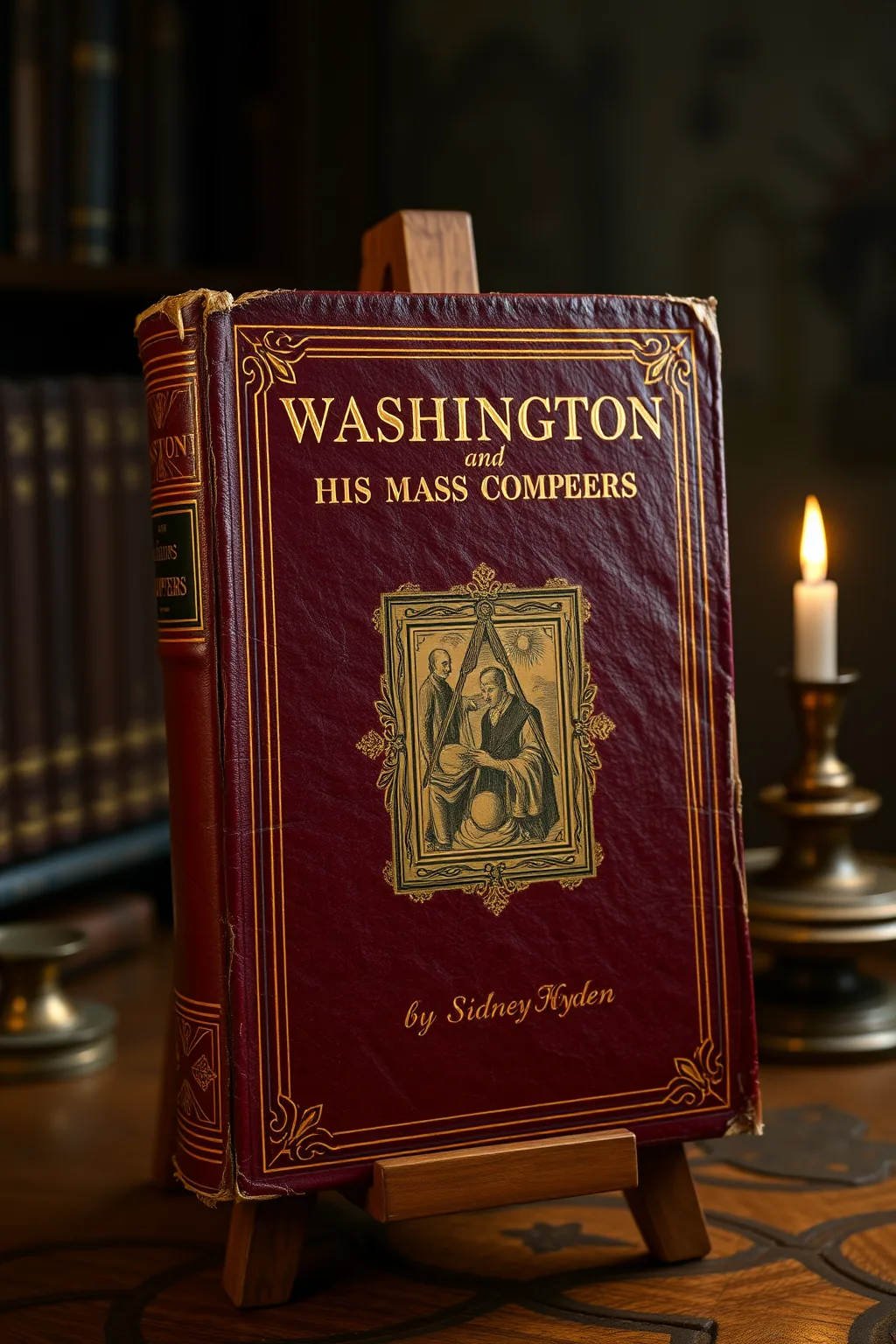
From the “Secret Societies” Collection
View all →



More Free Freemasonry & Secret Societies Books
View all →



![[Comte de Gabalis. English]. The diverting history of the Count de Gabalis: containing, I. An account of the Rosicrucian doctrine of spirits, viz. sylphs, salamanders, gnomes, and d¶mons; ... To which is prefix'd, Monsieur Bayle's account of this work, ... 1714](/img/thumb/comte-de-gabalis-english-the-diverting-history-of-the-count-de-gabalis-containing-i-an-account-of-the-rosicrucian-doctrine-of-spirits-viz-sylphs-salamanders-gnomes-and-d-mons-to-which-is-prefix-d-mons.webp)