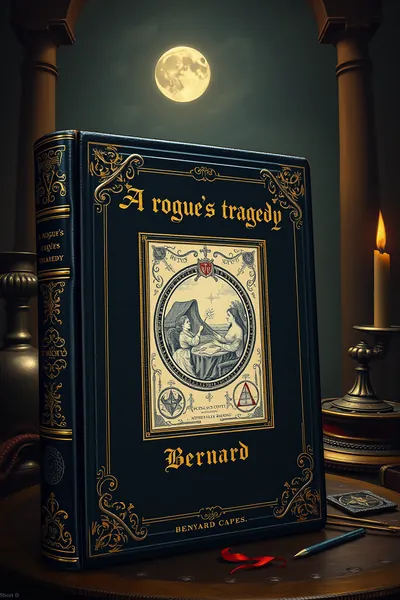
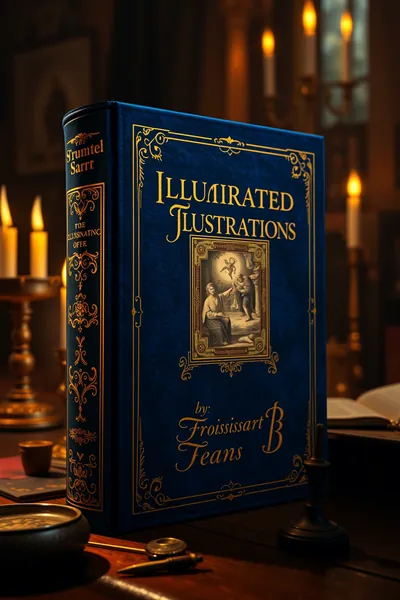
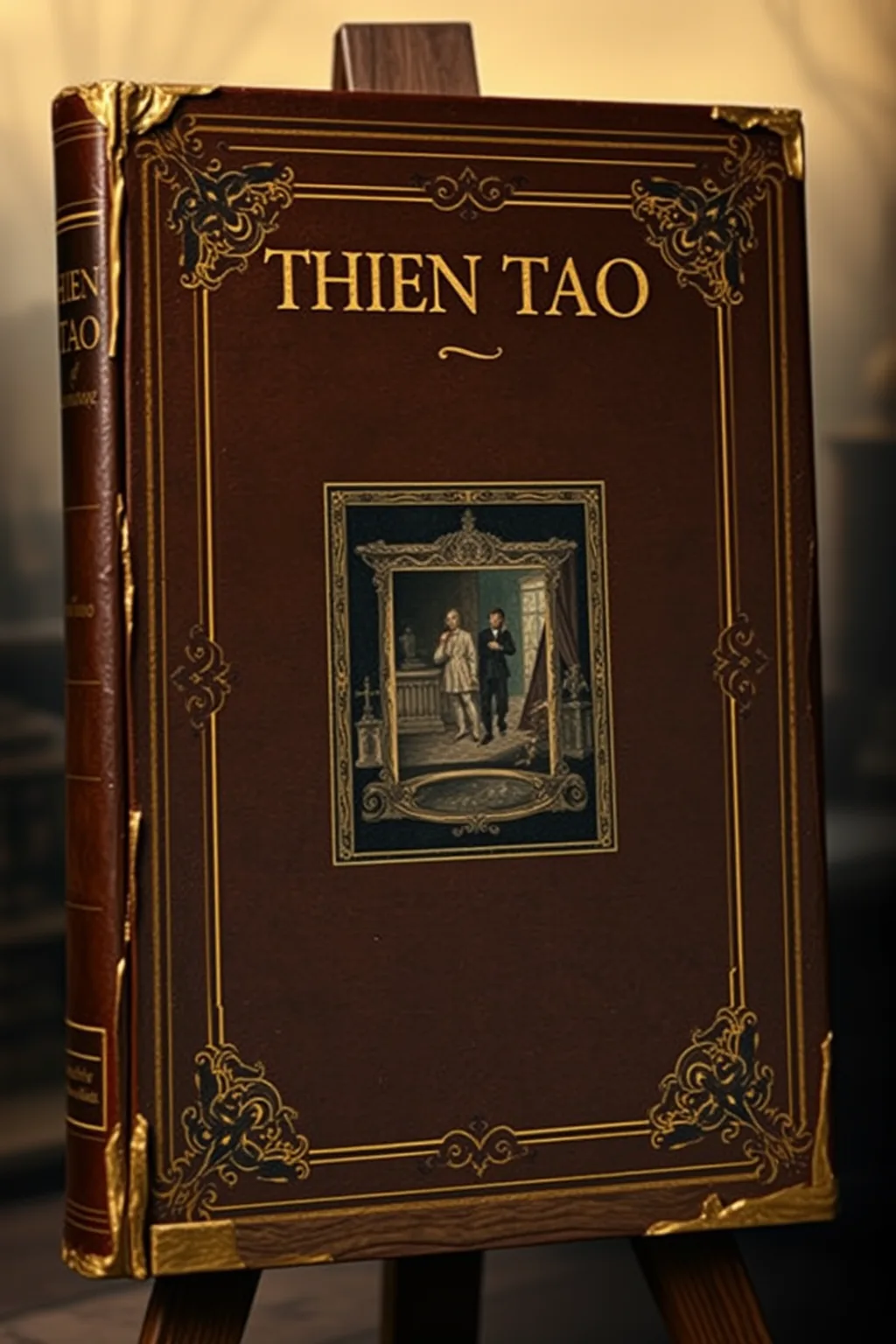
Thien Tao or, The Synagogue of Satan Sub figura XLI
 78
78

Thien Tao or, The Synagogue of Satan Sub figura XLI


Balthazar Finch, Senior Critic, Occult Philosophy: 'Thien Tao' is a cornerstone for any serious student of the occult, offering a rare glimpse into the foundational philosophies underpinning secret societies. The author, with remarkable intellectual rigor, navigates complex theological and cosmological concepts, subtly weaving them into the symbolic language of Freemasonry. Its strength lies in its audacious intellectual framework, which, while demanding, promises unparalleled insights into the mechanics of creation and consciousness. This is not a book for the casual reader, but for the dedicated scholar or practitioner willing to engage with profound questions about existence and the 'best of all possible worlds.'
📝 Description
78
Published as Sub figura XLI, 'Thien Tao, or, The Synagogue of Satan' examines Freemasonry through an esoteric lens.
This book, also known as 'The Synagogue of Satan,' investigates the inner workings of Freemasonry and other secret organizations. It interprets their rituals and symbols, suggesting a hidden cosmology beneath their surface. The author, identified only as 'the simple and austere process of beginning,' aims to expose potent spiritual ideas within what appear to be ordinary structures. The text presents a metaphysical viewpoint that questions fundamental aspects of existence.
'Thien Tao' is structured as a philosophical inquiry for individuals seeking arcane knowledge. It prompts contemplation on the concepts of reality, perfection, and imperfection. The book even suggests the existence of parallel universes as a means to comprehend discord in the world. This work requires dedicated study; those who persist will discover a deep, sometimes disturbing, esoteric perspective.
This work engages with traditions that seek hidden meanings within established structures, particularly those associated with Western esotericism and Freemasonry. It operates within a framework that views symbols and rituals not merely as historical artifacts but as keys to understanding deeper spiritual or cosmic principles. The author's approach suggests a gnostic or Hermetic inclination, where a concealed, often challenging, truth is revealed through diligent personal investigation and interpretation of esoteric lore.
💡 Why Read This Book?
Embark on a journey of intellectual and spiritual discovery with 'Thien Tao.' This book is essential for those seeking to unravel the esoteric underpinnings of Freemasonry and secret societies. It challenges your perception of reality, offering a unique metaphysical framework for understanding the world's imperfections. Ideal for scholars, dedicated practitioners, and sincere seekers of hidden wisdom, it promises profound insights into esoteric philosophy and the nature of existence.
⭐ Reader Reviews
Honest opinions from readers who have explored this book.
❓ Frequently Asked Questions
What is the primary focus of 'Thien Tao'?
The book primarily focuses on the esoteric and metaphysical interpretations of Freemasonry and secret societies, exploring their symbolic language and philosophical underpinnings within a broader cosmological context.
Who is the author, 'the simple and austere process of beginning'?
The author's pseudonym suggests a deliberate anonymization, emphasizing the process of learning and discovery over individual ego, a common practice in esoteric traditions.
Is this book suitable for beginners in occult studies?
While challenging, the book offers foundational insights. Beginners should approach it with dedication and perhaps alongside introductory texts on symbolism and esoteric philosophy.
What is the significance of 'Sub figura XLI'?
'Sub figura XLI' indicates that this work is part of a larger, numbered series of esoteric texts, often used to denote specific magical or philosophical treatises within a defined system.
Does the book offer practical rituals or only theoretical exploration?
The book leans heavily towards theoretical exploration and philosophical discourse, using symbolism and allegory rather than providing direct ritualistic instructions.
🔮 Key Themes & Symbolism
Cosmic Dualism and Perfection
The text grapples with the philosophical paradox of a 'best of all possible worlds' coexisting with manifest imperfection. It suggests that such discord might be a feature of alternate realities or a perceived state within a flawed human consciousness, prompting deep reflection on the nature of divine order and earthly chaos. This theme invites contemplation on the metaphysical architecture of existence and the possibility of unseen dimensions where such apparent contradictions are reconciled.
The Esoteric Architecture of Secret Societies
Studying Freemasonry and other clandestine groups, 'Thien Tao' interprets their rituals, symbols, and organizational structures not merely as social constructs but as coded pathways to higher knowledge. It posits that these societies act as vessels for preserving and transmitting ancient wisdom, offering a framework for spiritual ascent and understanding the hidden forces that govern human affairs and the cosmos.
The Nature of Illusion and Reality
The author challenges the reader to question the perceived reality, hinting that what we experience may be a 'figment of a diseased imagination.' This theme explores the power of consciousness to shape perception and the potential for illusion to obscure profound truths. It encourages a critical examination of sensory input and conventional wisdom, advocating for a deeper, more intuitive understanding of existence.
💬 Memorable Quotes
Direct passages from the work, attributed to the author.
“This world is the best of all possible worlds.”
— A direct reference to Leibnizian optimism, setting the stage for a philosophical inversion by questioning how imperfection arises in such a perfect system.
“The imperfect condition of things... can only obtain in some other universe.”
— Suggests a Gnostic or Platonic separation of perfect forms from flawed material reality, hinting at multi-dimensional existence.
“How can we reconcile the disease with perfection?”
— Presents the central paradox the text aims to explore: the presence of suffering and flaw within a divinely ordained or perfect creation.
“It is but the figment of my diseased imagination.”
— Introduces radical skepticism about the author's own perceptions, framing the text itself as potentially a subjective construct.
“The Synagogue of Satan”
— A provocative title implying a hidden, perhaps inverted, spiritual order or a subversion of divine principles within societal structures.
🌙 Esoteric Significance
Tradition
This work is deeply rooted in Western Esotericism, drawing heavily from Hermeticism, Gnosticism, and speculative interpretations of Masonic philosophy. It engages with concepts of divine perfection, the problem of evil, and the hidden architecture of the cosmos, often found in alchemical and Kabbalistic traditions. The author seeks to unveil a hidden spiritual order that operates beneath the surface of mundane reality, aligning with the broader esoteric quest for gnosis.
Symbolism
The text employs detailed symbolism, particularly derived from Masonic allegories, to represent profound philosophical and spiritual concepts. The 'Synagogue of Satan' itself acts as a powerful symbolic counterpoint to divine order, potentially representing the shadow aspect of creation, the material plane's limitations, or an inverted spiritual hierarchy. Other symbols likely relate to cosmic principles, the journey of the soul, and the hidden mechanisms of spiritual transformation.
Modern Relevance
In an age often characterized by existential uncertainty and a perceived disconnect from deeper meaning, 'Thien Tao' offers a compelling framework for re-examining reality. Its exploration of hidden orders and the subjective nature of perception appeals to contemporary discussions in consciousness studies and quantum physics. The book challenges readers to look beyond superficial appearances and engage with the profound questions of existence, offering a timeless perspective on the search for truth and spiritual understanding.
👥 Who Should Read This Book
This volume is a compelling acquisition for several distinct groups. For the dedicated **scholar** of Western Esotericism and comparative religion, it offers primary source material for understanding the philosophical currents within secret societies. **Practitioners** of occult arts and esoteric disciplines will find a collection of symbolic interpretation and cosmological thought to integrate into their studies. **Seekers** of deeper meaning, who are unafraid to question conventional realities and look at complex philosophical arguments, will be rewarded with clear insights. While perhaps less suited for absolute **beginners** due to its density, those with a foundational understanding of philosophical inquiry and symbolic language will find it an informative, albeit challenging, read.
📜 Historical Context
Penned during a period of intense philosophical and occult revival, 'Thien Tao' emerges from an era where established religious and scientific paradigms were being rigorously interrogated. The late 19th and early 20th centuries witnessed a surge in interest in Freemasonry, Rosicrucianism, Theosophy, and various forms of Western Esotericism. Thinkers grappled with Darwinism, the burgeoning field of psychology, and the perceived spiritual vacuum left by industrialization. This environment fostered a climate ripe for texts that explored hidden orders, ancient wisdom traditions, and alternative cosmologies, seeking to find meaning and order beyond the conventional. 'Thien Tao' stands as a proof of this intellectual ferment, reflecting the era's fascination with secret knowledge and the potential for hidden structures to influence reality.
📔 Journal Prompts
Reflect on the author's premise: 'This world is the best of all possible worlds.' How does this assertion clash with your personal experience of imperfection and suffering?
Explore the concept of a 'diseased imagination.' How might our individual or collective perceptions create illusions that obscure a more fundamental reality?
Consider the symbolic implications of 'The Synagogue of Satan.' What might this term represent in relation to established spiritual or societal structures?
If the author posits alternate universes as a way to reconcile imperfection, what are the philosophical consequences of such a belief for understanding our own reality?
How do secret societies, as hinted at in the text, function as conduits for knowledge or power? What is their potential role in shaping human perception and destiny?
🗂️ Glossary
Gnosticism
An ancient philosophical and religious movement characterized by the belief that salvation is achieved through secret knowledge (gnosis) of the divine and the cosmos, often positing a flawed material world created by a lesser deity.
Hermeticism
A philosophical and religious tradition based primarily upon writings attributed to Hermes Trismegistus, emphasizing esoteric knowledge, the interconnectedness of all things, and the pursuit of spiritual enlightenment.
Leibnizian Optimism
A philosophical concept, most famously articulated by Gottfried Wilhelm Leibniz, asserting that the existing universe is the best possible one that God could have created, given the divine attributes of power, knowledge, and goodness.
Cosmology
The study of the origin, evolution, and ultimate fate of the universe. In esoteric contexts, it often involves symbolic representations of spiritual realms and their relationship to the material world.
Allegory
A literary or visual symbol representing abstract ideas or principles. In esoteric texts, allegories are frequently used to convey hidden meanings about spiritual truths or cosmic laws.
This book appears in 2 collections
🔮 Readers Also Liked
Browse all →
From the “Secret Societies” Collection
View all →
More Free Freemasonry & Secret Societies Books
View all →