Paranoia
 73
73

Paranoia
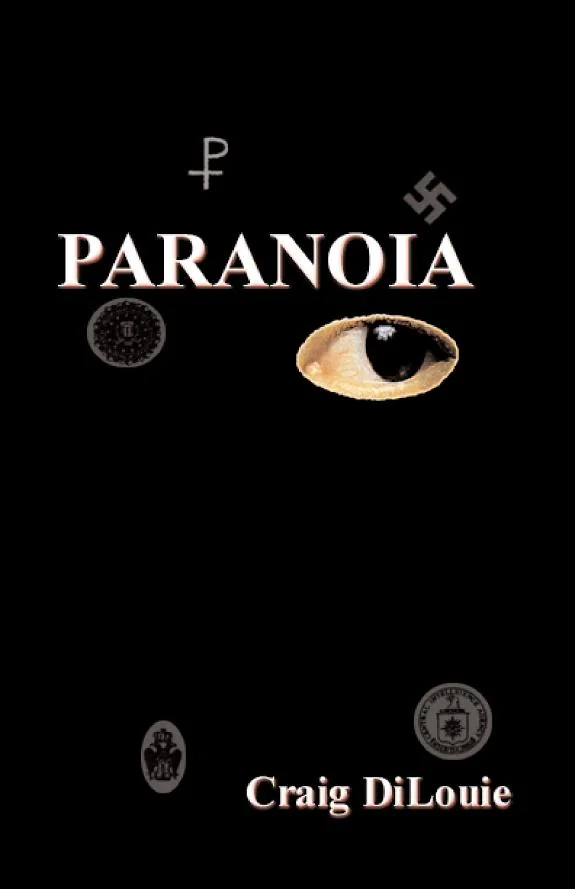
Craig DiLouie's "Paranoia" is a relentless dive into a psyche under siege. The novel excels in its claustrophobic atmosphere, building a palpable sense of dread as the protagonist's grip on reality loosens. DiLouie masterfully employs internal monologue to convey the escalating fear and suspicion, making the reader complicit in the character's unraveling. A particular strength lies in the ambiguity of the threats; are they real, imagined, or a product of external manipulation? The narrative's limitation, however, is its sheer intensity, which can at times feel overwhelming, leaving little room for reprieve or broader thematic exploration beyond the immediate psychological torment. The depiction of the protagonist's descent, especially in passages detailing fragmented memories and sensory distortions, showcases DiLouie's skill in crafting disturbing internal landscapes. Ultimately, "Paranoia" is a potent, if harrowing, study of fear's corrosive power.
📝 Description
73
Craig DiLouie's 2001 novel, 'Paranoia,' examines psychological disintegration under societal control.
Published in September 2001, Craig DiLouie's novel 'Paranoia' maps a descent into psychological fragmentation and external manipulation. The story immerses readers in a reality where perception falters, blurring the boundaries between what is real and what is imagined. It functions less as a direct explanation and more as an immersion into a constructed mental state. This work is suited for those who appreciate psychological horror and speculative fiction that examines the deeper anxieties of the human mind. Readers interested in themes of conspiracy, constructed realities, and the precariousness of sanity will find 'Paranoia' particularly resonant. It is not a book for those seeking easy answers or comfort.
Emerging in the early 2000s, 'Paranoia' appeared during a time of heightened cultural unease regarding surveillance and hidden influences. The novel taps into a widespread distrust of institutions and unseen forces, a sentiment amplified by contemporary events. Its publication followed a period where postmodern thought had already challenged objective truth, setting a stage for narratives that deconstruct reality. The core of 'Paranoia' concerns manufactured delusion, where external forces or internal processes contrive a false perception for the protagonist. This involves a close look at the subjective experience of fear, suspicion, and the breakdown of trust.
The novel engages with esoteric traditions that explore the malleability of reality and the power of belief systems to shape experience. It touches upon concepts related to manufactured consciousness and the potential for external forces, whether psychological or metaphysical, to influence an individual's perception of the world. The narrative reflects a lineage of thought that questions the solidity of the external world and emphasizes the internal landscape as a primary site of conflict and revelation, aligning with certain occult and philosophical inquiries into the nature of mind and reality.
💡 Why Read This Book?
• Understand the mechanics of manufactured reality as depicted in "Paranoia," learning how external pressures can warp internal perception, a concept explored through the protagonist's experiences. • Experience the escalating psychological dread generated by DiLouie's narrative technique, offering a unique immersion into a mind losing its footing, distinct from typical horror tropes. • Analyze the ambiguity of perceived threats within the novel, prompting a deeper consideration of subjective versus objective reality, a key element of the book's structure.
⭐ Reader Reviews
Honest opinions from readers who have explored this book.
❓ Frequently Asked Questions
What is the primary focus of Craig DiLouie's "Paranoia"?
"Paranoia" focuses on the psychological disintegration of a protagonist, exploring themes of manufactured delusion, societal control, and the blurring lines between reality and hallucination, as first published in 2001.
Is "Paranoia" a work of fiction or non-fiction?
"Paranoia" is a work of fiction, a psychological thriller that delves into the subjective experience of intense fear and suspicion, rather than presenting factual accounts.
When was "Paranoia" by Craig DiLouie originally released?
The original publication date for Craig DiLouie's "Paranoia" was September 2001.
What kind of atmosphere does "Paranoia" create?
The novel cultivates a deeply unsettling and claustrophobic atmosphere, characterized by escalating dread, pervasive suspicion, and a profound sense of psychological isolation.
Does "Paranoia" offer clear answers about the protagonist's situation?
No, "Paranoia" intentionally maintains ambiguity regarding the true nature of the protagonist's torment, leaving readers to question whether the threats are external, internal, or a combination thereof.
Who might enjoy reading "Paranoia"?
Readers who enjoy psychological horror, speculative fiction exploring conspiracy, and narratives that challenge perceptions of reality would find "Paranoia" particularly compelling.
🔮 Key Themes & Symbolism
Manufactured Delusion
The central theme is the construction of a false reality within a character's mind. This isn't merely paranoia as a symptom, but paranoia as a deliberate construct, potentially imposed by external forces or deeply ingrained psychological mechanisms. The narrative meticulously details how beliefs are shaped, reinforced, and how the protagonist's perception of the world becomes a distorted echo of an unseen agenda. This theme questions the very foundations of knowledge and certainty, suggesting that what we perceive as real can be expertly fabricated.
Erosion of Trust
A pervasive element is the breakdown of trust, both in external entities and within oneself. As the protagonist's reality fragments, so does their ability to discern friend from foe, truth from deception. This theme extends to the questioning of institutions, authority figures, and even the reliability of one's own senses. The work explores how a climate of suspicion can isolate individuals, leaving them vulnerable and disoriented, a potent commentary on societal anxieties.
The Unseen Agency
The novel plays with the concept of an unseen force or entity orchestrating events. This agency remains deliberately ambiguous, allowing for interpretations ranging from a literal conspiracy to a manifestation of the protagonist's internal breakdown. This thematic element forces readers to confront the unknown and the fear it engenders, prompting reflection on whether certain fears are rooted in objective threats or subjective projections. The presence of this unknown is a driving force of the narrative's tension.
Subjectivity of Reality
"Paranoia" profoundly interrogates the subjective nature of reality. It suggests that our perceived world is a construct, influenced by our beliefs, experiences, and potentially, external manipulations. The narrative challenges the reader to consider how fragile their own grasp on reality might be, especially under duress. By immersing the reader in a character's distorted perception, the book highlights how easily the objective world can be overshadowed by a potent, subjective experience.
💬 Memorable Quotes
Direct passages from the work, attributed to the author.
“They know I'm watching. That's the game.”
— This statement embodies the core of the protagonist's paranoia. It reflects a belief that their every action is observed and that this awareness is part of a deliberate, sinister plan orchestrated by an unknown 'they'.
“Every face a mask, every smile a lie.”
— This expression signifies a complete breakdown of social trust. The protagonist interprets all human interaction through a lens of deception, seeing hidden malice behind even the most innocent expressions.
“The silence was the loudest sound.”
— An example of paradoxical perception, this phrase conveys an intense psychological state where the absence of external noise becomes overwhelming, amplifying internal anxieties and the feeling of being under threat.
💡 Key Ideas
Editorial paraphrase of the work's core concepts — not direct quotes.
The walls felt closer every day, or perhaps it was just my mind shrinking.
This quote captures the claustrophobic descent into madness. It suggests a dual process: the external environment (the walls) appearing to close in, and simultaneously, the internal world (the mind) contracting, reflecting a loss of perspective and increasing isolation.
Was that a whisper, or just the house settling?
This line illustrates the constant state of hyper-vigilance and the inability to distinguish benign phenomena from perceived threats. It highlights the difficulty in maintaining a rational interpretation of sensory input when fear is paramount.
🌙 Esoteric Significance
Tradition
While "Paranoia" is primarily a psychological thriller, its exploration of manufactured realities and unseen forces touches upon Gnostic themes of illusion (the 'demiurge's' false creation) and the struggle for true knowledge against deception. The protagonist's quest for clarity in a world of apparent manipulation can be seen as a secularized echo of the Gnostic search for gnosis, a direct apprehension of divine truth obscured by material existence.
Symbolism
The recurring motif of 'walls' symbolizes confinement, both physical and psychological, representing the boundaries of the protagonist's perceived reality and their increasing isolation. 'Whispers' and indistinct sounds function as symbols of latent threats and the erosion of clear perception, representing how fear distorts auditory input into potential signals of danger. The concept of 'masks' symbolizes the deceptive nature of appearances, where outward expressions hide true intentions, feeding the protagonist's distrust.
Modern Relevance
In contemporary discussions around disinformation, algorithmic manipulation, and the concept of 'fake news,' "Paranoia" offers a fictional, visceral exploration of what it feels like to be ensnared by a fabricated reality. Thinkers and practitioners interested in the psychological impacts of information warfare or the philosophical implications of simulated realities find its intense focus on subjective experience highly relevant to understanding modern anxieties.
👥 Who Should Read This Book
• Readers of psychological thrillers who enjoy narratives that focus on internal states and escalating dread, offering a deep dive into a character's deteriorating mental landscape. • Speculative fiction enthusiasts interested in themes of conspiracy, manufactured realities, and societal control, particularly those who appreciate ambiguity and challenging perceptions. • Those who study the impact of fear and suspicion on the human psyche, seeking literary examples of how paranoia can shape an individual's experience of the world.
📜 Historical Context
Craig DiLouie's "Paranoia," published in September 2001, emerged during a period of heightened global anxiety, shortly before the September 11th attacks would profoundly reshape public consciousness regarding security and unseen threats. The novel tapped into a burgeoning post-millennial unease about surveillance, hidden powers, and the erosion of personal autonomy, themes that gained significant traction in the subsequent years. This era saw a continued interest in psychological thrillers and speculative fiction that questioned established realities, building on trends from the late 20th century. While not directly engaging with specific philosophical movements like existentialism in an overt manner, "Paranoia" shares a thematic kinship with existentialist concerns about alienation and the search for meaning in an often indifferent or hostile universe. Its reception, though not widely documented in major academic circles due to its genre classification, resonated with readers drawn to narratives that explored the darker psychological implications of modern life.
📔 Journal Prompts
The protagonist's perception of the 'walls' closing in.
The nature of the 'unseen agency' in your own life.
Moments of eroded trust and their consequences.
Distinguishing external threats from internal anxieties.
The construction of personal reality in the face of doubt.
🗂️ Glossary
Manufactured Delusion
A state of false belief or perception that is not organically developed but is instead created or imposed, often through external manipulation or psychological conditioning, as central to the novel's plot.
Unseen Agency
A mysterious, often malevolent force or group believed to be controlling events from behind the scenes, a key element of the protagonist's paranoid worldview in the book.
Psychological Disintegration
The process by which a person's mental and emotional stability deteriorates, leading to a loss of coherence in thought, emotion, and behavior, as depicted in the novel's protagonist.
Subjective Experience
An individual's personal, internal awareness and interpretation of events and sensations, which may differ significantly from objective reality, a core focus of the narrative.
Erosion of Trust
The gradual breakdown of faith in oneself, others, or institutions, leading to pervasive suspicion and isolation, a pervasive theme throughout the book.
Ambiguity of Threat
The state where the source and nature of danger are unclear, leaving the individual uncertain whether threats are real, imagined, or a product of internal states.
Perceived Reality
The world as an individual understands and experiences it, which can be influenced by psychological factors, external information, and personal beliefs, often distorted in the novel.
This book appears in 1 collection
🔮 Readers Also Liked
Browse all →








From the “Illuminati” Collection
View all →






More Free Freemasonry & Secret Societies Books
View all →