Liber Tvrris vel Domvs Dei sub figura XVI

 84
84

Liber Tvrris vel Domvs Dei sub figura XVI

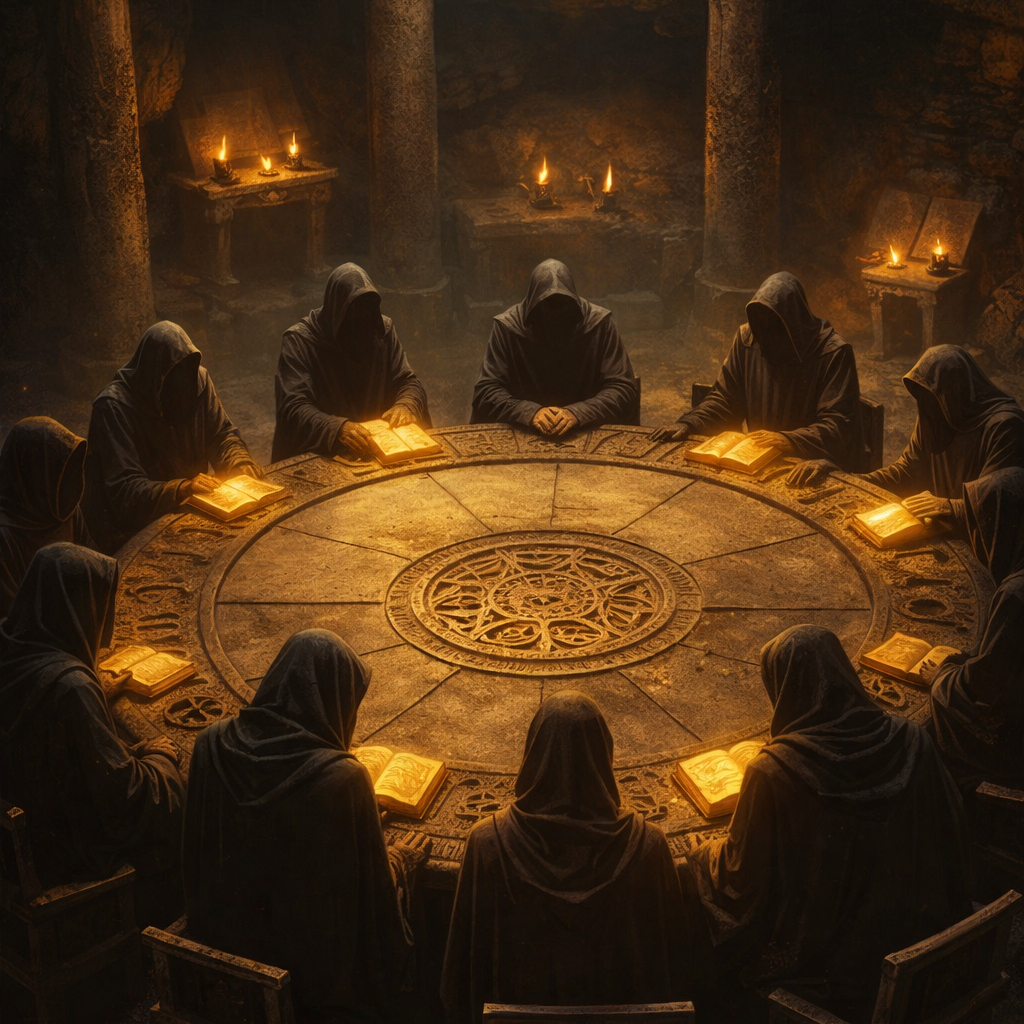

Sophia Crane (Associate Editor) — 'Liber Tvrris vel Domvs Dei' is a formidable text, a true cornerstone for advanced students of the Western Esoteric Tradition. Its 'wise men of old time' have crafted a work that eschews superficiality, demanding a profound commitment to inner work. The esoteric insights offered concerning the 'destruction' are not literal, but metaphorical, pointing towards the ego's dissolution as a gateway to divine union. Its strength lies in its uncompromising directness, assuming a reader already well-versed in *Liber E* and *Liber HHH*. This is not a book for the dilettante, but for the dedicated practitioner seeking to transcend the limitations of the mundane and ascend to higher states of awareness.
📝 Description
84
Published as sub figura XVI, Liber Tvrris vel Domvs Dei addresses the destruction of the self.
This text, attributed to 'wise men of old time concerning the destruction,' presents a framework for spiritual transformation through dissolution. It is not a simple historical artifact but a transmission of esoteric principles, communicated through the symbolic language of ancient spiritual traditions. The work invites serious students into complex ideas about consciousness, reality, and the construction of the self. It demands focused study and inner strength from its readers.
The book targets individuals already committed to self-discipline, possessing a solid grasp of basic meditative techniques and physical yoga. It discusses the philosophy of spiritual destruction as a necessary step before spiritual construction. The core message encourages the dismantling of the ego or illusory self to uncover an enduring spiritual reality. Its value comes from its direct, though difficult, method for awakening latent spiritual capacities and showing the patterns of sacred knowledge.
Liber Tvrris vel Domvs Dei belongs to traditions that view spiritual progress as a process of inner annihilation and rebuilding. Such paths often employ symbolic texts that require careful interpretation, moving beyond literal meaning to grasp deeper philosophical and psychological insights. These traditions frequently emphasize the necessity of overcoming the limitations of the personal ego to achieve a higher state of being. The book's focus on destruction preceding divine construction aligns with cyclical views of creation and transformation found in various Gnostic, Kabbalistic, and Tantric systems.
💡 Why Read This Book?
Embark on a journey of profound spiritual alchemy, where destruction paves the way for divine construction. This text is essential for advanced practitioners seeking to deepen their understanding of ego dissolution and the attainment of higher consciousness. It offers a challenging, yet rewarding, path for those dedicated to esoteric disciplines and the mastery of inner temples.
⭐ Reader Reviews
Honest opinions from readers who have explored this book.
❓ Frequently Asked Questions
What is the primary purpose of 'Liber Tvrris vel Domvs Dei'?
Its primary purpose is to guide advanced practitioners through the challenging process of spiritual 'destruction' – the dissolution of the ego – as a necessary precursor to building a divine inner edifice and attaining higher states of consciousness.
Who is the intended audience for this text?
The intended audience comprises serious students and practitioners of esoteric disciplines who have already mastered foundational meditation and yogic practices, as outlined in texts like *Liber E* and *Liber HHH*.
What does 'destruction' signify in this context?
In this context, 'destruction' refers to the metaphorical dismantling of the illusory self, the ego, and its attachments, rather than any literal act of annihilation. It's a process of purification.
Is prior knowledge of Freemasonry necessary to understand this book?
While the category is Freemasonry, the text's esoteric teachings are broadly applicable to advanced spiritual seekers. Familiarity with symbolic language and meditative practices is more crucial than specific Masonic degrees.
How difficult is the practice described in this book?
The original notes explicitly state that this practice is 'very difficult' and requires significant mastery of prior meditative and Asana techniques for any hope of success.
🔮 Key Themes & Symbolism
The Art of Spiritual Dissolution
This theme looks at the profound concept of 'destruction' not as an end, but as a transformative process. It explores the necessity of dismantling the edifice of the ego, the limitations of the perceived self, and the attachments that bind the practitioner to the mundane. The 'wise men of old time' present this not as a path of despair, but as a rigorous, alchemical purification, preparing the spiritual vessel for the reception of divine essence. It requires immense discipline and a clear understanding of self-deception.
Constructing the Inner Divine Temple
Following the foundational work of dissolution, this theme focuses on the subsequent act of spiritual construction. The 'Domvs Dei' or House of God, is not an external structure but an inner sanctuary built within the purified consciousness. This involves integrating higher spiritual principles, establishing a direct connection with the divine, and creating a stable, luminous inner citadel of being. It is the culmination of the destructive process, leading to a profound realization of one's true, eternal nature and its sacred dwelling.
The Labyrinth of Consciousness and Ascent
The text implicitly maps the intricate labyrinth of consciousness that the practitioner must navigate. Each stage of 'destruction' and 'construction' represents a level or chamber within this inner architecture. The journey is presented as an ascent, a gradual climb through successive planes of awareness, shedding illusions and gaining clarity. Understanding this symbolic topography is crucial for comprehending the arduous yet ultimately rewarding path towards spiritual liberation and divine union.
💬 Memorable Quotes
Direct passages from the work, attributed to the author.
“The Tower crumbles to forge the sacred edifice.”
— This aphorism expresses the core teaching: the dissolution of the false self (the Tower) is essential for the creation of the divine inner sanctuary (the sacred edifice).
“Where illusion stands, Truth cannot reside.”
— Highlights the necessity of dispelling falsehoods and egoic projections to make space for genuine spiritual insight and divine presence.
“Master the stillness before the storm of revelation.”
— Emphasizes the prerequisite of deep meditative control and inner peace before one can withstand or integrate profound spiritual insights.
“The architect of the soul begins with demolition.”
— A powerful metaphor for the spiritual path, suggesting that self-improvement and divine connection start with radical self-assessment and the removal of obstacles.
“In the void of self, the divine finds its home.”
— Points to the concept of egolessness as the ultimate state of receptivity, allowing the divine to manifest fully within the individual.
🌙 Esoteric Significance
Tradition
This work is deeply embedded within the Western Esoteric Tradition, drawing heavily from Hermeticism, Kabbalah, and potentially Gnostic and Alchemical philosophies. It represents a practical application of principles concerning spiritual purification, the dissolution of the ego, and the construction of an inner divine temple, mirroring the macrocosm within the microcosm.
Symbolism
The 'Tower' (Tvrris) symbolizes the ego, the mundane self, and the limitations of physical existence. Its destruction is the alchemical process of breaking down the base material. The 'House of God' (Domvs Dei) represents the purified soul, the divine dwelling, the perfected inner sanctuary. Sub figura XVI suggests a specific, perhaps initiatory, stage or method within a larger system.
Modern Relevance
In an age saturated with external distractions and superficial pursuits, the text's emphasis on profound inner work and ego dissolution is highly relevant. It offers a rigorous framework for individuals seeking genuine spiritual growth beyond transient trends, providing tools for self-mastery and the cultivation of a stable, luminous inner life.
👥 Who Should Read This Book
This text is unequivocally for the advanced practitioner who has dedicated years to disciplined spiritual study and practice. It is essential for seasoned seekers within the Western Esoteric Tradition seeking to deepen their understanding of ego transcendence and divine communion. Scholars of comparative religion and occult philosophy will find it a valuable primary source for understanding advanced initiatory concepts. Beginners are strongly advised to establish a firm foundation in foundational yogic and meditative practices before approaching this challenging, yet potentially transformative, work.
📜 Historical Context
The precise origins of 'Liber Tvrris vel Domvs Dei' are veiled, aligning with its esoteric nature, but it is attributed to the 'wise men of old time concerning the destruction.' This suggests a lineage drawing from ancient mystical traditions, likely predating or running parallel to the formalized structures of later esoteric orders, including aspects of Freemasonry and Hermeticism. The era of its compilation or transmission would have been a time when secret knowledge was carefully guarded, passed down through initiatory rites and cryptic texts. Its thematic focus on the destruction of the self as a prerequisite for spiritual attainment appeals to Gnostic, Kabbalistic, and Alchemical philosophies that flourished across various historical periods, particularly during the Renaissance and the Enlightenment, when the Western Esoteric Tradition experienced significant revival and synthesis.
📔 Journal Prompts
Reflect on the 'Tower' within your own consciousness. What aspects of your ego require 'destruction'?
Visualize the blueprint of your 'Domvs Dei.' What divine qualities are you currently cultivating within this inner temple?
Describe a moment when the dissolution of a personal illusion led to a profound spiritual realization.
How does the concept of 'destruction' as a precursor to creation inform your understanding of personal growth?
What are the most significant obstacles you face in constructing your inner divine sanctuary, and how can you address them?
🗂️ Glossary
Asana
In the context of yoga and meditation, Asana refers to a stable, comfortable posture that facilitates prolonged stillness and focus during practice, crucial for mental and spiritual discipline.
Liber
Latin for 'book.' In esoteric literature, it often denotes a specific grimoire, treatise, or collection of teachings, frequently part of a larger series or system.
Sub figura XVI
Latin for 'under the figure of 16.' This designation typically indicates a specific text within a larger corpus or a particular symbolic representation or stage in an esoteric system.
Ego
The sense of self, often perceived as an independent and separate entity, characterized by desires, attachments, and a narrative of personal identity. Spiritual traditions often aim to transcend or dissolve the ego's limitations.
Divine Edifice
A metaphorical term for the perfected spiritual self or the inner sanctuary of the soul, built through spiritual practices and the integration of divine principles after the ego's dissolution.
This book appears in 2 collections
🔮 Readers Also Liked
Browse all →









From the “Secret Societies” Collection
View all →






More Free Freemasonry & Secret Societies Books
View all →