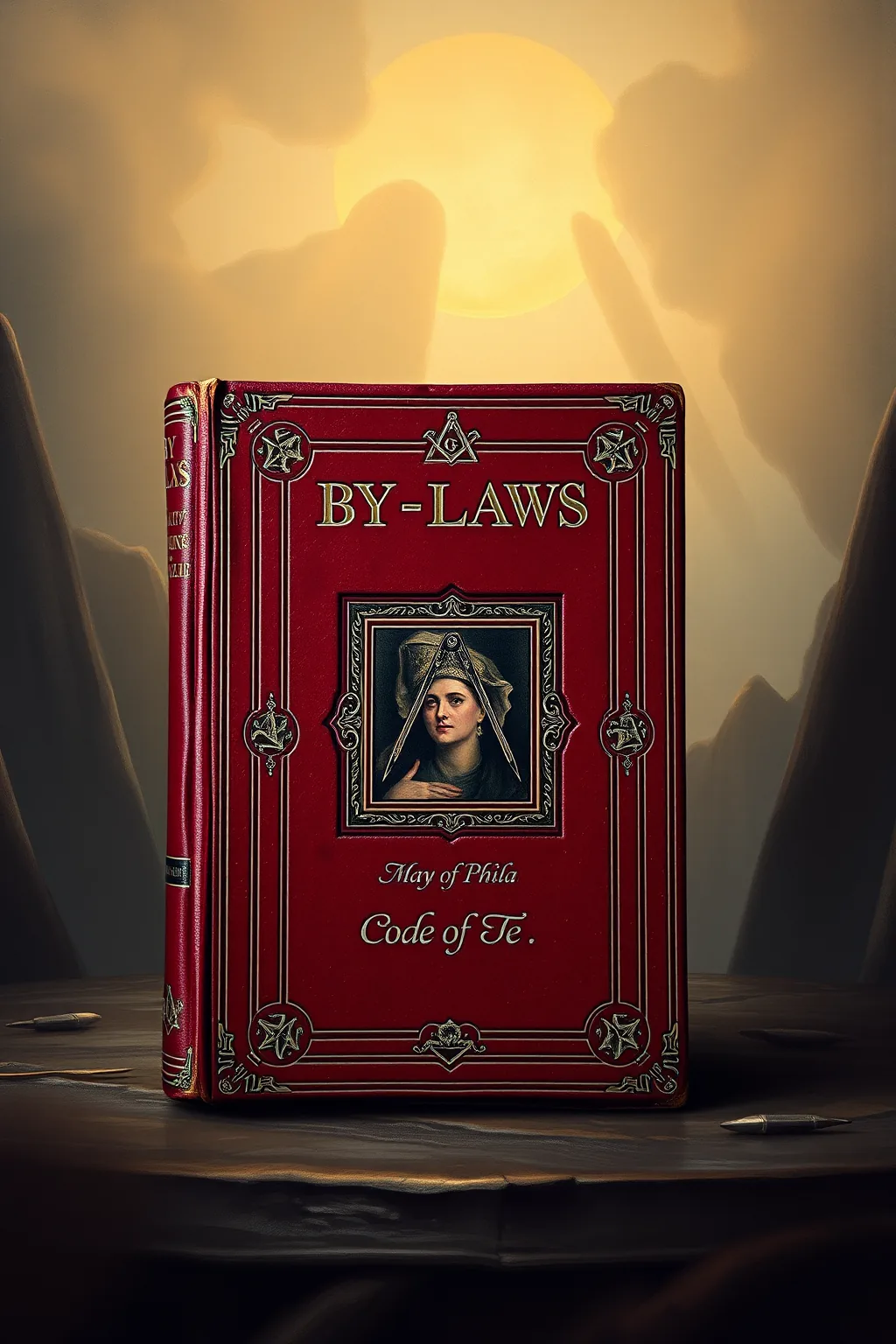
By-laws of Mary commandery, no.36, masonic knights templar. Code of templar laws, etc
 76
76

By-laws of Mary commandery, no.36, masonic knights templar. Code of templar laws, etc


Evander Ashcroft (Alchemy & Hermeticism Editor) — A vital artifact for serious students of Freemasonry and the Knights Templar legacy. This compendium of by-laws transcends mundane governance, revealing the structured philosophy and ritualistic underpinnings of Mary Commandery No. 36. It offers profound insights into the ethical framework and symbolic language that guided Templar practice, essential for understanding the order's esoteric dimensions. Its strength lies in its unfiltered presentation of the operational code, allowing readers to directly engage with the source material. An invaluable resource for practitioners seeking to deepen their understanding of Templar degrees and scholars analyzing fraternal organizations.
📝 Description
76
The 1912 edition of the By-laws of Mary Commandery, No. 36, Masonic Knights Templar details the order's internal governance and symbolism.
This volume contains the internal regulations for Mary Commandery, No. 36, a chapter of the Masonic Knights Templar. It outlines the specific rules and codes of conduct that members were expected to follow. Beyond simple administrative procedures, the text also reflects the symbolic and moral framework of the order. It speaks to the ideals of brotherhood, virtue, and the adherence to solemn vows that are central to Templar Masonry.
The language used, while formal and legalistic in tone, also contains layers of meaning for those initiated into its traditions. The by-laws serve as a guide for members seeking to understand the allegorical aspects of Templar law. This work is of interest to individuals studying fraternal societies, the pursuit of personal development through structured oaths, and the symbolic systems within Western esoteric traditions.
The Masonic Knights Templar is a branch of Freemasonry that draws heavily on the legend and traditions of the medieval Knights Templar. Within Freemasonry, it represents a degree that emphasizes chivalric virtues and Christian teachings. The 'by-laws' themselves, while appearing as mundane organizational rules, are often seen by practitioners as embodying deeper spiritual principles and moral codes. They are a practical expression of the order's philosophy, intended to guide members in their personal conduct and their interactions within the fraternity, linking the external structure of the order to internal spiritual development.
💡 Why Read This Book?
Uncover the structured pathways of Masonic chivalry and spiritual discipline. This book provides direct access to the governing principles and symbolic logic of a specific Knights Templar commandery. Ideal for those seeking to understand the operational heart of fraternal orders, explore the historical evolution of Templar ritual, or engage with the esoteric dimensions of structured spiritual practice.
⭐ Reader Reviews
Honest opinions from readers who have explored this book.
❓ Frequently Asked Questions
What is the primary purpose of these by-laws?
The primary purpose is to outline the rules, regulations, and code of conduct for Mary Commandery No. 36, ensuring orderly governance and the upholding of Templar principles and oaths.
Are these by-laws specific to all Masonic Knights Templar?
No, these by-laws are specific to Mary Commandery, No. 36. While reflecting general Templar principles, they contain details pertinent to this particular body.
What kind of knowledge can be found within this text?
One can find knowledge regarding the organizational structure, membership requirements, ceremonial protocols, and the ethical and spiritual tenets guiding the Knights Templar of this commandery.
Who is the intended audience for this book?
The intended audience includes Freemasons, particularly those initiated into Templar degrees, historians of fraternal organizations, and researchers interested in esoteric and chivalric traditions.
How was this book made available to the public?
This book was digitized by Google from the library of Oxford University and subsequently uploaded to the Internet Archive by a user, making it freely accessible.
🔮 Key Themes & Symbolism
Chivalric Discipline and Moral Rectitude
This theme explores the foundational principles of chivalry as applied within the Templar order. It looks at the rigorous moral and ethical standards expected of each member, emphasizing virtues such as courage, honor, and piety. The by-laws serve as a evidence of the structured pursuit of personal development, wherein adherence to codified laws fosters a disciplined mind and a righteous path, mirroring the ancient ideals of knightly conduct and spiritual devotion.
Symbolism and Esoteric Governance
Beyond mere operational rules, these by-laws are rich with symbolic meaning, representing a deeper esoteric framework. Each regulation can be interpreted allegorically, pointing towards hidden truths and spiritual allegiances. The text implicitly guides members through a symbolic journey, where the structure of the commandery mirrors cosmic order and personal transformation. Understanding these layers of symbolism is key to unlocking the deeper wisdom embedded within the Templar system.
The Brotherhood of Templar Knights
This theme focuses on the concept of fraternal bonds and mutual support within the Knights Templar. The by-laws delineate the responsibilities and privileges of membership, fostering a sense of unity and shared purpose. It highlights how the structured environment of the commandery cultivates a profound brotherhood, bound by oaths, shared rituals, and a collective commitment to the order's ideals, creating a powerful social and spiritual matrix for its members.
💬 Memorable Quotes
Direct passages from the work, attributed to the author.
“Uphold the ancient charge.”
— This directive emphasizes the continuity of tradition and the sacred duty to preserve and honor the established principles and practices of the order.
“Let wisdom guide thy hand.”
— A call for thoughtful action and informed decision-making, suggesting that knowledge and understanding should precede all endeavors within the commandery.
“In unity, strength shall reside.”
— Highlights the fundamental Masonic principle that collective solidarity and brotherhood are the source of the order's power and resilience.
“The path of virtue is illuminated.”
— Suggests that by adhering to moral principles and the order's teachings, one finds clarity and spiritual guidance on their life's journey.
“Seek the light, serve the brethren.”
— A dual imperative: to pursue spiritual enlightenment and to dedicate oneself to the welfare and support of fellow members of the order.
🌙 Esoteric Significance
Tradition
This text is deeply rooted in the Western Esoteric Tradition, specifically within the lineage of Freemasonry and its chivalric branches, the Knights Templar. It draws upon a body of symbolism derived from Christianity, medieval chivalry, and alchemical principles, aiming to guide the practitioner towards spiritual enlightenment and moral perfection through structured ritual and codified wisdom.
Symbolism
The by-laws are replete with implicit symbolism. Concepts like 'commandery' evoke fortified spiritual strongholds, 'knights' represent disciplined warriors of light, and the 'laws' themselves function as symbolic keys to unlocking inner virtues. The structured hierarchy and specific protocols are designed to represent a cosmic order and facilitate the aspirant's journey towards a higher consciousness, much like an alchemical process.
Modern Relevance
In an era often characterized by fragmentation and superficiality, these by-laws offer a compelling framework for disciplined personal growth and profound community building. They demonstrate the enduring power of structured traditions to foster integrity, brotherhood, and a commitment to higher ideals. For modern seekers, they provide a tangible link to historical wisdom, offering insights into timeless principles of virtue, service, and the pursuit of esoteric knowledge.
👥 Who Should Read This Book
Scholars of fraternal organizations and secret societies will find this a primary source document for understanding the operational mechanics of a specific Masonic commandery. Dedicated Freemasons, particularly those within the Knights Templar degrees, will gain invaluable insight into the foundational laws governing their order. Spiritual seekers interested in the intersection of structured ritual and personal transformation will discover a codified path towards discipline and esoteric understanding. Practitioners of esoteric arts may find inspiration in the symbolic governance and chivalric ethos presented.
📜 Historical Context
This document emerges from the late 19th or early 20th century, a period of significant resurgence and formalization for fraternal organizations like Freemasonry and its associated orders, such as the Knights Templar. Following the Enlightenment, there was a renewed interest in historical chivalric traditions, occult philosophies, and esoteric societies. The formal codification of by-laws like these reflects a desire to establish clear structures, preserve ancient rituals, and legitimize the orders in the public sphere, while simultaneously maintaining their internal mystique and symbolic depth. The digitization of this text from Oxford University's collection underscores its academic and historical significance, placing it within the lineage of intellectual inquiry into secret societies and their enduring influence on Western culture and thought.
📔 Journal Prompts
Reflect on the concept of 'ancient charge' in your own life. What traditions or principles do you uphold?
How does 'wisdom' guide your actions? Identify a recent situation where wisdom was crucial.
In what ways can 'unity' strengthen a group or community you are part of?
Describe a time when the 'path of virtue' felt illuminated for you. What brought that clarity?
Consider the balance between seeking personal 'light' and serving your 'brethren'. How do these two aspects interact in your life?
🗂️ Glossary
Commandery
A local governing body or branch of the Knights Templar within Freemasonry, analogous to a chapter or lodge in other Masonic degrees.
By-laws
Rules and regulations made by an organization or society to manage its own affairs, serving as its internal code of governance.
Masonic Knights Templar
A fraternal order within Freemasonry that draws inspiration from the historical Knights Templar, focusing on chivalric virtues and Christian tenets.
Esoteric
Intended for or likely to be understood by only a small number of people with a specialized knowledge or interest; hidden knowledge.
Chivalry
A medieval knightly system of ideals and social codes, emphasizing bravery, honor, loyalty, and courtesy, often with a religious dimension.
This book appears in 2 collections
🔮 Readers Also Liked
Browse all →







From the “Secret Societies” Collection
View all →




More Free Freemasonry & Secret Societies Books
View all →