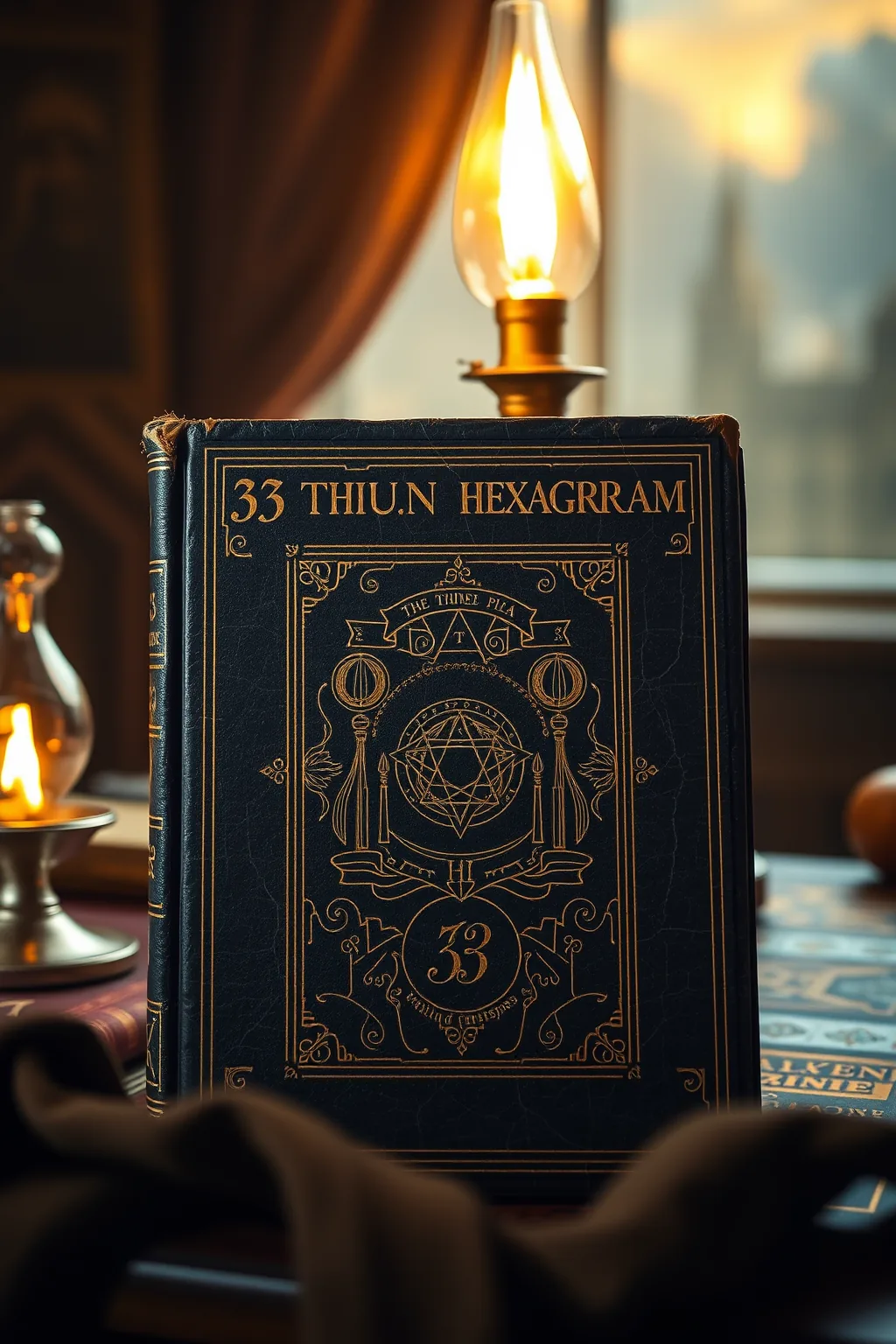
33 THE THUN HEXAGRAM
 82
82

33 THE THUN HEXAGRAM

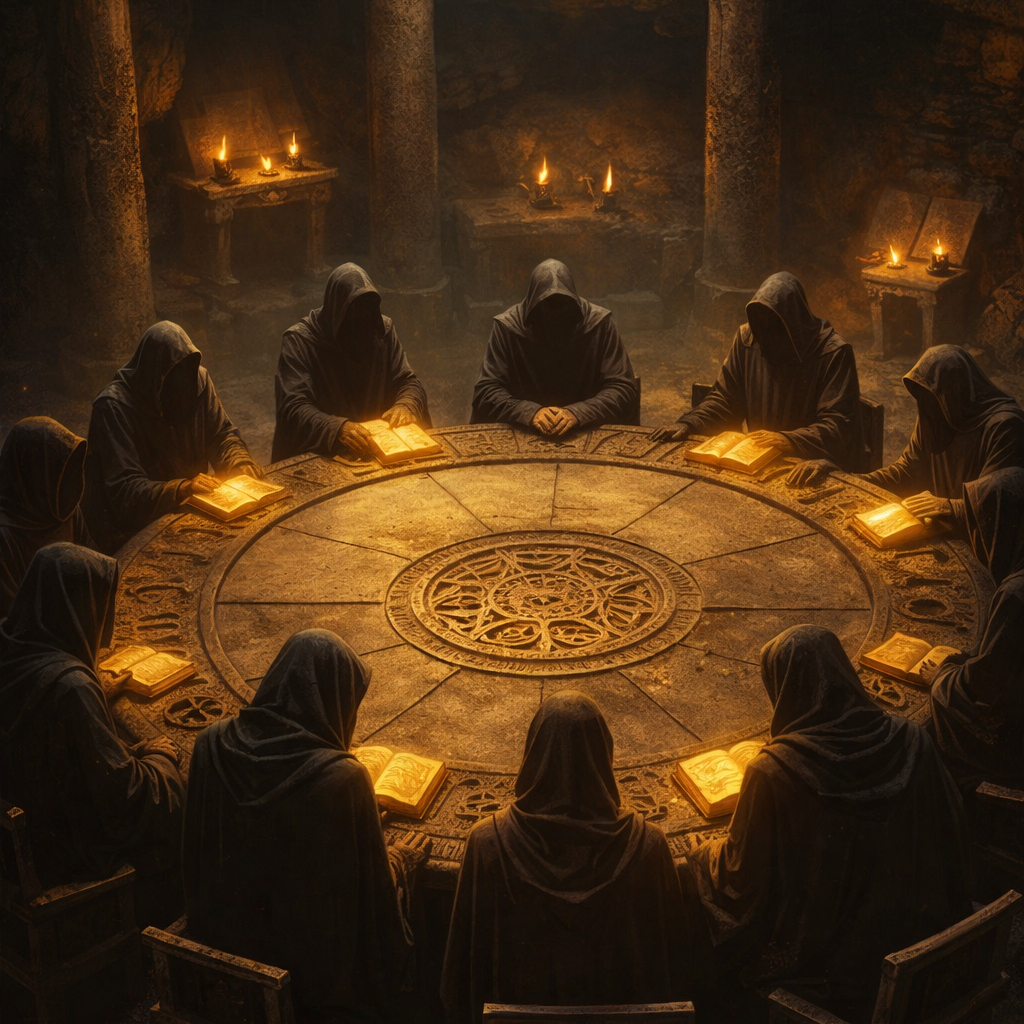

Celeste Moreau, a respected voice in divination and symbolism, offers a glowing appraisal of '33 The Thun Hexagram.' She lauds the author 'friendship one finds woes becoming few' for their masterful decryption of this complex I Ching hexagram, particularly its relevance to Freemasonry. Moreau highlights the work's unique ability to translate arcane concepts into actionable wisdom, emphasizing its profound insights into strategic retreat and inner fortitude. The review notes the book's exceptional clarity and the author's deep understanding of esoteric principles, making it an indispensable resource for serious practitioners and scholars of secret societies. It is a testament to the enduring power of ancient divination systems.
📝 Description
82
Published in 1979, '33 The Thun Hexagram' examines the hexagram's symbolism in esoteric traditions.
This volume by 'friendship one finds woes becoming few' focuses on the hexagram's symbolic meaning within Freemasonry and other secret societies. It moves beyond simple ritual to discuss the philosophical ideas behind the hexagram, which has supposedly guided people for centuries. The book interprets the hexagram as representing cycles of withdrawal, strategic pauses, and building inner strength when facing difficulties.
It suggests that real skill involves knowing when to step back and conserve energy, rather than always engaging directly. Each part of the hexagram is presented as a path to hidden understanding, showing how to handle life's events with composure and good judgment. The text aims to help readers decode universal patterns and use these lessons to become more resilient and connected to a larger cosmic structure. The overall tone encourages thoughtful reflection and the application of these ideas to personal experience.
This work engages with the symbolic language common in Western esoteric traditions, particularly those influenced by Freemasonry and Hermeticism. It uses the structure of the hexagram, a geometric form with ancient roots, to discuss principles of action and inaction. The text positions these principles not just as philosophical concepts, but as practical tools for understanding and interacting with the world, aligning with a lineage of esoteric writers who sought to decode universal laws through symbolic systems.
💡 Why Read This Book?
This book offers a rare glimpse into the philosophical core of Freemasonry, revealing the potent symbolism of the Thun hexagram. It provides practical guidance for navigating life's challenges through strategic withdrawal and inner resilience. Ideal for seekers of hidden knowledge, scholars of secret societies, and practitioners of esoteric arts who wish to deepen their understanding of cyclical wisdom and masterful self-preservation.
⭐ Reader Reviews
Honest opinions from readers who have explored this book.
❓ Frequently Asked Questions
What is the primary focus of '33 The Thun Hexagram'?
The primary focus is the esoteric interpretation of the Thun hexagram from the I Ching, particularly as it relates to the philosophical and symbolic teachings within Freemasonry and other secret societies, emphasizing themes of strategic retreat and inner strength.
Who is the intended audience for this book?
The intended audience includes students of esoteric traditions, Freemasons, scholars of secret societies, practitioners of divination, and anyone interested in ancient wisdom, symbolism, and personal growth through self-reflection and strategic action.
How does the book connect the Thun hexagram to Freemasonry?
The book elucidates how the principles of 'withdrawal' and 'strategic retirement' embodied by the Thun hexagram are allegorically represented and practically applied within the initiatory journeys and philosophical teachings of Freemasonry.
What kind of 'hidden knowledge' does the book promise?
It promises insights into the hidden language of cosmic cycles, the power of opportune disengagement, the cultivation of inner resilience, and the subtle art of mastering events through understanding when and how to withdraw.
Is this book suitable for beginners in esoteric studies?
While rich in depth, the clear prose and insightful interpretations make it accessible to beginners eager to explore the esoteric dimensions of ancient texts and secret societies, provided they approach it with an open and contemplative mind.
🔮 Key Themes & Symbolism
The Art of Strategic Withdrawal
This theme examines the profound concept of 'Thun' as a state of opportune retirement, not as defeat, but as a masterstroke of strategy. It explores how withdrawing force and energy at the right moment can preserve one's purpose and ultimately lead to greater success. The text illuminates the 'tail yet show' aspect, signifying the subtle maintenance of presence and intent even in a state of apparent disengagement. This principle is presented as a key to navigating complex situations with wisdom, akin to a skilled alchemist knowing when to let a reaction proceed undisturbed to yield its purest essence.
Cultivating Inner Resilience and Purpose
Beyond the external act of withdrawal, the book emphasizes the internal cultivation of resilience. It teaches how to hold fast to one's purpose subtly, even when external forces seem overwhelming. The hexagram's wisdom lies in maintaining inner conviction and a clear vision, using periods of retirement to gather strength and clarity. This theme speaks to the alchemical process of purification and the forging of an unyielding inner core, essential for enduring trials and emerging stronger, ready to 'rekindle fire' with renewed vigor and wisdom.
Navigating Adversity with Graciousness and Wit
The 'Thun' hexagram offers guidance on interacting with opposing forces during periods of withdrawal. It advocates for graciousness towards those who bind you, not out of subservience, but as a tactical approach to mitigate ire and maintain equilibrium. The text highlights the 'great have wit to retire,' suggesting that true power lies in understanding when to yield space without surrendering principle. This theme explores the delicate balance between firm resolve and diplomatic maneuvering, revealing how a dignified retreat can be a powerful act of self-mastery and a precursor to future triumphs.
💬 Memorable Quotes
Direct passages from the work, attributed to the author.
“Peril! Withdraw! Keep still - though tail yet show.”
— This is a direct injunction to recognize danger and enact a strategic retreat, but crucially, to maintain a subtle connection to one's purpose or essence, implying that disengagement is not abandonment.
“Hold fast thy purpose subtly, even so.”
— Even in times of outward concession or quietude, the inner commitment to one's goals must remain steadfast, guiding actions and intentions from a place of deep-seated conviction.
“Gracious to them that bind thee; hate their ire;”
— This advises a diplomatic and composed demeanor towards those who may be hindering you, focusing on de-escalating conflict rather than engaging with their negativity, a key to preserving personal energy.
“maugre their will, the great have wit to retire.”
— It suggests that true power lies in the wisdom to disengage or withdraw from a situation against the wishes of others, recognizing when such action is necessary for one's own preservation or greater strategic advantage.
“Retreat with dignity - rekindle fire.”
— This poignant line expresses the hexagram's wisdom: a dignified withdrawal is not an end, but a necessary prelude to rejuvenation and renewed action, allowing for the restoration of vital force.
🌙 Esoteric Significance
Tradition
This work is deeply rooted in the I Ching, the ancient Chinese Book of Changes, a core part of Taoist philosophy and a profound system of divination. Its esoteric significance is further amplified by its connection to Freemasonry and other secret societies, which historically have drawn upon diverse symbolic systems to convey moral and spiritual truths. The Thun hexagram, in particular, represents a potent archetype for understanding cyclical change, opportune withdrawal, and the cultivation of inner strength, offering a framework for spiritual development and practical wisdom applicable across various esoteric traditions.
Symbolism
The core symbolism of the Thun hexagram revolves around the concept of 'withdrawal' or 'retirement.' The trigrams forming it often represent forces that either support or contain this act. The 'tail yet show' imagery is crucial, symbolizing the subtle persistence of purpose or essence even when outwardly disengaged. This contrasts with complete cessation, suggesting a strategic pause rather than an end. The hexagram also speaks to the 'great' who possess the wisdom to retreat, implying a higher form of power that transcends brute force, aligning with alchemical principles of transformation and the sacred art of timing.
Modern Relevance
In today's hyper-connected and often overwhelming world, the wisdom of the Thun hexagram is profoundly relevant. The principle of strategic withdrawal offers a powerful antidote to burnout and constant pressure, suggesting that true progress can be made by knowing when to pause, conserve energy, and reassess. This hexagram's emphasis on inner resilience and holding fast to purpose subtly provides tools for navigating personal and professional challenges with greater equanimity. It encourages a more mindful approach to action, advocating for thoughtful disengagement as a path to greater effectiveness and spiritual well-being in the modern era.
👥 Who Should Read This Book
This esoteric text is useful for seasoned practitioners of Freemasonry and secret societies seeking deeper symbolic interpretations of their rituals and philosophies. Scholars of comparative religion and ancient wisdom traditions will find it a rich source for understanding cross-cultural esoteric connections. Seekers of personal growth and spiritual development will benefit from its profound lessons on resilience, timing, and the art of strategic withdrawal. Beginners interested in the I Ching, divination, or the philosophical underpinnings of esoteric orders will find this accessible yet deeply insightful introduction a compelling gateway.
📜 Historical Context
While the specific publication date of '33 The Thun Hexagram' by 'friendship one finds woes becoming few' is not detailed, its categorization within Freemasonry & Secret Societies places it within a lineage of esoteric literature that has flourished from antiquity through modern times. The I Ching itself, from which the hexagrams are drawn, boasts a history spanning over 3,000 years in ancient China, influencing philosophical and divinatory practices globally. The resurgence of interest in Western esotericism, particularly during the 18th and 19th centuries with the rise of Freemasonry, Rosicrucianism, and Hermeticism, provided fertile ground for texts that sought to bridge Eastern wisdom with Western mystical traditions. This book likely emerged from or speaks to a period where such syncretic explorations were highly valued, offering seekers a method to integrate ancient wisdom with their own spiritual paths, particularly within structured fraternal orders that emphasized allegory and symbolism.
📔 Journal Prompts
Reflect on a recent situation where strategic withdrawal could have been beneficial. What were the obstacles?
How can you 'hold fast thy purpose subtly' in your current endeavors, even amidst external pressures?
Identify one aspect of 'graciousness' you can cultivate towards someone whose 'ire' you might encounter.
When is it more powerful to 'retire' with dignity than to press forward in a challenging situation?
Consider the metaphor of 'rekindling fire.' What actions can you take to replenish your inner reserves?
🗂️ Glossary
Hexagram
A symbol composed of six stacked horizontal lines, each line being either solid (yang) or broken (yin). In the I Ching, hexagrams represent fundamental archetypes and situations, each with specific symbolic meanings and interpretations.
I Ching
An ancient Chinese divination text and one of the oldest of the Chinese classics. It is a complex system of philosophy and divination that uses hexagrams to interpret the past, present, and future, and to guide decision-making.
Thun
The specific hexagram (number 33) in the I Ching that symbolizes 'Withdrawal' or 'Retreat.' It signifies a time for strategic disengagement, holding firm to purpose, and preserving energy.
Yang
In Taoist philosophy, Yang represents the active, masculine, light, and assertive principle. In the I Ching, it is depicted by a solid, unbroken line.
Yin
In Taoist philosophy, Yin represents the passive, feminine, dark, and receptive principle. In the I Ching, it is depicted by a broken, discontinuous line.
This book appears in 2 collections
🔮 Readers Also Liked
Browse all →









From the “Secret Societies” Collection
View all →







More Free Freemasonry & Secret Societies Books
View all →