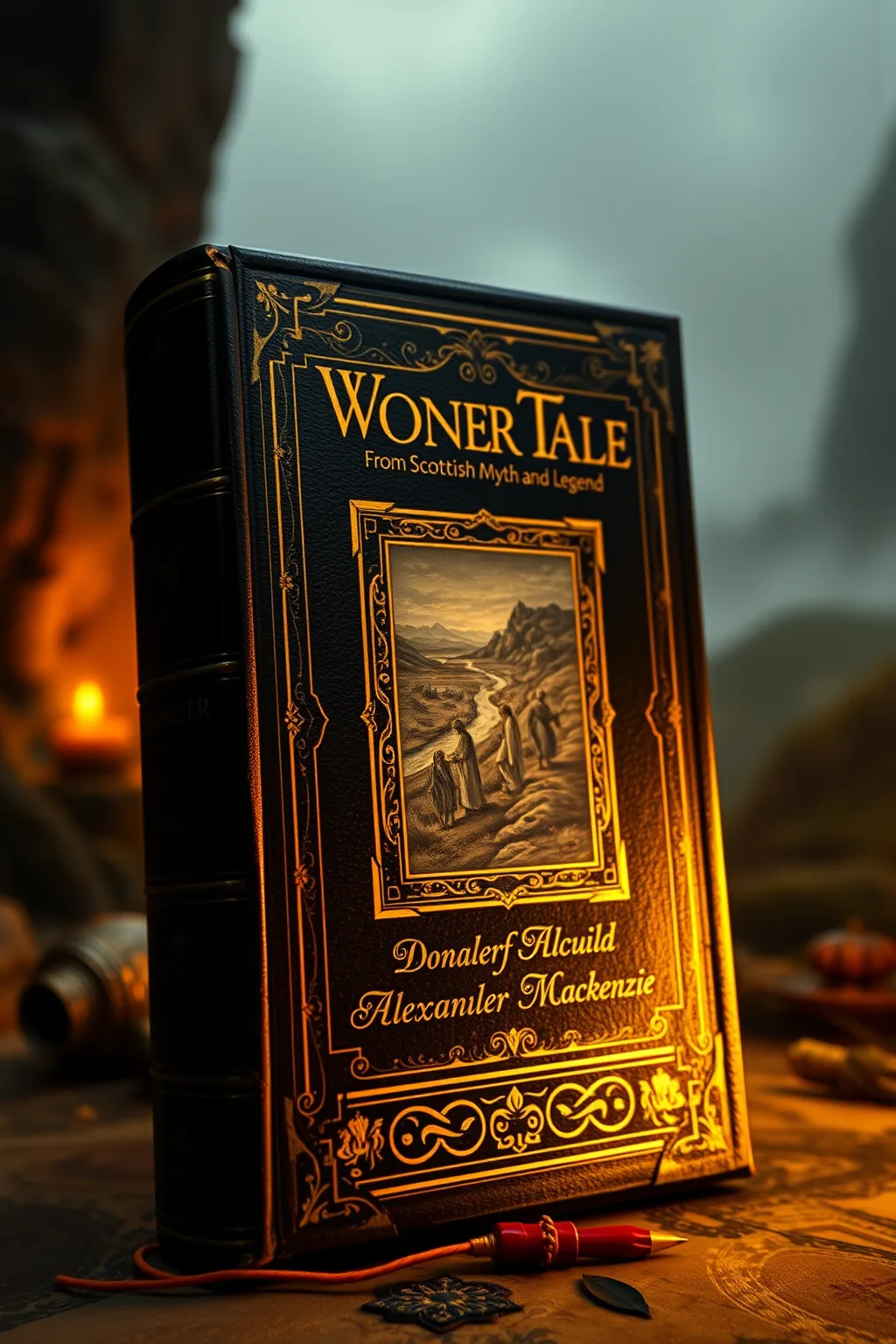
Wonder Tales from Scottish Myth and Legend
 81
81

Wonder Tales from Scottish Myth and Legend


Ophelia Vance (Mystical Literature Reviewer) — Donald Alexander Mackenzie’s 'Wonder Tales from Scottish Myth and Legend' is a luminous beacon for anyone drawn to the esoteric heart of Celtic lore. Published in 1917, it offers a rich compendium of sixteen tales, each imbued with potent symbolism and profound psychological resonance. Mackenzie's scholarship shines, revealing the deep roots of animism, shamanistic practices, and the elemental forces that shaped ancient Scottish belief systems. This is not just a collection of stories, but a key to unlocking forgotten wisdom, offering insights into the archetypal journeys that continue to influence our modern spiritual landscape. Ideal for scholars and seekers alike, this work illuminates the enduring power of myth.
📝 Description
81
Donald Alexander Mackenzie collected 16 Scottish wonder tales in 1917, revealing ancient beliefs.
Donald Alexander Mackenzie's 'Wonder Tales from Scottish Myth and Legend,' published in 1917, gathers sixteen stories from Scotland's rich folklore. These narratives are more than simple tales; they offer insight into the Scottish cultural mindset, its connection to natural forces, and its relationship with the unseen. Mackenzie, who had a deep interest in esoteric subjects, connects these stories to shamanistic practices, the symbolic meaning of the Scottish landscape, and recurring patterns in human thought that span centuries.
Each story acts as a gateway for readers interested in hidden meanings. It is suitable for those who study comparative mythology, seek understanding of ancient practices, or wish to grasp the deeper layers of reality. The book serves as a guide to the origins of myths, the lasting impact of archetypes, and the philosophical basis of a culture closely aligned with natural rhythms and spiritual communication.
This collection fits within the broader tradition of folklore studies that emerged in the late 19th and early 20th centuries, a period when scholars and enthusiasts were actively documenting and analyzing myths and legends as repositories of ancient knowledge. Mackenzie's work connects these specific Scottish narratives to wider esoteric concepts, such as the power of symbolism, the influence of primal magic, and the idea that myths contain keys to understanding consciousness and spiritual realities. It reflects an interest in recovering perceived lost wisdom through the study of traditional stories.
✍️ Author
Donald Alexander Mackenzie
Donald Alexander Mackenzie was a Scottish folklorist and writer, known for his works on mythology and ancient cultures.
Esoteric Writer
💡 Why Read This Book?
Uncover the deep spiritual currents and hidden symbolism within Scottish folklore. 'Wonder Tales' offers a rare glimpse into ancient belief systems, elemental magic, and archetypal wisdom. Essential for seekers of esoteric knowledge, students of comparative mythology, and practitioners interested in the roots of Celtic spirituality. Connect with timeless narratives that illuminate the human condition and the interconnectedness of all things.
⭐ Reader Reviews
Honest opinions from readers who have explored this book.
❓ Frequently Asked Questions
What is the primary focus of this book?
The book's primary focus is on presenting sixteen captivating tales from Scottish myth and legend, emphasizing their mystical, symbolic, and esoteric dimensions, offering insights into ancient beliefs and practices.
Who was Donald Alexander Mackenzie?
Donald Alexander Mackenzie was a Scottish journalist and folklorist renowned for his extensive work in collecting and interpreting myths, legends, and folklore from various cultures, particularly those of Scotland and Africa.
Are these tales suitable for beginners in mythology?
Yes, while rich in esoteric depth, the tales are presented in an accessible manner, making them suitable for beginners interested in mythology, while still offering profound insights for experienced scholars.
Does the book explore specific magical practices?
The book explores the beliefs and symbolic representations of magic within Scottish folklore, offering insights into ancient worldviews rather than explicit instructional guides for modern practices.
What makes this collection 'esoteric'?
The collection is considered esoteric due to its focus on hidden meanings, symbolism, archetypal patterns, and the underlying spiritual and philosophical currents within the myths, connecting them to broader mystical traditions.
🔮 Key Themes & Symbolism
The Elemental Soul of Scotland
This theme examines the profound connection between Scottish myths and the raw, untamed forces of nature—the mountains, the sea, the mists, and the seasons. Mackenzie reveals how these elemental powers are not just settings but active participants in the narratives, embodying ancient deities, spirits, and the very essence of life and death. Readers will discover the deep animistic worldview that imbued the Scottish landscape with consciousness and sacredness, offering a powerful lens through which to understand the land's enduring mystical allure and its influence on human spirituality.
Archetypes of the Hero and the Shaman
Central to these tales are the recurring archetypes of the heroic journey and the shamanistic quest. Mackenzie illuminates how Scottish legends portray individuals who traverse the boundaries between the mundane and the magical, confronting inner and outer demons, seeking hidden knowledge, and returning transformed. These narratives serve as potent metaphors for spiritual growth and self-discovery, reflecting universal patterns of initiation and transformation found across esoteric traditions. The reader is invited to recognize these archetypal patterns within themselves and to understand their role in shaping personal and collective destinies.
The Veil Between Worlds
This theme explores the permeable nature of reality depicted in Scottish folklore, where the spirit world, the land of the fae, and the field of the ancestors are constantly intersecting with human existence. Mackenzie highlights the symbolism of liminal spaces, ancient stones, and sacred waters as conduits between these realms. The tales offer a glimpse into a worldview where magic, prophecy, and spiritual communion are integral parts of life, revealing a profound understanding of the interconnectedness of all things and the subtle energies that shape our reality, urging a re-evaluation of the boundaries of perception.
💬 Memorable Quotes
Direct passages from the work, attributed to the author.
“They afford us not only glimpses of ancient times and of old habits of thought and life...”
— This suggests that the legends act as historical and anthropological windows, revealing the wisdom, beliefs, and societal structures of bygone eras.
“...but also of the country itself at different times of the year.”
— This highlights the cyclical and seasonal nature of the myths, tying them intrinsically to the natural world and its ever-changing rhythms.
“In the winter season the great mountain ranges are...”
— This fragment points to the evocative power of landscape in myth, hinting at the majestic and perhaps intimidating presence of natural features during specific, potent times.
“The Scottish people have a deep affinity for the unseen.”
— This profound statement suggests an inherent cultural sensitivity to spiritual and mystical dimensions, a readiness to acknowledge and engage with forces beyond the material.
💡 Key Ideas
Editorial paraphrase of the work's core concepts — not direct quotes.
The myths and legends of Scotland are full of what is called 'local colour'.
This quote emphasizes the unique, tangible essence of Scottish folklore, suggesting that its power lies in its deep connection to specific places and cultural nuances.
🌙 Esoteric Significance
Tradition
This collection deeply appeals to the Celtic esoteric tradition, particularly its animistic and shamanistic roots. It offers insights into ancient Druidic beliefs, the reverence for nature spirits, and the concept of a porous veil between the physical and spiritual realms characteristic of Celtic spirituality. The emphasis on the land as a living entity and the presence of otherworldly beings aligns with broader Indo-European mystical currents and pre-Christian European earth-based spiritualities.
Symbolism
The symbolism within these tales is rich and many-sided, encompassing archetypal figures like the hero and the trickster, potent natural elements (water, stone, fire), and the mystical field of the Fae. Symbols of transformation, such as the changing seasons or the journey through a dark forest, represent spiritual evolution. The presence of ancient standing stones and sacred sites points to ley lines, earth energies, and places of power, common motifs in geomancy and earth-based magical practices.
Modern Relevance
In an era increasingly disconnected from nature and ancient wisdom, 'Wonder Tales' offers a vital reconnect. Its exploration of archetypes provides timeless lessons for personal growth and understanding the human psyche. The emphasis on the sacredness of the land and the interconnectedness of all things appeals to contemporary ecological and spiritual movements, offering a blueprint for living in greater harmony with the natural world and the unseen dimensions of existence.
👥 Who Should Read This Book
This volume is a rich source for the discerning reader. **Beginners** curious about the mystical side of folklore will find an accessible yet profound introduction to Celtic mythology and its enduring power. **Scholars of mythology and comparative religion** will appreciate Mackenzie's meticulous research and insightful interpretations of archetypal patterns and esoteric themes. **Spiritual seekers** yearning for deeper connections to ancient wisdom and the earth will discover potent metaphors for their own journeys. **Practitioners of earth-based spiritualities and Celtic traditions** will find a rich source of inspiration, symbolism, and understanding of the foundational beliefs that underpin their practices.
📜 Historical Context
Published in 1917, 'Wonder Tales from Scottish Myth and Legend' emerged during a period of intense interest in folklore and national identity across Europe. The early 20th century saw a resurgence of Romanticism, a fascination with ancient traditions, and a desire to preserve and reinterpret cultural heritage. For Scotland, this era was marked by efforts to define its unique cultural space, often through the collection and celebration of its collection of myths and legends. Donald Alexander Mackenzie's work contributed to this scholarly and cultural movement, providing a meticulously researched and evocatively written compendium that sought to illuminate the esoteric underpinnings of Scottish folklore, connecting it to broader patterns of human belief and spiritual inquiry, and positioning it as a vital part of the global mystical narrative.
📔 Journal Prompts
Reflect on a time you felt a strong connection to nature. How did it mirror the 'local colour' described in the book?
Identify an archetype from a Scottish tale that appeals to your own life journey. How does it guide or challenge you?
Consider a liminal space in your life (e.g., dawn, dusk, a threshold). What 'veil between worlds' might be present?
How can the ancient Scottish reverence for the land inform our modern relationship with the environment?
Explore the concept of 'hidden knowledge' in a tale. What form does it take, and what is its cost or reward?
🗂️ Glossary
Fae
Referring to the supernatural beings of folklore, often associated with magic, otherworldliness, and the natural landscape. In Scottish lore, they can be benevolent, mischievous, or dangerous.
Animism
The belief that all natural things—animals, plants, rocks, rivers, weather—possess a spirit or soul, and are therefore imbued with consciousness and agency.
Archetype
A universal, archaic pattern or image that derives from the collective unconscious and is believed to influence human behavior and perception; a fundamental symbol or motif.
Shamanism
A spiritual practice characterized by the ability to enter altered states of consciousness, typically to interact with the spirit world for healing, divination, or guidance.
Liminal Space
A transitional or in-between state or place; a threshold where boundaries are blurred, often associated with transformation, revelation, or encounters with the supernatural.
This book appears in 1 collection
🔮 Readers Also Liked
Browse all →









More by Donald Alexander Mackenzie
All books →


From the “Transcendental Meditation” Collection
View all →





More Free Esoteric History & Biography Books
View all →