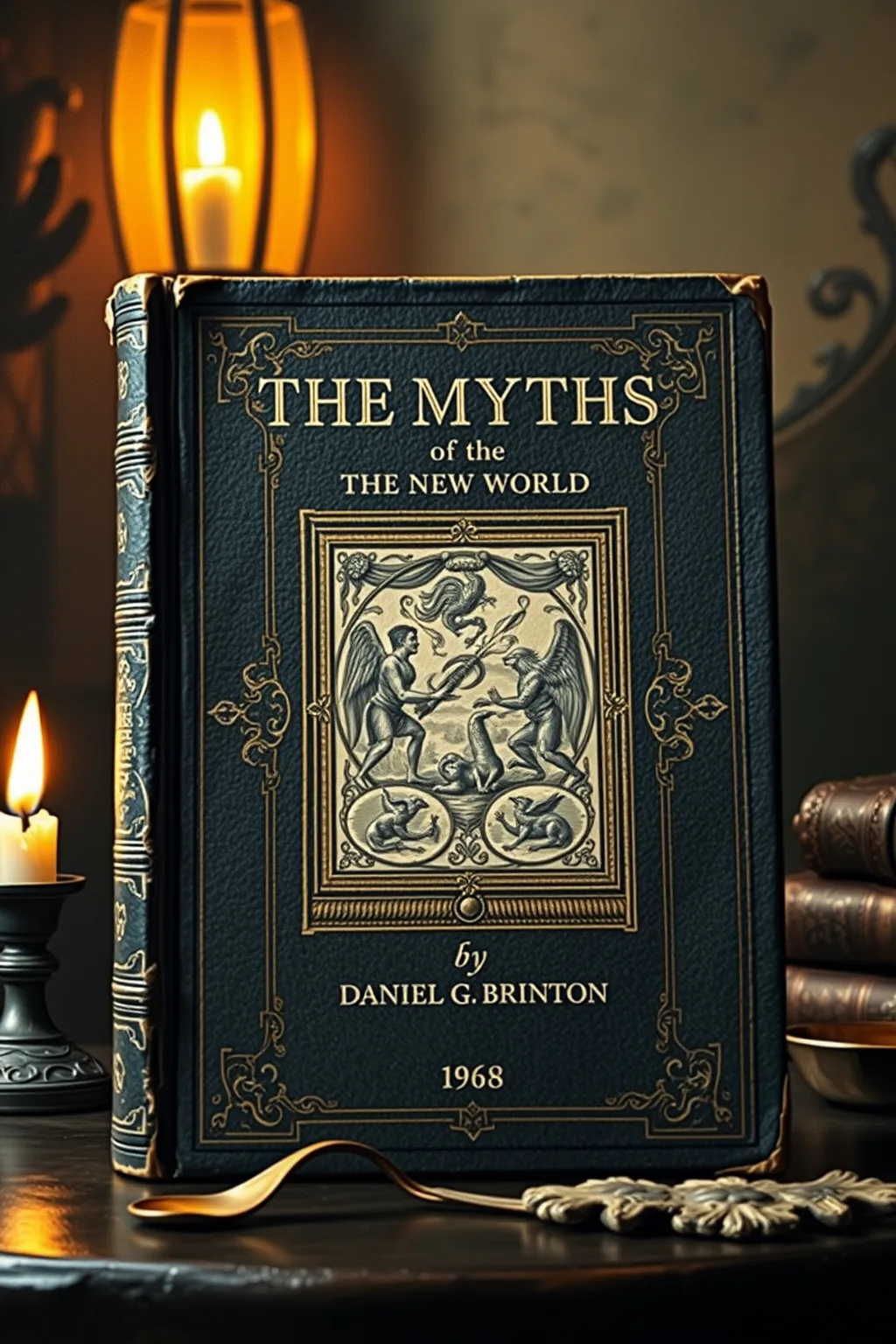
The Myths of the New World
 79
79

The Myths of the New World


Ophelia Vance, Mystical Literature Reviewer — Daniel G. Brinton's 'The Myths of the New World' remains a cornerstone for scholars of comparative mythology and esoteric traditions. Published in 1868, it courageously attempts a scientific yet deeply sensitive analysis of Indigenous American cosmologies. Brinton unearths universal mystical themes—the divine archetype, numerological significance, and the potent symbolism of nature—providing profound insights into the human psyche's engagement with the sacred. Its strength lies in its early recognition of the inherent spiritual depth in non-Western belief systems, offering a valuable lens for understanding humanity's collective unconscious. Essential reading for anyone seeking to grasp the esoteric underpinnings of ancient mythologies.
📝 Description
79
Daniel G. Brinton's 'The Myths of the New World' first appeared in 1868.
Daniel G. Brinton's 1868 study examines the mythologies of Indigenous American peoples. He analyzes their creation stories and flood myths, looking for underlying archetypes and doctrines. Brinton discusses concepts like sacred geometry in numbers, the symbolism of fire and water, and the serpent and bird motifs. The book aims to reveal connections between the material and spiritual worlds within these traditions.
It presents a scholarly approach to understanding the spiritual heritage of these cultures. Brinton's work is intended for readers interested in a deeper knowledge of pre-Columbian belief systems. He sought to uncover the veiled wisdom within forgotten traditions and the enduring mysteries of human spirituality.
Published in 1868, Brinton's work engages with the burgeoning interest in comparative mythology and folklore that characterized the late 19th century. It approaches Indigenous American beliefs not merely as anthropological curiosities but as expressions of universal human spiritual impulses. The book aligns with esoteric traditions that seek deeper, symbolic meanings in myths, viewing them as keys to understanding consciousness and the cosmos, rather than literal historical accounts.
✍️ Author
Daniel G Brinton
Brinton may refer to: == Places == Brinton (crater), on Pluto Brinton, Michigan, United States Brinton, Norfolk, England == People == Anna Cox Brinton (1887–1969), American classics scholar, Quaker worker Crane Brinton, American historian of France and …
💡 Why Read This Book?
Embark on a journey to the heart of ancient spiritual wisdom. 'The Myths of the New World' offers profound insights into the universal language of myth, revealing the esoteric connections between Indigenous American cosmologies and broader human spiritual quests. Ideal for seekers, scholars, and practitioners of esoteric arts who wish to understand the foundational myths that shape our perception of reality and the divine.
⭐ Reader Reviews
Honest opinions from readers who have explored this book.
❓ Frequently Asked Questions
What is the primary focus of 'The Myths of the New World'?
The book's primary focus is the scientific analysis and correlation of Indigenous American mythology, exploring themes such as the concept of God, sacred numbers, symbolic animals, elemental myths, and creation narratives.
When was the book first published?
The book was first published in 1868.
Who was Daniel G. Brinton?
Daniel G. Brinton was an American archaeologist and ethnologist known for his pioneering work in the study of Indigenous American cultures and languages.
Does the book offer practical applications for modern esoteric practices?
While primarily analytical, the book provides foundational knowledge of archetypal symbolism and mythic structures that can inform and deepen understanding within modern esoteric practices and spiritual exploration.
Is the language accessible for a general audience interested in mythology?
The language is scholarly but engaging, making it accessible to readers with a serious interest in mythology and esoteric studies, though some background in the subject may enhance comprehension.
🔮 Key Themes & Symbolism
Archetypal Symbolism and the Divine
This book delves deep into the symbolic language of Indigenous American myths, revealing how recurring archetypes like the bird and serpent represent fundamental cosmic forces and divine principles. Brinton meticulously unpacks the universal human quest for understanding the divine, demonstrating how these ancient narratives offer useful insights into the nature of God, creation, and humanity's place within the cosmos. It’s an exploration of the sacred geometry inherent in myth, suggesting a shared spiritual DNA across diverse cultures and epochs.
Cosmogonies and Elemental Mysteries
Explore the foundational myths of creation and the flood, understanding them not just as stories but as sophisticated cosmological frameworks. Brinton highlights the profound significance attributed to elemental forces like fire and water, which act as potent symbols of purification, transformation, and the very genesis of existence. This theme unravels how ancient peoples perceived the universe's origins and the cyclical nature of life, death, and rebirth through the lens of these powerful natural phenomena.
The Journey of the Soul and Human Origin
Brinton illuminates the ancient understanding of humanity's origins and the soul's intricate journey. The myths examined explore concepts of the soul's nature, its connection to the divine, and its passage through various states of existence. This theme explores the esoteric philosophies surrounding consciousness, mortality, and the potential for spiritual transcendence, offering a compelling perspective on how ancient cultures grappled with life's most profound questions about our essence and destiny.
💬 Memorable Quotes
Direct passages from the work, attributed to the author.
“The sacred number is the key to the universe.”
— This statement suggests that numerical patterns hold intrinsic spiritual or cosmic significance, acting as a fundamental cipher for understanding creation and divine order.
“The serpent symbolizes eternal life and wisdom.”
— The serpent, a prevalent symbol across cultures, represents cyclical renewal, hidden knowledge, and the profound mysteries of existence and transformation.
“Water is the primordial mother of all.”
— This highlights the ancient recognition of water's life-giving and foundational role in creation myths, symbolizing purity, rebirth, and the origin of all existence.
“The bird ascends to the heavens, bridging worlds.”
— The bird's ability to fly symbolizes a connection between the earthly and celestial realms, representing ascension, spiritual freedom, and divine communication.
“Man's creation is a divine breath.”
— This points to the belief that humanity's existence is infused with a divine spark or spirit, emphasizing a sacred origin and an inherent connection to the source of all being.
🌙 Esoteric Significance
Tradition
This work offers a crucial bridge to understanding the esoteric underpinnings of Indigenous American spiritual traditions. It highlights universal archetypes and cosmologies that resonate with Hermeticism, Gnosticism, and Jungian psychology, revealing a shared human impulse to understand the divine and one's place within it. Brinton's analysis implicitly validates the profound spiritual wisdom embedded in these ancient belief systems, framing them as sophisticated expressions of universal esoteric principles.
Symbolism
The book meticulously unpacks potent esoteric symbols central to Indigenous American mythologies: the serpent (rebirth, hidden knowledge), the bird (ascension, divine messenger), sacred numbers (cosmic order, divine structure), and elemental forces like fire and water (purification, creation, transformation). These symbols are presented not as mere decoration, but as keys to unlocking deeper meanings about existence, consciousness, and the interconnectedness of all things.
Modern Relevance
In an age seeking authentic spiritual connection and deeper understanding of global wisdom traditions, Brinton's work remains remarkably relevant. It provides a scholarly foundation for appreciating the profound esoteric insights of Indigenous cultures, encouraging a re-evaluation of their spiritual depth. For practitioners and seekers, it offers archetypal keys that can unlock personal transformation and a more holistic view of the human spiritual journey, fostering cross-cultural understanding and respect for ancient knowledge.
👥 Who Should Read This Book
This key work is indispensable for scholars of comparative mythology, anthropology, and religious studies, offering a foundational analysis of Indigenous American cosmologies. Esoteric practitioners and students of ancient wisdom will find profound resonance with the archetypal symbolism and universal spiritual themes. Seekers of deeper meaning and connection to ancestral knowledge will be drawn to its exploration of creation myths and the human soul. Even beginners with a serious interest in mythology and the hidden currents of human spirituality will find it an informative and thought-provoking read.
📜 Historical Context
Published in 1868, 'The Myths of the New World' emerged during a key era of burgeoning ethnographic and anthropological study in the United States. The post-Civil War period saw a growing interest in understanding the continent's Indigenous populations, often viewed through a lens of romanticism, scientific curiosity, or colonial apprehension. Daniel G. Brinton, a physician and ethnologist, was at the forefront of attempts to systematically categorize and interpret the rich cultural heritage of Native American tribes. His work sought to move beyond superficial observation, aiming for a comparative and analytical approach that could reveal universal patterns in human thought and belief. This period was characterized by both a desire to preserve what was perceived as vanishing knowledge and a tendency to impose Western frameworks onto non-Western spiritual systems. Brinton's book reflects this complex intellectual landscape, offering a foundational text that, despite its era's limitations, provided crucial early insights into the depth and sophistication of Indigenous American mythologies.
📔 Journal Prompts
Reflect on the concept of a 'sacred number' in your own life or belief system. What significance does it hold?
How do the symbols of the bird and serpent appear in contemporary culture or your personal understanding of spirituality?
Consider the myths of creation and flood. What do these universal narratives reveal about humanity's deepest fears and hopes regarding origins and destruction?
Explore the idea of the 'divine breath' in relation to your own sense of purpose and connection to something larger than yourself.
How does understanding ancient cosmologies influence your perception of the natural world and your place within it?
🗂️ Glossary
Cosmology
A theory or story concerning the origin, evolution, and structure of the universe. In 'The Myths of the New World,' it refers to the Indigenous American understanding of the cosmos and its creation.
Archetype
A universally understood symbol, character, or pattern of behavior found in many different cultures and mythologies, representing fundamental human experiences and motivations.
Ethnology
The study of the characteristics of various peoples and the differences and relationships between them. Brinton used this to analyze and compare different Indigenous mythologies.
Esoteric
Intended for or likely to be understood by only a small number of people with a specialized knowledge or interest. In this context, it refers to the hidden or inner spiritual meanings within myths.
Mythology
A collection of myths, especially one belonging to a particular religious or cultural tradition. Brinton analyzes these narratives for their deeper, often symbolic, significance.
This book appears in 2 collections
🔮 Readers Also Liked
Browse all →








From the “Transcendental Meditation” Collection
View all →



![An answer of a letter from a gentleman in Fife, to a nobleman, containing a brief acccount [sic] of the barbarous and illegal treatment, these poor women accused of witchcraft, met with from the baillies of Pittenweem and others, ... To which is adde](/img/thumb/an-answer-of-a-letter-from-a-gentleman-in-fife-to-a-nobleman-containing-a-brief-acccount-sic-of-the-barbarous-and-illegal-treatment-these-poor-women-accused-of-witchcraft-met-with-from-the-baillies-of.webp)

More Free Esoteric History & Biography Books
View all →